Rewrites Don’t Fail at Release. They Fail in What Happens After.
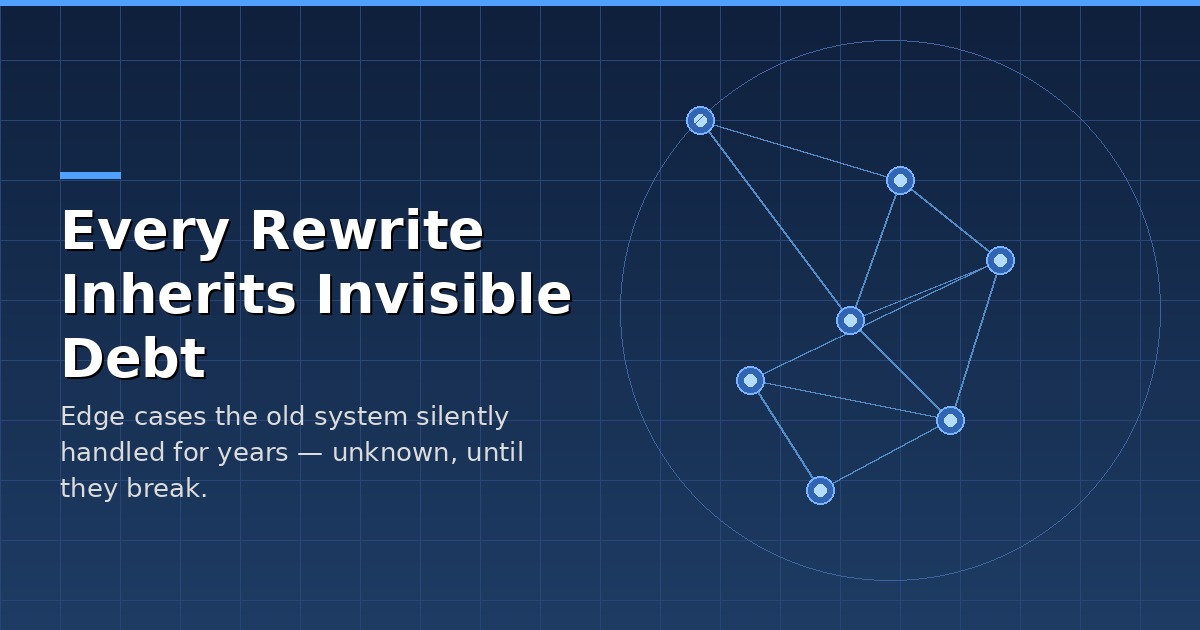
Every rewrite inherits invisible debt — edge cases the old system silently handled for years, unknown to anyone, until they break.
The original application earned its battle scars over time. Every quirky conditional, every oddly specific validation, every silent fallback — they exist because something went wrong once, someone fixed it, and the fix outlived the memory of why it was needed. When you rewrite, you ship clean code into a world that remembers none of that.
That’s not a failure of planning. It’s the nature of the work.
The Edge Case Problem
“You can’t engineer that risk away.”
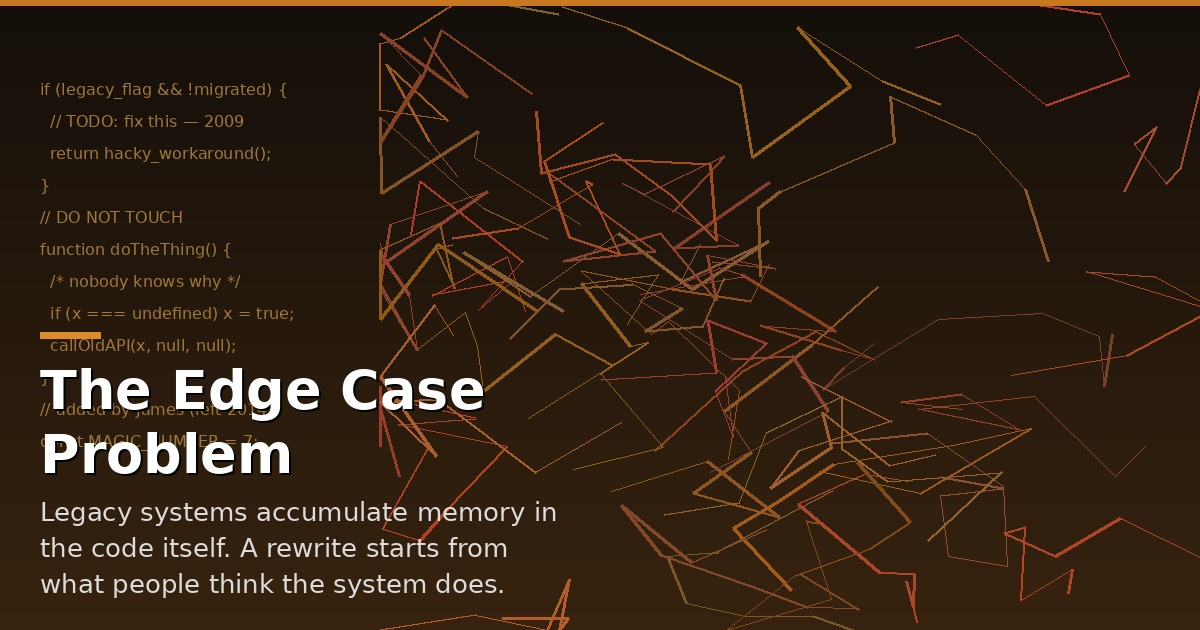
Legacy systems accumulate institutional memory in the codebase itself. A rewrite starts from specs, from documentation, from what people think the system does — not from what it actually does in the 0.1% of cases that never made it into a ticket.
Those cases exist. They will surface. Usually at the worst time, usually for the most demanding customer.
The teams that pretend otherwise — that spend energy projecting confidence in a flawless launch — are the same teams that get caught flat-footed when the inevitable happens. No incident response playbook. No communication template. No clear owner. Just scrambling.
What Actually Makes the Difference
A bug report after a rewrite is not evidence that the rewrite was a mistake. It’s evidence that the system is being used — by real users, in real environments, doing things no test suite anticipated.
What matters is what happens next.
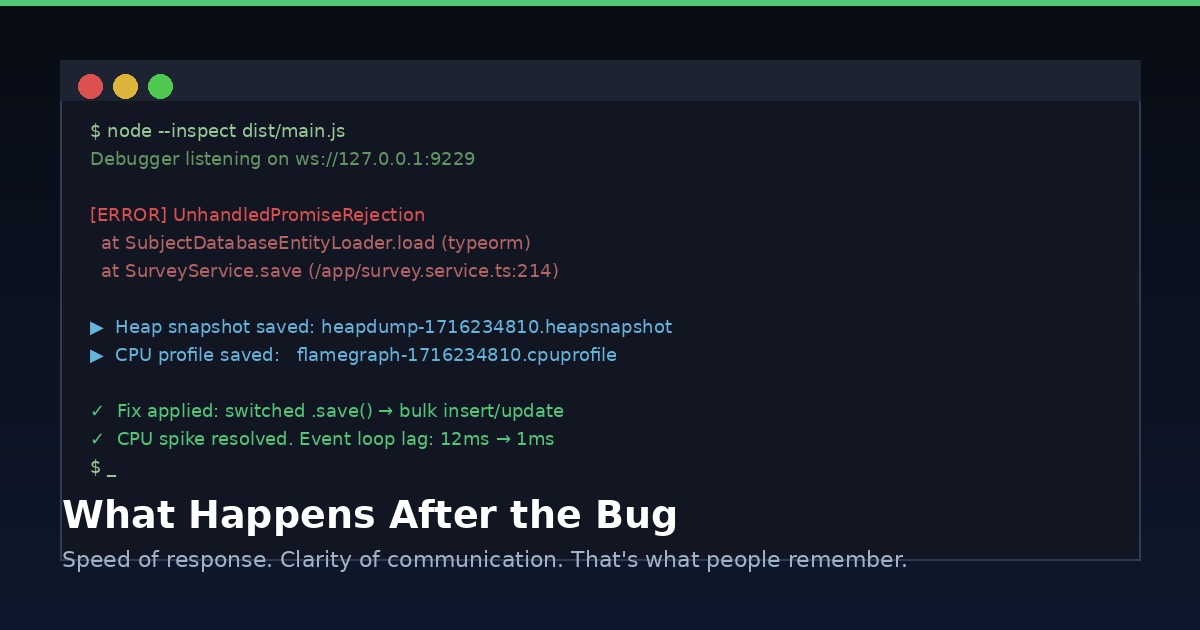
The teams that come out of these situations stronger share a few things:
1. They communicate fast, even when the answer is incomplete. “We’re aware, we’re on it, here’s what we know so far” is infinitely better than silence. Silence reads as ignorance or indifference. Neither is a good look.
2. They show genuine urgency — not performance. There’s a difference between a team that looks busy and a team that’s actually moving. Customers and support teams can tell. So can your engineering manager.
3. They support the people closest to the customer. Your support team is absorbing the heat directly. If they’re left without context, without a timeline, without someone to escalate to — you’ve made their job impossible. That erodes internal trust as much as it erodes customer trust.
4. They own it without hedging. Not “there may have been an issue with the legacy data migration path.” Just: “We got this wrong. Here’s what happened, here’s the fix, here’s what we’re doing so it doesn’t happen again.”
Trust Is the Long Game
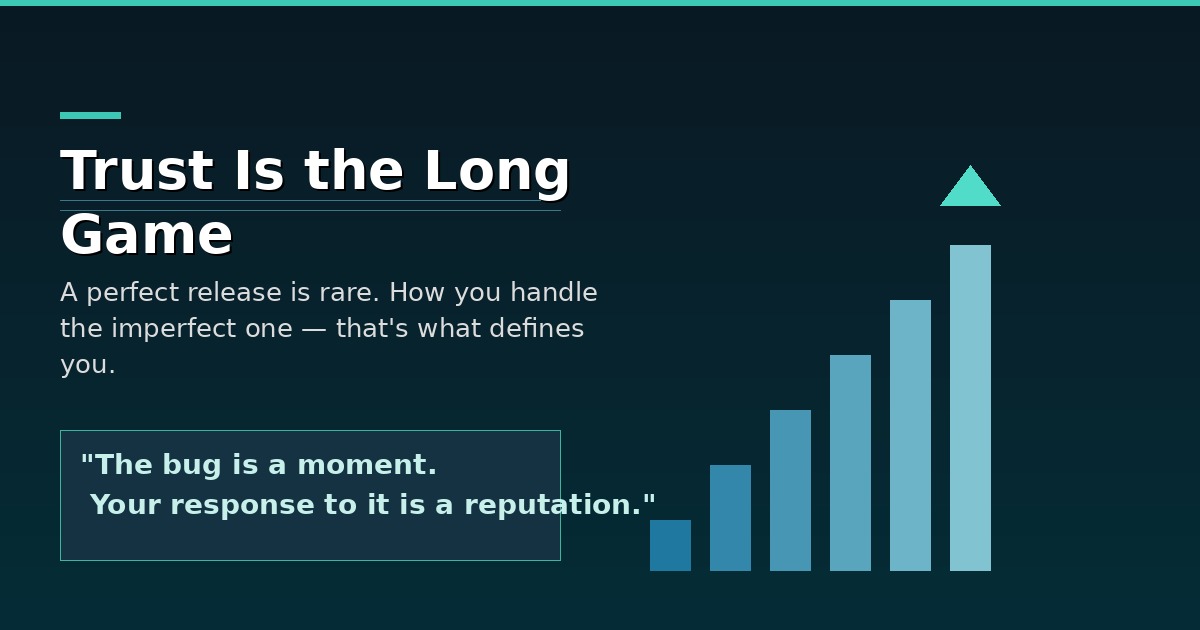
A perfect release is a nice thing. It’s also rare, fragile, and mostly luck-dependent once you’re past a certain scale of complexity.
Trust isn’t built in the good moments. It’s stress-tested in the bad ones.
When your stakeholders, your customers, and your team watch how you respond to a post-release bug — they’re forming a judgment about you that will outlast that bug by years. Did you hide? Did you deflect? Did you communicate clearly and move fast?
The engineering teams worth working with, and the engineering leaders worth following, are the ones who’ve internalized this:
The bug is a moment. Your response to it is a reputation.
A Note on Rewrites Specifically
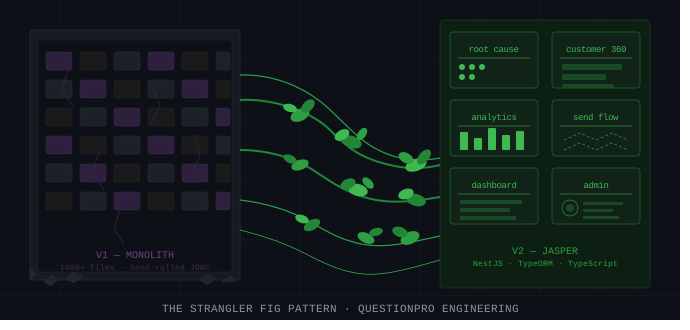
Rewrites deserve some defense here. They are often the right call — technically and organizationally. Legacy systems accrue complexity that eventually becomes load-bearing in ways that block every other improvement. Rewrites unlock velocity, maintainability, and the ability to hire engineers who don’t need six months of tribal knowledge before they’re productive.
The answer isn’t to avoid rewrites out of fear of post-launch bugs. The answer is to:
- Build a robust incident response process before you ship
- Prepare your customer-facing teams with context and escalation paths
- Communicate proactively with high-risk customer segments at launch
- Treat the first 30 days post-launch as a separate, high-attention phase
And when bugs happen — because they will — own them completely.
That ownership is what builds the trust that makes your next rewrite easier to get approved, easier to staff, and easier to land.