Why Survey-Only Research Is No Longer Enough
Organizations invest significant time and effort in understanding their consumers. They create surveys, build communities, recruit members, ask detailed questions, and analyze feedback through dashboards.
But one important challenge remains:
What people say does not always fully explain what they actually do.
Survey responses are valuable because they help brands understand opinions, preferences, intent, and satisfaction. However, they may not always capture real purchase behavior, basket patterns, consumption signals, or the motivations behind why a product was bought, liked, loved, or disliked.
For consumer insights teams, this creates a gap.
A member may say they prefer one brand, but their purchase history may show a different pattern. A shopper may buy a product repeatedly, but the brand may not know what is driving that behavior. A category may look strong in survey responses, but actual purchase data may reveal different levels of engagement.
This is where Consumer Lens helps.
Consumer Lens enables organizations to move beyond survey-only research by connecting verified member participation with real shopper behavior and product sentiment.
The Hidden Gap in Traditional Consumer Research
Traditional consumer research often depends heavily on claimed behavior.
Organizations ask questions such as:
- Which products do you buy?
- How often do you buy this category?
- Which brands do you prefer?
- What motivates your purchase decisions?
- What do you like or dislike about a product?
These questions are important, but they depend on memory and self-reporting. Members may forget details, estimate incorrectly, or describe behavior differently from what actually happened.
This can lead to:
- Incomplete understanding of shopper behavior.
- Gaps between claimed and actual purchase patterns.
- Limited visibility into basket composition.
- Difficulty identifying brand and category relationships.
- Lack of clarity on what motivates or demotivates product consumption.
- Missed opportunities for follow-up research.
Consumer Lens helps close this gap by combining behavioral purchase data with direct member feedback.
The goal is not to replace surveys. The goal is to make survey research stronger by adding behavioral context.
What Is Consumer Lens?
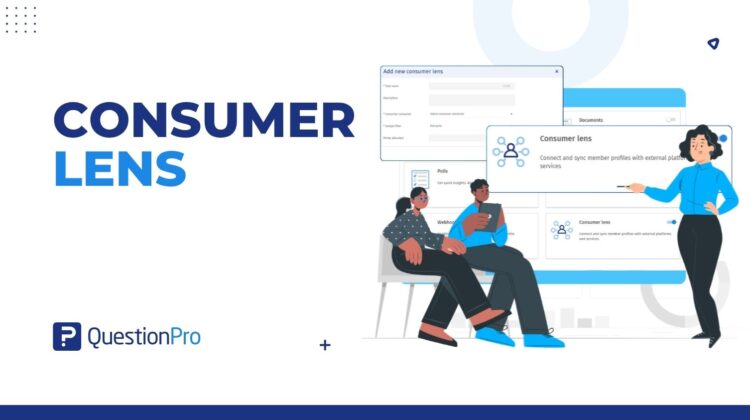
Consumer Lens is a behavioral intelligence module that helps organizations recruit verified community members into secure task-based experiences and convert their purchase/order data into shopper intelligence dashboards.
The Amazon Shopper Behaviour flow represents the first use case developed within the Consumer Lens module. In this flow, members are recruited through a community or survey experience and guided into a secure task flow to complete the Amazon login step. With member consent, their order and purchase history is collected, processed, and transformed into shopper intelligence dashboards that help organizations analyze consumption, basket, brand, and category-level behavior.
In simple terms:
Consumer Lens helps brands understand what members buy, how they consume, what they feel about products, and what drives or blocks purchase behavior.
It enables teams to:
- Recruit members through communities or surveys.
- Verify eligible members before task participation.
- Generate unique Consumer Lens links for secure participation.
- Collect consent-based purchase and order history.
- Classify purchase data into categories, subcategories, brands, and baskets.
- Analyze spend patterns, purchase frequency, and basket composition.
- Capture product sentiment through flash card-style feedback.
- Reward members after successful participation.
- Use behavioral insights to guide follow-up surveys, discussions, and research decisions.
Why Consumer Lens Matters
Consumer Lens is designed for organizations that want a deeper understanding of consumer behavior.
Instead of relying only on what members say in surveys, teams can also understand:
- What members actually purchased.
- Which categories and brands appear most often.
- How purchase behavior is distributed across members.
- What products are bought together.
- Which products members loved, liked, or disliked.
- What motivates consumption.
- What creates barriers or dissatisfaction.
- Which members should be targeted for follow-up research.
This creates a more complete research environment.
Clients can observe behavior, understand sentiment, and then probe deeper through targeted surveys or discussions.
How Consumer Lens Works
The Consumer Lens experience begins with recruitment.
Members can be recruited through a QuestionPro Community or a survey experience. They provide the required profile and contact details, complete recruitment questions, and proceed only if they qualify for the task.
Once the member is verified, a unique Consumer Lens link is generated. This ensures that the task can be securely tied back to the correct member record.
The member is then guided into a secure task flow. In the current Amazon Shopper Behaviour use case, the member completes the Amazon login step with consent. Their order and purchase history is collected, processed, and saved in a structured format.
The collected data is then classified into useful intelligence attributes such as:
- Category
- Subcategory
- Brand
- Basket
- Region
- Order value
- Purchase date
- Confidence score
- Ambiguous classification flag
Once the data is processed, it powers the Consumer Lens dashboard inside Communities.
The result is a complete journey:
Recruit member → Verify eligibility → Generate unique Consumer Lens link → Complete secure task → Collect behavioral data → Classify purchase data → Display dashboards → Reward member
The Four Consumer Lens Intelligence Views
Consumer Lens includes four dashboard areas designed to help teams move from raw purchase/order data to decision-ready insights.
1. Executive Summary
The Executive Summary gives stakeholders a high-level view of shopper activity and key performance indicators.
It helps teams quickly understand:
- Total orders.
- Total value transacted.
- Average expenditure.
- Shopper participation.
- Key trends and summary metrics.
This dashboard is useful for leadership, product, and insights teams that need a quick snapshot of overall behavioral activity across the recruited member base.
2. Consumption Intelligence
Consumption Intelligence helps teams understand what members are buying and how purchase behavior is distributed across categories, subcategories, brands, and regions.
It highlights:
- Spend patterns.
- Purchase frequency.
- Average order value.
- Category-level behavior.
- Brand-level consumption.
- Member-level purchase patterns.
This dashboard helps brands identify which products or categories are driving member consumption and where demand or growth opportunities may exist.
It also enables teams to identify and segment members based on their consumption patterns, supporting targeted follow-up surveys or discussions. This creates a more holistic research environment where clients can not only observe behavior, but also probe deeper to understand the drivers behind it.
3. Basket Intelligence
Basket Intelligence helps teams understand what products, brands, and categories are purchased together.
It supports analysis of:
- Basket composition.
- Cross-category relationships.
- Product combinations.
- Brand affinity.
- Category adjacency.
- Product bundling opportunities.
- Shopper missions.
For example, a brand may learn that certain products are frequently purchased with complementary categories, or that specific brands appear together in the same basket. These insights can support category strategy, product positioning, cross-sell opportunities, and deeper shopper research.
4. Consumer Intelligence
Consumer Intelligence captures member feedback through flash cards, allowing teams to understand how members feel about the products they have recently consumed.
Members can share what they:
- Loved.
- Liked.
- Disliked.
- Found motivating.
- Found disappointing.
This gives brands a closer view into the motivations and barriers that influence consumption.
Consumer Intelligence helps teams understand the overall sentiment mix by connecting recent product experiences with emotional and preference-based feedback. It enables clients to identify what drives positive product perception, what creates dissatisfaction, and where deeper follow-up research may be needed.
From Behavioral Data to Better Research Decisions
The power of Consumer Lens comes from connecting multiple layers of insight.
Survey research can tell teams what members think.
Behavioral data can show what members bought.
Flash card feedback can explain how members felt about the product experience.
Together, these signals help organizations answer stronger research questions, such as:
- Which products are members actually buying?
- Which categories are driving the most spend?
- Which brands are appearing together in baskets?
- Which members are high-value shoppers?
- What do members love or dislike after consuming a product?
- What motivates repeat purchase?
- What barriers prevent stronger product adoption?
- Which members should be invited to a follow-up survey or discussion?
This helps teams move from basic reporting to deeper consumer understanding.
Common Use Cases for Consumer Lens
Shopper Behavior Studies
Brands can understand what members are purchasing, how frequently they buy, and which categories or brands appear most often in their purchase history.
Basket Analysis
Teams can analyze which products, brands, and categories are purchased together to identify shopper missions, product combinations, and category relationships.
Product Sentiment Research
Using flash card feedback, brands can understand what members loved, liked, or disliked about products they recently consumed.
Follow-Up Survey Targeting
Teams can segment members based on purchase behavior or product sentiment and invite them into targeted follow-up surveys, discussions, or research activities.
Category and Brand Intelligence
Consumer Lens helps brands identify category-level behavior, brand affinity, repeat purchase patterns, and possible growth opportunities.
Community-Based Behavioral Research
Organizations with active communities can use Consumer Lens to add behavioral intelligence to their existing member research programs.
Best Practices for Using Consumer Lens
Recruit the Right Members
The quality of insights depends on recruiting members who are relevant to the study. Use survey questions, profile fields, and eligibility checks to ensure the right members enter the Consumer Lens flow.
Keep the Task Flow Simple
Members should be able to move from recruitment to task completion with minimal friction. The fewer unnecessary screens or steps, the better the participation experience.
Be Clear About Consent
Members should understand what task they are completing and what data will be collected. Clear consent helps build trust and supports a better member experience.
Use Behavioral Segments for Follow-Up
Consumer Lens is most powerful when clients use the data to take action. For example, members can be segmented based on purchase category, spend level, basket behavior, or product sentiment and invited into deeper research.
Combine Behavior With Feedback
Purchase data shows what happened. Flash card feedback helps explain why it happened. Teams should use both together to understand motivations, barriers, and product perception.
The Future of Consumer Lens
Consumer Lens is designed to evolve beyond the first Amazon Shopper Behaviour use case.
Future versions can support:
- Additional connectors beyond Amazon.
- More task types beyond shopper behavior.
- Automated member targeting based on profile fields.
- Task templates for common research use cases.
- Member task history.
- Advanced basket analysis.
- Household-level behavioral intelligence.
- AI-powered querying of Consumer Lens data beyond standard survey results.
The future vision is to allow clients to ask natural-language questions across their behavioral and survey data, such as:
- “Which members purchased this category most frequently?”
- “What are the top barriers mentioned by members who disliked this product?”
- “Which brands are commonly purchased together?”
- “Which shopper segment should we target for a follow-up discussion?”
This would help teams move from static dashboards to interactive behavioral intelligence.
Final Thoughts
Consumer research is changing.
Organizations no longer want to rely only on what members say they do. They want to understand what members actually buy, how they behave, what they feel after consumption, and what motivates or prevents future purchase.
Consumer Lens brings these signals together.
It connects verified member recruitment, secure task participation, purchase/order data, classification, dashboards, product sentiment, and rewards into one research experience.
The result is:
- Deeper shopper understanding.
- Stronger behavioral insight.
- Better segmentation.
- More relevant follow-up research.
- Clearer visibility into motivations and barriers.
- A richer connection between communities, surveys, and real consumer behavior.
The goal is no longer just to ask consumers what they think.
The goal is to understand what they do, how they feel, and why it matters.