This report examines what that means for market research agencies and the brands that commission research in India, the liability every leader is carrying right now, and why QuestionPro is the only research platform purpose-built for this new reality.
The Reckoning Has Arrived
India's market research industry and the brands that commission research have both operated for decades under a framework of implied consent, indefinite data retention, and flexible data sharing. That era is over. The Digital Personal Data Protection Act, 2023 (DPDPA), is not a consultation paper or a draft framework. It is the law of the land, signed by the President of India on August 11, 2023, with implementation rules notified in November 2025 and full enforcement of core obligations locked in for May 13, 2027.
For research agency leaders, this is not a compliance team problem to be delegated. For brand leaders, this is not a procurement team problem to ignore. This is an existential risk sitting on the desk of every CEO in this industry, on both sides of the research relationship. The Act imposes penalties of up to ₹250 crore per instance of violation. It gives the Data Protection Board quasi-judicial powers equivalent to a civil court. It grants every survey respondent the legal right to demand deletion of their data, the right to know who you shared it with, and the right to complain directly to a regulatory body if you fail them.
Critically, the Act holds the data fiduciary personally responsible for the compliance of every platform and vendor it uses. For a research agency, that means your survey platform. For a brand commissioning research, that means your agency. The liability travels the entire supply chain.
The Single Most Dangerous Misconception Today
The belief that DPDPA compliance is a future concern, whether you are a research agency or a brand. The Act is in force now. The board is constituted now. Respondents can file complaints now. Agencies that wait for the May 2027 deadline risk becoming the Board's earliest enforcement examples. Brands that continue commissioning research through non-compliant agencies are absorbing that liability into their own supply chains right now.
This report does three things. It explains precisely what DPDPA demands from both market research agencies and brands, in plain language that cuts through legal complexity. It maps the gap between what most organisations currently do and what the law now requires. And it makes an evidence-based case for why QuestionPro is the only research platform that has built DPDPA compliance into its architecture at the depth this law demands, for agencies and brands alike.
This is not about which platform has a privacy policy page. This is about which platform can prove consent was obtained, execute deletion on demand, manage parental consent for youth research, confine data to Indian servers, and produce an audit trail that will satisfy the Data Protection Board. Right now, only one platform can do all of that. That platform is QuestionPro.
1. What DPDPA Actually Says
The Constitutional Foundation
DPDPA 2023 rests on a nine-judge Supreme Court ruling from 2017, Justice K.S. Puttaswamy v. Union of India, which unanimously declared the right to privacy a fundamental right under Article 21 of the Constitution.
That ruling established that informational self-determination, the right of every Indian citizen to control what is collected and known about them, is a constitutional guarantee. DPDPA is the statutory embodiment of that guarantee.
What this means for research agencies and brands alike is profound: you are not merely dealing with a data regulation. You are dealing with a constitutional right.
Violating DPDPA is not a technicality. It is an infringement of a fundamental right that the highest court in India has placed alongside the right to life.
Who the Act Covers
Section 3 of the Digital Personal Data Protection Act (DPDPA) is intentionally broad in scope. The law applies to any organisation that processes digital personal data within India, regardless of whether the organisation itself is based in India or abroad. In addition, it extends to organisations located outside India if they process personal data in connection with offering goods or services to individuals in India.
This extraterritorial scope means that companies cannot avoid compliance simply by hosting data or operating their platforms outside the country. If the data belongs to Indian residents and the processing is linked to services, products, or interactions with Indian users, the Act applies.
Importantly, the DPDPA does not provide exemptions based on company size, sector, or operational scale. A small research agency, a SaaS platform, a multinational enterprise, and a startup collecting survey responses are all equally within scope if they process digital personal data. There is also no carve-out for market research, analytics, or consumer insight activities, even when the data is collected for statistical or research purposes.
For example, if a global consumer brand conducts a customer satisfaction survey targeting Indian consumers, the brand itself becomes a data fiduciary under the Act. At the same time, any research agency, survey platform, analytics vendor, or panel provider involved in collecting or processing that data may also fall within the regulatory framework. Compliance responsibility therefore becomes shared across the entire data processing chain, not just the organisation that directly interacts with the respondent.
In practice, this means that both the brand commissioning the research and the platform executing it must ensure lawful consent, purpose limitation, secure storage, and clear mechanisms for withdrawal and data erasure. The geographic location of servers, vendors, or research partners does not remove this obligation when Indian personal data is involved.
The Actors the Law Defines
| Term |
Legal Definition |
What It Means for Agencies and Brands |
| Data Principal |
The individual whose data is being processed |
Every survey respondent, panellist, interviewee, and focus group participant. Both the agency and the commissioning brand owe obligations to this person. |
| Data Fiduciary |
The organisation that decides why and how personal data is processed |
The research agency is a data fiduciary for all data it collects. The brand is also a data fiduciary for any respondent data it receives, uses, or stores. Both carry independent liability. |
| Data Processor |
A third party processing data on behalf of the Fiduciary under contract |
The survey platform is the agency's data processor. The agency can become the brand's data processor if contracted to handle data on the brand's behalf. The chain of liability runs through all of them. |
| Personal Data |
Any data about an individual who is identifiable from it |
Names, emails, phones, ages, opinions, survey responses, IP addresses, voice recordings, videos, and demographics. Every data point in every research project run by or for your organisation. |
| Personal Data Breach |
Any unauthorised access, disclosure, sharing, loss or destruction of personal data |
A leaked respondent database. An agency emailing raw data to the wrong brand contact. A brand's analytics team accidentally exposing a research dataset. All breaches require mandatory notification. |
The Two Grounds on Which Data Can Be Processed
Section 4 of the DPDPA permits processing personal data on exactly two grounds. Not six grounds like the GDPR. Two. This eliminates the flexible 'legitimate interests' basis that many organisations have relied upon, and it is the single most commercially disruptive aspect of the Act for both research agencies and the brands they serve.
Ground 1: Consent
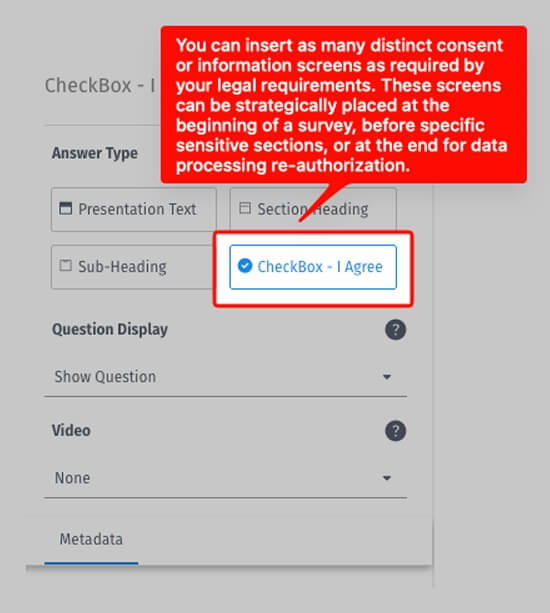
Consent is the default and primary ground. Under Section 6(1), valid consent must be simultaneously freely given, specific to a defined purpose, informed through a prior notice, unconditional, and unambiguous, and established by a clear affirmative action. Silence, pre-ticked boxes, or passive participation in a survey does not constitute consent under this Act.
The consent must also be withdrawable at any time, with a mechanism as easy to use as the consent itself. The burden of proving that consent was validly obtained falls entirely on the data fiduciary.
The Bundling Trap That Affects Everyone in the Research Supply Chain
Research agencies use consent language such as 'By completing this survey, you agree to our terms and conditions.' Brands accept datasets without asking how consent was obtained. Under DPDPA, this entire chain is non-compliant.
Consent for survey participation is not consent for data storage. Consent for storage is not consent for sharing with the commissioning brand. Consent for sharing is not consent for the brand's own analytics and targeting.
Each is a separate, required consent item. The entire industry's current approach is non-compliant on day one.
Ground 2: Certain Legitimate Uses
Section 7 defines nine narrow scenarios where processing can occur without consent, including processing required by law, medical emergencies, and public safety. Commercial market research does not qualify.
Research commissioned by a brand to inform product decisions, targeting strategies, or brand positioning fails this test entirely.
Both agencies and brands must treat consent as the only operative ground for commercial research activity.
2. The Obligations Carrying ₹250 Crore Penalties
What the Law Requires, From Every Organisation in the Research Chain
Section 8 of the DPDPA imposes obligations on every data fiduciary without distinction.
A research agency is a data fiduciary. A brand that receives and uses research data is also a data fiduciary. Both are independently obligated. Both face the same penalty schedule. The obligations below apply to both audiences unless specifically noted.
| Obligation |
What the Law Requires |
Agency Exposure |
Brand Exposure |
| Purpose Limitation |
Process data only for the purpose for which consent was given |
Using survey data for unapproved purposes or selling it to data brokers. Up to ₹50 crores. |
Using research data for retargeting, lookalike audiences, or product decisions beyond the consented scope. |
| Data Minimisation |
Collect only what is genuinely necessary for the stated purpose |
Over-collecting demographics without specific necessity is non-compliant from day one. |
Requesting respondent data fields that serve the brand's analytics rather than the stated research purpose. |
| Storage Limitation |
Delete data when purpose is fulfilled or consent is withdrawn |
Indefinite panel retention. The dormancy clause triggers mandatory deletion for inactive panellists. |
Retaining research datasets and raw respondent data after the project purpose has been fulfilled. |
| Reasonable Security |
Implement appropriate technical and organisational safeguards |
A breach from inadequate security attracts up to ₹250 crore. |
A breach of a research dataset held by the brand attracts the same penalty. The agency's security is not the brand's shield. |
| Breach Notification |
Immediately notify the Board and all affected respondents of any breach |
Failure to notify the board carries a penalty of up to ₹200 crores. Every hour of delay compounds exposure. |
The brand must notify the board and respondents if a dataset it holds is breached, regardless of where the data originated. |
| Processor Contracts |
Every platform and vendor must be under a valid Data Processing Agreement |
Using a survey platform without a DPDPA-compliant DPA makes the agency solely liable. |
Commissioning research from an agency without a DPDPA-compliant contract makes the brand solely liable for the agency's processing. |
The Children's Data Crisis
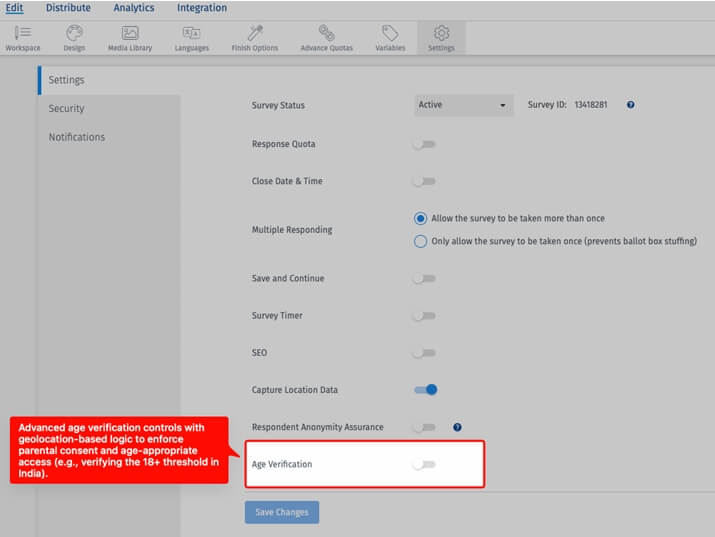
Section 9 mandates verifiable parental or guardian consent for any data processing involving individuals under 18.
It absolutely prohibits tracking, behavioural monitoring, and targeted advertising directed at children. This provision affects both agencies running youth research and brands commissioning it.
The Youth Research Time Bomb - For Agencies and Brands
Youth tracking studies, school-based surveys, Gen Z consumer panels, and EdTech platform studies. Every one of these research categories, as currently designed, is non-compliant with Section 9. The research agency bears the obligation to implement verified parental consent. The brand bears the obligation not to commission, receive, or use data that was not collected under that standard. Both face penalties of up to ₹200 crore per instance. If you are commissioning youth research today, you need to ask your agency whether they have a Section 9-compliant workflow. If they cannot answer that question, you have your answer.
The Rights Your Respondents Now Hold
DPDPA Chapter 3 transforms survey respondents from passive data subjects into legally empowered individuals with enforceable rights.
These rights run against every organisation that processes their data, including both the research agency that collected it and the brand that received it.
Right to Access: Any respondent can ask any data fiduciary what data it holds about them and who it was shared with. If a brand received respondent data from an agency, the respondent can ask the brand directly. You need records of every data receipt.
Right to Erasure: Any respondent can demand deletion from any party that holds their data. A brand holding a research dataset must be able to delete an identified individual from that dataset on request and prove it was done.
Right to Correction: A respondent who believes their data is inaccurate can demand correction from any fiduciary that holds it.
Right to Grievance Redressal: Every respondent must have readily available means to raise complaints against every fiduciary in the chain. Brands are not protected from complaints by the fact that an agency originally collected the data.
The Penalty Schedule
| Violation |
Maximum Penalty |
Risk Level |
| Failure to maintain reasonable security safeguards (Section 8(5)) |
₹250 crore |
Critical |
| Failure to notify the Board or respondents of a data breach (Section 8(6)) |
₹200 crore |
Critical |
| Breach of children's data obligations (Section 9) |
₹200 crore |
Critical |
| Breach of Significant Data Fiduciary obligations: DPO, DPIA, Audit (Section 10) |
₹150 crore |
High |
| Breach of any other DPDPA provision |
₹50 crore |
Significant |
Beyond financial penalties, Section 37 grants the central government the power to direct the blocking of a data fiduciary's platform after repeated violations. For a research agency, that means your survey tool and panel portal. For a brand, that could mean your customer data platform or marketing technology stack if it holds research data. Not a fine. An operational shutdown.
3. The Specific Threat to Research Operations and Brand Supply Chains
Why This Industry Is in the Centre of the Storm
Market research is not adjacent to the data economy. It is the data economy in its most concentrated form.
Every project exists for the explicit purpose of collecting personal opinions, behaviours, and identities from individuals and converting them into commercial intelligence. That is precisely what DPDPA was designed to regulate.
There is no commercial sector more directly impacted by this legislation than the research industry and the brands it serves.
And yet both research agencies and brands have been slower than almost any other sector to engage with DPDPA's implications. While financial services firms and technology platforms have invested heavily in compliance infrastructure, most research agencies are still operating on 2019-era privacy practices, and most brands have not begun auditing the research supply chains they depend on. The law has moved. Neither industry has. That gap is now a liability held jointly.
For Research Agencies
Consent: The Architecture Your Agency Does Not Have
The single most operationally disruptive requirement of DPDPA for research agencies is the consent standard. Section 6 demands that consent be granular, purposive, documented, and withdrawable.
What virtually every Indian research agency currently uses is the exact opposite: a single omnibus consent clause embedded in survey introductory text, covering all possible purposes, irrevocable by design, and undocumented in any auditable form.
This is a complete architectural failure. Your current consent mechanism is invalid under DPDPA.
Respondents who completed your surveys under that consent have, in law, not consented to the purposes for which you processed their data. Your entire existing panel may need to be treated as data collected without valid consent.
The Legacy Data Crisis
Every respondent record in your current database was collected under consent mechanisms that do not meet DPDPA's standard. The Act requires you to issue fresh privacy notices and give respondents a genuine, easy opportunity to re-consent or opt out. Respondents who cannot be reached, or who choose not to re-consent, must be deleted. For agencies with panels of hundreds of thousands of respondents, this is a fundamental data asset revaluation.
Panel Management: The Time Bomb in Your Database
The indefinite retention of panel member profiles is the most pervasive and legally dangerous practice in the Indian research industry.
Under DPDPA Section 8(7), this is illegal from May 2027. Section 8(8) introduces the dormancy clause: if a data principal has not engaged with the data fiduciary for a prescribed period, the retention is deemed to have expired, and deletion is mandatory. Not archived. Not moved to cold storage. Deleted.
For agencies whose panel databases are a core business asset, this provision is a direct threat to the financial value of that asset.
Every day it sits in noncompliant storage, it is a liability, not an asset. The only way to convert it back into a legitimate business resource is to rebuild it on a DPDPA-compliant foundation.
For Brands
The Research Supply Chain: Your Hidden Liability
Every brand that commissions market research in India is sitting on a supply chain liability it has not yet quantified. When your agency collects survey responses, you are the downstream recipient of personal data collected on your behalf.
Under DPDPA Section 8(1), if you instruct the agency to collect data and use it for your commercial purposes, you may be the data fiduciary for that collection, not merely a client. The distinction matters enormously.
If you are the data fiduciary for data your agency collected, then every obligation in the act runs against you. The validity of the consent. The security of the storage. The breach notification timeline. The respondent's right to erasure from your systems.
These are not your agency's problems to solve on your behalf. They are your problems, and your agency is your data processor, which means your failures are your liability regardless of what your agency did or did not do.
The Brand Supply Chain Audit That Cannot Wait
Every brand commissioning research in India must now ask its agencies the following questions before the next project brief: Does your consent mechanism meet DPDPA Section 6 standards? Can you produce a consent audit trail for any respondent? Do you have a DPDPA-compliant data processing agreement to offer us? Do you have an India data residency option? Do you have a verified deletion workflow? If any agency cannot answer yes to all five, your brand is absorbing their compliance failure as your own liability.
Data Sharing: The Disclosure Your Consent Notices Do Not Have
When an agency delivers a research dataset to a brand, personal data has been shared with a third party. Section 11 gives respondents the right to know exactly who received their data. Section 5 requires that this sharing be disclosed in the privacy notice at the point of consent.
If the agency's consent notice does not name the brand or the brand category as a recipient, every dataset delivery is a breach. Both parties are exposed.
Brands that incorporate research data into CRM systems, targeting platforms, or analytics infrastructure are creating a second, independent processing activity that may require its own consent basis. The original research consent does not automatically cover downstream brand analytics use.
The Significant Data Fiduciary Designation
Section 10 empowers the central government to designate organisations as significant data fiduciaries based on data volume and sensitivity. Large research agencies processing millions of Indian respondents are candidates.
So are brands that hold substantial consumer research databases. SDF designation requires an India-resident data protection officer, annual data protection impact assessments, and independent annual audits submitted to the board.
The designation can arrive with little warning.
Is Your Organisation at Risk of SDF Designation?
Large research agencies with multi-million respondent panels and brands with extensive consumer research databases are both realistic candidates for significant data-fiduciary designation. SDF designation is not a recognition. It is a burden requiring immediate investment in DPO appointment, annual DPIAs, and independent audit submissions to the Data Protection Board. Neither agencies nor brands that have not assessed this risk have a defensible position when the designation arrives.
4. The Compliance Gap: An Honest Assessment
Where the Industry Stands Today
Most Indian market research agencies have not begun meaningful DPDPA compliance transformation. Most brands have not audited the research supply chains they depend on.
The following tables map current practice against DPDPA requirements. They are not comfortable reading for either audience.
For Research Agencies
| Compliance Area |
What Most Agencies Do Today |
What DPDPA Requires |
| Consent |
Single omnibus consent clause; no purpose specificity; no withdrawal mechanism; no audit log |
Purpose-specific granular consent; immutable audit trail; withdrawal as easy as consent; burden of proof on agency |
| Panel Retention |
Indefinite retention; no deletion triggers; dormant panellists kept for sampling value; no re-consent protocols |
Time-bound retention; mandatory deletion on dormancy; fresh notice for legacy data |
| Rights Fulfilment |
No self-service portal; manual and inconsistent handling; no defined timelines; no deletion verification |
Readily available access, correction and erasure mechanism; prescribed timelines; verified deletion workflows |
| Breach Response |
No documented incident response plan; breaches handled informally; no Board notification protocol |
Immediate mandatory notification to the board and all affected respondents; documented protocol; forensic audit trail |
| Processor Governance |
Survey platforms used without data processing agreements; no security assessment; no sub-processor visibility |
Valid written DPA with every processor; security standards contractually defined; sub-processor list disclosed |
For Brands
| Compliance Area |
What Most Brands Do Today |
What DPDPA Requires |
| Vendor Due Diligence |
Research agencies selected on quality and price; no DPDPA compliance assessment |
Agencies must be assessed for DPDPA compliance before engagement; non-compliant agencies create brand liability |
| Research Contracts |
Focused on deliverables; no data protection obligations; no processor designation clauses |
Every research engagement requires a DPDPA-compliant Data Processing Agreement naming the brand's data protection obligations and the agency's processor duties |
| Dataset Retention |
Research datasets held indefinitely in analytics platforms, data lakes, and BI tools long after project completion |
Research datasets containing identifiable respondent data must have defined retention periods aligned to the original consent and must be deleted when those periods expire |
| Downstream Data Use |
Research data informally repurposed for CRM enrichment, audience building, targeting and campaign planning |
Downstream use of research data beyond the originally consented purpose requires either a new consent basis or a new consent collection from respondents |
| Respondent Rights |
No mechanism for respondents to exercise rights against the brand for research data received from agencies |
Brands that hold research data must maintain a mechanism for respondents to exercise access, erasure, and correction rights against them directly |
The uncomfortable truth is that no amount of policy writing, training, or good intentions closes these gaps. Both agencies and brands require infrastructure, specifically a research platform capable of supporting granular consent collection, automated deletion, rights request management, audit trail generation, and compliant data processing agreement execution. The platforms most widely used in India were not built to provide any of that.
5. Why QuestionPro Is the Only Platform That Solves This
Platform Choice Is Now a Legal Liability Decision for Agencies and Brands
Section 8(1) of the DPDPA states that a data fiduciary is responsible for the compliance of its data processors. For research agencies, the survey platform is a data processor. For a brand, the research agency is a data processor.
The compliance of every link in the chain is the legal responsibility of the link above it. Choosing a non-compliant survey platform is the agency's decision to absorb all risk. Choosing a non-compliant agency is the brand's decision to absorb the same risk.
The only way to break this chain of absorbed liability is to ensure that the foundational platform of the research supply chain is built for DPDPA compliance. That platform is QuestionPro.
QuestionPro: The Only Platform Built for DPDPA
QuestionPro is the only comprehensive market research platform that has architected DPDPA compliance as a native, India-specific capability across its entire product suite. Every feature described below exists today, is deployable immediately, and was designed specifically for the DPDPA standard that every agency and brand must meet by May 2027.
Consent Management That Holds Up in Court
QuestionPro's consent management framework is the most complete implementation of DPDPA Section 6 available in any research platform. Where other platforms offer a single consent toggle or a link to a privacy policy page, QuestionPro provides a fully featured consent architecture designed from the ground up for DPDPA's requirements.
Granular Purpose-Specific Consent
Survey designers embed separate, individually selectable consent items for each processing purpose: survey participation, panel recruitment, data sharing with the commissioning brand, follow-up research invitations, and any other project-specific purpose. Each item stands alone and is stored independently. No bundling. This means brands can demonstrate that the data they received was consented to at the exact level of specificity the Act requires. No other research platform operating in India provides this today.
Integrated Privacy Notice Builder
DPDPA Section 5 requires a privacy notice to accompany or precede every consent request. QuestionPro's built-in notice builder generates compliant notices including the data fiduciary's identity, all processing purposes, data categories collected, retention periods, third-party recipients, including the commissioning brand, and the respondent's rights exercise instructions, all served before a single checkbox appears. Every other platform treats this as an afterthought.
Immutable Consent Audit Trail
Every consent event is timestamped, tagged with collection method metadata, and stored in an immutable audit log. When the Board's investigators ask for evidence that a specific respondent consented to a specific purpose on a specific date, QuestionPro generates that record in seconds. Brands receiving data collected through QuestionPro receive this provenance record. Brands receiving data from any other platform receive no such record. This is the only platform that can answer that question definitively.
One-Click Withdrawal Triggering Automated Deletion
Section 6(4) requires consent withdrawal to be as easy as consent itself. QuestionPro's self-service withdrawal portal triggers an automated deletion workflow cascading across the respondent's survey responses, panel profile, and all connected databases. The deletion is logged, timestamped, and verifiable. On every other platform, deletion is a manual process, meaning it is unreliable, slow, and undocumented.
India Data Residency: Ready Now, Not Later
Section 16 of the DPDPA and Rule 13(4) of the DPDP Rules establish the framework for mandatory data localisation. The Central Government has not yet issued restriction notifications, but the power exists and will be exercised. Agencies processing Indian respondent data on international servers are operating on borrowed time. Brands that specify research platforms for agency use should be specifying platforms with India residency options before those notifications arrive, not after.
QuestionPro offers India-based data residency as a configurable option. Data collected from Indian respondents can be stored exclusively on servers physically located in India. No other major research platform makes this available as a deployable option today.
Respondent Rights Fulfilment at Scale
The rights under DPDPA Sections 11 to 14 are enforceable against both agencies and brands. One per cent of a 100,000-person panel exercising their right to access in a single month is 1,000 requests simultaneously directed at every organisation in the data supply chain. The only viable solution is automation. QuestionPro is the only research platform with a respondent rights management module built to DPDPA's specifications.
Automated Access Request Fulfilment
Respondents submit access requests through a self-service portal. QuestionPro automatically compiles all data held about that individual across every survey, panel profile update, and consent record, then generates a structured, readable report with SLA-monitored timelines. Agencies using QuestionPro can produce this report for any respondent. Brands whose agencies use QuestionPro can evidence the data provenance they received. No other platform offers this.
Verified Deletion Workflow
Erasure requests trigger QuestionPro's automated deletion protocol. Identified data is removed from active surveys, panel profiles, and analytics databases. The deletion is logged with a verification record that proves compliance with the standard the board's investigators expect.
If your agency's current platform cannot produce a deletion verification record, your brand cannot prove to the board that a respondent's erasure request was fulfilled.
Grievance Redressal Integration
QuestionPro's integrated grievance module provides response time tracking, SLA monitoring, and escalation workflows.
Section 13 requires grievance mechanisms to be readily available. Other platforms have no grievance infrastructure. For brands, an agency without a functioning grievance mechanism is a direct supply chain liability.
Panel Management Built for DPDPA's Lifecycle Requirements
QuestionPro's InsightHub panel management platform is the only panel solution in the Indian market with DPDPA's storage limitation and dormancy provisions built into its data lifecycle architecture.
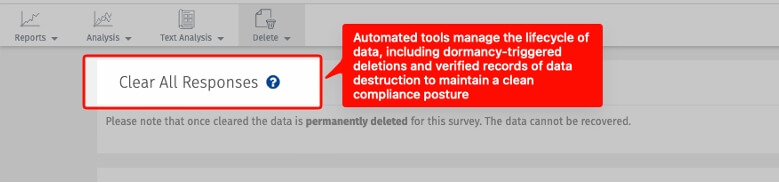
Automated Retention Tracking: Every panellist's profile is tagged with consent dates and configured retention periods. When periods expire, deletion workflows trigger automatically. No panellist is retained beyond their consent period.
Dormancy-Triggered Deletion: Panellists who have not engaged for a configurable dormancy period are flagged for re-consent outreach or automatic removal, directly operationalising Section 8(8) of DPDPA. No other panel platform has this capability.
Parental Consent Workflows for Youth Research: For panels including respondents under 18, QuestionPro provides verifiable parental consent collection, age verification, and guardian authentication workflows. This is the only platform that makes Section 9-compliant youth research operationally possible. Without it, both the agency running youth research and the brand commissioning it are non-compliant.
Segmented Consent Scoping: Panellists can consent to specific research categories and opt out of others, enabling purpose-limited panel management that no other platform supports.
The Data Processing Agreement No Other Platform Offers
Section 8(2) requires every data processor to be engaged under a valid contract with data protection obligations. QuestionPro is the only major research platform that provides a DPDPA-compliant data processing agreement as a standard contract document for Indian clients.
For agencies, this DPA resolves the most immediate Section 8(2) exposure on day one of migration. For brands, an agency on QuestionPro is an agency that can show them a DPDPA DPA. An agency on any other platform cannot.
The research platforms most widely used in India today offer only GDPR-based DPAs. GDPR compliance is not DPDPA compliance. An agency operating under a GDPR DPA carries the entire DPDPA liability alone. A brand that believes its agency's GDPR DPA provides DPDPA protection is dangerously mistaken.
Breach Response: The 6-Hour Problem
Section 8(6) requires immediate notification to the Data Protection Board and all affected respondents in the event of a personal data breach. The DPDP Rules are expected to align with CERT-In's existing 6-hour reporting requirement.
For a research agency or a brand that discovers a breach on a Friday evening, that is not a Monday morning problem.
QuestionPro provides real-time anomaly detection, incident response playbooks, and templated breach notifications formatted for both board submission and respondent communication.
Every other platform leaves breach response entirely to the agency, meaning an informal, uncoordinated, undocumented response that will not satisfy board investigators.
The Capability Comparison
| DPDPA Requirement |
QuestionPro |
Platform A |
Platform B |
Risk Without QuestionPro |
| Granular purpose-specific consent |
✔ Native |
Partial |
None |
All data was collected without valid consent. The agency and brand were both exposed. |
| Immutable consent audit trail |
✔ Full log |
None |
None |
Cannot prove consent to the board. Maximum penalty exposure for both parties. |
| One-click withdrawal and auto-deletion |
✔ Automated |
Manual |
Manual |
Withdrawal requests are fulfilled slowly and inconsistently. Direct board complaint risk. |
| India data residency option |
✔ Available |
None |
None |
Forced infrastructure migration emergency when localisation notifications are issued. |
| Parental consent for under-18 research |
✔ Built-in |
None |
None |
All youth research is non-compliant. ₹200 crore penalty exposure for the agency and commissioning brand. |
| Automated deletion verification record |
✔ Verified log |
Manual |
Manual |
Cannot prove erasure completed. Every unfulfilled request is an open liability for the entire supply chain. |
| DPDPA-compliant Data Processing Agreement |
✔ Standard DPA |
GDPR only |
GDPR only |
The agency carries full DPDPA processor liability. Brand has no contractual DPDPA protection from its agency. |
| Dormancy-triggered panel deletion |
✔ Automated |
None |
None |
The entire panel database becomes an illegal retention liability from May 2027 onwards. |
6. What Happens to Organisations That Get This Wrong
The board will act, and it will act early.
The Data Protection Board of India is not a passive registry. It is a body with quasi-judicial powers equivalent to a civil court under the Code of Civil Procedure, 1908. It can receive complaints from respondents, act on government references, and launch investigations on its own initiative. It can summon witnesses, compel document production, inspect premises, and issue interim orders during active investigations; and impose penalties reaching ₹250 crores.
Regulators worldwide establish credibility through early, high-profile enforcement actions. The first enforcement cases under DPDPA will be chosen for their deterrent value. They will involve organisations large enough to matter, violations clear enough to be unchallengeable, and penalties severe enough to generate headlines. Research agencies handling large panels under invalid consent mechanisms, and the brands that have been commissioning research through them, are precisely the kind of enforcement candidates that establish regulatory intent.
The First Mover Risk - For Agencies and Brands
The agencies that wait for enforcement to begin are volunteering to be the board's early examples. The brands that continue commissioning non-compliant research are sitting in the same dock. The penalties from those first cases will be public. They will be large. They will end careers and reshape businesses. Organisations that demonstrate good-faith compliance effort before enforcement begins have, at minimum, the mitigation conduct that Section 33(2)(e) instructs the Board to consider in reducing penalties. Organisations that cannot demonstrate any such effort have no mitigating argument whatsoever.
The Client Supply Chain Pressure
Research agency leaders who believe DPDPA is an internal compliance matter are missing the commercial dimension. Global brands, financial services firms, healthcare companies, and technology platforms operating in India all face their own DPDPA obligations. They are already, or will shortly be, auditing their supply chains for compliance risk. A research agency that is a demonstrable liability through inadequate consent mechanisms, insecure data handling, or non-compliant panel practices will be removed from approved vendor lists.
Conversely, a research agency that can produce a QuestionPro DPA, demonstrate a DPDPA-compliant consent audit trail, and evidence a functioning respondent rights portal becomes a compliance asset in a client's supply chain. That is a commercially decisive differentiation available exclusively through QuestionPro.
The Brand's Procurement Exposure
Brand procurement and marketing teams that have not yet incorporated DPDPA compliance into their research agency evaluation criteria are creating measurable legal exposure for their organisations.
Under DPDPA Section 8(1), a brand that instructs an agency to collect personal data on its behalf, and that agency uses a non-compliant platform, cannot claim the agency's failure as a defence. The brand bears co-responsibility.
The brands that revise their agency briefing processes now, that require a QuestionPro DPA as a condition of engagement, and that specify DPDPA-compliant consent architecture in project briefs are the brands that will navigate this regulatory environment without incident.
The brands that continue issuing research briefs without DPDPA compliance requirements are building liability with every project.
The Respondent Trust Collapse
There is a further dimension that operates independently of regulatory enforcement. Indian consumers are becoming increasingly aware of their data rights.
When respondents discover that the agency which surveyed them and the brand on whose behalf the survey was run have held their data indefinitely, shared it without disclosure, and have no deletion mechanism, the reputational damage is not contained to a board complaint. It becomes a social media incident, a media story, and a brand crisis simultaneously for the agency and for every brand whose research was conducted through that agency.
The research industry's foundational asset is the trust of respondents. DPDPA compliance, operationalised through QuestionPro, is an investment in the trust infrastructure that the industry's commercial model depends upon for agencies and for the brands that rely on research quality to make their commercial decisions.
7. The Compliance Roadmap: What to Do Right Now
The Timeline Is Tighter Than It Looks
Core DPDPA obligations come into full force on May 13, 2027. That is approximately fifteen months from the date of this publication. Re-consenting a large panel, redesigning survey consent architecture, executing DPAs with all vendors, building a respondent rights portal, training staff, and documenting breach protocols are collectively a twelve-to-eighteen-month programme of work. For brands, auditing every research agency in their approved list and restructuring all research contracting for DPDPA compliance is an equally substantial undertaking. There is no comfortable starting runway remaining for either audience.
| Phase |
Timeline |
Agency Actions |
Brand Actions |
| Immediate |
Now |
Appoint a DPDPA compliance lead. Commission data mapping audit. Inventory all platforms and vendors. Assess SDF designation risk. |
Identify all research agencies in the approved vendor list. Initiate the DPDPA compliance questionnaire to all active research partners. Assess brand-side SDF designation risk. |
| Foundation |
Q2 2026 |
Migrate to QuestionPro. Execute the DPDPA DPA on day one. Redesign all consent templates. Draft DPDPA-compliant privacy notices for all active programmes. |
Require a DPDPA-compliant DPA from all research agencies. Add DPDPA consent specification to all research briefs. Specify QuestionPro as the required or preferred research platform. |
| Operationalise |
Q3 2026 |
Launch the respondent rights portal. Implement a breach response plan. Begin the re-consent programme for legacy panellists. Activate dormancy tracking. |
Audit retention of research datasets held internally. Establish a deletion schedule for legacy research data. Implement a respondent rights request mechanism for brand-held data. |
| Validate |
Q4 2026 |
Internal compliance audit. Train all client-facing and research design staff. Embed the DPDPA review into the project intake. Prepare a DPIA if SDF designation is anticipated. |
Validate that all research agency contracts include DPDPA-compliant DPAs. Train procurement and marketing teams on DPDPA research requirements. Audit downstream data use practices. |
| Enforce |
May 2027+ |
Full DPDPA compliance. Annual DPIA for SDFs. Continuous consent monitoring. Regulatory updates via QuestionPro India Privacy Team. |
Full DPDPA compliance on research commissioning. Annual review of all research agency contracts. Monitor board enforcement actions for supply chain implications. |
What QuestionPro Migration Delivers Immediately
For agencies, migrating to QuestionPro delivers five immediate, tangible compliance outcomes that no other migration path provides. For brands, specifying QuestionPro as the required platform for their research engagements delivers the same five outcomes across their entire research supply chain simultaneously.
1. A DPDPA-compliant Data Processing Agreement is executed on day one, resolving the most immediate Section 8(2) exposure for both the agency and the brand.
2. The immutable consent audit trail begins generating from the first survey deployed, creating a provenance record that both the agency and the brand can rely on.
3. The respondent rights portal is live from deployment, satisfying Section 13 immediately for the agency and creating a data provenance record the brand can evidence.
4. Dormancy tracking activates across the panel database, converting an indefinite illegal retention liability into a managed, compliant data lifecycle.
5. India data residency can be activated immediately, ensuring both the agency and the brand are prepared for localisation notifications rather than scrambling when they arrive.
QuestionPro's India Privacy Commitment
QuestionPro maintains a dedicated India Privacy Team monitoring DPDP Rules notifications, board circulars, and regulatory guidance on an ongoing basis. Platform compliance is updated continuously as regulatory clarity develops. Agencies on QuestionPro do not need separate regulatory monitoring infrastructure. Brands that specify QuestionPro inherit that monitoring capability across their research supply chain. Every other platform leaves that burden entirely to the organisation.
8. The Competitive Advantage of Acting Now
Compliance as a Differentiator - For Agencies
The agencies that achieve verifiable DPDPA compliance earliest will find that compliance is not just a legal obligation but a commercial differentiator. As brand procurement teams incorporate DPDPA compliance requirements into agency briefings and RFPs, which will happen in financial services, healthcare, and technology sectors before mid-2026, the agencies that can evidence compliance will win mandates that non-compliant competitors cannot access.
The ability to tell a client, 'Our survey platform has India data residency; our panellists have provided DPDPA-valid consent we can prove; our youth research runs a verified parental consent workflow; and our vendor contracts include a DPDPA DPA,' is a proposition that closes business. Only QuestionPro gives an agency the infrastructure to make that statement truthfully.
Compliance as a Procurement Standard - For Brands
The brands that move first to require DPDPA-compliant research platforms from their agencies will not merely avoid regulatory exposure. They will gain a research supply chain that produces data with verified consent provenance, that can respond to respondent rights requests in a legally defensible timeframe, and that reduces the brand's independent liability exposure with every project.
Brands that specify QuestionPro as their required or preferred research platform are not adding a constraint to their research operations. They are building a compliance infrastructure that protects them across every research engagement, with every agency, in every category. That infrastructure is available now. The brands that wait for enforcement before requiring it will find that their agencies are scrambling to catch up at the moment the brand's own supply chain is being scrutinised by the board.
Respondent Quality as a Business Outcome
There is a counterintuitive benefit to rigorous consent practices that both agencies and brands should understand. When respondents know exactly what they are consenting to, give consent deliberately and with full information, and have confidence that their data will be deleted on request, their engagement quality changes. Response depth increases. Completion rates improve. The quality of open-ended responses rises. Respondents who trust the process produce better research. QuestionPro's transparent consent architecture is simultaneously a compliance requirement and a research quality investment.
The Window Is Closing
The advantage available to early movers narrows every month. The agencies that migrate to QuestionPro in Q2 2026 will enter the May 2027 enforcement date with twelve months of compliance maturity, a fully re-consented panel, documented audit trails, a practised breach response protocol, and trained staff. The brands that specify QuestionPro in Q2 2026 will enter enforcement with a research supply chain that is already auditable and defensible.
The agencies that delay until late 2026 will enter enforcement under deadline pressure, with an untested system and no demonstrated compliance track record to offer the board as mitigation. The brands that delay will find their research supply chains are their weakest DPDPA link at the exact moment regulators are looking for early enforcement examples.
The Decision in Front of You
The Digital Personal Data Protection Act, 2023, has changed the rules of Indian market research permanently and completely. The question is not whether your agency or your brand will operate under DPDPA. You will. The question is whether you will operate under it as a prepared, compliant, credible organisation or as a reactive one managing a compliance crisis.
Every survey your agency runs today uses a consent mechanism that will not pass DPDPA scrutiny. Every panellist in your database was recruited without the consent standard the Act requires. Every research dataset your brand holds was delivered under an agency contract that does not meet the processor obligations DPDPA imposes. Every time identifiable respondent data is shared without documented disclosure in the original consent notice, a right held under constitutional law is being breached.
The infrastructure to fix all of this exists. It is QuestionPro. It is the only research platform with granular, documented, withdrawable consent management. The only platform with Indian data residency. The only platform with automated deletion verification. The only platform with parental consent workflows for youth research. The only platform offering a DPDPA-compliant Data Processing Agreement as a standard contract. The only platform with dormancy-triggered panel deletion built into the data lifecycle.
The Cost of Inaction
The first ₹250 crore penalty issued by the Data Protection Board to a market research agency or a brand will make headlines across every business publication in India. It will trigger immediate supply chain audits across the entire industry. It will reshape how research is commissioned, conducted, and delivered overnight. The organisations that are not already on QuestionPro at that moment will not have six months to prepare a response. They will have six days.
The compliance window is open. It will not stay open. Research leaders and brand marketing leaders who treat this document as a reason to begin a procurement process are already behind the agencies and brands who treated the November 2025 DPDP Rules notification as their starting gun.
The next move is yours.
To speak with QuestionPro's India Privacy and Compliance Team
www.questionpro.com/in | [email protected]
Appendix: DPDPA Reference for Agencies and Brands
Critical Sections and Their Implications
| Section |
Subject |
Agency Implication |
Brand Implication |
| S.3 |
Scope |
Applies to all digital personal data processing by agencies in India or serving Indian respondents. |
Applies to all brands processing data about Indian consumers, including via commissioned research. |
| S.4 |
Grounds |
Consent is the only viable processing ground for commercial research. |
Consent obtained by the agency is not automatically valid for the brand's downstream data use. |
| S.5 |
Notice |
A compliant privacy notice must name all processing purposes and all recipients, including the commissioning brand. |
If the agency's consent notice does not name the brand, every dataset delivery is a breach. |
| S.6 |
Consent Standard |
Freely given, specific, informed, unconditional, unambiguous, withdrawable. Burden of proof on the agency. |
The brand cannot rely on consent obtained by the agency unless it meets the full Section 6 standard. |
| S.8 |
Obligations |
Purpose limitation, minimisation, security, breach notification, grievance mechanism, processor contracts. |
All the same obligations apply to the brand for every research dataset it receives and processes. |
| S.9 |
Children |
Verifiable parental consent is required. No tracking or profiling of under-18s. Up to ₹200 crores. |
Brands commissioning youth research are co-liable for non-compliant data collection by their agency. |
| S.10 |
SDF |
India-resident DPO, annual DPIA, independent audit. Designation risk for large panel operators. |
Brands with large consumer research databases face the same designation risk as research agencies. |
| S.11-14 |
Rights |
Access, correction, erasure, grievance, nomination. Legally enforceable against the agency. |
All four rights are enforceable directly against the brand for any research data it holds. |
| S.16 |
Cross-Border |
Map all international data flows now. The India residency option is required before restriction notifications. |
Brands that specify international research platforms face forced localisation migration when restrictions are issued. |
| S.33 |
Penalties |
Up to ₹250 crores for security failures. Up to ₹200 crores for breach non-notification and children's violations. |
The same penalty schedule applies to brands as data fiduciaries for research data they hold or direct. |
| S.37 |
Blocking |
Repeated violations can result in platform blocking. An operational shutdown, not just a fine. |
A brand whose research supply chain generates repeated violations could face blocking of its own data platforms. |
Key Dates
August 11, 2023: DPDPA receives presidential assent. The Act is the law of the land.
November 13, 2025: DPDP Rules 2025 notified. Data Protection Board provisions in force. The enforcement apparatus is live.
November 13, 2026: Consent manager provisions operative. Centralised consent management becomes mandatory infrastructure.
May 13, 2027: Core DPDPA obligations fully enforceable. Sections 3 through 17 come into full force. There are no extensions.
Glossary
Data Fiduciary: The organisation that determines why and how personal data is processed. This is your agency. This is also your brand.
Data Principal: The individual whose data is being processed. This is your respondent.
Data Processor: A third party processing data on the fiduciary's behalf under contract. This is your survey platform. Your agency can also be your brand's data processor.
Significant Data Fiduciary (SDF): A government-designated fiduciary facing enhanced obligations, including DPO, DPIA, and independent audit.
DPIA: Data Protection Impact Assessment. Mandatory annually for significant data fiduciaries.
DPO: Data Protection Officer. Mandatory for Significant Data Fiduciaries. Must be a resident in India.
DPA: Data Processing Agreement. Mandatory contract between every data fiduciary and every data processor.
Personal Data Breach: Any unauthorised access, disclosure, loss or destruction of personal data. Mandatory notification to the board and affected respondents.
This document is based on the Digital Personal Data Protection Act, 2023 (No. 22 of 2023) and the DPDP Rules 2025. It is intended for informational purposes and does not constitute legal advice. Research agencies and brands should seek qualified DPDPA legal counsel for their specific circumstances.

 Survey Software
Easy to use and accessible for everyone. Design, send and analyze online surveys.
Survey Software
Easy to use and accessible for everyone. Design, send and analyze online surveys.
 Research Suite
A suite of enterprise-grade research tools for market research professionals.
Research Suite
A suite of enterprise-grade research tools for market research professionals.
 Customer Experience
Experiences change the world. Deliver the best with our CX management software.
Customer Experience
Experiences change the world. Deliver the best with our CX management software.
 Employee Experience
Create the best employee experience and act on real-time data from end to end.
Employee Experience
Create the best employee experience and act on real-time data from end to end.