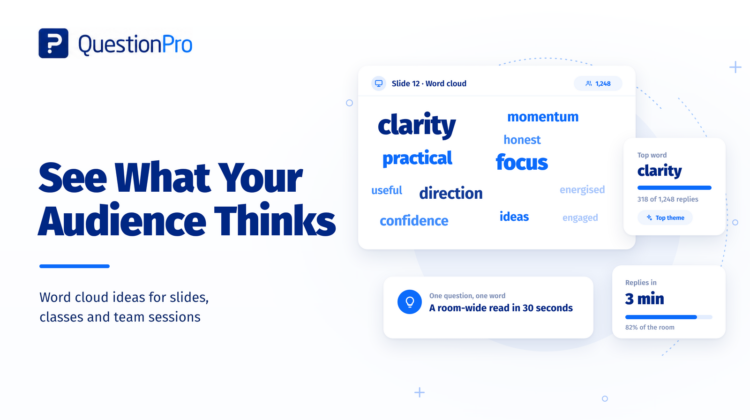
Live quizzes and live polls can both increase participation, but they solve different problems. Choosing between them starts with the outcome you want: do you need to check knowledge, or do you need to understand opinions, perceptions, or preferences?
When live polls work best
Live polls are useful when there is no single correct answer. They can capture opinions, confidence, preferences, sentiment, predictions, and quick decisions. They work well in presentations, town halls, classrooms, webinars, and meetings.
When live quizzes work best
Quizzes are better suited to knowledge checks where responses can be evaluated against an answer or learning objective. Trainers and educators can use them to reinforce concepts, identify misunderstandings, and make learning more active.
Use both in a learning session
The two formats can complement one another. Start with a poll to understand participants’ prior confidence, introduce the concept, use a quiz to check comprehension, and finish with a poll asking how participants plan to apply what they learned.
Consider the audience experience
Both formats should be easy to join and quick to complete. Clear wording, limited question complexity, and mobile-friendly participation reduce friction and keep attention on the session.
Match the data to the decision
Before choosing a format, decide what you will do with the response. If the result will change teaching, discussion, or a decision in the room, make the question directly useful to that next step.
Build a repeatable engagement strategy
Rather than treating quizzes and polls as isolated activities, define a small library of question patterns for common session goals. This makes interactive sessions easier to plan and more consistent.
Make feedback part of the decision
Whether the goal is improving a learning experience, understanding stakeholder sentiment, or making a live session more participatory, feedback is most useful when it leads to a clear next step. Define the decision first, ask focused questions, review the response patterns, and communicate what happens next. That turns feedback from a collection exercise into an ongoing source of insight.
Creating a stronger feedback practice
Successful feedback programs are not built around collecting information alone. They are built around creating a repeatable process where organizations listen, understand patterns, and make informed improvements. Whether the audience is students, employees, community members, educators, customers, or event participants, the value of feedback comes from connecting responses to meaningful action.
Use technology to simplify the feedback process
Modern feedback platforms help organizations manage the entire journey from question design to reporting. Teams can create targeted surveys, collect responses across different channels, analyze trends, and share insights with the people responsible for making decisions. This reduces manual work and helps teams focus more time on interpretation rather than administration.
Balance measurement with human understanding
Numbers provide direction, but context explains the reason behind those numbers. Combining structured questions with comments and qualitative input creates a more complete picture. Organizations can identify what is happening, explore why it is happening, and determine what changes are most likely to create improvement.
Build continuous improvement into everyday work
The most effective organizations treat feedback as an ongoing conversation rather than a single research activity. Regular listening moments help identify emerging needs, measure progress, and ensure that decisions continue to reflect the experiences of the people they serve.
Turning insights into practical outcomes
When feedback is connected with clear goals, the information collected becomes more valuable. Teams can identify strengths, address challenges, and create experiences that better meet the needs of their audiences. A structured approach also makes it easier to communicate progress and demonstrate the impact of improvements over time.
Make feedback actionable
Collecting responses is only the beginning. The strongest programs define what success looks like before asking questions. Clear objectives help teams select the right audience, create focused questions, and interpret findings in a way that supports real decisions.
Improve participation and response quality
People are more willing to participate when feedback feels relevant, accessible, and respectful of their time. Clear communication, simple survey experiences, and thoughtful question design improve the quality of responses and create better insights.
Feedback creates more value when insights reach the teams that can act on them. Reporting should highlight important patterns, provide context, and help decision makers understand both current experiences and opportunities for improvement.
Make feedback actionable
Collecting responses is only the beginning. The strongest programs define what success looks like before asking questions. Clear objectives help teams select the right audience, create focused questions, and interpret findings in a way that supports real decisions.
Improve participation and response quality
People are more willing to participate when feedback feels relevant, accessible, and respectful of their time. Clear communication, simple survey experiences, and thoughtful question design improve the quality of responses and create better insights.
Feedback creates more value when insights reach the teams that can act on them. Reporting should highlight important patterns, provide context, and help decision makers understand both current experiences and opportunities for improvement.
Make feedback actionable
Collecting responses is only the beginning. The strongest programs define what success looks like before asking questions. Clear objectives help teams select the right audience, create focused questions, and interpret findings in a way that supports real decisions.
Improve participation and response quality
People are more willing to participate when feedback feels relevant, accessible, and respectful of their time. Clear communication, simple survey experiences, and thoughtful question design improve the quality of responses and create better insights.
Feedback creates more value when insights reach the teams that can act on them. Reporting should highlight important patterns, provide context, and help decision makers understand both current experiences and opportunities for improvement.
Choose the right format for every audience interaction.