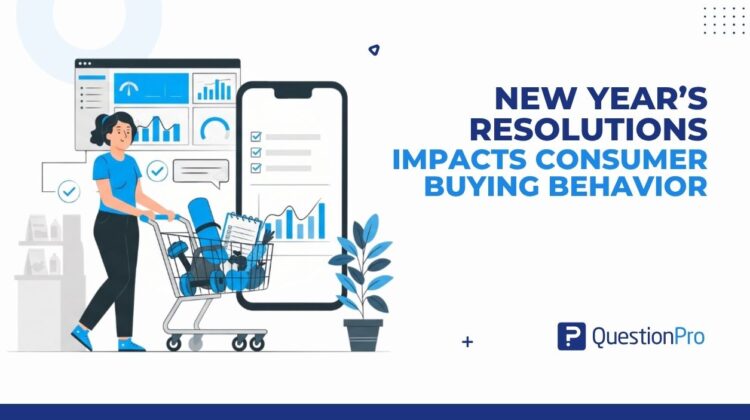
New Year’s resolutions and consumer buying behavior move together every January, and the shift is bigger than most marketing teams assume. About 31% of Americans plan to make a resolution this year, according to a YouGov survey, with exercise, mental health, and saving money topping the list.
That single date on the calendar resets how people see themselves, and it resets what they are willing to buy. Gyms fill up, budgeting apps see a surge in downloads, and grocery carts change almost overnight. For brands that sell anything tied to self-improvement, January is rarely a slow month, and the businesses that plan for it tend to outperform the ones that treat it as a normal week on the calendar.
In this blog, we will break down what actually drives this spending shift, which industries feel it first, how long the effect lasts, and how to track it with real consumer data instead of guesswork.
What is the fresh start effect, and why does it drive January spending?
The fresh start effect is the tendency for people to feel more motivated to pursue new goals right after a meaningful date, such as January 1, a birthday, or the start of a new month.
Wharton behavioral scientist Katy Milkman studied this pattern and found that gym visits, financial planning searches, and diet-related purchases all spike right after calendar milestones, not just at random points in the year.
The effect works because a new year creates psychological distance from past failures. People feel like a new version of themselves, one that has not yet broken a promise. That mental reset makes them more open to new products, new subscriptions, and new spending categories they would have ignored in November.
This direct connection between New Year’s resolutions and consumer buying behavior explains why seasonal demand shifts so rapidly at the turn of the year.
This is different from ordinary motivation, which tends to build slowly over weeks. The fresh start effect arrives all at once, tied to a specific date, which is exactly why it shows up so clearly in sales and search data every January.
How is resolution-driven buying different from holiday and impulse spending?
Resolution-driven buying is intentional and goal-linked. Impulse spending, by contrast, is triggered by an unplanned emotional urge with no long-term goal attached.
Holiday shopping is different again. Gift-giving in November and December is often obligation-driven and social, built around other people’s expectations rather than a personal change someone wants to make for themselves.
Here is what separates resolution buying from these other patterns:
- It is tied to a specific personal goal, not an occasion or a gift list.
- It often involves a new habit or category, like a first meal kit or a first fitness tracker.
- It shows up in buying behavior research as more deliberate and researched than a typical impulse purchase.
- It fades faster than seasonal demand because it depends on willpower staying high.
Which industries benefit most from New Year’s resolutions?
Four categories consistently see a demand spike once resolution season starts. The table below shows what each one sells and the resolution behind the surge.
| Industry | Resolution driving demand | What the data shows |
|---|---|---|
| Fitness and gyms | Exercise more (25% of Americans) | US consumers are expected to spend an average of $61 a month chasing an active fitness goal in 2026 |
| Health and nutrition apps | Eat healthier (22%) | Diet and nutrition tracking apps see download spikes every January tied to this goal |
| Personal finance apps | Save more money (21%) | Budgeting and saving stays a top-three resolution year over year, driving app installs |
| Travel and self-care bookings | Improve mental health and happiness (23%) | Personal growth, experiences, and self-care categories are seeing the largest budget increases heading into resolution season |
These categories overlap with broader consumer behavior patterns that researchers track year-round, not just in January. The difference is timing. Resolution spending compresses months of normal demand into a few concentrated weeks.
Retailers adjacent to these four categories often see a smaller, secondary lift too. Grocery stores stock more produce and lean proteins, home organization brands see a bump as people declutter, and job search platforms report more activity as career goals join the list.
How long does the resolution sales spike actually last?
Most resolution-driven demand fades faster than brands expect.
The Health & Fitness Association’s 2025 benchmarking data, cited by gym industry researchers, shows that half of new gym members quit within six months, and only 66.4% of all members renew annually. Roughly one in three gym relationships that start with high motivation end within the year.
A 2026 survey by Accelerant Research found a similar pattern outside fitness. Nearly 80% of resolution-makers said they felt confident they would stick with their goals, yet fewer than half historically follow through by year’s end. That gap, the difference between what people plan to do and what they actually do, is often called the intention-action gap.
This gap is the single biggest risk for any brand building a campaign around resolutions. The spike is real, but it is a spike, not a new baseline.
What mistakes do brands make when marketing to resolution shoppers?
Many brands treat January like a one-time sales event instead of the start of a longer relationship. That mindset creates a few avoidable mistakes.
- Chasing new customers only, while ignoring loyal buyers already spending on related products, who research on consumer behavior models shows are usually cheaper to retain than to replace.
- Front-loading the entire marketing budget into the first two weeks of January, then going quiet once the fresh start effect fades in February.
- Promising fast results for goals that take months, which erodes trust the moment week three arrives.
- Treating every resolution shopper the same, when age, income, and purchase history all change what keeps someone engaged.
- Measuring success only by January sign-ups, instead of tracking how many of those customers are still active by March or April.
How are brands turning resolution momentum into loyal customers?
A few brands consistently convert January’s fresh start effect into customers who stay past March.
Connected fitness brands like Peloton lean into progress tracking and leaderboards, giving members a reason to keep showing up once the initial motivation dips. Budgeting apps such as YNAB ask users to link a real financial goal in their first session, turning a vague resolution into a specific, trackable target from day one.
Low-cost gym chains, including Planet Fitness, use a well-known $10-a-month price point specifically in January to lower the barrier for resolution shoppers who might otherwise hesitate.
The pattern across all three is the same. They give people a way to measure progress, not just a product to buy.
None of these brands rely on the fresh start effect alone to hold a customer. They treat January as the entry point into a habit loop, then use data from that first month to decide who is likely to stay and who needs a different kind of nudge.
How can you measure resolution-driven consumer behavior for your brand?
Surveys are the fastest way to find out which resolutions your own customers are making, and how that maps to what they buy from you, providing clear data on how New Year’s resolutions and consumer buying behavior intersect for your brand.
A short pulse survey sent to your customer list in December or early January can ask directly about upcoming goals, planned purchases, and price sensitivity, instead of relying on industry averages that may not match your audience.
QuestionPro’s market research software supports this kind of seasonal tracking, letting teams build a resolution-focused survey and, if needed, reach an outside panel of respondents to compare results against their own customer base year over year.
The goal is a repeatable measurement, not a one-time report. Asking the same questions every January turns resolution season into a predictable part of the annual calendar instead of a guess.
It also helps to follow up with the same customers in March. A short check-in survey shows whether the goal that drove the original purchase is still active, which tells you whether to keep nurturing that relationship or shift budget toward acquiring a fresh audience.
The real opportunity is in February, not January
The fresh start effect gets most of the attention, but brands that win long-term pay closer attention to what happens after it fades. Customers who stay past the first six weeks are telling you something valuable. The goal mattered to them beyond the calendar date that inspired it.
Tracking these patterns closely offers key insights into how New Year’s resolutions and consumer buying behavior align beyond the initial January spike. Start listening early.
A simple online survey tool run before, during, and after resolution season can show exactly where the drop-off happens and give your team a real chance to close that gap before next January arrives.
Frequently Asked Questions (FAQs)
Yes. A Sampler survey found that 99% of consumers said they were open to trying a new product if it supported a resolution goal, a far higher trial rate than brands typically see in a regular month.
Most brands launch on January 1, but research on the fresh start effect shows the motivation window opens around any meaningful date, including the first Monday of January. Pre-launch campaigns in early December often outperform January-only ones.
Rarely on their own. Numerator’s research found that resolution buyers who stuck with healthier eating goals were already spending more on healthy food the year before, meaning brands are often reactivating existing customers rather than creating new ones.
A short survey sent to your existing email list costs little and beats guessing from national averages. Ask two or three direct questions about goals and planned purchases in late December, then compare answers against actual sales in January and February.
Yes, though less visibly. Budget resets, new fiscal years, and leadership goal-setting create a similar effect in B2B purchasing, particularly for software and training tools tied to a company’s stated annual goals.