Online research community success depends on more than recruiting members. It depends on keeping people engaged, showing them that their feedback matters, and making participation easy over time.
For OnePoll, a market research firm known for quick and reliable insights, QuestionPro’s Online Research Communities helped support a large and active research panel. Their story shows how clear communication, thoughtful incentives, and a smooth member experience can help a community stay active for years.
Building a Community That Thrives
In 2020, OnePoll faced a major challenge: moving an existing panel to a new platform without losing member engagement.
With QuestionPro, the team was able to re-invite members smoothly and continue building the community. Four years later, OnePoll had grown the panel to around 100,000 members. In 2024 alone, the community completed 2.2 million surveys, averaging about 184,000 completed surveys per month.
So, what helped make that possible?
Steven McGee, Panel Manager at OnePoll, joined our latest webinar and shared practical lessons from managing a high-performing online research community. His experience points to three core strategies that help keep communities active, trusted, and useful:
- Consistent communication: Keep members informed about how their feedback is used and why their participation matters.
- Incentives that matter: Use a mix of intrinsic rewards, such as recognition and influence, and extrinsic rewards, such as money or gift cards.
- A simple user experience: Make surveys and community activities easy to access, complete, and understand so members are less likely to drop off.
McGee’s approach shows that online research community success is not only about sending more surveys. It is about transparency, appreciation, and making participation feel worthwhile.
Why Online Research Communities Work
Online research communities work because they give brands ongoing access to engaged participants instead of relying only on one-time surveys. Members can share feedback across multiple studies, join discussions, respond to polls, and help researchers understand how opinions change over time.
This makes the research process more consistent. It also helps teams combine quick quantitative feedback with deeper qualitative context from the same community.
For brands, the biggest value is continuity. A well-managed community can help teams test ideas, explore customer needs, validate decisions, and build stronger relationships with people who want to be heard.
The 10 Key Steps to Building a Successful Online Research Community
Drawing from industry best practices, Ray Poynter (a leading expert in new market research techniques) wrote 10 key steps that will help design and use an online community optimally.
- Identify a community of interest: Build around shared goals, interests, or experiences so members feel connected to the purpose of the community.
- Choose a short-term or long-term strategy: Define whether the community is built for a specific project, ongoing feedback, or long-term customer insight.
- Blend qualitative and quantitative methods: Use surveys for large-scale feedback and discussions for deeper context.
- Recruit actively and strategically: Invite members who match your research goals and can provide useful, relevant feedback.
- Encourage meaningful conversations: Use thoughtful prompts and follow-up questions to move beyond surface-level responses.
- Reward participation thoughtfully: Offer incentives such as cash rewards, gift cards, exclusive content, or recognition to keep members motivated.
- Balance work and fun: Add polls, quizzes, challenges, or lighter community activities to keep participation from feeling repetitive.
- Use behavioral nudges: Reminders, progress bars, and clear next steps can help increase participation and reduce drop-offs.
- Support the community manager: Give the community manager the tools, time, and authority to respond to members and keep engagement healthy.
- Test new research ideas: Use formats such as video diaries, live chats, themed discussions, or quick polls to keep the community fresh and useful.
These steps help brands improve online research community success by creating a reliable feedback environment where members stay engaged and researchers can gather better insights over time.
Build a Community That Lasts
As Steven McGee shared, “The success of any panel lies in keeping your members engaged and making them feel that their voices truly matter.”
OnePoll’s journey shows that a well-managed online research community can become a long-term research asset. With the right platform, clear communication, thoughtful incentives, and a strong member experience, brands can collect better feedback while building stronger relationships with their audience.
Whether you are starting a new community or improving an existing one, the key is to make participation clear, easy, and meaningful.
If you want to learn more about building effective online research communities, we have a helpful resource for you.
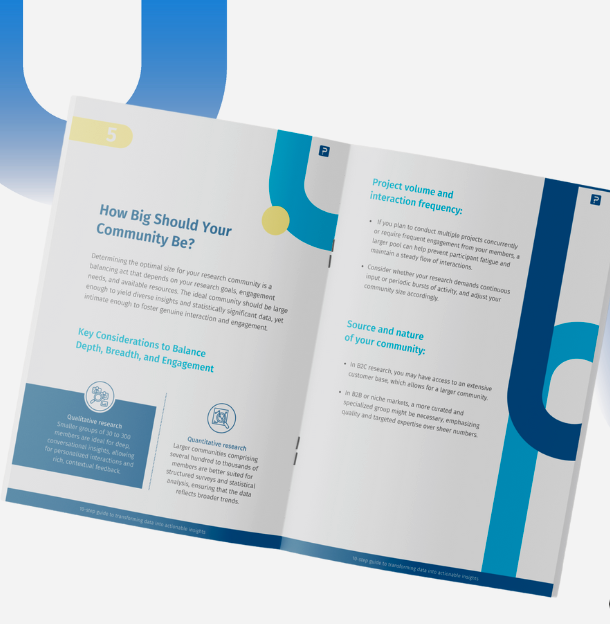
Download Our FREE Guide to Online Research Communities!
Learn more about the 10 proven steps to build a thriving online research community.