Culture & Consumer Behavior • 7 min read
← Back to studies
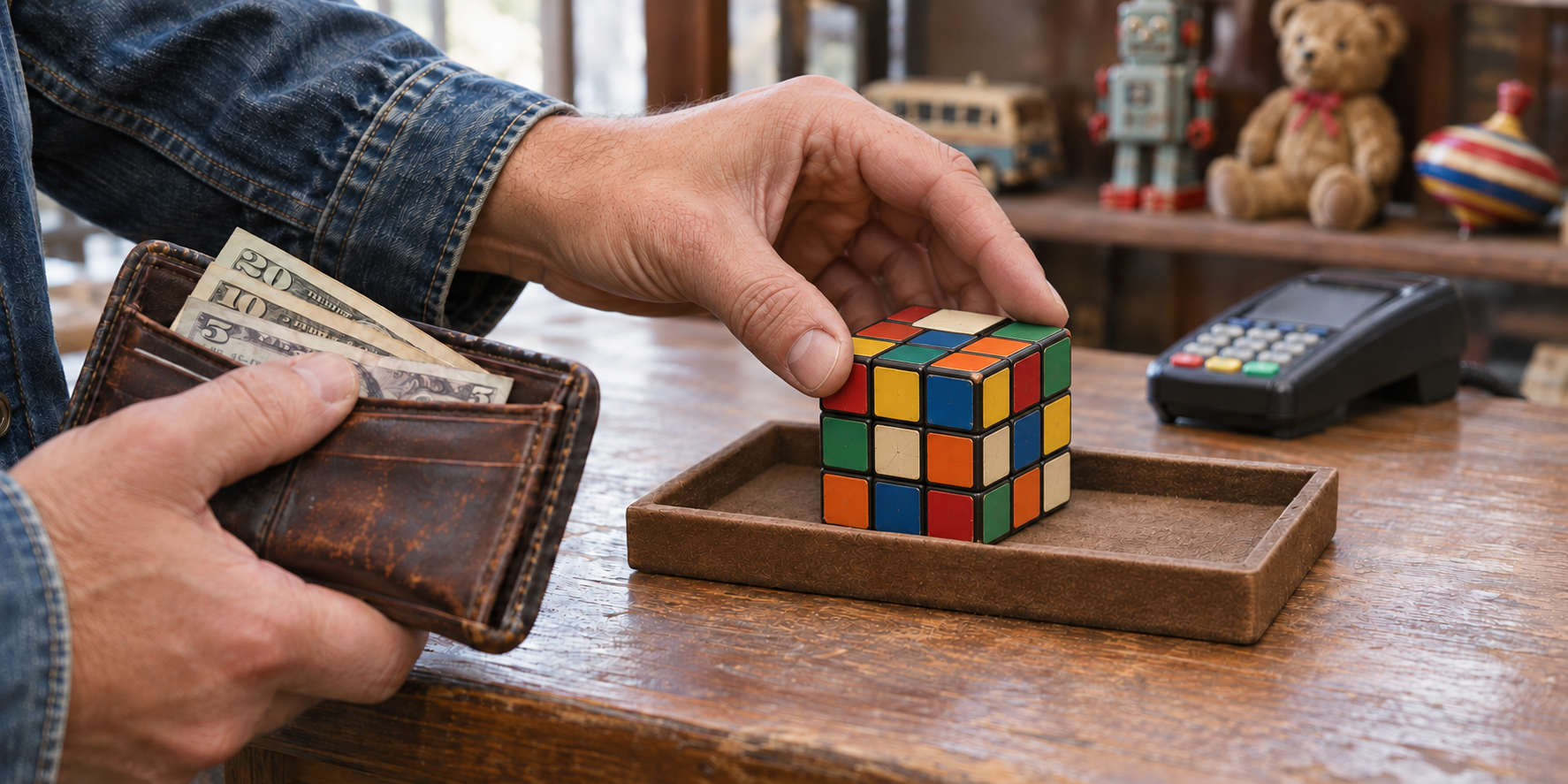
A full 56% of adults buy toys, games, and collectibles exclusively for their own personal enjoyment, dispelling the belief that adult toy purchases are solely intended for children. Furthermore, 45% of respondents share playtime with kids or family, demonstrating that kidulting seamlessly bridges generations.
GET IT NOWAdult play has officially crossed into mainstream culture. More than half of American adults (53%) engage in playful or nostalgic activities on a weekly or daily basis, while 73% agree that adult play is far more prevalent in their generation than in eras past.
GET IT NOWAdults describe play primarily as enjoyable (55%), relaxing (55%), stress-relieving (45%), and nostalgic (43%). Rather than an embarrassing habit—cited by only 8%—play is seen as an essential decompression ritual to escape daily pressures.
GET IT NOWAdults demonstrate a strong appetite for structured, analog engagement. Puzzles and brain games rank first at 57%, followed closely by board and card games (55%), video games (48%), coloring or crafts (39%), and hands-on building sets like Lego (32%).
GET IT NOWWhile 46% of adults preserve playful time as solitary decompression, play also strengthens social ties: 45% participate with family or children, 40% with friends, and 35% with romantic partners, showing high versatility across settings.
GET IT NOWWith 48% participating in video and computer games, digital gaming functions as an everyday source of low-friction relaxation. Screen-based play provides an immediate, accessible mental break that easily fits into small pockets of personal downtime.
GET IT NOWAdults leverage mobile gaming with clear intentionality. Players report using quick digital sessions as mental breathers during stressful work hours or as peaceful rituals to wind down before sleep, seeking personal equilibrium over high-pressure competition.
GET IT NOWAdult gamers exercise remarkable financial restraint in digital environments. The vast majority avoid excessive microtransactions, opting instead for free or low-cost gaming experiences that maximize emotional enjoyment without accumulating digital expenses.
GET IT NOWA dominant 56% of adults spend under $50 monthly on playful hobbies, and only 10% spend $150 or more. Furthermore, 44% maintain or increase their spend during inflation specifically because play provides an affordable, grounded emotional coping mechanism.
GET IT NOWSocial stigma around adult play has virtually collapsed. Half of adults (50%) state that playful hobbies are a core part of their personal identity, and 59% rarely or never feel judged by others for purchasing or enjoying toys and games.
GET IT NOWHigh Frequency
72%
play multiple times each month
Primary Driver
55%
cite stress relief & relaxation
Budget Ceiling
78%
spend $100 or less per month
Faced with modern burnout and persistent economic headwinds, American adults are turning to toys, tabletop games, and collectibles not as childish indulgences, but as essential tools for mental wellness and everyday escapism. Adults are actively redefining leisure by trading out-of-reach prestige splurges for accessible, sub-$50 playful resets that deliver immediate emotional comfort without financial guilt.
Key takeaways from our national study include:
Play has transitioned from 'guilty pleasure' to regulated self-care: 89% connect kidulting with positive emotional well-being, while 82% view it as an active coping mechanism to relieve stress and escape adult responsibilities.
The sub-$50 micro-luxury replaces big-ticket discretionary spending: 78% of adults spend $100 or less per month on playful hobbies—with 56% spending under $50—establishing play as an inflation-resilient sweet spot for joy.
Adult toy purchasing is personal, not purely parental: 56% of adults buy toys, games, and collectibles exclusively for themselves, overturning assumptions that adult toy purchases are intended only for children.
Burnout is the primary catalyst: Over half of respondents (55%) cite modern stress and anxiety as the primary driver of adult play, outranking commercial advertising (34%) and disposable income (26%).
Tactile and analog activities lead engagement: Brain games and puzzles (57%) and board/card games (55%) outpace digital gaming (48%), coloring/crafts (39%), and building kits (32%).
Social stigma has collapsed: 85% feel comfortable openly discussing their playful hobbies, half (50%) consider play a core part of their identity, and 59% rarely or never feel judged.
Nostalgia and stress relief outweigh speculation: 35% buy toys to manage stress and 28% to evoke positive childhood memories, compared to just 17% who treat purchases as speculative financial investments.
This study was conducted by the QuestionPro Market Research Services team among n=1,000 adult respondents aged 18 and older across the United States. Data was collected via an online survey using non-probability sampling from double opt-in panels. The data was weighted to align with U.S. census benchmarks where applicable. All respondents were verified, and responses were securely stored. The margin of error is approximately ±3.1% at a 95% confidence level.
The kidulting economy refers to the commercial market and cultural movement driven by adults purchasing toys, collectibles, board games, and nostalgic media for their own personal recreation, emotional grounding, and mental wellness.
According to QuestionPro research, 55% of adults cite modern stress and anxiety as the primary catalyst. Adults turn to play as an accessible decompression ritual to escape daily responsibilities (35%), evoke simpler times (33%), and experience judgment-free fun (30%).
Spending is disciplined and accessible: 78% of adults spend $100 or less per month on playful hobbies, with 56% spending under $50 monthly. Only 10% spend $150 or more, positioning kidulting as an affordable micro-luxury.
A national QuestionPro survey reveals that 56% of adults purchase toys, games, and collectibles exclusively for themselves, showing that adult play is an independent lifestyle choice rather than a byproduct of parenting.
Tactile, analog games lead participation: 57% engage in puzzles and brain games, 55% play board or card games, 48% play video or computer games, 39% do coloring books or crafts, and 32% build physical model sets like Lego.
Social stigma has largely collapsed. 85% of adults feel comfortable discussing their playful hobbies openly, 50% consider it a core element of their identity, and 59% rarely or never feel judged by peers or family.
Kidulting exhibits strong economic resilience. When faced with rising living costs, 44% of adults maintain or even increase their playful spending because these items provide immediate emotional comfort and stability during stressful times.
Both. While 46% enjoy play as solitary downtime, 45% participate with family or children, 40% with friends, and 35% with partners, establishing kidulting as both a private sanctuary and an intergenerational bonding tool.