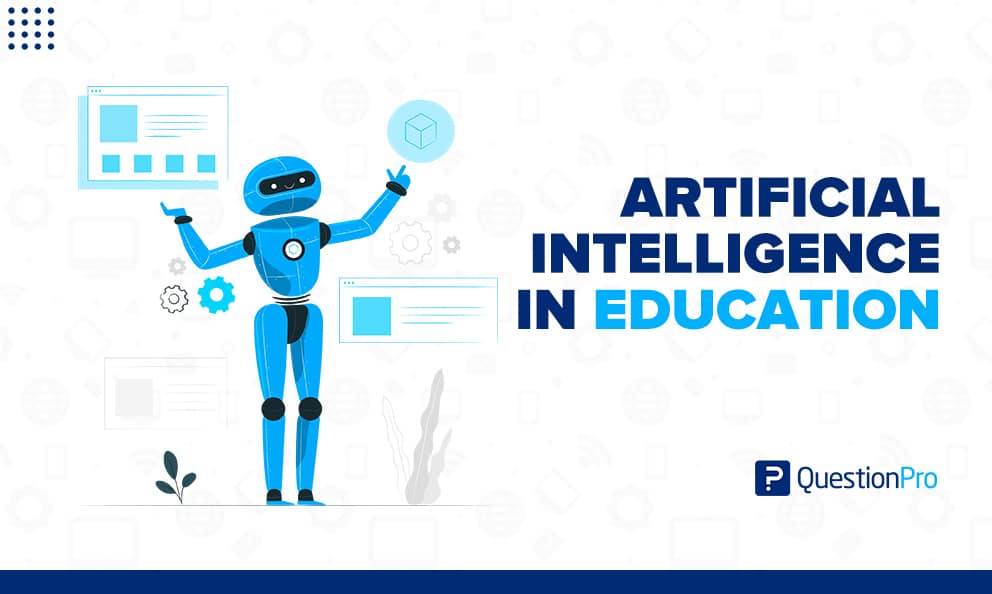
AI in education refers to the use of artificial intelligence, a branch of computer science that lets software learn patterns and make predictions, to support teaching, learning, and school administration. Chatbots answer student questions at midnight, adaptive platforms adjust a lesson the moment a student struggles, and grading tools return feedback in minutes instead of days.
Adoption has moved fast. Recent research from the Digital Education Council found that 88% of students and 77% of faculty now use AI in their coursework or teaching, up sharply from the year before. That single statistic explains why so many institutions are writing policy after adoption instead of before it.
In this blog, we’ll explain what AI in education actually looks like right now, walk through real tools schools are using, and cover the benefits, risks, and open questions that come with it.
What is AI in education?
AI in education is the application of machine learning, natural language processing, and data analytics to teaching, learning, and school operations. It is not the same thing as general edtech.
A learning management system that stores grades and posts assignments is edtech, but it is not AI unless it also predicts, personalizes, or generates content. Video conferencing software used for remote classes is edtech too, again without an AI layer.
AI in education specifically covers systems that adapt to a learner, generate content, or make a judgment call, such as an intelligent tutoring system, a system that mimics one-on-one tutoring by adjusting question difficulty based on a student’s responses. Recommendation engines, automated essay scoring, and AI chatbots for students all fall under this narrower definition.
The distinction matters for budgeting and policy. A district evaluating “educational technology” broadly might lump a projector, a grading spreadsheet, and a generative AI writing tool into one review, when only the last one raises the data and integrity questions this article covers.
How is AI actually used in classrooms right now?
AI shows up in three main places today, each serving a different audience with a different kind of tool.
- Student support
Tutoring chatbots, writing assistants, and adaptive practice apps that adjust difficulty in real time
- Teacher workload
Drafting lesson plans, generating quiz questions, and a first pass on grading before human review
- Institutional decisions
Spotting patterns in enrollment, retention, and engagement data at a scale that manual review cannot match
A Gallup and Walton Family Foundation study found that teachers who use AI tools weekly save close to six hours of work per week, time many reinvest in direct student support rather than paperwork.
At the institutional level, AI helps administrators spot patterns in enrollment, retention, and engagement data that would take a research team far longer to find manually. This is where AI in higher education overlaps most with academic research and institutional analytics work.
A mid-size university, for example, might use an AI-assisted survey software platform to build a term-over-term retention study, then let the AI layer flag which departments show the sharpest engagement drop before a human researcher digs into why.
6 examples of AI tools used in education
Naming specific tools makes the abstract idea of AI in education concrete. Here are six that show up consistently across classrooms and research offices in 2026.
- Duolingo: A language learning app that uses AI to personalize lesson difficulty and review timing for each learner.
- Khanmigo (Khan Academy): An AI tutor built on a large language model that walks students through problems with guided questions instead of direct answers.
- ALEKS: An adaptive math platform that builds a personalized learning path based on what a student already knows.
- Coursera: uses AI recommendation systems to suggest courses based on a learner’s history and stated goals.
- Grammarly: An AI writing assistant that flags grammar, tone, and clarity issues for student and faculty writing.
- QuestionPro AI: A conversational AI-powered survey creation tool that lets researchers and institutions build a study by describing it in plain language, useful for the academic research surveys covered later in this article.
Not every tool fits every institution. A K-12 district evaluating adaptive math software needs different criteria than a university research office evaluating a survey platform, so match the tool to the actual job before adopting it.
Price, data handling, and integration with an existing learning management system usually matter more than the flashiest feature list. A tool that works beautifully in a demo but cannot export data into a district’s existing reporting system creates more work than it saves.
What are the benefits of AI in education?
The clearest benefit of AI in education is personalization at a scale no single teacher could manage alone. A platform can track hundreds of students simultaneously and adjust content for each one individually.
Beyond personalization, AI delivers several other measurable gains for schools and universities.
| Benefit | What it looks like in practice |
|---|---|
| Personalized learning paths | Adaptive software adjusts difficulty and pacing per student |
| Faster feedback | Automated grading returns results in minutes, not days |
| 24/7 student support | Chatbots answer common questions outside office hours |
| Reduced admin workload | Teachers save hours weekly on lesson prep and grading |
| Accessibility gains | Text-to-speech and translation tools support diverse learners |
| Data-informed decisions | Institutions spot enrollment or engagement trends early |
Live classroom tools have also matured well beyond simple multiple-choice clickers. A modern live polling tool lets an instructor run real-time quizzes, gauge understanding mid-lecture, and adjust the next ten minutes of a lesson based on what the class actually shows.
None of these benefits arrive automatically just because a school purchases a license. A personalization engine only personalizes well when it has enough clean data to work from, and a chatbot only reduces workload when staff trusts it enough to actually route questions through it. The benefit is real, but it depends on setup and training, not just the software itself.
What are the challenges and risks of AI in education?
AI in education carries real risks alongside its benefits, and none of them disappear just because adoption is growing. Three stand out consistently in research and in classroom experience.
Academic integrity is the most visible concern. Generative AI can produce a passable essay in seconds, and distinguishing AI-assisted work from a student’s own writing remains genuinely difficult, even with detection tools.
Bias and equity gaps follow close behind. An algorithm trained on historical data can replicate the same disparities that existed in that data, and students without reliable internet access or a personal device are shut out of AI-powered learning entirely.
Data privacy rounds out the list. AI tools often require student data to function well, which raises legitimate questions about who owns that data, how long it is stored, and who can access it under laws like FERPA in the United States.
None of these risks argue against using AI in education. They argue for using it deliberately, with a plan for oversight rather than a rollout driven purely by enthusiasm.
A common real-world version of this plays out in writing-heavy courses. An instructor notices a sudden jump in unusually polished essays, runs them through a detection tool, gets an inconclusive result, and is left deciding whether to escalate based on writing style alone. That gray area is exactly why policies built before a semester starts matter more than reactive decisions made mid-term.
Should your school or institution adopt AI tools? How to decide
Deciding whether to adopt an AI tool works best as a short, repeatable process rather than a one-time debate. Four steps cover most of what matters.
- Define the specific problem first.
“We want to use AI” is not a plan. “We want faster feedback on writing assignments” is one, and it points directly to the type of tool worth evaluating.
- Pilot with a small group.
Run the tool with one department or one grade level before a school-wide rollout, and set a fixed pilot length, such as one semester, before deciding anything permanent.
- Set a data privacy checklist.
Confirm what student data the tool collects, where it is stored, and who can access it before signing any contract, not after.
- Review outcomes against the original problem.
Measure whether the tool actually solved what you set out to fix, not just whether people used it or liked it.
Institutions that skip the pilot step tend to face the steepest pushback later, because staff and students experience the rollout as something done to them rather than with them. A short pilot also gives an institution real data to bring into contract negotiations, rather than negotiating blind based on a vendor’s own case studies.
How do institutions measure the impact of AI in education?
Measuring AI’s actual impact requires structured feedback, not assumptions based on usage numbers alone. High usage does not automatically mean a tool is working.
Course evaluations and student feedback surveys give the clearest signal on whether an AI tool changed the learning experience for the better. Pairing a short pulse survey right after a pilot with a longer end-of-term evaluation catches both immediate reactions and lasting effects.
Student engagement surveys add a second layer, tracking whether participation, motivation, and time-on-task actually shifted after an AI tool was introduced, rather than just whether students logged in.
Faculty input matters just as much. A quick faculty pulse survey after a semester using an AI grading assistant will surface workload and quality concerns that student surveys alone would miss.
For a structured starting point, many institutional research teams adapt existing course evaluation survey templates rather than building a new instrument from scratch, adding two or three questions specific to the AI tool being piloted. That keeps the comparison consistent with prior terms while still capturing what changed.
Common mistakes schools make when adopting AI
Even well-funded AI initiatives in education run into the same handful of avoidable mistakes, and most of them have nothing to do with the AI technology itself. They come down to how the rollout was planned and communicated.
- Rolling out a tool to an entire school before piloting it with a smaller group
- Skipping staff training and expecting teachers to figure out the tool alone
- Treating AI detection scores as definitive proof of cheating without human review
- Ignoring students who lack reliable devices or internet access at home
- Adopting a tool because it is popular rather than because it solves a defined problem
- Never circling back to measure whether the tool delivered what it promised
Most of these come down to speed. Schools that slow down enough to pilot, train, and measure consistently report smoother adoption than those that move straight to full deployment.
Where AI in education is headed next
AI in education is not a single, fixed trend. It is still growing and evolving rapidly. Tools are continuing to mature. Meanwhile, institutions are trying to figure out what truly helps students learn.
The most successful schools and universities share a key habit. They test and measure AI continually rather than installing it as a finished fix. This mindset matters far more than any individual software. It will define which institutions actually benefit.
Faculty members who led early pilots offer valuable guidance for future decisions. They know what worked and what created unnecessary extra work. Consulting them before buying new tools will save significant time.
Frequently Asked Questions (FAQs)
No major research supports this. Teachers remain central to instruction and relationship-building, while AI mainly handles repetitive tasks like grading and drafting lesson materials, freeing up teacher time rather than replacing the role itself.
Costs vary widely, from free tools like basic chatbots to enterprise platforms priced per student or per license. Districts should budget for training and data governance too, since those costs often exceed the software license itself.
Not consistently. Detection tools produce both false positives and false negatives, which is why most academic integrity policies now recommend combining detection scores with human judgment rather than relying on them alone.
Not exactly. K-12 tools focus more on guided tutoring and parental transparency, while higher education tools lean toward research support, academic writing assistance, and independent study, reflecting the different levels of student autonomy.
FERPA governs student data privacy and applies to AI tools that collect student information. Several states have also issued their own AI-in-schools guidance, so districts should check both federal and state-level rules before adopting a tool.