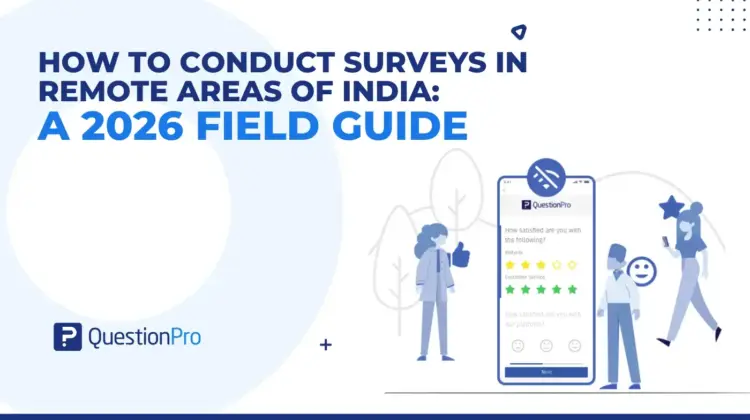
Conducting research in rural India often feels like a race against infrastructure. Despite the rapid digital growth of 2026, many remote regions still grapple with “dark zones”areas where high-speed internet is a luxury and electricity is inconsistent.
Yet, with two-thirds of India’s population residing in villages, these regions hold the key to the nation’s true consumer sentiment.
In this guide, we’ll break down how to bridge the rural-urban divide using advanced field research methods and the robust offline capabilities of QuestionPro.
1. Eliminate the “No Signal” Barrier
In remote areas, relying on a live internet connection is a recipe for data loss. Whether you are conducting an ethnographic study in the Northeast or an agricultural survey in Vidarbha, your tools must work without a heartbeat from
the web.
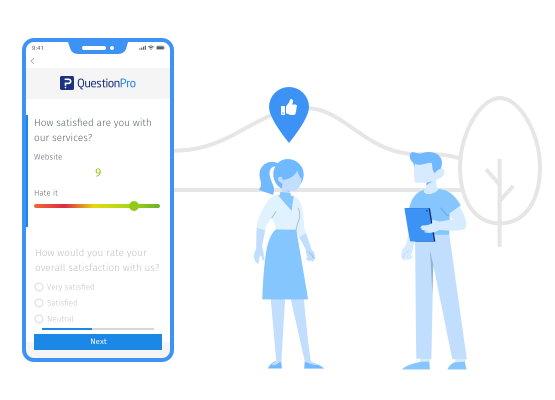
The QuestionPro Offline Survey App allows field agents to download surveys onto tablets or smartphones while at the base office. Once in the field, they can collect thousands of responses including multimedia like photos and signatures without a single bar of signal. The data stores l
2. Audio & Visuals: Breaking the Literacy Gap
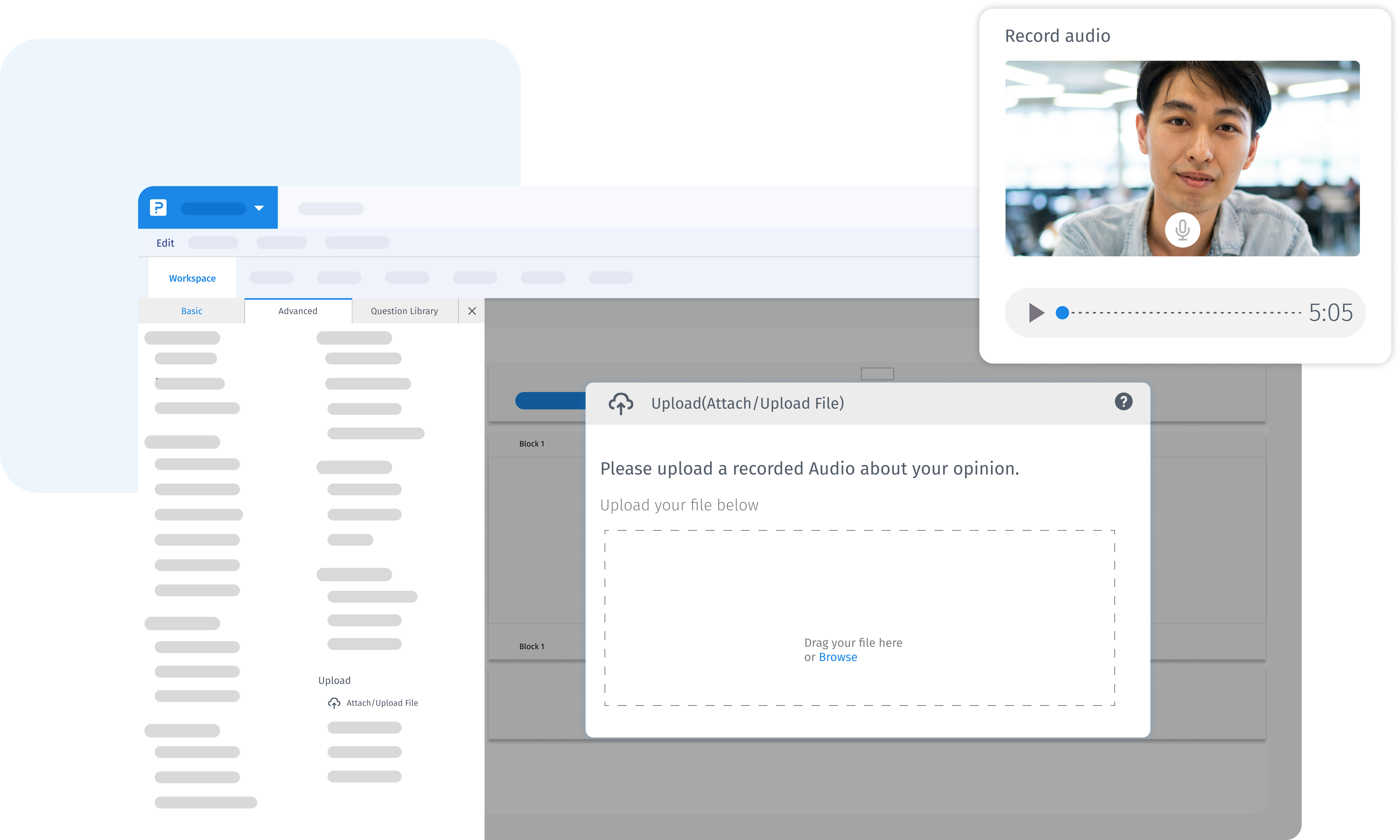
Standard text-based surveys often struggle in regions where literacy rates vary or where local dialects are more prominent than written scripts. Audio recording is a game-changer; use QuestionPro to record verbal responses.
This not only ensures accuracy but also captures the “tone” of the respondent, which is vital for qualitative research.
Additionally, Image Capture provides visual proof. In rural audits, a photo is worth a thousand data points. Our app allows you to attach geotagged photos directly to the survey response.
3. Trust Through Personalisation (The CAPI Method)
In rural India, a link sent via SMS is often viewed with suspicion. Computer-Assisted Personal Interviewing (CAPI) remains the gold standard for high-quality data.
Field researchers equipped with the QuestionPro app can sit with respondents, building the necessary rapport to get honest answers. This face-to-face interaction helps in reducing survey bias and ensures that complex questions are explained clearly in the local tongue.
4. Geofencing and Auditor Accountability
One of the biggest challenges in remote surveys is “ghost data” responses filled out by agents sitting in a tea shop instead of the target village.
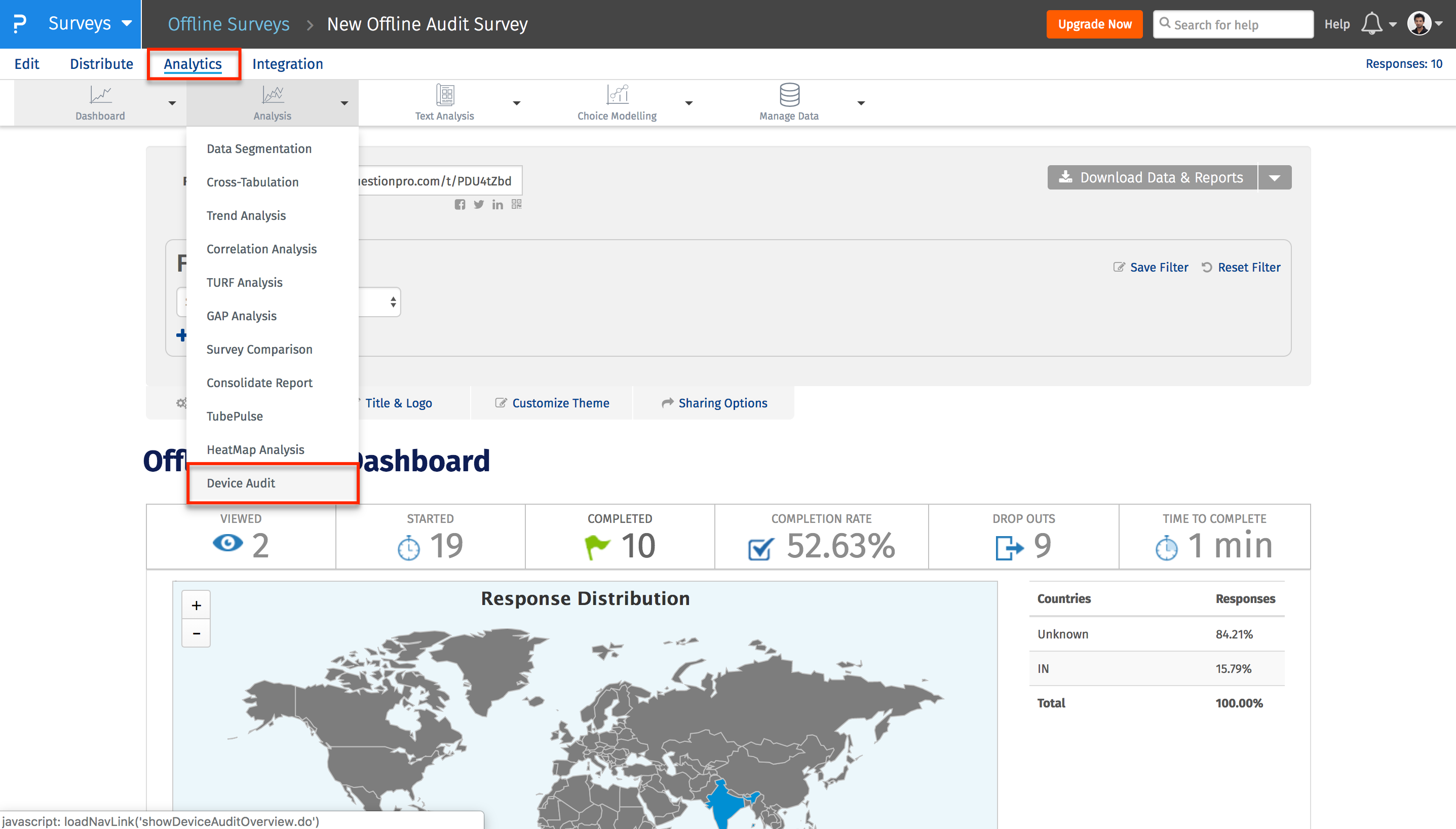
To combat this, QuestionPro’s field audit features include GPS tracking, where every response is stamped with precise coordinates, ensuring the agent was actually at the specified location. Time stamps are also crucial to audit how long was spent on each question to identify rushed or faked entries.
5. Compliance with the DPDP Act in the Field
Data privacy isn’t just for city dwellers. With India’s Digital Personal Data Protection (DPDP) Act now in full force, collecting data in remote areas requires strict consent management.
Ensure your field agents use multilingual consent forms. These allow you to explain data usage in the respondent’s native language, ensuring that the “Notice of Purpose” is legally compliant and ethically sound.
Rural vs. Urban Survey Strategy (2026)
| Feature | Urban Research | Remote/Rural Research |
| Connectivity | High (5G/4G) | Low/None (Edge/Offline) |
| Primary Method | Self-Administered (Online) | Interviewer-Led (CAPI/Offline) |
| Incentive Type | Digital Vouchers | Cash/UPI/Essential Goods |
| Verification | IP/Email Check | GPS/Device Audit |
Ready to take your research offline?
Explore QuestionPro’s Offline Survey App for Field Research
Frequently Asked Questions (FAQs)
Answer: The most effective way to do surveys in remote areas of India is by using an “Offline-First” digital platform. Researchers should deploy field agents equipped with mobile devices running apps like QuestionPro, which allow for data collection without internet. Key steps include localising questions into regional languages, using CAPI (face-to-face) methods, and verifying data through GPS and timestamps.
Answer: QuestionPro is considered the best offline survey app for rural India due to its 2026 updates tailored for the Indian landscape. It supports 80+ question types offline, includes built-in GPS tracking for auditor accountability, and is fully compliant with the Indian DPDP Act, ensuring local data residency and secure storage.
Answer: To conduct surveys without internet, you need a mobile survey tool that supports local device storage. You download the survey structure while online, travel to the remote location to collect responses, and then sync the data back to the cloud once you return to an area with connectivity.
Platforms like QuestionPro also allow for offline logic and branching, meaning the survey remains “smart” even without a live connection.
Answer: Data quality in field surveys is ensured through a combination of GPS geo-tagging, audio recording of responses for verification, and time-tracking for each survey page. Using a platform that offers “Device Auditing” helps identify and eliminate fraudulent responses before they reach your final analysis report.
Data collection in India’s heartland doesn’t have to be a logistical nightmare. By choosing the right technology, you can turn rural challenges into a competitive advantage.