A single annual survey tells a nonprofit or cultural institution what its community thought on one particular day of the year. It cannot tell you whether sentiment is improving, declining, or holding steady, because a single data point has no trend to compare against.
Continuous community intelligence solves that by treating audience or community feedback as an ongoing practice, measured against a defined baseline, rather than a once-a-year snapshot exercise.
Quick takeaways
- A single annual survey provides a snapshot. Continuous measurement against a defined baseline is what reveals whether sentiment is actually changing over time.
- Cultural institutions like the National Gallery apply AI sentiment analysis to longitudinal audience data, moving beyond one-off visitor surveys into ongoing intelligence.
- Continuous feedback requires a stable core set of questions across measurement periods, so trend data stays comparable year over year.
- This model works for donor, member, and community audiences as well as visitor audiences, wherever an organization wants to track sentiment over time rather than once.
Why a single annual survey cannot show you a trend
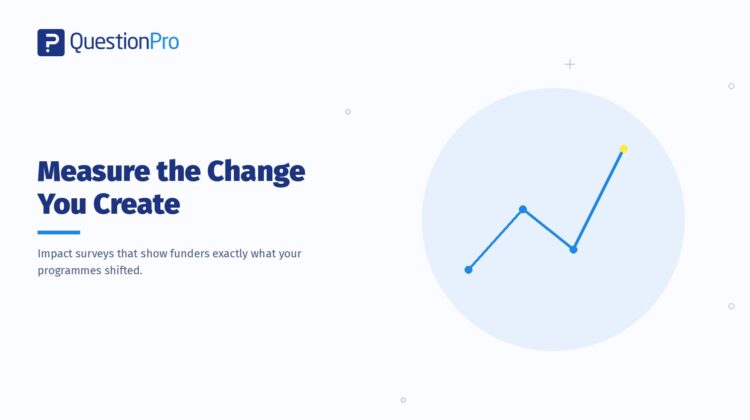
The mathematical issue is simple: you cannot calculate a trend from one point. An annual visitor satisfaction survey can tell you this year’s score, but without a comparable prior measurement using the same core questions, there is no way to know whether that score represents progress, decline, or business as usual.
What continuous community intelligence actually looks like in practice
The National Gallery’s approach to longitudinal audience intelligence applies AI sentiment analysis to ongoing visitor and community data, treating audience research as a continuous discipline rather than a periodic event. This same underlying structure, continuous measurement against a defined baseline, applies just as well to program evaluation as it does to visitor research, regardless of program type.
Continuous measurement against a stable baseline is what turns community feedback into evidence of change, not just a snapshot of a single moment in time.
What this requires that a one-off survey does not
The main structural requirement is a stable core question set that stays consistent across measurement periods, even as an organization adds supplemental questions to address specific, current priorities. Changing the core questions every cycle breaks the trend line and forces the organization back to a single-point-in-time snapshot, undoing the main benefit of continuous measurement in the first place.
Where organizations get this wrong
The most common mistake is redesigning the survey instrument every cycle to chase whatever topic feels most urgent at the time. A stable core, paired with a smaller set of rotating supplemental questions tied to current priorities, preserves the ability to track change over time while still allowing room to investigate new, timely concerns.
Applying this beyond visitor and audience research
The same discipline applies to donor sentiment, member satisfaction, and community program feedback. Any nonprofit or cultural institution that wants to know whether its relationship with a given community is actually improving needs the same structure: a consistent baseline, measured continuously, rather than reassembled from scratch every year. QuestionPro’s nonprofit and NGO pricing supports exactly this kind of ongoing community intelligence program.
Choosing what belongs in the stable core
The hardest early decision in building continuous community intelligence is not how often to measure. It is agreeing on which four or five questions belong in the permanent core set, since those are the questions your organization will still be asking, unchanged, three years from now.
Favor questions tied to your organization’s central mission outcomes over questions tied to a single current initiative. A rotating supplemental section is the right place for anything time-bound, so the core measurement stays comparable no matter what else changes around it.
Write the core question set down formally, with a note on why each question was included, before the first measurement cycle begins. That document becomes the reference point that keeps future staff, including people not yet on the team, from quietly rewording a core question in a way that breaks the trend line.
Frequently asked questions
How often should a nonprofit measure community or audience sentiment to build a real trend line?
This depends on the audience and program cycle, but quarterly or biannual measurement using a stable core question set is common for organizations building genuine longitudinal insight.
Does continuous measurement mean asking the same questions every single time?
Mostly, yes, for the core question set. Organizations typically pair a stable core with a smaller set of rotating supplemental questions tied to current priorities.
Can smaller nonprofits realistically run continuous community intelligence, or is this only for large cultural institutions?
Smaller organizations can run a scaled-down version of the same model. The principle, a stable baseline measured consistently over time, matters more than the scale of the program.
The bottom line
A single survey is a photograph. Continuous community intelligence is closer to a video, showing not just where your community stands today, but where it has been heading. For organizations trying to prove impact, that difference in evidence quality matters.
See how continuous community intelligence could work for your organization’s audience or program research.