Every customer issue has two sides to the story.
The first is why it happened.
Was it a product defect? A billing issue? A delayed delivery? A service failure?
Root Cause Analysis has always helped organizations answer that question.
But once the issue is resolved, another question becomes just as important:
What did your team actually do to fix it?
Did they issue a refund? Escalate the issue? Replace the product? Offer a workaround?
For many organizations, these answers exist only as comments inside support tickets. They’re recorded, but they’re not structured, making them difficult to analyze or use for improving future customer experiences.
That’s why we’ve reimagined Root Cause Actions in QuestionPro Closed Loop Feedback.
Root Cause Tells You Why. Root Cause Actions Tell You How.
Root Causes help organizations identify recurring issues, monitor trends, and prioritize improvements.
But they only explain why a customer experienced a problem—not how it was resolved.
Imagine twenty tickets with the same Root Cause: Delivery Delay.
Some customers receive refunds. Others receive expedited shipping. Some receive account credits.
From a reporting perspective, every ticket looks identical because they share the same Root Cause. Yet each followed a different recovery path.
Without structured Root Cause Actions, organizations can’t easily answer questions like:
- Which corrective actions are used most often?
- Which actions are most effective for specific issues?
- Are support teams following consistent resolution processes?
- Which departments contribute most to customer recovery?
Root Causes explain the problem.
Root Cause Actions explain the response.
Together, they tell the complete story.
Why Traditional Root Cause Actions Fall Short
Historically, Root Cause Actions have often been treated as free-form notes.
Agents describe what happened in their own words, making similar actions appear differently across tickets.
Because these actions aren’t consistently linked to Root Causes, they become difficult to analyze, compare, or standardize.
The information exists, but it isn’t structured enough to generate meaningful operational insights.
Introducing the New Root Cause Actions Experience
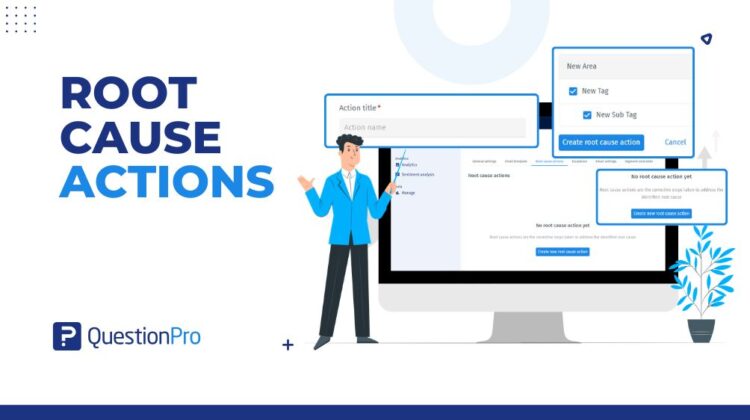
The new Root Cause Actions experience transforms corrective actions into structured, reusable operational data.
Every Root Cause Action is now linked to one or more centralized Root Causes.
For example, an action like Provide Refund can be associated with multiple Root Causes such as Billing Issue, Product Defect, or Service Quality.
Instead of documenting actions differently on every ticket, organizations create a standardized library of corrective actions that can be reused across teams.
This creates a clear relationship between:
Root Cause → Corrective Action → Resolution
The result is cleaner data, more consistent workflows, and richer reporting.
Built Around Better Workflows
Organizations can now manage Root Cause Actions centrally and associate each action with one or more Root Causes.
When resolving tickets, teams select structured Root Cause Actions instead of relying on descriptive comments.
This encourages consistency across agents while still allowing organizations to model their own support processes.
Rather than documenting every resolution differently, teams work from the same operational framework.
Better Data Leads to Better Decisions
Structured Root Cause Actions make entirely new analysis possible.
Organizations can identify:
- Which actions are most commonly associated with specific Root Causes.
- Which corrective actions reduce recurring issues.
- Whether teams are following standard operating procedures.
- How different departments contribute to resolving customer issues.
Instead of only understanding what went wrong, organizations gain visibility into what was actually done—and which actions consistently lead to better outcomes.
A Simpler Administration Experience
The revamp also simplifies administration.
Legacy Root Cause configuration has been replaced by the centralized Root Cause framework, giving organizations a single place to manage Root Causes across the platform.
Administrators can create reusable Root Cause Actions, link them to multiple Root Causes, and maintain them from one centralized location.
Existing Root Cause data is migrated into the new framework, allowing organizations to preserve historical reporting while adopting the updated workflow.
Every Resolution Is an Opportunity to Learn
Closing a support ticket shouldn’t simply end a customer interaction.
It should help organizations understand how customer problems are being solved.
Root Causes explain why issues happen.
Root Cause Actions explain what was done about them.
Together, they transform ticket resolution from documentation into operational intelligence—helping organizations improve consistency, identify effective recovery strategies, and continuously strengthen the customer experience.