If you have ever sat in a strategy meeting, you have probably filled in a SWOT analysis grid. It is one of the most common planning tools for entrepreneurs and small business owners shaping a marketing or sales strategy. It is also one of the most commonly done poorly. Too often it turns into a rushed list of words that never connects back to a real decision.
In this guide, we’ll explore what a SWOT analysis is, how each part works, and a full worked example. We’ll also learn something most SWOT guides skip: how to pull real customer input into the process instead of relying only on internal opinion.
What is a SWOT analysis?
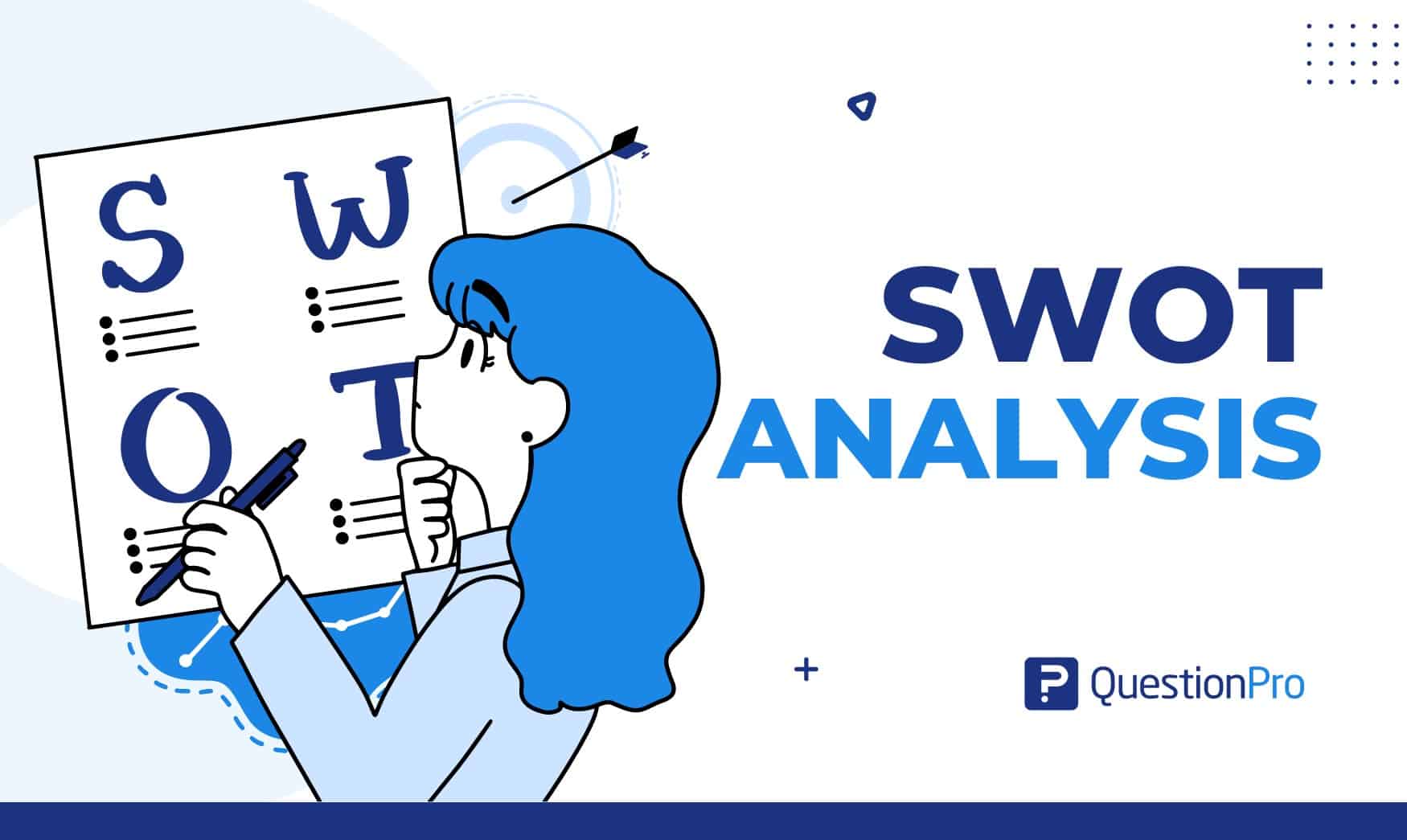
A SWOT analysis is a strategic planning tool that evaluates the Strengths, Weaknesses, Opportunities, and Threats affecting a business, project, or decision. Strengths and weaknesses are internal, meaning your organization controls them. Opportunities and threats are external, meaning they come from the market around you.
- Internal, controllable: Strengths and Weaknesses.
- External, largely uncontrollable: Opportunities and Threats.
Most guides trace SWOT to Albert Humphrey’s research at the Stanford Research Institute in the 1960s. A 2023 study in the journal Long Range Planning revisited the original archives. It found the framework actually began as “SOFT” analysis under researcher Robert Franklin Stewart, with Humphrey as a participant rather than the sole inventor. Either way, the tool that emerged from that research is still where most teams start. It comes before the business plan or marketing strategy, not after.
The four components of a SWOT analysis
Each SWOT quadrant answers one question about your business. Getting specific in each quadrant, rather than listing generic traits, is what separates a useful SWOT from a wasted meeting.
- Strengths: What you do well.
- Weaknesses: What holds you back.
- Opportunities: What you could seize.
- Threats: What could hurt you.
Strengths
Strengths are what your organization already does well, including your competitive advantages, financial resources, and tangible assets like an established customer base. A strength should be specific enough that a competitor could not claim the exact same thing.
- Example strengths: a proprietary process, a loyal customer base, a location competitors cannot easily replicate.
Weaknesses
Weaknesses are the areas holding you back, such as outdated technology, a thin marketing budget, or gaps in staff expertise. Naming a weakness clearly is what lets you actually address it instead of just acknowledging it exists.
Opportunities
Opportunities are external chances to grow, such as a shift in customer demand, a competitor’s misstep, or a new technology that fits your business. The key question is whether the opportunity fits your strategy and whether you can act on it in a realistic timeframe.
- Example opportunities: a competitor exiting a market segment, a regulatory change that favors your product, a new distribution channel.
Threats
Threats are external risks like new competitors, shifting customer behavior, or regulatory changes that could hurt your business. A vague threat like “the market could change” is not useful. A specific one, with a cause and a rough timeframe, is what lets you plan around it.
SWOT vs. PESTLE vs. TOWS: How the frameworks differ
These three frameworks get confused often since they share letters and overlap in subject matter. Each one does a different job in the planning process.
| Framework | What it covers | When to use it |
|---|---|---|
| SWOT | Your internal strengths and weaknesses, plus external opportunities and threats | A quick strategic snapshot of where you stand right now |
| PESTLE | External macro factors only (Political, Economic, Social, Technological, Legal, Environmental) | A deeper scan of your operating environment, often used to feed the external half of a SWOT |
| TOWS | The same four SWOT quadrants, paired into action strategies (Strength plus Opportunity, Weakness plus Threat, and so on) | Turning a finished SWOT into a specific next step, rather than leaving it as a list |
Why perform a SWOT analysis?
A SWOT analysis is worth the time even for a small team. It is one of the few planning exercises you can run without hiring outside help. It forces a side-by-side view of what is working, what is not, and what is coming.
- No extra cost, since it can be run entirely in-house.
- A clear, single-page summary of your current strategic position.
- Weaknesses surface that would otherwise go unnoticed without a structured review.
- A shared reference point for the whole team when priorities get debated later.
When should you do a SWOT analysis?
A SWOT analysis works best as an occasional deep review, not a recurring checklist. Strategies need time to play out, and redoing the analysis too often just resets your focus before you can see results.
Most businesses benefit from a full review once or twice a year. A few specific events justify an off-cycle one. A new competitor enters your market, a technology shift changes how customers buy, production costs drop sharply, or a new regulation affects your industry. Outside of those triggers, treat the SWOT as a periodic reset rather than a running list you update weekly.
How to create your own SWOT analysis
Avoid turning the exercise into a complaint session. Ground every entry in a specific question about the past year, not a general impression.
- Anchor every answer to something that actually happened, not a general feeling about the business.
Strengths questions
- Which deals or projects did we win this year, and why?
- Which customer segments generated the most sales and profit?
- What was our biggest achievement this year, and what drove it?
Weaknesses questions
- Which deals or bids did we lose this year, and why?
- Which customer segments produced the least profit?
- What were our biggest disappointments, and what caused them?
Opportunities questions
- What customer need is currently unmet?
- What have competitors overlooked that we could act on?
- Is there a technology shift or market change we can move on faster than others?
Threats
A weak threat is one without a source or a timeline. “Increasing competition” is weak. “Competitor X launched a lower-priced version in our core segment last quarter” is specific and useful. Ask three things. What concerns you most about the next twelve months? Which competitor poses the clearest risk? Could any pending regulation raise your costs?
How to perform a SWOT analysis for a business plan
- Set a clear objective.
Decide what decision this SWOT needs to inform, such as whether to launch a new product line.
- Research your market.
Look at competitors, customer trends, and relevant technology shifts before you start filling in the grid.
- Gather internal and external factors.
List strengths and weaknesses your team already knows, then list opportunities and threats from your market research.
- Prioritize the findings.
Lay strengths, weaknesses, opportunities, and threats side by side and ask which strengths help you seize which opportunities, and which weaknesses leave you exposed to which threats.
- Build the strategy.
Turn the highest-priority pairings into specific actions, whether that means doubling down on a strength or shoring up a weakness before it becomes a liability.
How to bring customers into your SWOT analysis
Most teams fill a SWOT using customer research that was originally collected for a different purpose, like a satisfaction survey run months earlier. A more reliable approach is to run a short, purpose-built survey aimed specifically at the decision in front of you.
- Start with a customer list.
Build a respondent list with emails, tagged with fields like industry, customer type, and products purchased.
- Ask open-ended questions before you categorize anything.
Structured qualitative questions, similar to a QuestionPro AskWhy format, surface what actually drives a purchase decision. Push past a generic answer like “price” until you get something concrete, such as “walking distance from home.”
- Turn candidate strengths into forced-choice questions.
List specific traits, such as high-tech, friendly staff, convenient location, or good value, and ask customers to confirm each with Yes, No, or Not Applicable rather than a rating scale. A forced choice surfaces a real signal, while a neutral rating on a five-point scale often just means someone did not want to commit.
- Include the traits you are unsure about.
Add anything you suspect might be a weakness to the same list, so customers can confirm or contradict the assumption.
- Ask about external forces too.
Opportunities and threats affect your customers as well. Find out whether they are seeing the same market shifts you are, or something different entirely.
- Field it as a dedicated survey, not a repurposed one.
Building this in Market Research Software designed for this kind of targeted fielding gives you current input tied to the actual decision, instead of recycled findings from an unrelated project.
SWOT analysis example: ABC Electronics
ABC Electronics, a fictional company, used the questions below to evaluate whether to launch a new mobile phone variant. For more worked examples across other industries, see QuestionPro’s SWOT analysis example breakdown.
- Strengths: What are our most valuable assets? How do our products stand out? What is our unique selling point?
- Weaknesses: What parts of the business need improvement? Where could a competitor exploit a gap? Is revenue keeping pace with the market?
- Opportunities: What trends could open new demand? What gaps exist in the market right now? Are competitors failing to meet a specific customer need we could target?
- Threats: Which competitors pose the clearest risk? Do our products meet every current regulation? Could customer preferences shift in the next year?
Common SWOT analysis mistakes to avoid
A SWOT analysis fails most often not because the framework is wrong, but because each quadrant gets filled in too vaguely to act on.
- Listing a strength every competitor could also claim, like “good customer service,” instead of something specific and hard to copy.
- Writing a threat with no timeframe or source, like “the market could change,” instead of naming the actual risk and roughly when it might hit.
- Treating the SWOT as a one-time list instead of feeding the results into a TOWS matrix or a similar next step.
- Relying only on internal opinion and skipping the customer’s perspective entirely.
- Running the exercise so often that the team never sees a strategy through before the next review resets it.
Tips for a successful SWOT analysis
Keep each entry specific. If staff is a strength, name the skill or team that makes it true. Do not just write “great staff.” Pull input from more than one group: employees, customers, suppliers, and partners. Check recent reviews too, for an outside view of your business. Do not narrow the exercise too far.
A SWOT built around one goal, like next quarter’s customer count, is useful. A broader review of the whole business still has value on its own schedule. Whatever you find, tie it back to the objectives already in your business plan, and write the results down somewhere your team will actually revisit.
Using QuestionPro’s SWOT analysis survey template
Building the customer research survey described above from scratch takes time most teams do not have during a planning cycle. QuestionPro’s SWOT Analysis Survey Template provides pre-built, customizable questions mapped to each of the four SWOT categories. The strengths and weaknesses questions above are ready to send rather than written from a blank page.
- Pre-built question sets for strengths, weaknesses, opportunities, and threats.
- Custom fields for tagging respondents by industry, customer type, or product line.
- Editable wording so the template fits your specific market rather than a generic one.
Running this ahead of a marketing plan session specifically? QuestionPro’s SWOT analysis template for marketers frames the same question set around that exact meeting.
Turning your SWOT findings into a real strategy
A finished SWOT grid is a snapshot, not a strategy. The value shows up once you pair the quadrants against each other. A strength paired with an opportunity points toward where to invest. A weakness paired with a threat points toward what to fix before it becomes a real problem.
Use a formal TOWS matrix or a simpler side-by-side comparison, whichever fits your team. Either way, the goal is the same: turn four lists into a small number of decisions you can act on this quarter.
Frequently Asked Questions (FAQs)
SWOT stands for Strengths, Weaknesses, Opportunities, and Threats. Strengths and weaknesses are internal factors you control, like your team or finances. Opportunities and threats come from outside your business, such as market trends, competitors, or new regulations you cannot directly change.
A SWOT analysis looks at your own strengths and weaknesses alongside external opportunities and threats. A PESTLE analysis studies only the outside environment, covering political, economic, social, technological, legal, and environmental factors, often feeding the external half of a later SWOT.
Most businesses benefit from a full SWOT analysis once or twice a year, since strategies need time to play out. Redo it sooner if something major shifts, such as a new competitor, a regulation change, or a sharp drop in production costs.
A SWOT list on its own is not a strategy. Pair strengths with opportunities and weaknesses with threats. A TOWS matrix turns each pairing into a specific action, such as a new product launch or a pricing change.
Customers reveal blind spots internal teams tend to miss, since employees often assume they already know why people buy. Short, targeted surveys asking customers to confirm specific strengths produce more reliable input than research recycled from an unrelated project.