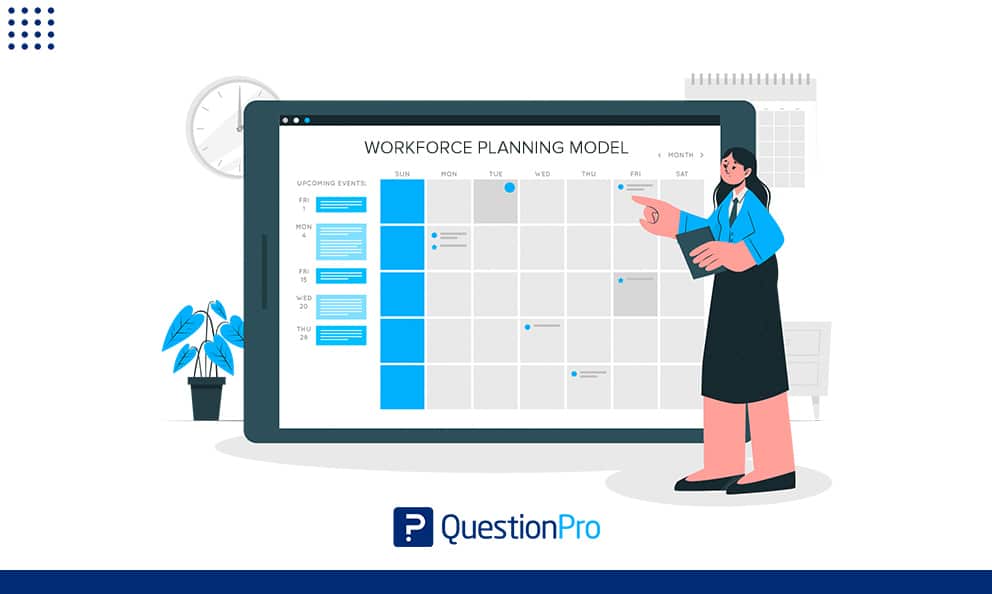
A workforce planning model gives HR and business leaders a structured way to match staffing levels and skills to where the company is actually headed, not just where it has been. Instead of reacting to vacancies as they open, teams using a model can see gaps forming months in advance. That difference matters more now than it used to, since skills needs shift faster than annual budget cycles can keep up with.
Many teams have heard the term but never seen it explained clearly enough to apply.
This guide covers what a workforce planning model includes, why it works, and the five-step process HR teams can follow to build one for their own organization.
What is a workforce planning model?
A workforce planning model is a structured framework for aligning an organization’s staffing, skills, and talent development with its current and future business goals. It gives HR leaders a repeatable way to answer a deceptively hard question: who do we need, with what skills, and by when?
At its simplest, a workforce planning model can be a spreadsheet tracking headcount against projected growth. At its most advanced, it involves workforce analytics software modeling multiple demand scenarios against skills inventories and attrition trends.
The right level of complexity depends on how many variables your business needs to plan around, not on what looks impressive in a slide deck.
Every workforce planning model, regardless of complexity, needs to cover three connected areas: hiring and development, succession planning, and performance management. Skipping one usually creates blind spots the other two cannot cover on their own.
Core elements of a workforce planning model
Breaking strategic workforce planning into its component parts makes the model easier to build and easier to explain to leadership.
Hiring and employee development
This element gives the organization a plan for finding new talent and developing the people already on staff. With a clear profile of current employee skills, HR can identify gaps and build hiring and training processes that close them directly instead of guessing.
Since most companies compete for the same pool of skilled candidates, workforce planning also shapes how a company positions itself to attract them, from compensation to growth opportunities highlighted during recruiting.
Succession planning
Workforce planning and succession planning work together closely. By tracking which leadership roles are likely to open, whether through retirement, promotion, or turnover, companies can start developing internal candidates or sourcing external ones well ahead of the actual vacancy.
This overlap matters for continuity. SHRM research shows business leaders and HR professionals often see succession readiness differently, which is exactly the kind of gap a shared workforce planning model is built to close.
Performance management
The final element connects staffing decisions to actual output. Workforce planning identifies not just how many people you need, but how to get the most value from the people already on the team through clear goals and regular performance conversations.
Why workforce planning delivers measurable benefits
A workforce planning model earns its place on the HR roadmap because it solves problems that are otherwise expensive to fix after the fact. Four benefits show up consistently across organizations that use one well.
- Future-proofed staffing: Leaders can plan hiring around growth projections instead of scrambling once a shortage is already visible.
- Clear visibility into workforce gaps: Knowing exactly where skills are thin lets HR prioritize hiring, redeployment, or training with evidence instead of guesswork.
- Stronger succession outcomes: Employers who maintain a succession plan report that it positively affects engagement, and employees consistently say they would feel more engaged working somewhere with a visible career path, according to research summarized by the RPO Association.
- Better retention through redeployment: Instead of losing good employees to a role mismatch that drives turnover, workforce planning identifies where their skills could be better used elsewhere in the business.
The 5 steps of the workforce planning model
Most organizations can adapt the same five-step sequence, adjusting the depth of analysis to match their size and complexity.
- Set the scene for strategic planning.
Gather the organization’s strategic and business plans for the period you are planning around, and talk with executives about hiring priorities tied to those goals. - Review current employee profiles.
Identify where the organization is chronically short-staffed and investigate why turnover is higher in some departments than others. - Create an action plan.
Use what you learned in steps one and two to design specific fixes, whether that means new hiring criteria, restructuring, or targeted training investment. - Apply the action plan.
Work across finance, IT, and department leadership to put the plan into motion, including how new roles will be communicated internally and externally. - Monitor and revise.
Track how the plan performs against its original goals and adjust regularly rather than waiting for the next annual cycle to make corrections.
Workforce planning model example: A mid-size healthcare provider
A 600-employee healthcare provider used this five-step process after noticing nursing turnover was consistently 15% higher in one region than the rest of the network. Step two revealed the gap was concentrated among nurses within their first 18 months, not tenured staff.
The action plan focused on a mentorship program pairing new hires with experienced nurses and adjusted onboarding to include earlier check-ins at 30, 60, and 90 days. Within a year, first-year nursing turnover in that region dropped closer to the network average, without any change to pay or benefits. The fix came from correctly diagnosing where in the employee lifecycle the gap actually existed.
How workforce planning differs from succession planning alone
These terms often get used interchangeably, which creates confusion for HR teams building their first model. Succession planning focuses specifically on leadership continuity, identifying and developing people for a defined set of critical roles.
Workforce planning is broader. It covers succession planning as one component, but also includes recruiting strategy, skills forecasting, and performance management across the entire organization, not just leadership positions. A company can have strong succession planning for its executive team while still lacking a workforce plan for its frontline staff.
Common mistakes when building a workforce planning model
Even well-intentioned workforce planning efforts run into the same handful of problems.
- Building the model once a year and never revisiting it as conditions change
- Treating workforce planning as an HR-only exercise instead of involving finance and department leaders
- Focusing exclusively on headcount numbers while ignoring the skills gaps behind them
- Skipping the succession planning component until a senior leader unexpectedly departs
- Failing to communicate the plan clearly enough for middle managers to act on it
Where QuestionPro Employee Experience fits into workforce planning
Workforce planning depends on accurate, current data about employee skills, satisfaction, and flight risk, which is difficult to gather through informal manager check-ins alone.
QuestionPro Employee Experience gives HR teams a way to run structured pulse surveys, skills assessments, and an employee engagement survey that feed directly into the planning process described above, rather than relying on year-old data from the last engagement review.
Getting workforce planning right takes ongoing discipline
A workforce planning model only works if leadership treats it as a living process rather than a document produced once and filed away.
The organizations that get real value from strategic workforce planning revisit their assumptions regularly, adjust for turnover and market shifts, and keep finance and HR aligned on the same numbers. Done consistently, workforce planning becomes less about predicting the future perfectly and more about being ready for several versions of it.
Frequently Asked Questions (FAQs)
Headcount planning focuses narrowly on the number of employees needed. Workforce planning is broader, covering skills, succession, and performance alongside headcount, so it answers not just how many people you need but what capabilities they must bring.
Most organizations review their model quarterly, with a deeper annual refresh tied to strategic planning cycles. Fast-growing companies or those in volatile industries often benefit from monthly check-ins on key metrics like turnover and time-to-fill.
Yes, though the model can be simple. Even a basic spreadsheet tracking projected growth against current staffing helps small businesses avoid the common trap of hiring reactively only after losing a key employee.
Strong models pull from turnover reports, engagement and pulse survey results, performance data, and business growth forecasts. Combining internal HR data with strategic business plans is what separates workforce planning from simple headcount tracking.
Yes. By identifying gaps months before they become urgent vacancies, companies can plan hiring timelines that avoid rushed searches, which typically cost more and lead to higher early turnover among new hires.