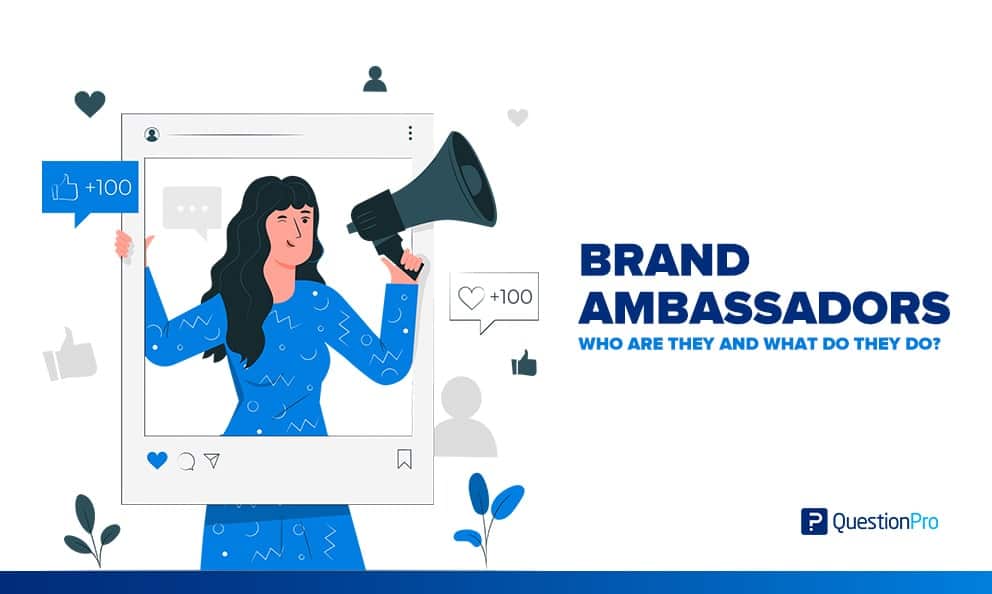
A brand ambassador is a customer, employee, or creator who consistently promotes a company’s products because they genuinely use and believe in them, not because of a single paid placement. Companies formalize that relationship through a brand ambassador program: a structured way to recruit, manage, and reward the people already talking about their brand.
That relationship matters because of how much consumers trust it. Globally, 88% of people trust recommendations from people they know more than any other marketing channel, according to Nielsen. In this guide, we’ll cover what separates a brand ambassador from an influencer and the types of programs companies run. We’ll also walk through how to build one and how to measure whether it’s working.
What does a brand ambassador do?
A brand ambassador consistently represents a company’s products across their own network, driven by real product use rather than a single paid post. That ongoing relationship is what separates a brand ambassador from a typical influencer campaign.
Ambassadors show up in a few recurring ways:
- Sharing personal experiences with the product on social media
- Referring friends and family
- Attending brand events and product launches
- Giving direct product feedback to the company
That last point gets overlooked. An engaged ambassador is also a low-cost source of product insight. They already pay close attention to what works and what doesn’t.
What is a brand ambassador program?
A brand ambassador program is the structured process a company uses to recruit, manage, reward, and track its ambassadors. Rather than relying on organic advocacy alone, the program formalizes it. It sets criteria for who qualifies and defines what ambassadors are asked to do. It also builds a system to reward and measure their contributions.
The strongest programs start with the existing customer base rather than an open casting call. A customer who already tags the brand or leaves detailed reviews is a warmer prospect than a stranger with a large following. That approach tends to pay off financially, too. Ambassador-style programs delivered the highest ROI (return on investment) of any campaign format in Aspire’s 2026 State of Influencer Marketing benchmark. That survey polled close to 900 marketers and creators.
Brand ambassador vs. Brand advocate vs. Influencer
“Brand ambassador,” “brand advocate,” and “influencer” get used interchangeably. They describe three different relationships, and mixing them up leads to the wrong recruitment strategy and the wrong metrics.
| Term | Relationship length | Primary motivation | Typical compensation |
|---|---|---|---|
| Brand ambassador | Long-term, often 6-12 months or longer | Genuine product affinity, formalized into a role | Ongoing: discounts, commission, salary, or product |
| Brand advocate | Long-term, usually informal | Satisfaction, no contract or defined role | Rarely paid, occasional recognition or perks |
| Influencer | Short-term, tied to a specific campaign | Content creation as a business | One-time fee or gifted product |
An ambassador program is a formal structure. A brand advocacy program is usually looser, growing out of everyday customer satisfaction rather than a defined agreement. Many companies run both. An advocacy layer surfaces the most enthusiastic customers, and an ambassador program formalizes the strongest of them into an ongoing role.
Types of brand ambassador programs
Companies build ambassador programs around whichever group is most likely to reach their target audience authentically. The most common types:
- Customer ambassador programs.
Existing customers who already use and recommend the product get formal recognition, perks, or commission for continuing to do so. This is usually the lowest-cost, highest-trust format.
- Employee ambassador programs.
Employees share their day-to-day experience working for the company. This builds external trust and reinforces internal culture at the same time.
- Campus and student ambassador programs.
Companies recruit students to represent the brand on college campuses, often through a formal application cycle aimed at younger demographics.
- Affiliate ambassador programs.
Ambassadors earn a commission or referral credit tied to trackable sales. ROI is easy to calculate, but the relationship skews more transactional.
- Nonprofit and cause-based ambassador programs.
Individuals who care about a cause a company supports help promote its philanthropic work, often reaching mission-driven audiences.
- Global and local ambassador programs.
Some programs recruit by region to adapt messaging to local markets. Others focus on one community to build a concentrated, hyper-local presence.
Which type of program fits your business?
The types above aren’t interchangeable. The right one depends on the specific goal driving the program, not just what competitors are running.
| If your goal is… | Best-fit program type | Why |
|---|---|---|
| Building broad consumer trust | Customer ambassador program | Backed by real product use, the highest-trust format |
| Strengthening employer brand and hiring | Employee ambassador program | Builds internal culture and external credibility together |
| Reaching a younger, cost-conscious audience | Campus or student ambassador program | Access to a demographic with limited existing brand awareness |
| Scaling affordably with clear, trackable ROI | Affiliate ambassador program | Commission-based and easy to measure against sales |
| Aligning with a cause the brand supports | Nonprofit or cause-based program | Reaches mission-driven audiences beyond typical customers |
| Expanding into new geographic markets | Global or local ambassador program | Adapts messaging and relationships to each region |
Most mature programs eventually blend two types, often a customer ambassador base with an employee or affiliate layer added once the core program proves out.
What makes someone a good brand ambassador?
Follower count is the easiest thing to measure and the least reliable signal. A handful of traits matter more than reach when screening candidates.
- Genuine, unprompted use of the product.
Someone already talking about the brand without being asked is a stronger signal than someone who applies cold.
- An audience that overlaps with the target market.
A smaller, relevant audience outperforms a larger, unrelated one.
- A communication style that fits the brand voice.
Ambassadors don’t need to sound identical to brand messaging, but wildly mismatched tone creates friction later.
- Willingness to give honest feedback, not just promotion.
The best ambassadors flag what isn’t working, not only what is.
- Reliability.
A person who follows through on posting cadence and program commitments is worth more than someone with double the following who doesn’t.
Why brand ambassador programs work
A well-run program earns its place in the marketing mix for reasons that go beyond reach.
- Higher trust than paid ads: A recommendation from a known person carries more weight than a branded ad, since the endorsement isn’t obviously bought.
- Owned, evergreen content: Ambassador posts live on their own accounts indefinitely, generating impressions long after a paid campaign budget runs out.
- Lower acquisition cost over time: Once a program is running, activating an existing ambassador costs far less than buying a new audience through ads.
- A built-in feedback loop: Ambassadors stay close to the product and are quick to flag what’s working, functioning as an informal research panel.
- Stronger internal culture: For employee programs specifically, formal advocacy tends to build genuine pride, not just external promotion.
Companies running a broader Customer Experience Software program can fold ambassador identification directly into their existing feedback loop. That’s often easier than building a separate process from scratch.
How to build a brand ambassador program
A brand ambassador program can be a highly effective way to increase brand awareness and drive customer loyalty. Here’s a quick and effective way to build a good ambassador program:
- Define the goal and the metric that proves it.
Decide upfront whether the program exists to drive referrals, generate content, or support a launch. Pick one or two KPIs (key performance indicators) tied to that goal.
- Identify your existing advocates first.
Look at repeat customers, people who tag the brand unprompted, and top reviewers before recruiting strangers.
- Set clear terms and expectations.
Document posting frequency, content guidelines, and any compliance requirements before anyone signs on.
- Choose compensation that matches motivation.
Cash, commission, free product, and early access all attract different kinds of ambassadors. Match the reward to the audience.
- Equip ambassadors with training and assets.
Give them product knowledge, brand guidelines, and ready-to-use content so quality stays consistent across the group.
- Track and measure continuously.
Reach and engagement numbers only tell part of the story, and this is often where a broader customer loyalty program already tracking retention can share data with the ambassador program. The next section covers a more reliable way to know who your real ambassadors are.
How to measure a brand ambassador program’s success
Follower counts and engagement rates are easy to track and just as easy to game. A more reliable way to identify ambassador potential is to ask customers directly how likely they are to recommend the brand. That’s the Net Promoter Score (NPS) framework, developed by Bain & Company.
NPS asks one question, scored 0 to 10: how likely are you to recommend us to a friend or colleague? The answers sort customers into three groups.
| Score | Category | What it means |
|---|---|---|
| 9-10 | Promoters | Loyal, enthusiastic customers, and the strongest candidates for an ambassador role |
| 7-8 | Passives | Satisfied but not vocal, unlikely to promote the brand without a nudge |
| 0-6 | Detractors | Unhappy customers whose feedback shows where the experience is falling short |
The overall score (percentage of promoters minus percentage of detractors) is a useful benchmark. For ambassador recruitment, though, the real value is the list of individual promoters it surfaces. Software like QuestionPro’s Net Promoter Score tool automates that scoring and flags high-scoring respondents automatically. A ready-made NPS survey template makes this easier to set up than building a scoring system from scratch. Passives and detractors aren’t a lost cause either. Their answers point directly at what to fix before asking anyone to publicly recommend the brand.
Real brand ambassador program examples
Brand ambassador programs are marketing initiatives where companies collaborate with passionate individuals to promote their brand. Here are examples across industries:
- Nike builds long-term relationships with athletes, trainers, and local run club leaders who embody its brand identity. It extends its reach into grassroots fitness communities rather than relying only on celebrity endorsements.
- lululemon runs its Collective program around local ambassadors, often yoga and fitness instructors, who represent the brand in their own communities.
- Sephora holds an annual open-call ambassador program that accepts applicants regardless of follower count. Genuine product enthusiasm matters more than reach.
- Tesla runs an owner referral program that rewards current owners for bringing in new buyers. The specific perks have changed over time as the company adjusts the offer.
- UNICEF recruits college students through its Campus Initiative to advocate for children’s rights, reaching a younger demographic through cause rather than product.
Across industries, the common thread is the same. These programs invest in people first and treat the relationship as ongoing, not a single transaction.
Common mistakes to avoid
Most ambassador programs fail from a handful of repeatable mistakes, not from a flawed concept.
- Selecting ambassadors by follower count alone.
A smaller, genuinely engaged audience usually converts better than a large, passive one.
- Skipping FTC disclosure requirements.
In the US, the FTC’s Endorsement Guides require ambassadors to clearly disclose paid or incentivized relationships. Vague terms like “ambassador” alone don’t meet that bar.
- Treating it as a one-time campaign.
A program that ends after a single push loses the long-term trust that makes ambassadors valuable in the first place.
- Tracking only vanity metrics.
Reach and likes don’t show whether ambassadors are actually driving referrals or sales.
- Ignoring passives and detractors.
Their feedback is often the clearest signal of what needs to change before the program can grow.
Building a program that lasts
A brand ambassador program works best as a long-term relationship. It shouldn’t be a tactic that gets switched on for a launch and off afterward. The companies that get the most out of it treat ambassador identification as an ongoing process, not a one-time recruitment push. It stays tied to real customer feedback, and success gets measured by referrals and retention, not likes.
Frequently Asked Questions (FAQs)
A brand ambassador is an individual person representing the brand. A brand ambassador program is the company’s formal system for recruiting, managing, rewarding, and measuring a whole group of ambassadors, rather than one-off relationships.
Pay varies widely by ambassador type. Customer and campus ambassadors often earn discounts, commission, or free product, while niche experts and professional ambassadors can earn salaried or contract fees. There’s no single standard rate.
A brand ambassador operates under a formal, defined role with set expectations and compensation. A brand advocate is usually an unpaid, satisfied customer who promotes the brand informally, without a contract or ongoing obligation to post.
There’s no universal “good” score, since it varies by industry. Any customer scoring 9 or 10 on the NPS question counts as a promoter. That makes them a realistic ambassador candidate, regardless of the company’s overall benchmark.
Most formal programs run six to twelve months at minimum. Shorter relationships rarely build the audience trust that makes ambassador marketing more effective than a single sponsored post or one-off campaign.