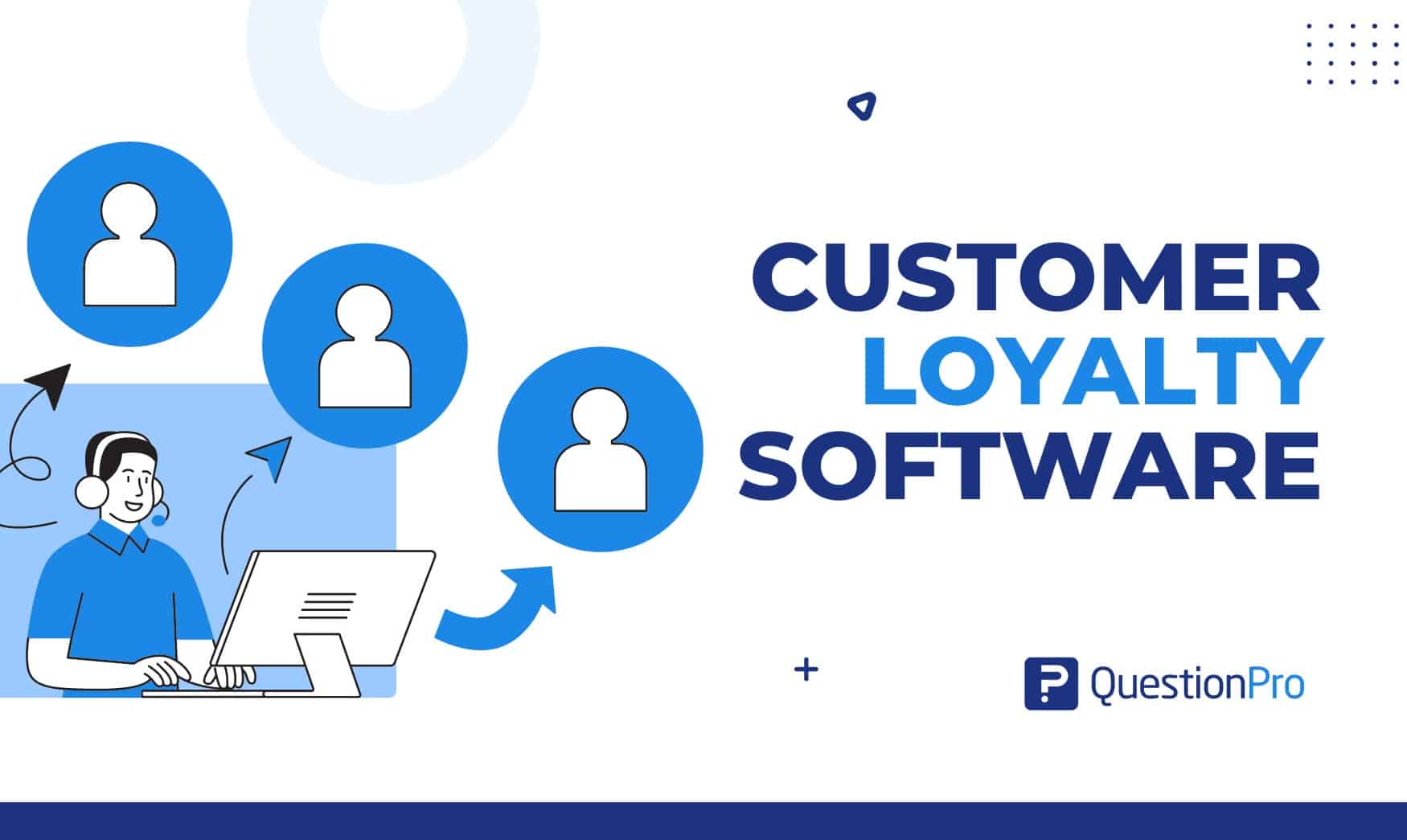
Customer loyalty software is a system that tracks what customers buy, rewards repeat behavior, and shows you which customers are drifting away. The right one turns one-time buyers into regulars. The wrong one becomes an expensive punch card nobody uses.
Retention pays for itself. Research found that raising retention by as little as 5 percent can lift profits by as much as 95 percent. In this guide, we’ll break down what loyalty software does, which features matter, how ten platforms compare, and how to pick one.
What is customer loyalty software?
Customer loyalty software is a platform that lets a business reward customers for repeat purchases and other valued actions, then measure whether those rewards change behavior. It stores member profiles, applies earning and redemption rules, and reports on retention.
Most platforms bundle four jobs into one product:
- Enrolling customers and keeping a profile of each member.
- Awarding points, stamps, tiers, or perks based on rules you set.
- Sending offers and reminders through email, SMS, app, or wallet pass.
- Reporting on repeat rate, redemption, and revenue from members.
Customer loyalty is the wider idea behind all of this: a customer’s ongoing preference for a brand, shown by repeat purchases and recommendations. Our guide on what customer loyalty is and how to get it covers the concept in depth.
How is it different from CRM and feedback software?
Loyalty software, CRM software, and feedback software overlap, which is why buyers mix them up. Each answers a different question, and many businesses need more than one.
| Tool type | Core question it answers | Typical output | Where it falls short alone |
|---|---|---|---|
| Loyalty software | Who earned what, and what should they get next? | Points balances, tiers, redemptions | Rarely explains why a member is unhappy |
| CRM | Who is this customer and what is their history? | Contact records, deal stages, service logs | Has no reward engine in most cases |
| Customer feedback software | How do customers feel, and why? | NPS, CSAT, comments, themes | Does not issue or manage rewards |
| Loyalty program (the strategy) | What deal do we offer for repeat business? | Rules, reward structure, tiers | Needs software to run at scale |
A loyalty program is the offer. Loyalty software is the machinery that runs it. For program design and reward models, read our guide to loyalty programs.
What features should customer loyalty software have?
The best customer loyalty software combines a flexible rewards engine with data you can act on. Start with the features below, then weight them by your business model.
- Rewards engine.
Support for points, tiers, stamps, cashback, and paid memberships. A good engine lets you change earning rules without a developer. - Integrations.
Connections to your store, point-of-sale (POS) system, email tool, and CRM. A loyalty tool that cannot see your sales data cannot reward them. - Segmentation.
The ability to group members by spend, recency, and behavior, then target each group differently. Our guide to customer segmentation shows common ways to split a base. - Omnichannel earning.
Members should earn and redeem the same way online, in-store, and in your app. - Analytics.
Dashboards for enrollment, repeat purchase rate, redemption rate, and member versus non-member revenue. - Referral and advocacy tools.
Rewards for bringing in new customers, which feeds customer advocacy. - Automation and AI.
Triggered messages for birthdays, lapsed members, and near-miss tier upgrades, plus AI that suggests the next best offer. - Privacy and consent controls.
Tools to honor opt-outs and data requests under rules such as California’s CCPA.
How does customer loyalty software help a business?
Loyalty software helps a business keep more customers, learn more about them, and spend less on winning replacements. Those gains come from structure, not from the software itself.
Here is how each benefit works in practice:
- Higher retention: Reward timing nudges a second and third purchase, which is where most customers are lost.
- First-party data: Every member action becomes data you own, which matters as third-party tracking fades.
- Better targeting: Segments let you send a lapsed buyer a win-back offer instead of a blanket discount.
- Lower acquisition pressure: A steady base of repeat buyers reduces how much you must spend on ads to hit revenue targets.
- More referrals: Members who feel recognized talk about the brand.
None of this happens automatically. A program with weak rewards or confusing rules produces enrollment but not behavior change. The measurement section below shows how to test the effect.
Which type of loyalty software fits your business?
The right type of loyalty software depends on how you sell, not on which brand has the longest feature list. A Shopify store, a coffee shop, and a bank need different tools.
| Business type | What matters most | Platform category | Examples in this guide |
|---|---|---|---|
| Ecommerce store | Store app integration, email, reviews | Ecommerce loyalty apps | Smile.io, LoyaltyLion, Yotpo |
| Local shop or restaurant | POS sync, simple setup, low monthly cost | Small business loyalty | Kangaroo Rewards, Fivestars, TapMango |
| Brand using digital cards | Wallet passes, push messages | Mobile wallet platforms | PassKit |
| Enterprise or multi-brand | APIs, complex rules, scale | Enterprise loyalty engines | Talon.One, Antavo |
| Any business with a loyalty program | Why members stay or leave | Feedback and experience layer | QuestionPro Customer Experience |
If you run both online and in-store sales, put POS integration first. If you sell only through an online store, put store-platform integration first.
Do B2B companies need different loyalty software?
B2B companies need loyalty tools built around accounts, not individual shoppers. A business buyer rarely earns points per purchase, and the relationship runs through several people.
The differences show up in a few places:
- Unit of loyalty: The account, not the person, is the member. Rewards go to the company or to a named buyer on its behalf.
- Reward type: Priority support, early access, co-marketing, and account reviews matter more than discount points.
- Signals: Renewal dates, support tickets, and product usage replace purchase frequency.
- Feedback: Relationship NPS surveys and executive check-ins carry more weight than a points balance.
Most consumer loyalty apps in this guide fit B2C poorly. A B2B team usually combines its CRM with account-level surveys and a referral or advocacy tool instead.
Top 10 customer loyalty software platforms
These ten platforms cover the main use cases. Pricing changes often, so confirm current plans on each vendor’s site before you decide. Where a vendor publishes prices, we list them as of October 2026.
1. QuestionPro Customer Experience
QuestionPro Customer Experience is a feedback and measurement platform, not a points engine. It tells you whether your loyalty program is working by tracking NPS, CSAT, and CES, and by explaining the reasons behind each score.
- Best for: Businesses that already run a rewards program and need to know why members stay or leave.
- Standout features: Closed-loop feedback, AskWhy follow-up questions, AI text and sentiment analysis, and customizable dashboards.
- Limits: It does not issue points or manage reward catalogs, so pair it with a rewards tool.
- Pricing: Quoted per organization based on program scope.
2. Smile.io
Smile.io is a loyalty and referral app built mainly for ecommerce stores. It suits merchants who want points, referrals, and VIP tiers without custom development.
- Best for: Small and midsize online stores.
- Standout features: Points, referrals, branded rewards page, and multi-language support.
- Limits: The free plan caps monthly orders and omits some analytics.
- Pricing: A free plan, then paid plans from $15 per month.
3. LoyaltyLion
LoyaltyLion is an e-commerce loyalty platform focused on data-led programs for growing online brands. It leans on segmentation and campaign tools more than simple points.
- Best for: Online brands with steady order volume.
- Standout features: Tiers, points, referrals, and customer segment reporting.
- Limits: Higher tiers move to custom pricing.
- Pricing: The Classic plan is listed at $199 per month for 500 orders, with a 14-day trial.
4. Yotpo Loyalty and Referrals
Yotpo pairs loyalty with reviews and other ecommerce marketing tools. That makes it a fit for stores that want one vendor for several retention tactics.
- Best for: Ecommerce brands already using reviews or user-generated content.
- Standout features: Points, tiers, referrals, and ties to Yotpo’s other products.
- Limits: Full feature access requires paid tiers.
- Pricing: A free plan exists, with paid tiers starting at $199 per month.
5. Kangaroo Rewards
Kangaroo Rewards is a loyalty program platform for small and midsize businesses, including restaurants, salons, and retail shops. It focuses on quick setup and in-store use.
- Best for: Local businesses that want a simple points program.
- Standout features: POS connections, referral rewards, and email or SMS campaigns.
- Limits: Less suited to complex enterprise rule sets.
- Pricing: Tiered monthly plans with a trial.
6. Fivestars
Fivestars targets local merchants with a card-linked or phone-based rewards program. Its pitch is bringing neighborhood customers back more often.
- Best for: Single-location and small multi-location merchants.
- Standout features: POS-linked rewards and marketing campaigns.
- Limits: Pricing is quote-based, so budgeting takes a sales call.
- Pricing: Custom.
7. TapMango
TapMango combines a branded mobile app, online ordering, and loyalty for food and beverage businesses. It suits restaurants and cafes that want their own app instead of a shared network.
- Best for: Restaurants, cafes, and quick-service brands.
- Standout features: Custom-branded app, ordering, and rewards in one product.
- Limits: Focused on food service, so retailers may find a narrower fit.
- Pricing: Custom.
8. PassKit
PassKit issues loyalty cards, coupons, and tickets as mobile wallet passes on Apple Wallet and Google Wallet. Members need no app download.
- Best for: Brands that want low-friction digital cards.
- Standout features: Wallet pass design, push updates, and API access.
- Limits: It is a pass platform, so complex reward logic needs extra build work.
- Pricing: Plan-based.
9. Talon.One
Talon.One is an API-first promotion and loyalty engine for large digital businesses. Developers build custom reward logic on top of it.
- Best for: Enterprises with engineering teams and complex promotion rules.
- Standout features: Rules engine, coupons, referrals, and loyalty tiers.
- Limits: It needs development resources and is overbuilt for small shops.
- Pricing: Custom.
10. Antavo
Antavo is an enterprise loyalty cloud that supports multi-brand and multi-region programs. It is built for retailers and consumer brands that run loyalty as a core channel.
- Best for: Large retailers and brands with global programs.
- Standout features: Configurable program types, campaign tools, and integration options.
- Limits: Implementation takes planning and budget.
- Pricing: Custom.
How do you choose customer loyalty software?
Choose customer loyalty software by working backward from your goal, your systems, and your total cost. A short, scored shortlist beats a long feature hunt.
- Set one measurable goal.
For example, raise the 90-day repeat purchase rate from 22 percent to 28 percent. - List your systems.
Note your store platform, POS, email tool, and CRM. Rule out any vendor that cannot connect to them. - Match the category.
Use the business-type table above to cut the field to three or four vendors. - Count the full cost.
Add subscription, setup, per-order fees, reward costs, and staff time for 12 months. - Score the shortlist.
Rate each vendor from 1 to 5 on integrations, rewards flexibility, reporting, ease of use, and support. - Run a pilot.
Launch to a small member group for 60 to 90 days and compare it with a control group.
Pilot results beat demos. A vendor that looks perfect in a sales call can still frustrate your staff at the register.
How do you measure whether loyalty software is working?
You measure loyalty software by comparing member behavior with non-member behavior over the same period. The core question is whether members buy more often, spend more, and stay longer.
Track these metrics from day one:
| Metric | Formula | What it tells you |
|---|---|---|
| Enrollment rate | Enrolled customers / total customers | Whether people see value in joining |
| Repeat purchase rate | Customers with 2+ orders / total customers | Whether rewards drive a second purchase |
| Redemption rate | Rewards redeemed / rewards issued | Whether rewards feel reachable and useful |
| Retention rate | Customers kept over a period / customers at start | Whether members stay |
| Member revenue lift | Avg. member spend minus avg. non-member spend | Whether the program pays for itself |
| NPS | % promoters minus % detractors | Whether members would recommend you |
Pair these numbers with survey data. Our guides to customer retention rate and customer loyalty analytics show how to calculate and read each one.
What do real loyalty programs look like?
Well-known programs show how software-backed mechanics turn into customer habits. The first two run on proprietary systems, so treat them as models rather than vendor picks.
- Starbucks Rewards: Earning is tied to payment through the mobile app. Members collect Stars on purchases and redeem them for food and drinks. The lesson: when the loyalty tool and the payment tool are the same, earning takes no extra step.
- Sephora Beauty Insider: Spending tiers named Insider, VIP, and Rouge unlock added perks. The lesson: tiers give members a goal, which encourages them to consolidate purchases with one retailer.
- A neighborhood coffee shop: A POS-linked stamp card with a free drink on the tenth visit applies the same logic at small scale. The lesson: a clear, reachable reward after repeat visits works at any size.
- An online skincare store: A points and referral app on a Shopify store rewards reorders and friend invitations. The lesson: ecommerce loyalty is mostly about the second and third order.
What trends are shaping loyalty software in 2026?
Loyalty software is moving toward personalization, wallet-based delivery, and data ownership. Each trend changes what you should ask vendors in a demo.
- AI-driven offers.
Platforms now suggest the next best reward or send timing for each member. Ask vendors to show which decisions the AI makes and which you control. - Mobile wallet passes.
Members add a card to Apple Wallet or Google Wallet instead of installing an app. This lowers the effort to join. - First-party data.
As third-party tracking declines, the purchase and preference data members share becomes a core marketing asset. - Paid and value-based programs.
More brands test paid memberships and non-discount perks, since constant discounts erode margin. - Privacy by design.
Consent records and deletion tools are now standard buying criteria, especially for US brands serving California residents under the CCPA.
How does QuestionPro Customer Experience support a loyalty program?
QuestionPro Customer Experience adds the missing “why” to loyalty data. A rewards tool shows what members did. Feedback software shows what they felt and what to fix.
The platform’s Customer Experience software supports a loyalty program in three specific ways:
- Survey triggers: NPS, CSAT, and CES surveys go out after purchases, redemptions, or support contacts.
- Closed-loop recovery: Unhappy members are routed to a named owner, so you can win them back before they leave. Our guide to customer churn explains why this matters.
- Reason capture: The AskWhy question type pairs each score with the reason behind it, and AI text analysis groups open comments into themes.
A practical example: a retailer notices low redemption of a points reward. A short survey to members who earned but never redeemed shows the catalog feels irrelevant. The retailer changes the rewards, then watches redemption and NPS in the same dashboard.
A final thought on choosing customer loyalty software
Customer loyalty software works when it makes repeat behavior easy and rewarding for the customer and measurable for you. The platform matters less than the clarity of your goal, the quality of your data, and your willingness to adjust.
Before you sign anything, ask three questions:
- What single outcome will tell us this worked?
- Can the tool see the sales data it needs to reward?
- How will we learn why members stay or leave?
Rewards bring people back once. Being listened to is what keeps them.
Frequently Asked Questions (FAQs)
Costs range from free entry plans to custom enterprise quotes. Small ecommerce tools often start at $15 to $199 per month, while enterprise engines price by scale. Add reward costs, setup, and staff time to compare vendors fairly.
Simple ecommerce apps can launch in days. POS-based programs for local shops often take one to three weeks. Enterprise platforms with custom rules and integrations can take several months, so build testing time into your plan.
Yes. Tools such as Smile.io, Kangaroo Rewards, and TapMango are built for small teams. A small business should favor fast setup, POS or store integration, and predictable monthly pricing over advanced rule engines.
Reputable vendors provide consent and data-deletion tools, but compliance still depends on how you use the data. Ask each vendor how it handles opt-outs and data requests, and have counsel review your member terms.
Yes, for very small programs. A paper stamp card or spreadsheet works for a single location. Once you need tiers, referral tracking, or reporting by segment, manual tracking becomes error-prone and software pays off.