Employee suggestion box software gives every employee a structured, trackable way to share ideas instead of dropping a note in a box and hoping someone reads it. It replaces email chains, sticky notes, and shared spreadsheets with one system for collecting, reviewing, and acting on employee feedback.
The stakes are real. Gallup’s 2026 State of the Global Workplace report found that global employee engagement dropped to 20 percent in 2025, the lowest level since 2020, and estimated that low engagement now costs the world economy roughly $10 trillion a year in lost productivity. A structured way to hear employees out is one of the more direct responses available to any HR team facing that trend.
This guide breaks down what employee suggestion box software actually does, how it differs from a generic idea board, which features are worth prioritizing, and how to measure whether a program is working.
What is employee suggestion box software?
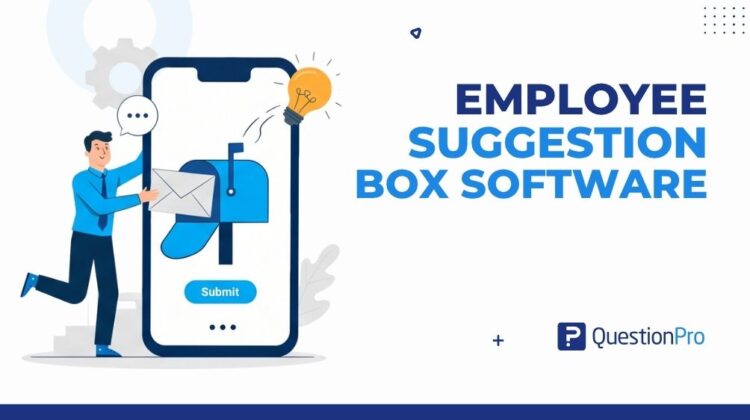
Employee suggestion box software is a digital system that lets employees submit ideas, track their status, and get feedback on what happens next. It replaces the physical box, the shared inbox, and the spreadsheet with one place where ideas can be reviewed, discussed, and acted on.
Most platforms in this category share a common set of capabilities:
- A submission form employees can access from a desktop or a phone
- Voting and commenting so colleagues can react to each other’s ideas
- Status tracking so submitters know if an idea is under review, approved, or declined
- Reporting that shows submission volume, participation, and outcomes
- Optional anonymity for sensitive feedback
This category is sometimes called employee idea management software or a digital suggestion box. The names differ across vendors, but the goal stays the same across all of them: turn scattered feedback into ideas an organization can actually act on, rather than a pile of notes nobody revisits.
How is an employee suggestion box different from a generic idea board?
Many workplace tools use the phrase “idea board,” and that has created some confusion in search results and buying decisions alike. A generic idea board, the kind found in visual collaboration tools, is built for live brainstorming and workshop sessions. An employee suggestion box is built for an ongoing feedback program with review and follow-up built in from day one.
The table below breaks down where the two categories overlap and where they part ways.
| Aspect | Generic idea board | Employee suggestion box software |
|---|---|---|
| Primary use | Live brainstorming and whiteboarding | Ongoing employee feedback and idea intake |
| Typical session | One meeting or workshop | Continuous, open year-round |
| Review workflow | Rarely built in | Core feature, with defined stages |
| Anonymity | Uncommon | Common, especially for sensitive topics |
| Reporting | Limited to the board itself | Participation, implementation, and impact metrics |
If a team needs a canvas for a single workshop, a visual whiteboard tool works fine for that one session. If the goal is a lasting program that captures ideas from across the company and closes the loop on every submission, dedicated suggestion box software is the better fit.
What features matter most in employee idea management software?
Feature lists vary between vendors, but a handful of capabilities separate a tool people actually keep using from one that quietly dies after the pilot phase.
- Multiple submission channels. Web, mobile, and single sign-on (SSO) login remove the friction that keeps people from submitting in the first place.
- Voting and commenting. Peers can react to an idea, which surfaces strong submissions without relying on one reviewer’s judgment alone.
- Defined review stages. Ideas should move through clear steps, such as submitted, under review, approved, or declined, rather than sitting in one unsorted pile.
- Automatic notifications. Submitters need to know when their idea changes status without having to check back manually.
- Tagging and categories. Grouping ideas by department or theme makes patterns easier to spot over time.
- Exportable reporting. Leadership will eventually ask whether the program is worth the budget, and a team needs data ready when that question comes.
Prioritize the two or three features that map to an organization’s actual bottleneck. If ideas already come in fine but nothing happens after that, review workflow and notifications matter more than a flashier submission form.
Some organizations pair a suggestion box with a more formal peer review process, such as 360 Feedback Software, for a fuller picture of how ideas and performance connect. Both typically sit on top of the same underlying survey software, which keeps data collection consistent across programs.
How does a digital suggestion box handle idea submission and voting?
Most platforms move an idea through a similar sequence from submission to decision, even though the interface details differ from vendor to vendor.
| Stage | What happens |
|---|---|
| Submission | An employee submits an idea through a web portal or mobile app, often with SSO login and an option to stay anonymous |
| Peer interaction | Colleagues view the idea, add comments, and vote or react, which raises visibility for strong submissions |
| Review | A manager, committee, or HR team evaluates the idea against defined criteria |
| Decision | The idea is approved, declined, or parked, and the reason is recorded |
| Implementation | Approved ideas move into delivery, with progress visible back to the original submitter |
Every stage should stay visible to the person who submitted the idea, not just to the reviewer handling it. That visibility is what separates a working feedback loop from a black hole where ideas go in, and nothing ever comes back out.
Where does QuestionPro’s Employee Experience platform fit in?
QuestionPro’s Employee Experience platform includes an idea board employees can use to submit suggestions, vote on colleagues’ ideas, and leave comments, all from one login that supports SSO providers such as Google, Oracle, and Office 365. Ideas are organized into views such as all ideas, my ideas, popular ideas, and a leaderboard that tracks who has submitted the most, so both individual contributors and department heads can see participation at a glance.
The feature works best as part of a broader employee survey software setup, where idea submissions sit alongside engagement surveys and pulse checks rather than standing alone. That combination gives HR teams a fuller picture of what employees think and what they actually want changed, instead of two disconnected data sources.
What does this look like across different types of teams?
The specifics vary by industry, but a few patterns show up whenever a suggestion program actually works.
- Retail and hospitality.
Frontline staff flag issues at the point of service, such as a checkout step that slows down every transaction. A quick fix based on that feedback often saves more time than any process audit run from head office.
- Manufacturing.
Line workers usually know exactly where the real bottlenecks are. A defined review stage that routes ideas to the right supervisor keeps a good suggestion from getting lost between shifts.
- Remote and hybrid teams.
Without a shared office, ideas that used to surface in the break room have nowhere left to go. A digital suggestion box gives distributed employees the same voice their in-office colleagues have always had.
Across all three patterns, the common thread is the same: the idea has to reach someone who can act on it, and the submitter has to hear back either way, even if the answer is no. That pattern lines up with QuestionPro’s Positive People Science research on what actually drives intrinsic motivation at work, rather than assumptions about what employees want.
How do you measure whether an idea management program is working?
A suggestion program that only tracks submission volume is measuring the easy part. The metrics that actually show impact go a step further than a simple count.
| Metric | What it tells you |
|---|---|
| Participation rate | Share of employees who have submitted at least one idea |
| Time to first response | How long it takes a submitter to hear anything back |
| Implementation rate | Percentage of approved ideas that actually get built or launched |
| Cost or time saved | Measurable business impact from ideas that were implemented |
| Repeat submission rate | Whether employees who submit once come back to submit again |
Repeat submission rate is worth watching closely. It is one of the clearest signs that employees trust the process, since people who feel ignored the first time around rarely bother submitting a second idea. Many organizations track these figures alongside broader sentiment metrics such as employee Net Promoter Score to see whether the suggestion program is moving overall engagement.
What mistakes should you avoid when launching a suggestion box?
Most failed suggestion programs fail for process reasons, not software reasons.
- Going silent after submission. If employees never hear back, participation drops within a few weeks and rarely recovers on its own.
- Skipping a defined review process. Without clear criteria, one manager approves an idea that another would reject, and submitters lose trust in the whole system.
- Treating votes as the only signal. Popular ideas are not always the most valuable ones. A complex operational fix can save real money while collecting far fewer votes than a cafeteria complaint.
- Launching without a plan for implementation. Collecting ideas is the easy part of the process. If there is no owner or budget for follow-through, the program becomes a wish list instead of a working system.
- Forgetting frontline employees. A web-only tool excludes anyone without a desk or a company email address, which cuts out the people closest to daily operations.
A suggestion box only works if the loop closes
The tool matters less than most vendors would have anyone believe. A basic form paired with a disciplined review process will consistently outperform a feature-rich platform that nobody trusts. What separates a working suggestion program from a forgotten one is whether employees get an answer, whether that answer comes quickly, and whether they can see what happened to the ideas that got approved.
Software makes all three of those things easier to do consistently, especially once a company grows past the point where one HR manager can track every submission by hand in a spreadsheet. Choose a platform that fits the workforce, define the review process before launch, and treat the first few months as the test that decides whether employees will keep showing up with ideas.
Frequently Asked Questions (FAQs)
For teams under 50 people, a shared form and a disciplined manual process can work fine on their own. Once headcount grows past that point, or ideas start slipping through the cracks, dedicated software pays for itself in time saved on tracking and follow-up.
Most employee suggestion box platforms support anonymous submissions, though the details vary by vendor. Confirm whether anonymous means hidden from evaluators, from managers, or only from other employees, since sensitive workplace topics often need that distinction spelled out clearly upfront.
A suggestion box collects open-ended ideas at any time, while an engagement survey asks structured questions on a set schedule, such as quarterly or annually. Many US organizations run both, using surveys to measure sentiment and suggestion boxes to capture specific, actionable improvement ideas.
Generally, no, but HR and legal teams should still set clear policies on what anonymous actually means, how long submissions are stored, and how harassment or safety complaints get routed, since those categories may require documented follow-up regardless of anonymity settings.
Most organizations see initial submissions within the first two weeks of launch. Meaningful patterns, such as which departments participate most and which ideas get implemented, typically take 90 days to appear, which is why a short pilot is worth building into the rollout.