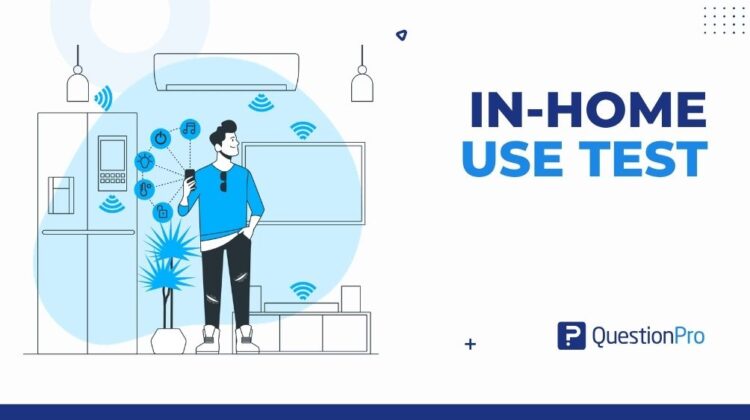
Launching a product without testing it in the real conditions people will actually use it is a costly gamble. An in-home use test, often shortened to IHUT, gives you a cost-effective way to check a product with real consumers before committing to a full launch.
Rather than relying on a controlled lab setting, an IHUT sends the product to participants who use it at home, in their own routine, and then reports back through a survey, phone interview, or occasionally an in-person conversation. That real-world context tends to produce more honest signals about how a product will actually perform once it hits the shelf.
This article covers what an in-home use test measures, how the process typically runs, and what a completed IHUT can tell you before launch, often as a final step following earlier concept testing work.
What is an in-home use test?
An in-home use test is a market research method where consumers use a product in their own home over a defined period, then share feedback through a survey or interview about their experience, satisfaction, and likelihood to buy.
Unlike testing in an artificial lab environment, an IHUT captures how a product performs in the messy reality of daily use, which tends to produce more realistic feedback on satisfaction, usage patterns, and areas for improvement. Participants are usually recruited through a panel management system matched against specific criteria relevant to the product category.
How does an in-home use test work?
An in-home use test works by shipping a product to qualified participants, then collecting feedback at set intervals through structured questionnaires over the usage period.
The typical process follows these steps:
- Recruit participants who match your target audience through an online panel, paired with survey software for the questionnaires themselves.
- Ship the product, along with any necessary instructions, to selected participants.
- Send a first questionnaire after an initial usage period, often around one week, to capture first impressions.
- Send a final questionnaire after a longer usage period, often several weeks, to capture detailed satisfaction and improvement feedback.
The exact usage period depends heavily on the product category. A snack food might only need a few days of use before feedback is meaningful, while a skincare product or household appliance often needs several weeks before results reflect real usage patterns.
What does an in-home use test measure?
An in-home use test measures first impressions, ongoing satisfaction, purchase intent, and brand fit, tracked across the full usage period rather than a single snapshot.
Acceptor-rejector analysis
Acceptor-rejector analysis asks participants key questions before and after using the product to assess whether it meets the benefits promised to consumers. If acceptance drops between the two measurements, the data helps pinpoint what caused the decline.
Satisfaction tracking
Overall satisfaction and satisfaction with specific product features get measured to surface early areas for improvement. Measuring the relative importance of different product aspects ensures resources go toward optimizing what actually matters most to consumers, and tracking this over multiple questionnaires shows whether satisfaction shifts as the novelty wears off.
Benefit and brand fit testing
A card-based benefit test shows participants specific product benefits and asks them to rate how well each one matches their actual experience, often by sorting cards into categories. A similar card exercise can measure how well a product’s experience aligns with the broader image consumers already have of the brand, which shows whether the product reinforces or undermines existing brand values.
Recommendation intent
Questions about recommendation likelihood generate a Recommendation Intent Score, giving insight into how likely participants are to advocate for the product among their own network after using it, a dynamic closely related to how Net Promoter Score works in ongoing customer relationships.
Why does real-world testing produce better data than a lab setting?
Real-world testing produces better data than a lab setting because participants use the product the way they actually would in daily life, without the artificial attention a controlled test environment can create.
This matters especially for products where context affects the experience, such as food, personal care items, or household goods used repeatedly over time. Research on ecological validity from the American Psychological Association supports this idea broadly: behavior observed in a natural setting tends to predict real-world outcomes better than behavior observed under artificial, controlled conditions. A lab test might catch an obvious defect, but it rarely reveals how a product fits into someone’s actual routine, or whether they would genuinely choose to buy it again.
When should a business run an in-home use test?
A business should run an in-home use test as one of the final checks before a full product launch, once earlier concept testing has already validated the basic idea.
IHUTs work well for:
- Confirming a product is ready for market before committing to full production.
- Comparing a new formulation or design against a current product.
- Identifying specific improvements before a wider rollout.
- Validating packaging, naming, or flavor changes with real usage context.
How do you set up an effective in-home use test?
Setting up an effective in-home use test starts with clear recruitment criteria and a realistic usage period matched to the product category.
- Define the target audience precisely, since a mismatch here undermines the entire study.
- Choose a usage period long enough to move past initial novelty and reflect genuine habits.
- Build a first questionnaire focused on immediate impressions and a final questionnaire focused on sustained satisfaction.
- Include open-ended questions throughout to capture specific, unprompted improvement ideas.
A market research platform that supports panel recruitment, multi-wave survey scheduling, and dashboard reporting makes it easier to manage this kind of extended study without losing track of participants across several weeks.
An in-home use test is the final real-world check before launch
An in-home use test gives a business its clearest signal yet on whether a product is ready for the market, since it combines the efficiency of a structured research process with feedback collected under genuine, everyday conditions.
Comparing acceptance before and after usage, alongside satisfaction and recommendation intent, tells you not just whether a product works, but whether people will actually keep choosing it.
Frequently Asked Questions (FAQs)
Most in-home use tests run anywhere from one to six weeks, depending on the product category. Fast-consumption products like snacks need less time, while personal care or durable goods often require several weeks to reflect real usage patterns.
Sample sizes vary by product category and confidence level needed, but many IHUTs recruit between 100 and 300 participants to produce reliable directional data without the cost of a much larger study.
A focus group gathers reactions in a short, moderated session, often without hands-on product use over time. An in-home use test measures extended, real-world usage, which produces more reliable signals about long-term satisfaction and repurchase intent.
No. An IHUT is a strong final check before launch, but it works on a smaller, recruited sample rather than the open market, so it cannot fully replace post-launch tracking once a product reaches broader distribution.
Products used repeatedly in daily routines, such as food, beverages, personal care items, and household goods, tend to benefit most, since their value only becomes clear after sustained use rather than a single trial.