When people are shown multiple ideas at once, their answers often turn into comparisons instead of real opinions. That makes it tough to know what actually works. Monadic testing solves this by keeping the focus on one idea at a time.
People react to a single product, message, design, or price point, just like they would in real life. The result is feedback that feels more honest and easier to act on.
Because of this, monadic testing is a common approach in consumer research. Brands use it to understand how ideas perform on their own before deciding what to improve, launch, or leave behind.
What is Monadic Testing?
Monadic testing is a research method where each participant evaluates only one concept in a survey. They do not see other versions in the same survey, so their answers stay focused on that single idea. This setup keeps the feedback more accurate because nothing else influences the respondent’s opinion.
This approach helps eliminate outside influences and reduces respondent bias, leading to more reliable data.
Key points about monadic testing:
- No direct comparisons
- Less bias in feedback
- Strong interpretation
- Designed to gather both qualitative and quantitative data for consumer research
This structure helps you collect feedback that is not shaped by direct comparison. As a result, the data more closely reflects how people react in real life.
Learn About: Monadic vs sequential monadic surveys
Why Monadic Testing Matters in Research?
Monadic testing matters because it helps you get reliable feedback from your surveys. People react to just one idea, so their answers are easier to read and trust.
Here are the main reasons researchers use monadic testing:
- True first reactions: Respondents see only one concept, so their answers reflect a real first impression, not a comparison.
For example, if you show a new product concept to a respondent without showing alternatives, their reaction reflects how they would respond when seeing it for the first time on a shelf or website. - Strong performance metrics: Scores for appeal, clarity, or purchase intent link directly to a single concept, making results easier to explain.
- Better diagnostic insights: Open comments and ratings describe one idea at a time, allowing for in-depth feedback and more detailed feedback about each concept. This makes it easy to see what works and what needs fixing.
- Fair comparison across concepts: Even though respondents see only one version, you can compare results across survey cells and spot the strongest concept.
- Closer to real-life decisions: In many situations, people see one product, one ad, or one message at a time, so the survey setup feels more realistic.
For example, when testing a homepage message or email subject line, users usually see only one version, not several side by side, which makes monadic testing a natural fit.
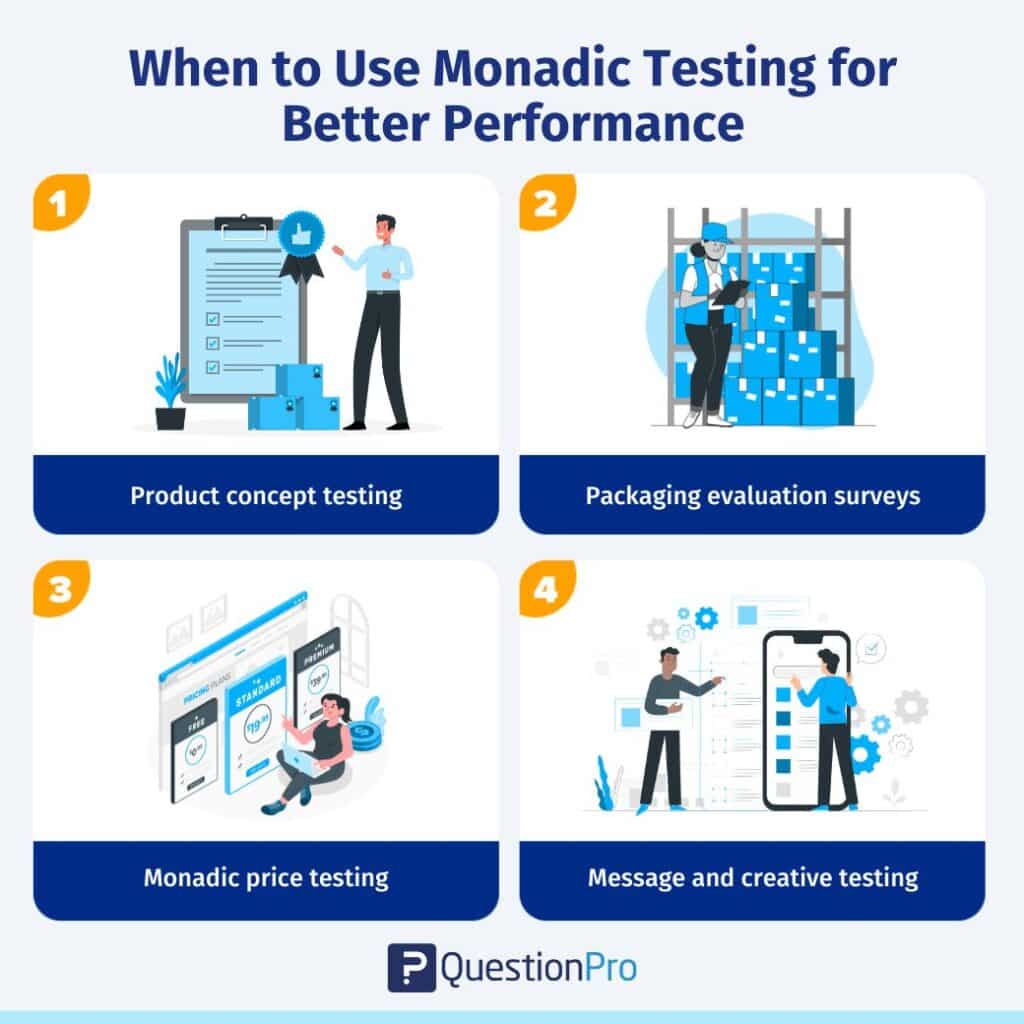
When to Use Monadic Testing for Better Performance
Monadic testing works best when you want focused feedback on one idea at a time. It is especially useful in surveys where you need honest reactions without the influence of multiple concepts shown together.
It is often used to evaluate multiple concepts by assigning each to a separate group of respondents.
- Product concept testing
Use monadic testing when you want to see how a single product idea performs on its own. One concept test per respondent helps you measure appeal, clarity, and purchase intent in a simple way.
This testing is especially valuable for testing a new concept or comparing a new concept to a current product.
- Packaging evaluation surveys
Minor design changes can affect how people feel about packaging. Showing one pack design per survey keeps responses honest and focused. This makes it easier to see which design works better.
- Monadic price testing
Use monadic price testing when you want to understand real price acceptance. Monadic price tests can be used to test different price points by segmenting the sample and analyzing responses at each price.
Each respondent sees only one price, so cheaper or more expensive options do not shape their answer. This approach helps you analyze demand and behavioral responses at various price points.
- Message and creative testing
When you test taglines, ads, or key messages, monadic surveys keep attention on one version at a time. This helps you see which message is relevant and more engaging for your audience.
In software and product development, monadic testing is primarily used during the concept validation stage to understand unfiltered user reactions to new features or designs. Development teams use this testing to make high-stakes decisions before full-scale production or launch.
The survey design should allow for follow-up questions to dive deeper into respondents’ feelings about the concept being tested.
Limitations of Using Monadic Testing Surveys
Monadic testing is a strong method for collecting feedback, but it is not always the right choice. Understanding its limitations helps you decide when to use it and when another approach may work better.
- Larger sample size needed: Each respondent sees only one concept, so you need separate groups for every idea. This increases the total sample size and can raise research costs.
- Higher cost for multiple concepts: If you test many concepts, running several monadic cells can become expensive. More respondents mean more time and budget.
- No direct comparison inside the survey: Respondents do not compare concepts side by side. This makes it harder to capture preference rankings unless you compare results across groups later.
- Limited context for price or competitive ideas: In price testing or competitive analysis, showing only one option may miss how people respond when presented with alternatives. This can reduce real-world accuracy in some cases.
- Longer fieldwork for niche audiences: If your target group is small or hard to reach, filling separate monadic cells can take more time.
Monadic vs. Sequential Monadic Testing
Monadic and Sequential Monadic testing are the two most common ways to gather consumer feedback on new concepts, designs, or products.
While they sound similar, the core difference lies in how many items each person evaluates.
Comparison Table: Monadic vs. Sequential Monadic Testing
| Feature | Monadic Testing | Sequential Monadic Testing |
| Concept exposure | One concept per respondent | Multiple concepts shown in sequence |
| In-survey comparison | Not possible | Happens naturally |
| Bias risk | Low | Higher due to order effects |
| Feedback type | Independent, focused feedback | Relative, comparison-based feedback |
| Best for | Measuring true first impressions | Ranking or screening ideas |
| Sample size | Larger | Smaller |
| Survey length | Short | Longer |
| Respondent fatigue | Low | Medium to high |
| Real-world realism | High | Lower |
| Analysis effort | Simple and direct | More complex |
Which One Should You Use?
Choose monadic testing when you want unbiased feedback on how a single idea performs on its own. It works best for product concepts, pricing, packaging, and message testing where first impressions matter.
Choose sequential testing when you need to compare or rank multiple ideas quickly using a smaller sample. It is useful for early-stage idea screening, but results may be influenced by order effects.
How to Conduct Monadic Testing With QuestionPro
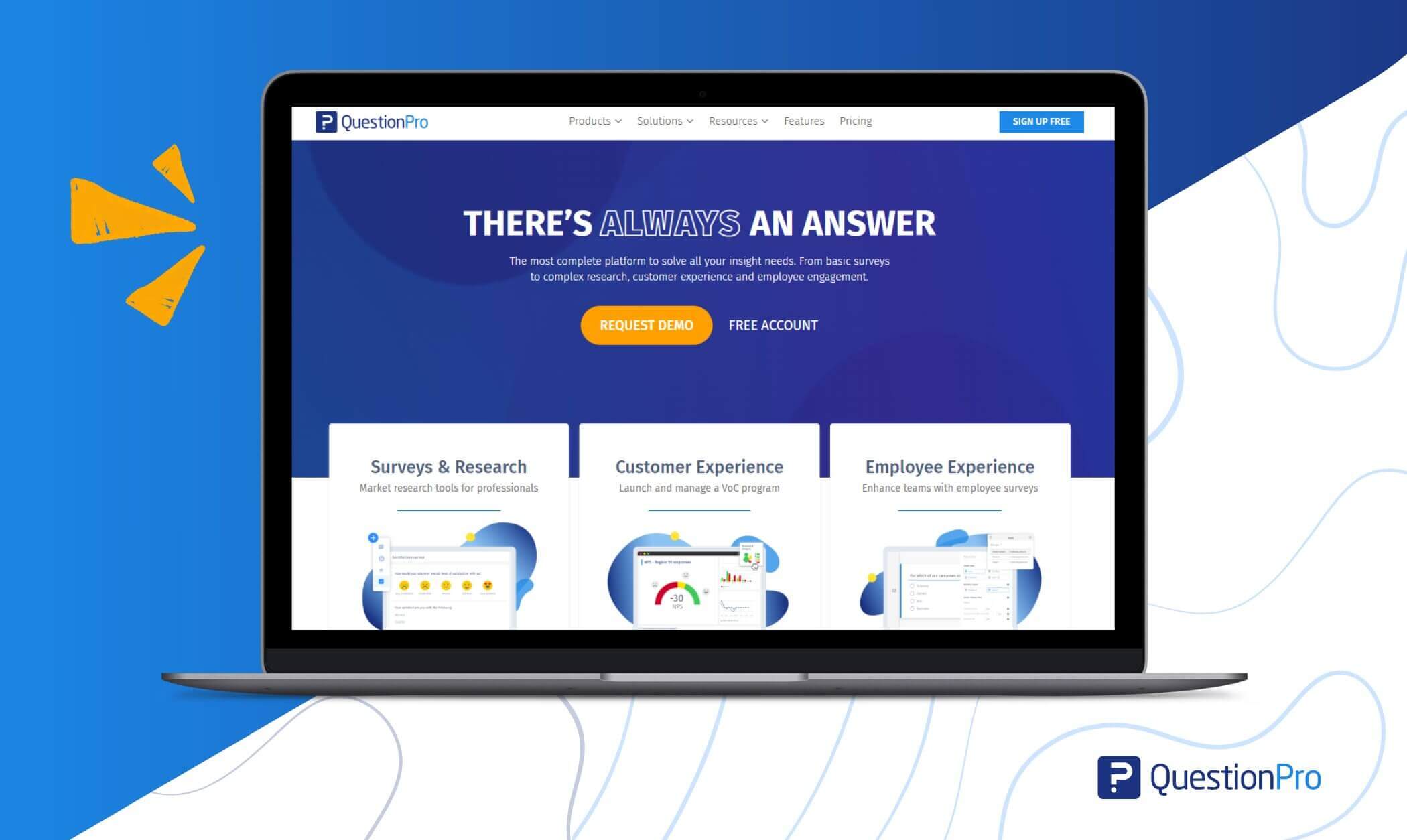
QuestionPro makes it simple to run monadic testing by helping you build survey questions, organize concepts into blocks, and randomly show only one concept to each respondent. The steps below guide you through the whole process.
1. Creating survey questions
Start by creating the survey questions you will use to evaluate each concept. QuestionPro provides flexible tools to build simple, consistent survey items. You can use:
- Ready-made templates for faster setup
- Different question types, such as rating scales, purchase intent, and open text
- Survey logic to control flow and skip patterns
- QuestionPro AI, which creates survey questions based on your prompt
With split cell monadic testing, you can ask more questions per concept without causing respondent fatigue. This enables you to gather more detailed feedback on each idea. Including follow-up questions after initial responses can help you collect deeper insights about respondents’ feelings and preferences.
Keep your questions short and similar across concepts so the results are easy to compare.
2. Set Up a Monadic Test
Once your questions are ready, you can set up the monadic structure in your survey so each respondent sees only one concept. In QuestionPro, you can:
- Insert Concepts
Set up each concept in its own section of the survey. - Use the Monadic Logic
For monadic testing, you will use randomization and add supporting questions inside each block. - Add Screening Questions
QuestionPro allows screening based on demographics, behaviors, product familiarity, or custom criteria. You can use it to test specific personas. - Launch to Your Audience:
Distribute the survey through:
- QuestionPro Audience
- Email lists
- Social channels
- Embedded website links
- Mobile apps
- Analyze and Share the Results
Use QuestionPro Analytics to compare key results across concepts. You can review open-text sentiment, rankings, and basic statistical differences to see how each concept performs.
Use QuestionPro’s reporting dashboard to compare how each concept performs. You can quickly review key scores, open-text comments, and price insights, then export charts or tables to share with your team.
Conclusion
Monadic testing is a simple and effective way to collect honest feedback through surveys. By showing only one concept to each respondent, you reduce bias and capture real first impressions.
The method fits naturally into many research tasks, especially when clarity and focus matter. Even with its limitations, monadic testing remains a strong choice when you want honest and reliable data.
With tools like QuestionPro, running a monadic test becomes much easier. You can create reliable questions, organize concepts into blocks, and use random assignment to keep the survey structure simple and fair.
It gives you a clear path to understanding your ideas. When used well, it helps you choose better concepts, design stronger messages, and move forward with insights you can trust.
Frequently Asked Questions (FAQs)
Answer: It provides clean data that points directly to what works, what fails, and what needs improvement in each concept.
Answer: It works well for testing product ideas, packaging designs, price points, messages, and creative assets.
Answer: Yes, because each concept needs its own group of respondents.
Answer: Yes, monadic price testing is often used to measure real willingness to pay without comparison effects.
Answer: QuestionPro allows you to create separate blocks for each concept and use random assignment so each respondent sees only one version.
Answer: Simple rating items, purchase intent questions, clarity checks, and short open text questions work well.