Proximity bias is the tendency for managers to favor, trust, or reward employees who are physically closer to them over those working remotely or in a different location, often without realizing it. It shows up as a preference for the people a manager sees every day, regardless of who is actually delivering the strongest work.
The effect is not just a fairness problem. SHRM research on remote supervisors found that 67% viewed their remote employees as more easily replaceable than in-office staff, and 42% admitted they sometimes forget about remote workers entirely when assigning tasks. That kind of oversight quietly shapes who gets promoted, who gets mentored, and who eventually leaves.
In this guide, we’ll break down what proximity bias looks like in practice, why it matters for hybrid teams, and what managers can do to prevent it.
What is proximity bias?
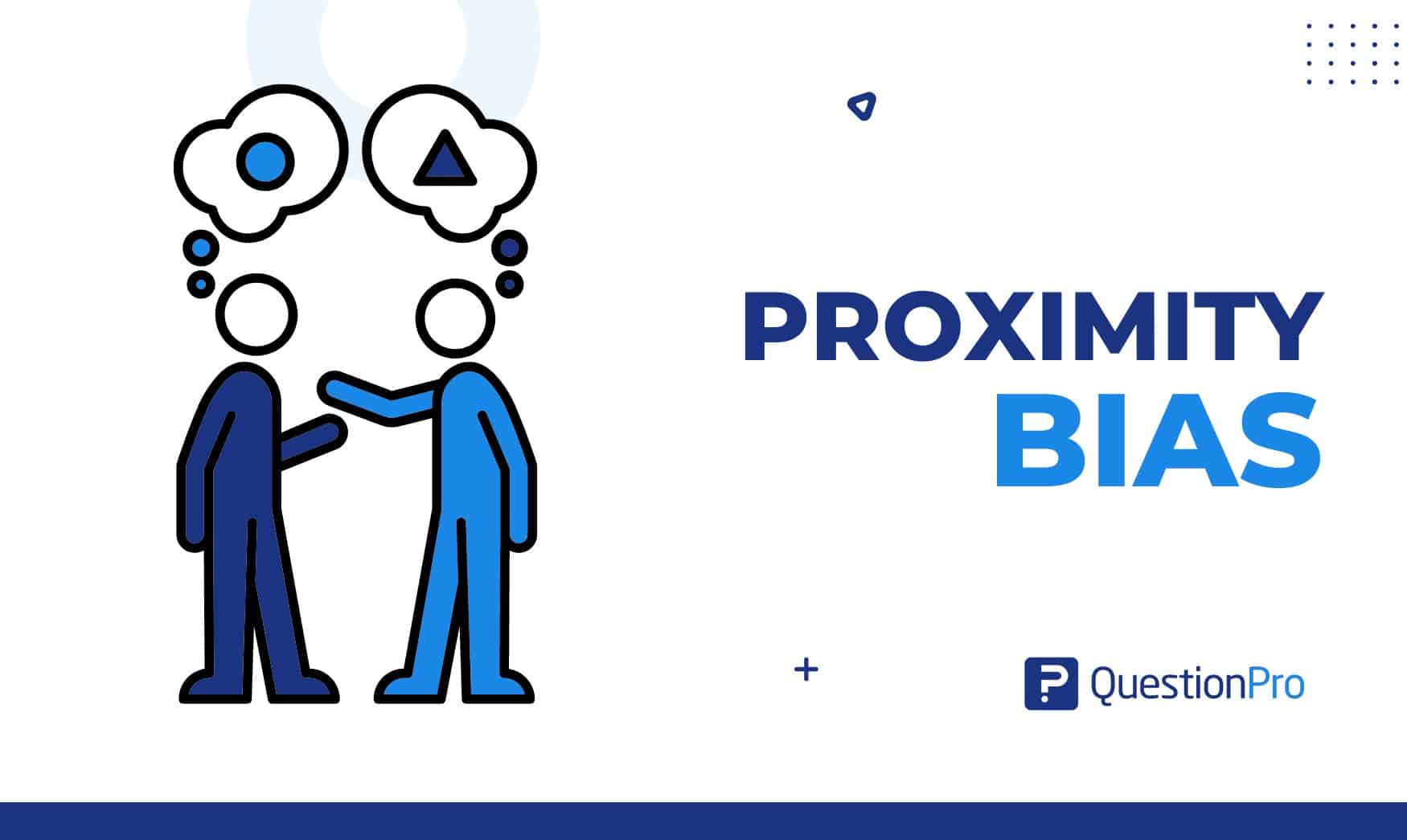
Proximity bias is an unconscious tendency to associate physical presence with better performance, leading managers to favor employees who work nearby over equally capable colleagues who don’t.
It is not usually deliberate favoritism. The brain tends to equate visibility with value, so an employee seen at their desk daily can seem more dedicated than a remote employee producing the same output out of sight.
The practical effect is that remote and hybrid employees can be quietly excluded from key decisions, project assignments, and promotion conversations, even when their performance data says otherwise.
How is proximity bias different from other workplace biases?
Proximity bias specifically concerns physical closeness, which sets it apart from biases based on identity, background, or communication style.
Affinity bias, for comparison, favors people who share similar interests or backgrounds with the decision-maker, regardless of location. Recency bias favors whoever did something notable most recently. Proximity bias can overlap with both, since in-office employees often get more casual face time that builds affinity, but it’s distinct enough to require its own prevention strategy.
Why does proximity bias matter for hybrid teams?
Proximity bias matters because it directly shapes who advances in a company and who quietly stalls, often without either party realizing why.
- Hiring impact.
Decision-makers can unconsciously favor candidates who interview in person over equally qualified remote candidates.
- Collaboration gaps.
Employees who share a physical space naturally get more spontaneous project opportunities, leaving remote colleagues out of decisions that shape their own work.
- Performance evaluation skew.
In-office employees often receive more frequent, informal feedback, while remote employees may only hear from a manager during scheduled reviews.
- Career growth barriers.
A 2024 analysis of white-collar promotion data found that remote workers were 31% less likely to be promoted than hybrid or in-office peers, despite comparable output.
What are real examples of proximity bias at work?
Proximity bias tends to show up in five recognizable patterns.
- Physical location bias. A manager consistently assigns high-visibility projects to the main office team, overlooking a remote employee with directly relevant expertise.
- Office layout bias. An employee whose desk sits near the manager’s office receives more informal mentorship simply through proximity, not merit.
- Social circle bias. Employees who attend the same after-work events build stronger rapport with leadership, which can quietly influence who gets considered for stretch assignments.
- Meeting presence bias. In a hybrid meeting, the people physically in the room get more airtime and follow-up questions than remote attendees dialing in.
- Commuting bias. An employee who lives closest to the office gets tapped for last-minute in-person tasks, which can be misread over time as being more “available” or committed.
How can managers prevent proximity bias?
Preventing proximity bias takes a deliberate process, not just good intentions, since the bias operates below conscious awareness.
- Set objective criteria.
Define clear, written standards for hiring, evaluations, and promotions so decisions rest on documented performance rather than who a manager sees most often.
- Standardize collaboration opportunities.
Rotate high-visibility assignments and make sure remote employees are looped into decisions that affect their own projects.
- Run structured check-ins.
Give remote and in-office employees the same frequency and depth of feedback, rather than letting informal hallway conversations substitute for real reviews.
- Audit meeting practices.
Call on remote attendees directly and share materials in advance so they can contribute with the same context as people in the room.
- Track outcomes by location.
Periodically compare promotion rates, project assignments, and performance ratings between remote and in-office employees to catch patterns early.
How do you measure proximity bias in your organization?
Measuring proximity bias starts with comparing outcomes, not opinions, across employee location.
Segment your existing HR data by work location and review promotion rates, project assignment frequency, and performance ratings over the past one to two years. A meaningful gap between groups with comparable tenure and output is a signal worth investigating.
Anonymous pulse surveys add the qualitative layer that HR data alone can’t provide, surfacing whether remote employees feel excluded from decisions even before it shows up in promotion numbers.
How can QuestionPro help identify proximity bias?
QuestionPro’s Employee Experience platform supports anonymous pulse surveys and segmented reporting by location, which lets HR teams compare how remote and in-office employees experience recognition, feedback, and growth opportunities. Pairing that with 360-degree feedback gives a fuller picture, since it draws input from peers and direct reports rather than relying on a single manager’s view.
Building a workplace that rewards output, not visibility
Proximity bias persists because it operates quietly, through small daily decisions rather than one obvious act of unfairness. The fix isn’t a single policy change. It’s a habit of checking outcomes against data, giving remote and in-office employees equal access to feedback and opportunity, and treating physical presence as one input among many, not a proxy for commitment.
Frequently Asked Questions (FAQs)
No. Hybrid employees who split their time between home and the office can also experience it on the days they work remotely, since they may miss the same informal visibility that their in-office colleagues get on those days.
Occasionally. An employee who works quietly at their desk without much interaction with leadership can still be overlooked in favor of a more visible or vocal in-office colleague, even without a remote work factor involved.
Not on its own, since it’s based on work location rather than a legally protected characteristic. It can become a legal issue if it consistently disadvantages employees in a protected class, such as caregivers who need remote flexibility.
There’s no fixed timeline, but most organizations see measurable shifts within two to four review cycles after introducing objective criteria and location-based tracking, since bias reduction depends on consistent follow-through, not a single training session.
A significant one. Cultures that equate visibility with dedication, through unwritten norms like expecting employees to be seen late in the office, tend to reinforce proximity bias even when formal policies say otherwise.