• Skip to main content
  • Skip to primary sidebar
  • Skip to footer
QuestionPro

QuestionPro

questionpro logo
  • Products
    survey software iconSurvey softwareEasy to use and accessible for everyone. Design, send and analyze online surveys.research edition iconResearch SuiteA suite of enterprise-grade research tools for market research professionals.CX iconCustomer ExperienceExperiences change the world. Deliver the best with our CX management software.WF iconEmployee ExperienceCreate the best employee experience and act on real-time data from end to end.
  • Solutions
    IndustriesGamingAutomotiveSports and eventsEducationGovernment
    Travel & HospitalityFinancial ServicesHealthcareCannabisTechnology
    Use CaseAskWhyCommunitiesAudienceContactless surveysMobile
    LivePollsMember ExperienceGDPRPositive People Science360 Feedback Surveys
  • Resources
    BlogeBooksSurvey TemplatesCase StudiesTrainingHelp center
  • Features
  • Pricing
Language
  • English
  • Español (Spanish)
  • Português (Portuguese (Brazil))
  • Nederlands (Dutch)
  • العربية (Arabic)
  • Français (French)
  • Italiano (Italian)
  • 日本語 (Japanese)
  • Türkçe (Turkish)
  • Svenska (Swedish)
  • Hebrew IL (Hebrew)
  • ไทย (Thai)
  • Deutsch (German)
  • Portuguese de Portugal (Portuguese (Portugal))
  • Español / España (Spanish / Spain)
Call Us
+1 800 531 0228 +1 (647) 956-1242 +55 9448 6154 +49 030 9173 9255 +44 01344 921310 +81-3-6869-1954 +61 (02) 6190 6592 +971 529 852 540
Log In Log In
SIGN UP FREE

Home Audience

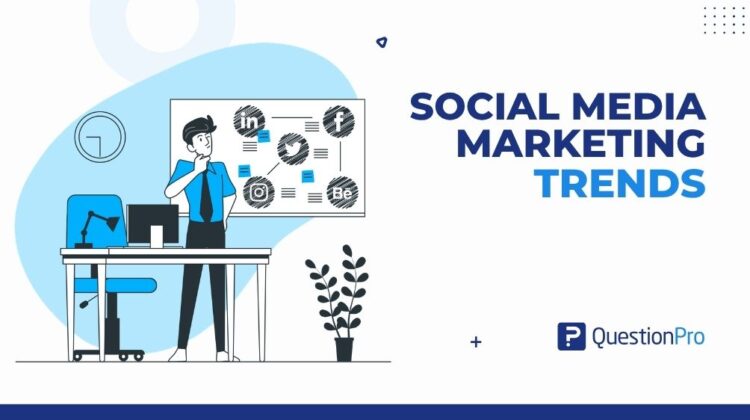
Social Media Marketing Trends: How Social Media Changed Who Controls the Brand

social-media-marketing-trends

Social media marketing trends today point to one consistent shift: the customer, not the marketing department, now controls how a brand is perceived. A single review, comment, or viral post can shape opinion faster than any paid campaign.

That wasn’t always true. Marketing once ran through controlled channels, print ads, TV spots, and direct mail, where the brand decided what the audience saw and when. Social platforms broke that model by giving every customer a publishing tool of their own.

This piece looks at how that shift happened, which platforms matter most for US audiences today, and how brands can measure the impact of a channel they no longer fully control.

Content Index hide
1. What does it mean that customers control the brand narrative?
2. Which social platforms matter most for US marketing in 2026?
3. How does electronic word of mouth affect brand marketing?
4. What is a real example of a brand benefiting from customer-led marketing?
5. How should brands measure social media marketing impact today?
6. What mistakes do brands make with social media marketing today?
7. How can QuestionPro help brands act on social feedback?
8. Marketing in a channel you don’t fully control
9. Frequently Asked Questions (FAQs)

What does it mean that customers control the brand narrative?

It means that public sentiment, expressed through likes, shares, reviews, and comments, now shapes brand perception more than a company’s own messaging does.

Two forces drive this shift. First, customers decide what content about a brand gets shared or ignored, not the marketing team. Second, people trust the opinions of other customers, sometimes called electronic word of mouth, more than they trust brand-produced advertising.

A marketer’s job has changed accordingly: less about dictating the message, more about creating something worth talking about and responding well when the conversation happens without an invitation.

Which social platforms matter most for US marketing in 2026?

Reach still varies significantly by platform, and picking the right one depends on where your specific audience actually spends time.

Platform Share of US adults who use it
YouTube 84%
Facebook 71%
Instagram 50%
TikTok 37%

Data reflects 2026 US adult platform usage estimates. YouTube and Facebook remain the broadest-reach platforms in the US, while Instagram and TikTok skew younger and drive more product discovery and short-form engagement.

How does electronic word of mouth affect brand marketing?

Electronic word of mouth, or e-WOM, refers to the opinions customers share online about a brand or product, and it now shapes purchase decisions more heavily than most traditional advertising.

When a customer likes, comments on, or shares a brand’s content, they are effectively vouching for it to their own network. That endorsement typically carries more trust than a paid ad, because it comes from a peer rather than the company itself.

This shift means marketers increasingly measure success by advocacy, not just reach. A smaller audience of vocal, satisfied customers can outperform a large but silent one.

What is a real example of a brand benefiting from customer-led marketing?

LEGO is a widely cited example of a brand that leaned into customer-generated content rather than fighting it. Adult LEGO enthusiasts have long shared their own builds and modifications online, and the company embraced that behavior instead of controlling it.

Fans didn’t just showcase existing sets. Many proposed new building techniques and use cases that influenced LEGO’s own product direction. That collaborative dynamic turned an enthusiast community into an ongoing source of marketing content and product ideas, at essentially no ad spend.

How should brands measure social media marketing impact today?

Measuring impact now requires looking past vanity metrics like follower counts toward signals that connect to actual customer sentiment and business outcomes.

Useful measurement approaches include:

  • Tracking sentiment in comments and reviews, not just volume of mentions
  • Running short social polls to validate messaging before a full campaign launch
  • Comparing engagement rates across platforms rather than raw follower totals
  • Connecting social feedback to customer satisfaction and retention data over time

A brand that only tracks likes and shares misses the deeper signal: whether the sentiment behind that engagement is actually positive.

What mistakes do brands make with social media marketing today?

The most common mistake is treating social platforms as a one-way broadcast channel instead of a two-way feedback loop.

Other frequent issues include:

  • Posting identical content across every platform regardless of audience or tone
  • Ignoring negative comments instead of responding constructively
  • Chasing follower count instead of engaged, relevant audience segments
  • Failing to connect social sentiment back to product or service decisions

How can QuestionPro help brands act on social feedback?

QuestionPro’s Customer Experience platform helps brands turn scattered social sentiment into structured insight, using surveys and sentiment analysis to understand not just what customers are saying online, but why. Quick live polls can also validate a campaign message with a real audience sample before it goes live more broadly, catching problems before they become public.

Marketing in a channel you don’t fully control

Social media didn’t just add a new marketing channel. It removed the brand’s exclusive control over its own story. The brands that adapt well treat that loss of control as an opportunity, listening closely to what customers are already saying and building campaigns around genuine sentiment rather than assumptions about what the audience wants to hear.

Create memorable experiences based on real-time data, insights and advanced analysis. Request Demo

Frequently Asked Questions (FAQs)

Which social platform has the best ROI for small businesses in the US?

It depends on the audience. Facebook and Instagram tend to offer the broadest reach and the most mature ad tools for small businesses, while TikTok often delivers stronger engagement rates for brands targeting younger demographics.

How often should a brand post on social media?

There’s no universal number, but consistency matters more than frequency. Most brands see better results from posting three to five times a week on their primary platform than from posting daily without a clear content plan.

Does negative feedback on social media always hurt a brand?

Not if it’s handled well. A thoughtful, timely response to a complaint can actually build trust with onlookers, while ignoring or deleting criticism tends to damage credibility more than the original complaint did.

How is social media marketing different from social listening?

Social media marketing focuses on creating and distributing content. Social listening focuses on monitoring conversations about your brand, industry, or competitors to inform strategy, and the two work best together rather than as separate efforts.

Can small businesses compete with large brands on social media?

Yes, often by leaning into authenticity and direct customer interaction, which larger brands struggle to replicate at scale. A smaller, highly engaged following frequently outperforms a large but passive one in terms of conversion.
SHARE THIS ARTICLE:

About the author
Adi Bhat
Aditya Bhat, a.k.a. ‘Adi’, is a thought leader in market strategy and business development. He leads QuestionPro's sales teams to partner with companies, government organizations, and nonprofit institution.
View all posts by Adi Bhat

Primary Sidebar

Unlock the Power of Research with QuestionPro Audience

Gain insights from more than 22 million high-quality respondents around the globe

Get a Free Quote Now!

RELATED ARTICLES

HubSpot - QuestionPro Integration

Closed-Loop Management: The Key to Customer Centricity

Sep 03,2024

HubSpot - QuestionPro Integration

Stop Losing Respondents to Your Matrix Questions: Introducing Carousel Layout

Jun 18,2026

HubSpot - QuestionPro Integration

Raked Weighting: A Key Tool for Accurate Survey Results

May 31,2024

BROWSE BY CATEGORY

Footer

MORE LIKE THIS

sample-control-with-quota-management

Quota Management: From Simple Caps to Full Sample Control

Sep 17, 2026

source-selection-in-insightshub

Stop Scouring the Whole Attic: Precise AI Chat with Source Selection

Sep 16, 2026

audio-analysis-in-insightsHub

From Buried Audio to Instant Answers: Introducing Audio Analysis in InsightsHub

Sep 16, 2026

ai-incidence-rate

AI Incidence Rate: Estimate Before You Launch

Sep 13, 2026

Other categories

questionpro-logo-nw
Help center Live Chat SIGN UP FREE
  • Sample questions
  • Sample reports
  • Survey logic
  • Branding
  • Integrations
  • Professional services
  • Security
  • Survey Software
  • Customer Experience
  • Workforce
  • Communities
  • Audience
  • Polls Explore the QuestionPro Poll Software - The World's leading Online Poll Maker & Creator. Create online polls, distribute them using email and multiple other options and start analyzing poll results.
  • Research Edition
  • LivePolls
  • InsightsHub
  • Blog
  • Articles
  • eBooks
  • Survey Templates
  • Case Studies
  • Training
  • Webinars
  • All Plans
  • Nonprofit
  • Academic
  • Qualtrics Alternative Explore the list of features that QuestionPro has compared to Qualtrics and learn how you can get more, for less.
  • SurveyMonkey Alternative
  • VisionCritical Alternative
  • Medallia Alternative
  • Likert Scale Complete Likert Scale Questions, Examples and Surveys for 5, 7 and 9 point scales. Learn everything about Likert Scale with corresponding example for each question and survey demonstrations.
  • Conjoint Analysis
  • Net Promoter Score (NPS) Learn everything about Net Promoter Score (NPS) and the Net Promoter Question. Get a clear view on the universal Net Promoter Score Formula, how to undertake Net Promoter Score Calculation followed by a simple Net Promoter Score Example.
  • Offline Surveys
  • Customer Satisfaction Surveys
  • Employee Survey Software Employee survey software & tool to create, send and analyze employee surveys. Get real-time analysis for employee satisfaction, engagement, work culture and map your employee experience from onboarding to exit!
  • Market Research Survey Software Real-time, automated and advanced market research survey software & tool to create surveys, collect data and analyze results for actionable market insights.
  • GDPR & EU Compliance
  • Employee Experience
  • Customer Journey
  • Synthetic Data
  • About us
  • Executive Team
  • In the news
  • Testimonials
  • Advisory Board
  • Careers
  • Brand
  • Media Kit
  • Contact Us

QuestionPro in your language

  • English
  • Español (Spanish)
  • Português (Portuguese (Brazil))
  • Nederlands (Dutch)
  • العربية (Arabic)
  • Français (French)
  • Italiano (Italian)
  • 日本語 (Japanese)
  • Türkçe (Turkish)
  • Svenska (Swedish)
  • Hebrew IL (Hebrew)
  • ไทย (Thai)
  • Deutsch (German)
  • Portuguese de Portugal (Portuguese (Portugal))
  • Español / España (Spanish / Spain)

Awards & certificates

  • survey-leader-asia-leader-2023
  • survey-leader-asiapacific-leader-2023
  • survey-leader-enterprise-leader-2023
  • survey-leader-europe-leader-2023
  • survey-leader-latinamerica-leader-2023
  • survey-leader-leader-2023
  • survey-leader-middleeast-leader-2023
  • survey-leader-mid-market-leader-2023
  • survey-leader-small-business-leader-2023
  • survey-leader-unitedkingdom-leader-2023
  • survey-momentumleader-leader-2023
  • bbb-acredited
The Experience Journal

Find innovative ideas about Experience Management from the experts

  • © 2022 QuestionPro Survey Software | +1 (800) 531 0228
  • Sitemap
  • Privacy Statement
  • Terms of Use