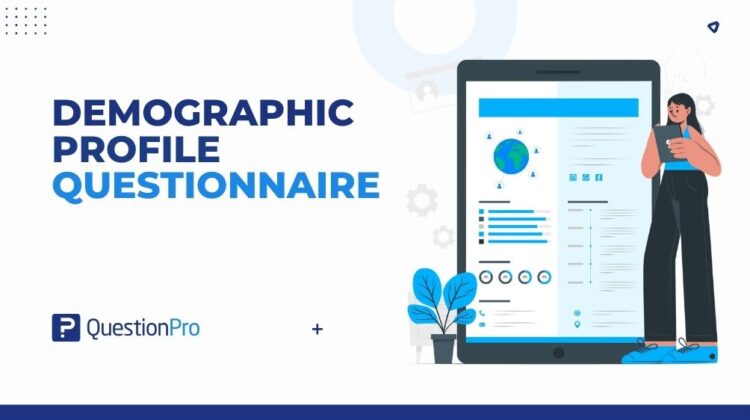
A demographic profile questionnaire is the survey that captures a panelist’s baseline demographic and usage information before they take part in any other research. It is often the first survey a new panelist ever completes, and its answers get reused across every study that follows.
Because those answers get appended to future surveys automatically, a poorly designed profile questionnaire can quietly distort results for a full year. Getting it right the first time saves far more effort than fixing it later.
This guide covers what a demographic profile questionnaire includes, why it needs more care than a typical survey, and how to keep it accurate as your panel grows.
What is a demographic profile questionnaire?
A demographic profile questionnaire is a baseline survey that collects standard demographic and usage information from panelists, such as age, income, education, and product usage, so that data can be reused across future studies instead of being asked repeatedly.
It is usually the first significant survey a panelist encounters after joining a research panel. Because of that, its design needs to hold up for an entire year of new panelists rather than a single project.
Why does a demographic profile questionnaire matter?
A demographic profile questionnaire matters because it becomes the primary source of segmentation, sample selection, and data weighting for every survey the panel runs afterward. If the categories in that questionnaire do not match how the organization actually defines its market, every downstream analysis inherits the same mismatch.
For example, a company that segments customers by usage level needs its “heavy user” and “light user” categories in the profile questionnaire to match the exact definitions used elsewhere in the business, such as a specific sales volume threshold. If those definitions drift apart, sample selection and reporting stop lining up with how the rest of the organization talks about its customers.
The questionnaire also removes the need to ask the same qualification questions on every project. Once a panelist answers age, income, and education once, that data can be appended automatically to future surveys, which shortens each new questionnaire and reduces respondent fatigue.
What should a demographic profile questionnaire include?
A demographic profile questionnaire should include core demographics, firmographics where relevant, and any usage-based categories tied to the organization’s segmentation model.
Common categories include:
- Age, gender, and household income
- Education level and employment status
- Geographic location, often down to state or region for US panels
- Household composition, including number of children or dependents
- Product or service usage frequency, matched to internal segmentation definitions
- Category-specific attributes relevant to the industry being studied
Skip any question that will not actually be used for segmentation or weighting. Every unnecessary question adds length without adding value.
How does a demographic profile questionnaire differ from a screener survey?
A demographic profile questionnaire is a one-time baseline collected when a panelist joins, while a screener survey is a short set of qualifying questions run before a specific project to confirm someone fits that project’s target audience.
The profile questionnaire feeds broad segmentation across the whole panel. A screener applies narrower, project-specific criteria on top of that existing profile, often reusing profile data instead of re-asking it.
How should businesses maintain a demographic profile questionnaire over time?
A demographic profile questionnaire should be reviewed and updated at least once a year, then re-administered to the full panel to keep every response current. Demographic and usage data drift over time as people change jobs, move, or shift buying habits, and stale profile data leads to inaccurate segmentation.
Keep these points in mind when maintaining the questionnaire:
- Update the questionnaire annually, or sooner if internal segmentation definitions change
- Re-administer the updated version to all existing panelists, not just new ones
- Tell panelists upfront that the questionnaire will take longer than a typical survey
- Offer an incentive for completion, since length can otherwise reduce response rates
- Add save-and-resume functionality so interrupted panelists can finish later
- Send reminders to panelists who start but do not complete the questionnaire
- Pull existing data from CRM systems where possible instead of re-asking it
What mistakes should businesses avoid when building this questionnaire?
The most common mistake is treating the demographic profile questionnaire like any other survey instead of the foundational document it actually is. Other frequent issues include:
- Letting internal segmentation definitions drift from the categories used in the questionnaire
- Failing to re-administer updates to existing panelists after a revision
- Asking questions that never get used in any actual analysis or weighting
- Underestimating how long the questionnaire will take and losing respondents partway through
- Skipping annual reviews until the data is too outdated to trust
How does QuestionPro support demographic profiling for panels?
QuestionPro helps research teams design, distribute, and maintain demographic profile questionnaires, including save-and-resume functionality, logic branching, and automated data append across future surveys. Teams managing their own panels can also use QuestionPro Audience to recruit qualified respondents who match specific demographic and usage criteria from the outset.
Getting qualified respondents into the panel in the first place makes the profiling process considerably more reliable downstream.
A strong foundation saves a year of downstream errors
The demographic profile questionnaire rarely gets the attention it deserves, given how much downstream research depends on it. A well-designed version reduces respondent fatigue, keeps segmentation accurate, and saves the effort of re-asking the same questions on every project.
Treating it as a living document that gets reviewed annually, rather than a one-time setup task, keeps a panel’s data usable for the long run.
Frequently Asked Questions (FAQs)
Most run longer than a typical survey since they cover a wide range of categories, often ten to fifteen minutes. Communicating that length upfront and offering an incentive helps maintain completion rates despite the extra time required.
Existing panelists should be asked to update their responses whenever the questionnaire is revised, not just once at signup. This keeps segmentation and weighting accurate as circumstances like income or household composition change over time.
Yes, where CRM systems already hold reliable data such as company size or purchase history, pulling that data in directly can shorten the questionnaire and reduce respondent burden significantly.
Every survey that relies on that questionnaire for sample selection or weighting inherits the same mismatch, which can quietly skew results across an entire year of research until the categories get corrected.
No. A census collects data from an entire population, a screener qualifies people for one specific project, and a demographic profile questionnaire builds a reusable baseline for an ongoing panel.