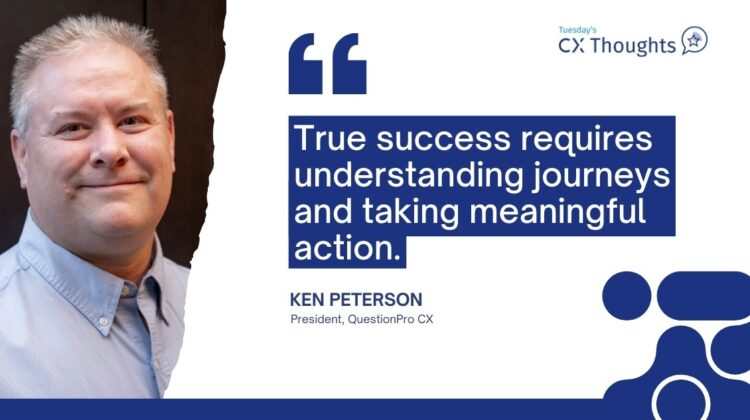
TCXT is a section of our blog where our Director of QuestionPro Customer Experience reflects and shares his thoughts on everyday moments and their relationship to customer experience. Ken Peterson shares his thoughts on how everyday moments shape customer experience. Read on to discover his perspective.
Want to hear Ken Peterson’s thoughts directly? Watch the video summary here:
Over the years, the landscape of Customer Experience (CX) has evolved dramatically. It has shifted from simple transactional surveys to comprehensive journey orchestration, blending advanced technologies with the psychology of consumer behavior. Yet, amidst the rise of Artificial Intelligence, sophisticated Voice-of-the-Customer (VoC) platforms, and big data, the fundamental principles of CX remain deeply rooted in human connection and operational execution. Reflecting on years of insights from the frontlines of CX management, a singular, resounding philosophy emerges: true success requires understanding journeys and taking meaningful action.
When analyzing the vast array of stories, strategies, observations and methodologies from over five years of Tuesday CX Thoughts (which comprises over 150 articles), several common themes consistently rise to the surface:
1. The Trap of Measurement vs. The Power of Action
A pervasive theme across the CX industry is the over-reliance on metrics, dashboards, and scores. Too often, companies fall into the trap of using data merely to hit Key Performance Indicators (KPIs) or earn corporate incentives, rather than utilizing it to gain actionable insights. Pressuring employees to achieve a “Perfect 10” does not inherently create a diamond-level experience; instead, it creates pressure that often results in manipulated scores and a lump of coal.
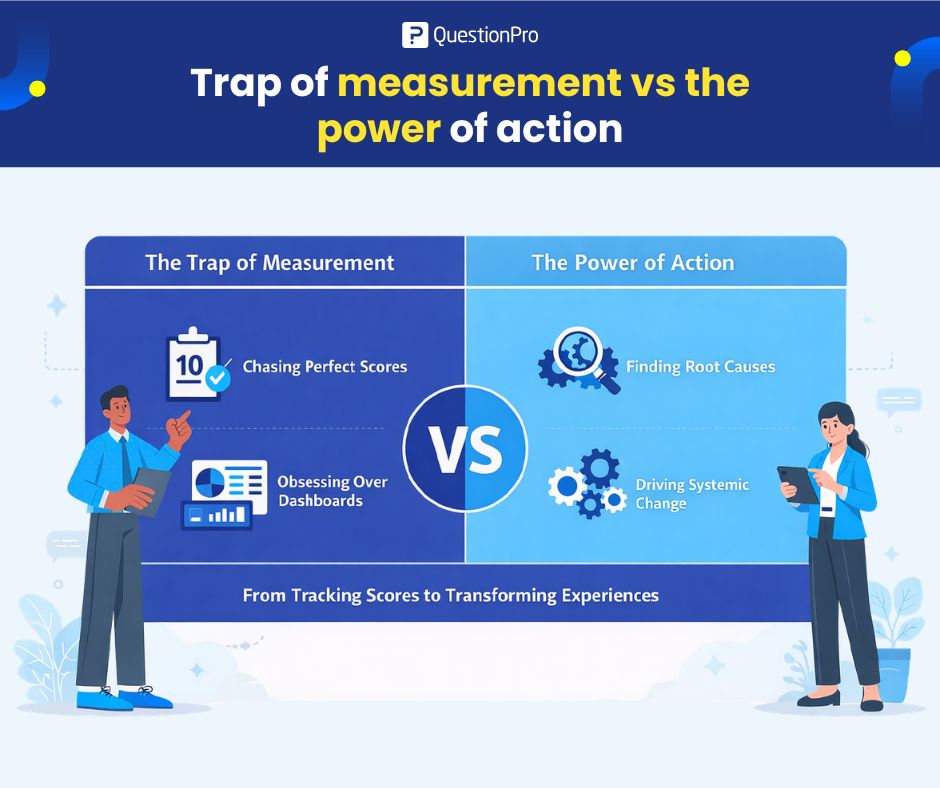
Furthermore, many brands believe they are successfully managing CX simply because they respond to individual customer complaints through a closed-loop feedback system. While this tactical “inner loop” response is essential for recovering a detractor, true business transformation occurs in the “Outer Loop”.
Outer Loop strategies involve taking the root causes identified in individual surveys—such as those captured by advanced metrics like QuestionPro’s AskWhy question type—and applying cross-functional, strategic fixes to systemic problems. Ultimately, measuring the experience is useless if it does not lead to broad operational improvements that prevent the issue from happening to the next customer.
Additionally, businesses often track the wrong KPIs to the detriment of the customer. For instance, prioritizing “Average Handle Time” in a contact center may look like an operational win on a spreadsheet, but it forces employees to rush interactions, actively discouraging empathy and harming both the employee and customer experience.
2. Empathy in the Age of Technology and AI
As businesses rush to adopt self-service kiosks, automated chatbots, and mobile applications, they risk stripping the emotional engagement out of the customer journey. While technology can optimize efficiency and provide much-needed operational consistency, it cannot replicate the human element of empathy.
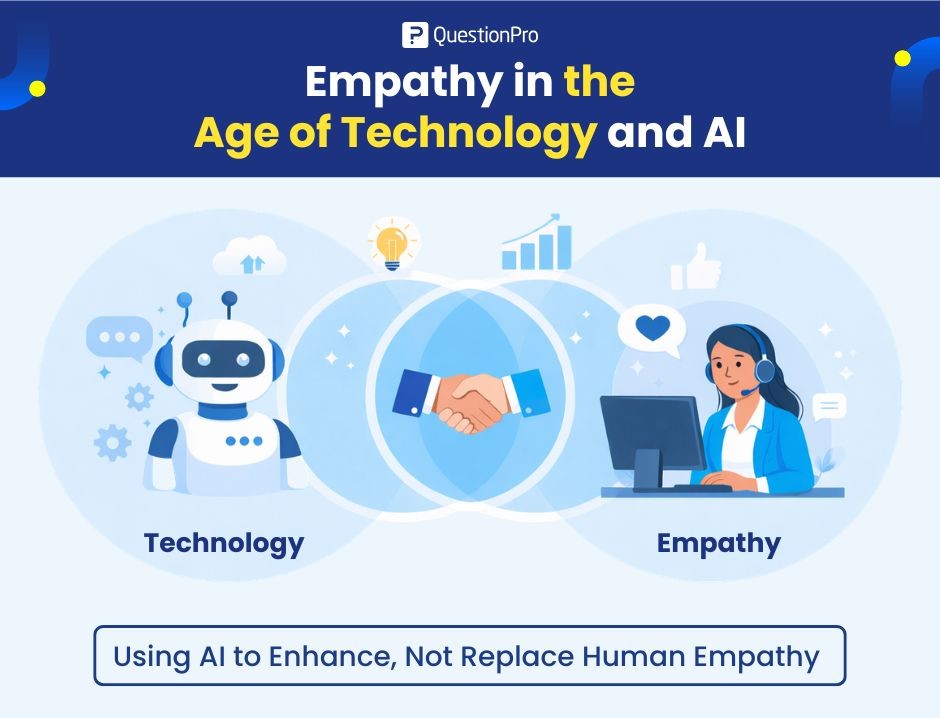
The true value of technology in CX is found when it is used to empower human interactions, not replace them. For instance, an agent reciting a rigid script to tell a customer “it is our company policy” creates friction and frustration. Conversely, utilizing Generative AI to “listen” to a customer’s concern and instantly provide a frontline agent with a personalized, empathetic response script allows the human to focus on delivering a genuine connection.
The most memorable customer experiences—the moments that create true “delight”—occur when fundamental needs are met consistently, and a human being goes above and beyond to provide something unexpectedly positive.
3. The Inextricable Link Between Employee Experience and Customer Experience
A world-class customer experience is impossible to sustain without a world-class Employee Experience (EX). The customer experience can be viewed as a tripod supported by three legs: the Customer, the Employee, and Profit. If any single leg is neglected, the entire structure falls.
Frontline employees are the true difference-makers in delivering satisfaction and delight. However, companies frequently neglect their workforce, failing to realize that disgruntled, overworked, or unsupported employees will inevitably drive away customers.
For example, a business that understaffs its operations and demands open availability from its workers creates an inconsistent, high-stress environment. This translates directly into poor customer service. Conversely, when employees are empowered, given the right tools, and treated with respect, they become fierce advocates for the brand and naturally pass that positivity onto the consumer. Happy employees make happy customers, creating a continuous cycle of positive reinforcement.
This is why the outdated mantra that “the customer is always right” can actually be toxic to a company’s culture. Forcing frontline workers to capitulate to abusive or unprofitable customers damages morale and positions the customer as an adversary. A mature CX strategy recognizes that not all customers hold the same value, and protecting the employee experience sometimes means being willing to “fire” a bad customer to maintain a healthy, supportive environment.
4. Contextualizing Feedback Through Journey Mapping
A common pitfall in CX programs is measuring a single touchpoint—like a post-sale transaction—and assuming it represents the entire customer relationship. In reality, the customer experience begins long before a purchase is made, often starting at the marketing or awareness phase, and continues well into post-purchase support.
A robust CX strategy requires dynamic, data-driven customer journey maps that overlay VoC feedback directly onto the various stages of the customer’s path. This holistic view helps organizations understand customer motivations, uncover hidden pain points, and anticipate friction across all channels.
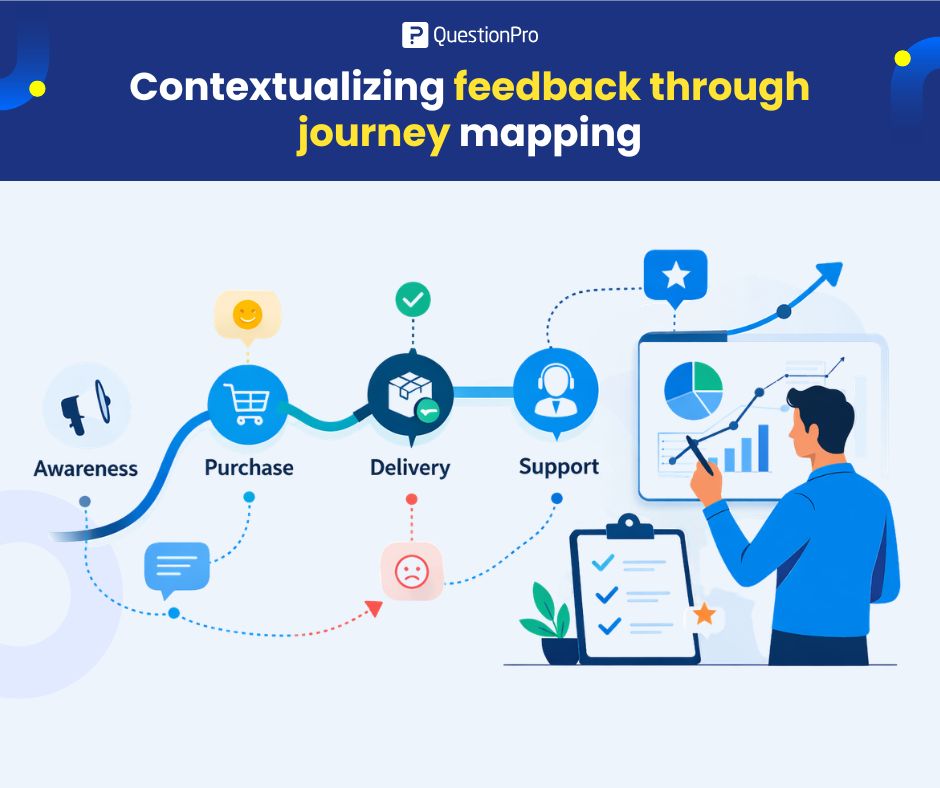
For example, if a marketing campaign promises two-day delivery, but operational delays push it to three days, the core issue is a broken brand promise, not necessarily a flawed shipping department. Mapping the journey ensures that teams aren’t working in silos and that the brand’s promises align with reality.
5. Listening to the “Middle Child” and Fostering Co-Creation
CX programs routinely obsess over “Promoters” who sing a brand’s praises or “Detractors” who require immediate damage control. However, the “Passives”—the customers who sit in the middle of the satisfaction scale—are frequently ignored.
These potentially apathetic customers carry a significant churn risk. They may not complain loudly or leave negative online reviews, but they will easily defect to a competitor when a better offer arises because their perceived value in the brand is quietly eroding.
A comprehensive CX program actively engages these middle-ground customers to understand their root concerns. Furthermore, moving beyond simple measurement allows brands to invite customers into the innovation process. By letting customers vote on ideas and co-create solutions, companies can proactively discover new ways to elevate the experience, prevent churn, and turn apathetic buyers into loyal advocates.
In the end, Customer Experience is not about achieving absolute perfection. It is an ongoing, operational pursuit of a more perfect union with the consumer. By moving past vanity metrics to focus on strategic Outer Loop actions, marrying technological efficiency with human empathy, prioritizing the employee experience, and looking at the holistic journey, businesses can build enduring, profitable relationships that stand the test of time and market disruption.
If you would like to learn more about how we guide experiences through Customer Journey Management or using AI guardrails in CX, please do not hesitate to reach out to me and schedule time. I’m always excited to talk about the future.
Measure the experience you are delivering to your customers
Understanding customer satisfaction levels and their perception is essential to evaluating the impact of our efforts across every aspect of our business. Our main goal remains the same: providing a great experience.
If you’re also interested in gaining deeper insights into your customer base, QuestionPro Customer Experience offers the necessary tools to help you achieve this. Schedule a demo now—we’ll be happy to guide you through the platform and learn about the challenges in reaching your goals.