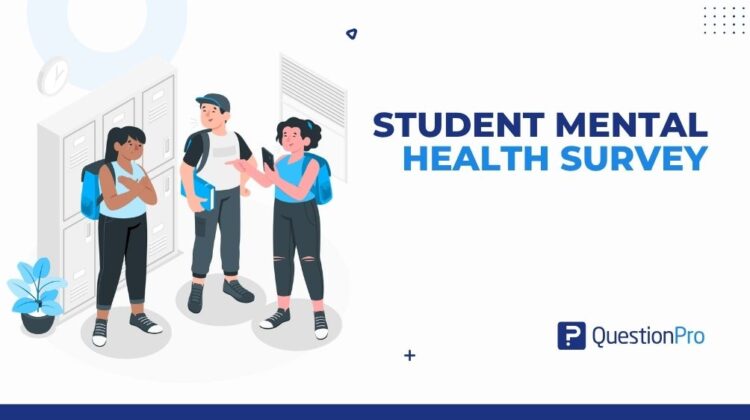
A student mental health survey is a structured questionnaire that measures well-being across a student population, covering emotional health, academic stress, loneliness, and awareness of campus support services. Roughly one in three university students report moderate anxiety or depression symptoms, yet many never reach out for help.
That gap is not only a resources problem. It is often a design problem. A poorly built survey collects compliance data without encouraging honest disclosure, while a well-built one protects trust, captures usable data, and connects insight to action.
This guide covers what a strong student mental health survey needs, how to protect anonymity, and how to turn responses into real support decisions.
What is a student mental health survey?
A student mental health survey is a questionnaire designed to measure emotional well-being, stress, and help-seeking behavior across a student population. It can explore academic pressure, loneliness, financial strain, and awareness of campus resources.
A well-designed version answers practical questions for student affairs teams: which groups feel most isolated, which services students actually know about, where academic pressure peaks, and what stops students from asking for help.
Some institutions include validated screening tools inside the survey, such as the PHQ-9 for depression symptoms or the GAD-7 for anxiety severity. These tools should guide support planning and early identification, not replace clinical care. Platforms like QuestionPro Academic Research support creating, distributing, and analyzing these surveys across student groups with flexible question types and reporting.
Why does anonymity improve disclosure in student surveys?
Anonymity directly affects whether students answer honestly. Students in small departments, residential colleges, or communities where mental health stigma is high often avoid honest answers if they believe someone could identify them.
Strong anonymity protection works at two levels. Visible anonymity means names, student IDs, and emails never appear in reports. System anonymity means IP addresses and device metadata are not linked to individual responses in exported data.
Students decide whether to trust a survey before they answer the first sensitive question, so the opening screen matters. A clear, plain-language anonymity statement works better than legal language. For example: “Your responses will be reported in aggregate. We will not show your name, student ID, or email with your answers.” Features like respondent anonymity assurance and anonymous survey links help separate identity from analysis at a technical level.
How does a student mental health survey turn feedback into action?
A survey should never end as a static report. Closed-ended questions reveal trends, such as how many students report loneliness or difficulty accessing support, while open text answers explain why those trends exist.
Sentiment analysis, which tags open-ended comments by theme and tone, helps teams spot patterns without manually reading every response. Common patterns that surface this way include academic pressure spiking near exam periods, loneliness appearing more often among graduate students, and financial stress correlating with withdrawal risk.
These patterns give student services teams a basis for prioritizing action and give institutional research teams evidence to bring to senior leadership. Connecting results to dashboards and text analytics tools, such as QuestionPro BI, turns large volumes of open-ended feedback into something a team can actually act on.
How do alert systems support earlier intervention?
Many well-being programs collect useful data but deliver it to support teams too late to help. A student might report high distress on a Wednesday, and the report may not reach a welfare officer until the following week.
Threshold-based alerts close that gap by flagging responses that cross a defined risk level for faster follow-up. This should be defined carefully, since the alert needs enough context to be actionable, while the broader dataset still protects anonymity.
This process supports early intervention, not crisis triage. Institutions should explain this clearly before the survey begins, so students understand what happens if they indicate serious distress and what the actual limits of confidentiality are.
How do you design a mobile-first student mental health survey?
Most students complete well-being surveys on a phone, so mobile design should shape the survey from the start rather than being an afterthought. A mobile-first design uses short questions, simple answer choices, and visible progress indicators, while avoiding large matrix questions and long scrolling pages.
The survey should also load quickly, state the expected completion time upfront, and use skip logic so students who report low concern are not routed through a long sequence of high-distress questions. This respects both completion rates and the student’s emotional state during a sensitive survey.
What questions belong in a student mental health survey?
A strong survey balances depth with simplicity, covering five core areas without overwhelming respondents.
- Emotional health.
“In the past two weeks, how often have you felt overwhelmed by your academic or personal responsibilities?” - Academic impact.
“How often has your mental well-being affected your ability to complete academic work?” - Awareness of support services.
“Do you know where to go if you need mental health support on campus?” - Barriers to seeking help.
“What is the main reason you might avoid seeking mental health support?” - Open feedback.
“What is one change the university could make to better support student well-being?” Use sparingly, since open text should add depth, not replace structured questions.
What are best practices for running a student mental health survey?
A strong program starts with a clear goal, whether that is measuring service awareness, understanding stress points, or identifying support gaps across specific student groups. From there, five practices consistently improve data quality.
- Keep the survey short and focused rather than exhaustive.
- Use plain language and preserve original wording for any validated screening items.
- Test the survey with a small student group before full launch to catch confusing wording.
- Close the loop after collection by sharing what the institution learned.
- Repeat the survey on a consistent cadence to track whether interventions actually work.
How can universities use the results?
Survey data should guide concrete decisions rather than sit in a report. Student affairs teams can use results to plan well-being campaigns, expand peer support, or adjust counseling capacity. Academic leaders can identify pressure points tied to the academic calendar, such as exam periods or dissertation deadlines.
Institutional research teams can compare results across faculties, year levels, and campuses to find groups needing targeted support. When sample sizes are small, results should be reported carefully to protect privacy and avoid misleading conclusions.
A student mental health survey works when students trust it
Trust comes from clear privacy rules, simple design, relevant questions, and visible action after the survey closes. Institutions get the most value when they treat well-being surveys as part of a continuous support system rather than a one-time compliance exercise.
To maintain this momentum, institutions must establish clear, ongoing communication channels that keep students informed about how their feedback directly shapes campus policies and support services. Over time, this visible commitment to continuous improvement transforms standard survey administration into a powerful catalyst for authentic student engagement and well-being.
Frequently Asked Questions (FAQs)
Most institutions run a full survey once or twice a year, often near the start and midpoint of an academic term, so results reflect meaningful shifts without over-surveying an already time-constrained student population.
No. Validated screening tools like the PHQ-9 or GAD-7 flag risk levels, but only a licensed clinician can provide a diagnosis. Surveys should guide support planning, not replace clinical assessment.
Response rates for campus well-being surveys commonly range between 15 and 30 percent, though incentives, mobile-friendly design, and department-level promotion can push participation higher.
Consider adjusting language and examples for cultural context, since stigma, help-seeking norms, and awareness of US-specific support systems can differ significantly for international student populations.
Shorter, more frequent pulse surveys often produce more current data and reduce fatigue compared to one long annual instrument, especially for tracking well-being trends across a fast-changing academic calendar.