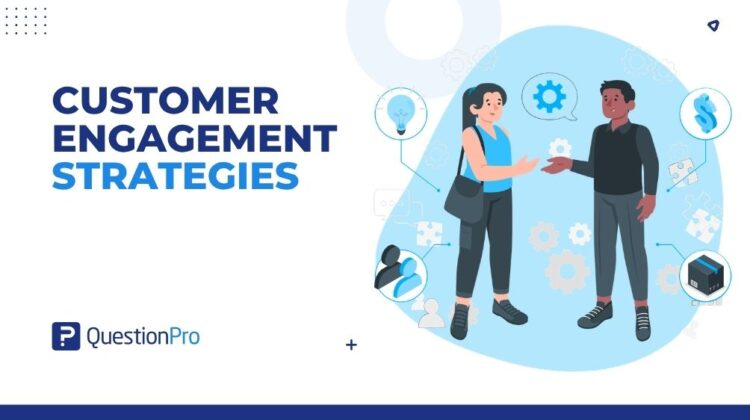
Customer engagement strategies are the tactics a business uses to build ongoing, meaningful relationships with the people who buy from it. Done well, they turn a one-time buyer into someone who comes back, recommends the brand, and forgives an occasional bad experience.
Gallup’s research puts a number on this: fully engaged customers deliver a 23% premium in share of wallet, profitability, and revenue growth compared to the average customer. That gap is too large for most businesses to ignore, yet many still treat engagement as an afterthought.
In this blog, we’ll explain what customer engagement strategy actually means, how to choose the right tactics for your business, and eight strategies worth testing this year.
What is a customer engagement strategy?
A customer engagement strategy is a documented plan for how a business builds, maintains, and deepens its relationships with customers across every touchpoint. It defines which channels you use, what content or interactions you offer, and how you measure whether customers are actually connecting with your brand.
People often confuse customer engagement with customer experience, but the two are not the same thing. Customer experience covers every impression a customer forms across their entire journey, from the first ad they see to the support call they make years later. Engagement is narrower. It focuses on the specific, repeated interactions, like an email opened, a loyalty point redeemed, or a community post answered, that keep a customer actively involved with your brand.
A strong engagement strategy sits inside a broader experience strategy. You cannot engage customers consistently if the underlying experience is broken, and a great experience with no engagement plan behind it tends to fade from memory. For a deeper breakdown of the concept itself, QuestionPro’s guide to what customer engagement means is a useful starting point.
Why customer engagement strategies matter
Businesses without an engagement plan lose customers they never see coming. A buyer who stops opening emails, skips a renewal, or quietly switches to a competitor rarely files a complaint first. They just leave.
The data backs this up. Gallup research shows fully engaged customers bring a 23% premium in profitability and revenue growth, while actively disengaged customers represent a 13% discount in those same measures, according to Gallup’s analysis of customer engagement. In retail banking specifically, fully engaged customers generate 37% more annual revenue than disengaged ones.
Retention math makes the case even stronger. Acquiring a new customer typically costs far more than keeping an existing one, so every customer an engagement strategy retains is directly protecting revenue you already earned. Engagement also compounds. An engaged customer refers new business, tolerates the occasional mistake, and gives you feedback before a small problem becomes a churn event.
How to choose the right customer engagement strategy for your business
Not every tactic fits every business. The right starting point depends on three things: your customer base, your resources, and what stage of the relationship you are trying to strengthen.
- New customers need onboarding and education. Content and welcome sequences matter most here.
- Repeat customers respond well to rewards and recognition. Loyalty programs and personalized offers fit this stage.
- At-risk or inactive customers need direct outreach. Win-back campaigns and proactive support work better than broad content pushes.
- B2B relationships usually need fewer, deeper touchpoints, like account check-ins and dedicated success managers, rather than high-volume social activity.
Pick one or two strategies that match your current biggest gap instead of trying to run all of them at once. A focused plan you can measure beats a scattered one you cannot.
8 Customer engagement strategies to build lasting loyalty
Each of these strategies works independently, but the strongest engagement programs combine at least three or four of them across the customer lifecycle. The first four focus on starting and strengthening conversations. The last four focus on keeping customers around once that conversation exists.
Strategies for starting the conversation
- Educate customers with useful content.
Content that answers a real customer question, whether it is a how-to guide, a product comparison, or a short video, keeps customers coming back for reasons beyond the next purchase. Duolingo built much of its engagement around bite-sized educational content that customers return to daily. - Build a genuine social media presence.
Social platforms let you talk with customers directly instead of only broadcasting at them. Starbucks uses social channels to spotlight customer moments and seasonal offers, which keeps the relationship visible between purchases rather than only during them. - Personalize interactions using real data.
Generic outreach gets ignored. Segmenting customers by behavior, purchase history, or stated preference and tailoring offers accordingly increases the odds an interaction lands. Tools like customer engagement platforms can pull this data together so personalization does not rely on guesswork. - Run interactive experiences like polls and live events.
Polls, quizzes, and live Q&A sessions turn a passive audience into active participants and give you fast, direct feedback on what customers actually want. QuestionPro’s live polls and quizzes tool, built on its survey software platform, is designed for exactly this kind of real-time interaction at events and webinars.
Strategies for keeping customers engaged long term
- Reward loyalty with a structured program.
A points, tier, or cashback program gives customers a reason to keep choosing you over a competitor with a similar product. Sephora’s Beauty Insider program is a widely cited customer engagement example because it ties rewards directly to purchase behavior and status. - Re-engage inactive customers through targeted email.
A dormant email list is not a dead end. Segment inactive subscribers separately from active ones, identify why they went quiet, and send a targeted offer instead of a generic blast. This kind of win-back campaign tends to outperform cold outreach because these customers already know your brand. - Show up consistently across channels.
Customers move between your website, app, social media, and email without thinking about it, so your engagement strategy should follow them. A customer who gets the same accurate information everywhere trusts the brand more than one who gets conflicting answers. - Build a community around your brand.
A branded community, whether it is a forum, a Slack group, or an online research community, gives customers a reason to engage with each other, not just with you. Peer-to-peer conversation often does more to build loyalty than any single marketing message.
Pick two or three of these to start. Trying to run all eight at once, with no clear owner for any of them, is how engagement programs stall before they produce results.
How to measure customer engagement
A strategy without measurement is a guess. Track a small set of metrics consistently rather than chasing every number available.
| Metric | What it measures | Good for |
|---|---|---|
| Net Promoter Score (NPS) | Likelihood a customer recommends you | Overall loyalty trend |
| Customer Satisfaction Score (CSAT) | Satisfaction with a specific interaction | Single touchpoint quality |
| Customer Effort Score (CES) | How easy an interaction was | Friction points in the journey |
| Repeat purchase rate | Share of customers who buy again | Retention over time |
| Active usage rate | Frequency of product or content use | Ongoing engagement depth |
Net Promoter Score, or NPS, asks customers how likely they are to recommend your business to someone else, scored from 0 to 10. It remains one of the fastest ways to track whether engagement efforts are moving loyalty in the right direction over time.
Platforms like QuestionPro Customer Experience let teams run these surveys, track scores by segment, and route negative feedback to the right team automatically, so measurement turns into action instead of sitting in a spreadsheet.
Common customer engagement mistakes to avoid
Most engagement programs fail from a handful of repeatable mistakes, not from a lack of effort.
- Treating engagement as a one-time campaign instead of an ongoing program with a budget and owner.
- Ignoring the data you already collect, like support tickets and survey responses, before launching new outreach.
- Overloading customers with contact across too many channels at once, which reads as spam rather than care.
- Skipping segmentation and sending the same message to every customer regardless of their stage or history.
- Never closing the loop on feedback, so customers stop responding because nothing visibly changes.
Fixing even two or three of these often improves engagement faster than adding a brand-new tactic.
Engagement is a habit, not a campaign
The businesses that keep customers longest are not the ones running the flashiest campaign this quarter. They are the ones that show up consistently, listen to what customers tell them, and adjust based on real feedback rather than assumptions.
Start with one gap, whether that is onboarding, win-back, or measurement, and build from there. A focused, well-measured engagement plan will outperform a scattered one every time.
Frequently Asked Questions (FAQs)
Engagement refers to the ongoing interactions between a customer and a brand. Loyalty is the outcome of sustained positive engagement, showing up as repeat purchases, referrals, and resistance to switching to a competitor.
Costs vary widely, but many small businesses start with free or low-cost email and survey tools before investing in a dedicated platform. The budget should scale with customer volume, not company size alone.
Transactional metrics like CSAT should be tracked after every key interaction. Broader metrics like NPS work well on a quarterly cadence, giving enough time to see whether changes are actually moving the needle.
No single channel is enough on its own. Social media builds visibility and quick interaction, but it works best paired with email, loyalty programs, or community efforts that reach customers who are not active on social platforms.
Subscription businesses, financial services, and retail see some of the largest measurable gains, since repeat behavior directly drives revenue. Gallup’s research found retail banking customers who are fully engaged bring in 37% more annual revenue than disengaged ones.that