Email surveys remain one of the easiest ways to collect reliable data from people who already know your brand. A customer who trusts your emails enough to open them is usually willing to answer a few honest questions, too.
In this blog, we’ll cover how email surveys work and the two main ways to send them. We’ll also walk through nine tips that actually move response rates, plus real examples by use case.
What Are Email Surveys?
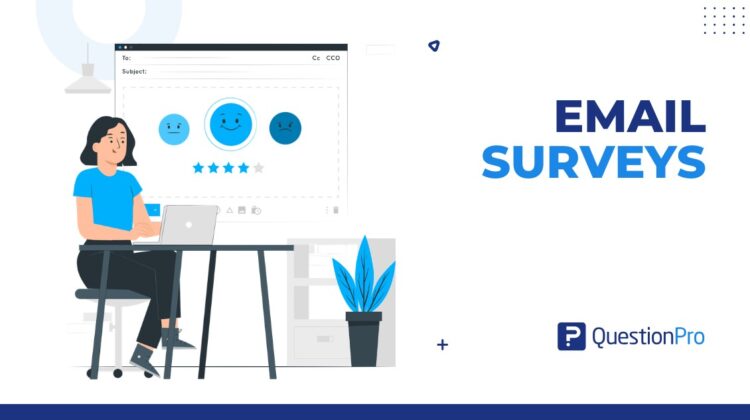
Email surveys are a data collection method that uses a questionnaire sent to a targeted list of respondents. Delivery happens through email. Respondents either answer questions embedded in the email itself, or they click through to a full survey page. Which option applies depends on the delivery method the researcher chooses.
Every email survey depends on a few core pieces working together:
- A targeted recipient list, usually built from existing customers, subscribers, or panel members who already gave consent to be contacted.
- A clear delivery method, either questions answered inside the email or a link to a longer survey page.
- A defined goal, since the questions you ask should map directly to a decision you plan to make with the data.
Consider a fashion brand that wants customer opinions on a product it just launched. Customers already registered their email addresses when they made a purchase. That means the brand can send a short survey straight to that list without collecting new contact information first.
The result is quick, reliable feedback from people who actually bought the product. Once responses come in, the brand analyzes them in whatever survey software it already uses. That closes the loop between purchase and product feedback within days rather than weeks.
Why Email Surveys Still Work
Email has stayed relevant because people check it constantly, and it plays well with other message types. According to the DMA’s Consumer Tracker, 94% of consumers check their email every day. That habit puts survey invitations in front of a genuinely captive audience. It’s a different game than competing for attention on a platform people only check occasionally.
Part of the advantage comes from flexibility. A single email can combine several purposes at once:
- An invoice or receipt confirming a recent purchase.
- A promotional offer relevant to that purchase.
- A short survey invitation asking how the experience went.
Email is also inexpensive to send at scale. That combination of low cost and high reach matters. It keeps email one of the most widely used data collection methods worldwide, especially for organizations that already maintain a customer email list.
Embedded Surveys vs. Redirect Surveys
Email survey questions reach respondents in one of two ways, and the right choice depends mainly on survey length. The table below compares the two side by side.
| Method | Best For | Typical Question Types | Where It Lives |
|---|---|---|---|
| Embedded survey | Short, quick-response surveys | Yes/no, rating scales, single choice | Directly inside the email body |
| Redirect survey | Longer, detailed surveys | Open-ended, matrix, multiple advanced types | A separate survey page in the browser |
Embedded email surveys
An embedded email survey, sometimes called an email inline survey, lets the respondent answer directly inside the email body. There’s no click required and nowhere else to go. Because different email providers render emails differently, these surveys work best when they stay short. Simple question formats display consistently across inboxes, while complex ones often break.
Close-ended questions are the standard choice here. Demographic questions, Net Promoter Score questions, and matrix-style questions are the most common types. All three are quick to answer without leaving the inbox, which keeps completion rates high.
A restaurant running a customer service survey is a good example. Customers answer a handful of yes/no or 1-to-5 rating questions about wait times, server attentiveness, or food quality. The whole exchange takes under a minute. The restaurant still gets usable feedback it can act on the same week.
Redirect email surveys
A redirect email survey sends the respondent a link that opens the full survey in their browser. This method suits longer surveys. Respondents expect more depth once they’ve clicked through and left their inbox. A few extra questions don’t feel out of place the way they would inside an embedded format.
Redirect surveys can include a wider mix of formats:
- Open-ended questions for detailed written feedback.
- Close-ended questions for quick, structured answers.
- Advanced question types like ranking, sliders, or matrix grids.
A cab service company gathering detailed feedback on a recent ride is a typical use case. The company sends a survey invitation link by email. The longer format then lets it ask about specific parts of the trip, like driver communication or route choice. Those details rarely fit inside a one-line embedded question.
9 Tips to Improve Email Survey Response Rates
Response rate is the clearest sign an email survey is working, and it’s usually the first number stakeholders ask about. These nine tips address the most common reasons a survey underperforms.
- Write a simple, clear subject line.
A subject line like “Help us serve you better” tells the recipient exactly what’s inside before they open it.
- Acknowledge why they were chosen.
A line like “As a loyal customer, you’ve been selected for this survey” signals that their opinion specifically matters.
- Explain the survey’s purpose.
Telling respondents their feedback will shape a real decision, not just sit in a spreadsheet, increases follow-through.
- Create gentle urgency.
A line like “Take the survey now” nudges people to act, though it should be paired with the option to complete it later.
- State how long it takes.
Time the survey yourself first. If it takes four minutes, say four minutes. Underselling the time costs trust; overselling it costs completions.
- Offer an incentive.
A discount code or small reward measurably lifts response rates, especially for longer redirect surveys.
- Use the right survey tool.
Real-time data collection, automated distribution, and built-in analytics all matter as much as the questions themselves. QuestionPro’s email survey distribution tools handle scheduling, embedded question rendering, and response tracking in one place.
- Stay CAN-SPAM compliant.
A valid “from” name, a working reply-to address, and a physical mailing address are legal requirements in the US, not optional extras. The FTC’s CAN-SPAM Act guidance covers the full list of requirements.
- Thank the respondent.
A short thank-you message, confirming their input matters, builds the kind of goodwill that improves response rates on the next survey too.
Popular Email Survey Examples by Use Case
Email surveys show up across nearly every industry, though the questions and goals shift depending on who’s answering. The categories below cover the most common use cases.
- Customer surveys: Used to measure satisfaction, effort, and Net Promoter Score. Common templates include general customer surveys and dedicated satisfaction surveys.
- Human resources surveys: Used to gauge employee satisfaction and workplace culture. Exit interviews and job evaluation surveys are the most frequent examples in this category.
- Marketing surveys: Used to evaluate market perception, competition, and product feedback. Consumer electronics surveys and website visitor profile surveys fall under this group.
- Industry surveys: Built by domain experts for specific sectors like hospitality, retail, or healthcare, tailored to that industry’s particular questions and terminology.
- Community surveys: Sent to a defined group about a shared topic, such as a media accountability survey or a relationship survey.
- Academic evaluation surveys: Used by schools and universities to collect input from students, staff, or parents, including graduation exit surveys and teacher engagement surveys.
If you’re starting from scratch, ready-made survey templates exist for each of these categories. Starting from a template cuts setup time down considerably compared to building a survey from a blank page. It also usually means the question wording has already been tested against real respondents.
Advantages of Email Surveys
Email surveys earn their popularity through a specific set of practical strengths. Most of that comes down to cost, speed, and reach.
- Response rates tend to run higher than many other outreach methods, particularly for existing customers who already trust the sender.
- Cost per response stays low since there’s no printing, mailing, or interviewer time involved, which makes repeat surveys sustainable at scale.
- Data reliability improves because there’s no live interviewer who could unintentionally bias an answer through tone or body language.
- A single method covers both short embedded surveys and longer redirect surveys, depending on the goal, without needing two separate platforms.
- Automated scheduling means recurring surveys, like quarterly satisfaction checks, don’t require manual re-sending each time.
- Integration with marketing automation and survey platforms means a single trigger event, like a completed purchase, can launch a survey automatically.
Disadvantages of Email Surveys
Email surveys aren’t a perfect fit for every research goal, and a few limitations are worth planning around before you commit to this channel.
- Some responses may not be fully genuine, particularly when an incentive is the main motivation to participate rather than the topic itself.
- Reach is limited to people who actually have and check email, which can skew results in regions or demographics with lower email adoption.
- Building a quality recipient list takes real effort if you don’t already have registered emails for your target audience, since purchased lists tend to produce weak, unreliable data.
- Running an effective campaign requires at least a working knowledge of email deliverability and basic list hygiene, or response rates quietly erode over time as addresses go stale.
How to Choose the Right Email Survey Approach
The right approach depends on what you’re trying to learn. It also depends on how much effort you can reasonably ask of the respondent.
- Choose embedded surveys: When you need a fast pulse check, like a single satisfaction rating after a purchase or service interaction.
- Choose redirect surveys: When the topic needs depth, multiple question types, or open-ended written feedback that a one-line question can’t capture.
- Match the list to the goal: A registered customer list works well for product feedback; a purchased or cold list rarely performs well for either method, since trust with the sender matters as much as the questions themselves.
- Pick software that supports both formats: Switching tools between a quick pulse survey and a longer study wastes time better spent on the actual questions. Customer Experience Survey Software that handles embedded and redirect delivery in one platform avoids that friction entirely.
Common Mistakes to Avoid With Email Surveys
A handful of avoidable mistakes account for most underperforming email survey campaigns, and most of them are easy to catch before a send goes out.
- Making embedded surveys too long.
Once a respondent has to scroll through several questions inside an email, completion rates drop fast, and the format stops doing what it’s good at.
- Skipping the time estimate.
Respondents abandon surveys more often when they don’t know upfront how long it will take, even when the actual survey is short.
- Ignoring CAN-SPAM basics.
Missing a valid reply-to address or physical mailing address risks spam flags and legal exposure, not just lower open rates.
- Sending to a stale list.
Emails that bounce or go unopened for months signal a list that needs cleaning before the next send, and continuing to mail it hurts deliverability for every future campaign too.
- Asking too many open-ended questions in a short survey.
Open text fields raise the effort required and usually belong in a redirect survey instead, where respondents already expect to spend more time.
Getting the Most From Every Email Survey
A good research design, a clean subject line, and the right delivery method matter more than any single clever trick. Email surveys work because they meet people where they already are, in an inbox they check daily. They don’t ask for more effort than the question actually deserves.
A few signals tend to separate a strong email survey from a weak one:
- The subject line tells the reader exactly what to expect before they open it.
- The question format matches the survey’s length, embedded for short, redirect for long.
- The list is built from people who already have a relationship with the sender.
Frequently Asked Questions (FAQs)
An embedded survey lets respondents answer directly inside the email body, which works best for short, simple questions. A redirect survey sends a link to a separate page instead. That format suits longer surveys with open-ended or advanced question types.
Most effective email surveys take two to five minutes. Anything longer should move to a redirect format. Otherwise respondents end up scrolling through multiple questions inside their inbox, which usually lowers completion rates.
Yes, as long as the sender follows CAN-SPAM requirements in the US. That means a valid “from” name, a working reply-to address, and a physical mailing address on every commercial message. These aren’t optional details. They’re legal requirements the FTC actively enforces.
Yes, incentives like discount codes or small rewards measurably increase completion, particularly for longer surveys. The lift tends to be larger among less-engaged recipients and smaller among already-loyal customers who respond regardless.
Yes, but typically through the redirect method rather than embedded questions. Open-ended fields require more effort from the respondent. They perform better once someone has already committed to a full survey page.