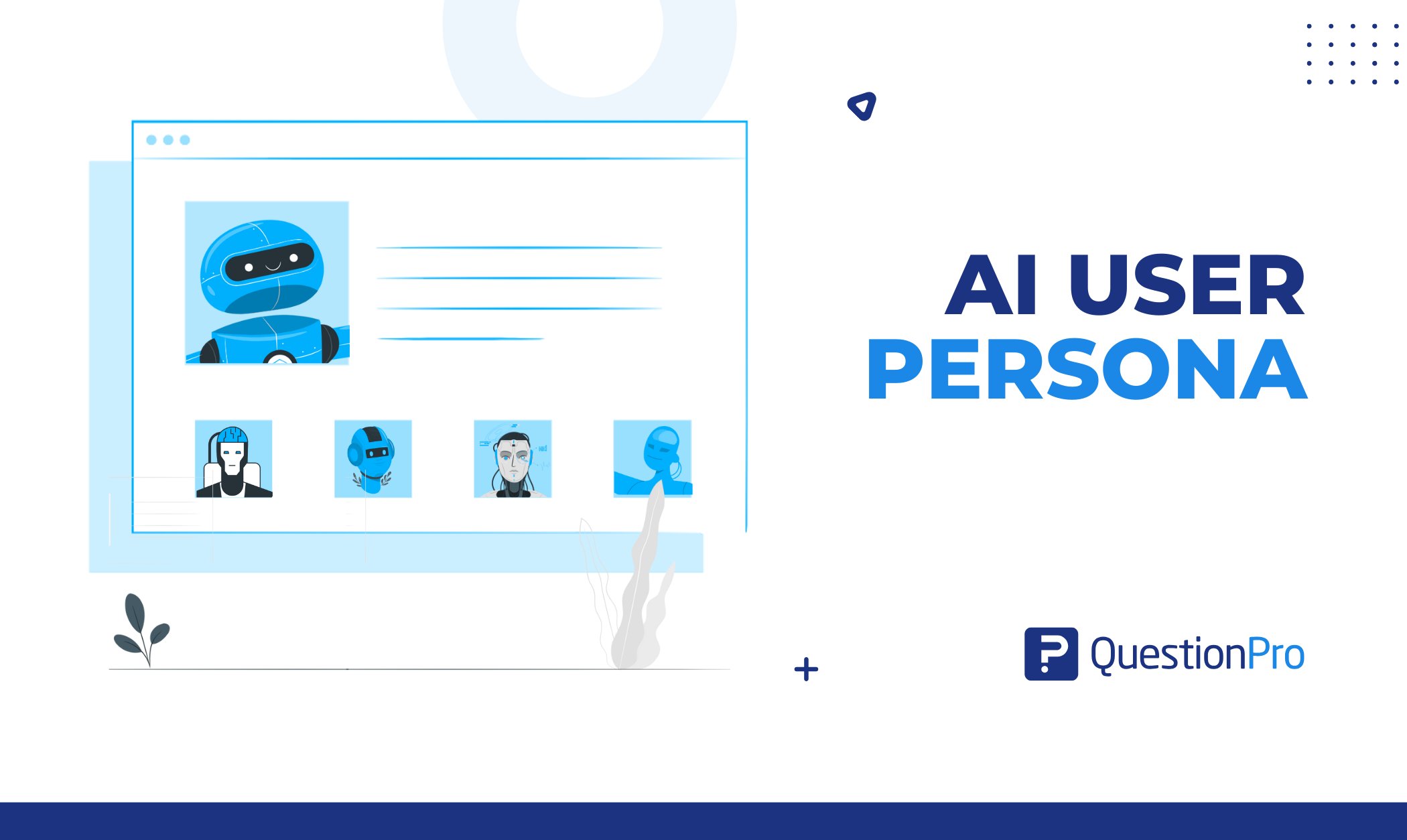
An AI user persona is a detailed, data-driven profile of a target audience segment, built by feeding real customer data into AI tools instead of relying on assumptions and static demographic sheets. Teams pull from surveys, support conversations, and behavioral data, then let AI surface the patterns a manual review would take weeks to find.
The result updates as customer behavior shifts, which is the main advantage over a traditional persona built once and left untouched for years. A pricing change, a new competitor, or a shift in how customers discover a product all show up in the data long before an annual survey would catch them.
In this article, we’ll explain what an AI user persona actually is, how it differs from a synthetic user, how to build and validate one, real examples, and the challenges worth planning for before you start.
What is an AI user persona?
An AI user persona is a profile of a target audience segment built by combining traditional demographic data with patterns AI extracts from real customer interactions, such as surveys, support tickets, and behavioral data.
Most teams pull from a mix of sources before building one.
- Surveys and feedback forms
- Customer interviews
- Customer support conversations
- Website and product analytics
- Social media activity
AI tools analyze this input to surface patterns in behavior, pain points, and motivations. Unlike a persona document written once and filed away, an AI-built version can be refreshed as new data arrives, keeping it aligned with how customers actually behave right now rather than how they behaved a year ago.
AI user persona vs. synthetic user: What’s the difference?
These two terms get confused constantly, and the difference matters because one is a research aid grounded in real data, while the other simulates real people.
An AI user persona is a profile document built from actual customer data. It describes a real segment of your audience, and every trait in it should trace back to something a real customer said or did.
A synthetic user, sometimes called an AI-generated user, is different. According to the Nielsen Norman Group, a synthetic user is an AI-generated profile that mimics a user group and produces artificial research findings without studying any real users at all.
| Feature | AI user persona | Synthetic user |
|---|---|---|
| Built from | Real survey, interview, and behavioral data | Model training data and assumptions |
| Purpose | Describe a real, existing audience segment | Simulate hypothetical user responses |
| Best used for | Segmentation, personalization, messaging | Early brainstorming, hypothesis generation |
| Risk if misused | Drifts out of date without refreshes | Mistaken for real user research |
Nielsen Norman Group’s research found that synthetic users tend to give overly favorable, one-dimensional answers, which is why they recommend treating synthetic output as a hypothesis to test, never as a replacement for talking to real customers. An AI user persona avoids that trap by staying anchored to data your real audience actually produced.
Why use AI to build personas?
AI speeds up persona creation and grounds it in real behavioral data instead of guesswork, which changes both the speed and the accuracy of the output.
- Real-time, data-driven insights
AI pulls from multiple live data sources instead of relying on assumptions made months ago.
- Faster turnaround
Automating the analysis and segmentation of customer data cuts the manual work down significantly.
- Sharper personalization
Analyzing motivations and behavior at scale produces personas that map more closely to actual user needs.
- Adaptability
An AI-built persona updates as behavior shifts, instead of going stale within a year.
- Better decisions
Marketing, product, and customer experience teams can act on patterns AI surfaces rather than waiting on a manual analysis cycle.
A subscription box company that once updated its personas annually switched to an AI-assisted process and began refreshing them quarterly using ongoing feedback and support ticket data. That shift caught a move toward budget-conscious buyers months before the next annual survey would have revealed it.
Personalization backed by real data pays off at scale too. McKinsey’s research found that personalization done well most often drives a 10 to 15 percent revenue lift, which is the underlying value an accurate AI persona is built to unlock.
How do you build an AI user persona?
Building an AI user persona takes three main steps, and skipping the first one is the most common way teams end up with a persona that looks polished but doesn’t reflect real users.
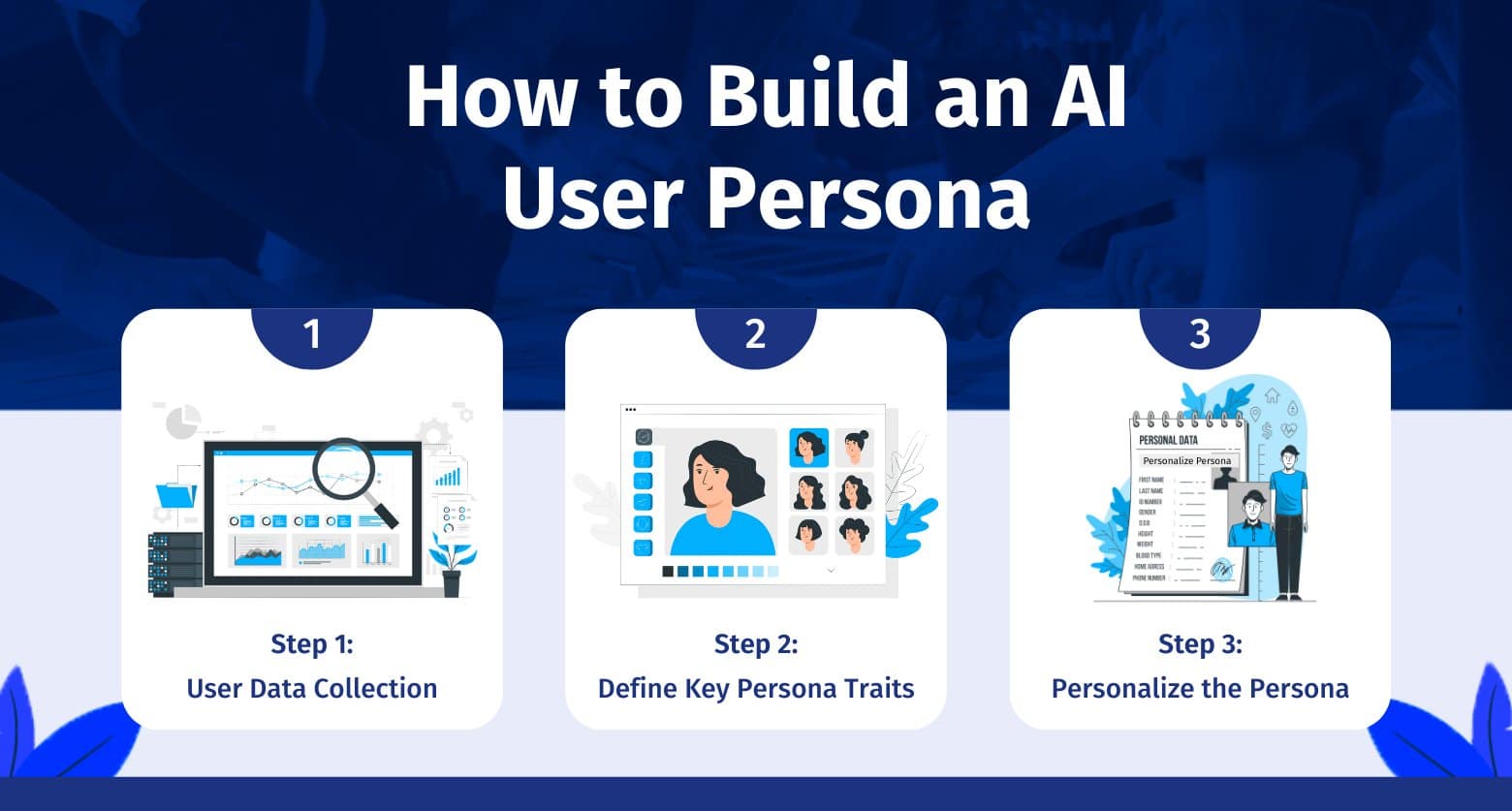
- Collect user data. Pull from customer feedback, surveys, website analytics, and support conversations, and look for patterns across the full data set rather than isolated data points.
- Define key persona traits. Give the persona a name, then define its goals, pain points, and behavior patterns based on what the data actually shows, not assumptions.
- Personalize the persona. Segment by traits like age, location, or buying habits where they add real distinction, then layer in the specific challenges and preferences the data surfaced.
The traits defined in step two determine how useful the whole persona ends up being. A vague goal like “wants a good experience” gives a team nothing to design around. A specific, behavior-tied goal like “wants to complete checkout in under two minutes” gives product and marketing teams something concrete to build toward.
Pulling this together from scattered spreadsheets and interview notes is where most of the manual effort disappears. Structured market research software that feeds directly into a research suite keeps the underlying data clean enough for an AI layer to actually find real patterns instead of noise.
4 Real-world examples of AI user personas
Several companies use AI-driven personas to power personalized experiences at scale, and each applies the same core idea to a different part of the customer journey.
- Streaming and content recommendations.
Netflix uses AI to analyze viewing history, ratings, and search behavior to build a dynamic viewer persona for each household. Rather than one static “movie lover” profile, the system updates continuously as viewing habits shift week to week, which drives the personalized recommendation rows that shape what a user sees first.
- E-commerce personalization.
Amazon builds personas from purchase history, browsing behavior, and search queries. The persona adapts within a single session too. A shopper browsing baby products sees different recommendations than one browsing electronics, even if both are the same demographic on paper, something a static, demographic-only persona could never replicate.
- Loyalty and rewards programs.
Starbucks uses transaction data and app interactions to personalize rewards and promotional offers. A customer who orders the same drink at the same time each morning gets a different offer than one whose orders vary widely, because the persona encodes a habit, not just a demographic.
- B2B trial-to-paid conversion.
SaaS companies build personas from product usage data to spot which trial users behave like customers who convert, then route those users toward higher-touch onboarding. The persona here isn’t a static job title, it’s a live pattern of in-product behavior tied to actual conversion outcomes.
Across all four, the underlying pattern holds: AI-built personas turn raw behavioral data into personalized decisions at a scale no manual process could match.
How do you validate an AI-generated persona?
An AI-generated persona should be treated as a strong first draft, not a finished, trustworthy profile, until it’s checked against real data.
Validation matters because the persona is only as good as what it was built on. Its accuracy depends entirely on the quality and diversity of the data feeding it, and skipping this step risks designing an entire campaign or feature around a persona that doesn’t match your real audience.
- Pull a small sample of real evidence. Gather a handful of real customer interviews or support tickets from the same segment.
- Compare language and pain points. Check whether the persona’s stated pain points and phrasing match what real customers actually say.
- Flag anything generic. If the persona feels vague or interchangeable with any other segment, the underlying data likely needs more depth before it’s ready to use.
A persona that passes this check is grounded in reality. One that fails needs more data, not a rewrite of the profile itself.
What are the challenges of using AI user personas?
AI user personas come with real benefits, but also real risks that need active management rather than being ignored.
- Data privacy and security
Personas rely on personal data, so mishandling it creates legal and trust risks. Get clear user consent before collecting it.
- Data bias and fairness
AI inherits whatever bias exists in its training data. A narrow or non-diverse dataset can produce personas that stereotype or exclude entire user groups.
- Transparency
Complex AI models can make it hard to explain exactly how a persona was built, which can undermine trust in the output.
- Over-reliance on AI
AI should support human judgment, not replace it. Some insights only come from an analyst actually talking to customers.
- Ethical use of synthetic data
Synthetic responses can fill real data gaps, but overusing them risks producing personas that no longer reflect actual customer behavior.
Addressing these directly, rather than ignoring them, is what separates a genuinely useful AI persona program from one that quietly misleads the team relying on it. None of these are a reason to avoid AI personas. They’re a reason to build a review step into the process, the same way any data-driven system needs regular auditing to stay trustworthy.
When should you build an AI persona instead of skipping it?
Not every team needs one right away. A small team with a handful of customers and a founder who talks to every one of them may get more value from direct conversations than from a formal persona process.
First, customer volume grows too large for one person to track. Second, feedback is scattered across surveys, tickets, and interviews without a unified view. Finally, teams make decisions using outdated assumptions about who their customer actually is.
If none of those apply yet, a lightweight, manually updated persona is often enough. Building the AI layer too early just adds process without adding insight.
Common mistakes to avoid
A few recurring mistakes separate AI persona programs that stay useful from ones that quietly drift into fiction.
- Jumping straight to segmentation before collecting enough real data to support it
- Treating the first AI-generated draft as final instead of validating it against real interviews
- Letting a persona sit unrefreshed for a year, the same failure mode AI was supposed to fix
- Filling data gaps with synthetic responses until the persona no longer reflects real customers
- Building a persona nobody on the marketing or product team actually consults before decisions
Most of these come down to treating the persona as a one-time deliverable instead of a living tool that needs the same maintenance as any other data source.
Getting more value from your AI personas
AI personas work best when they’re treated as a living tool, refreshed regularly, not a one-time document filed away after the first workshop.
The teams that get the most value feed customer data continuously. This lets the persona update automatically instead of waiting for annual research cycles.
QuestionPro gathers the real survey data that an accurate persona requires. It connects directly to the customer journey mapping workflows that personas support.
Frequently Asked Questions (FAQs)
Yes, but accuracy depends more on data diversity than volume. A smaller company can still build a useful persona from a focused set of customer interviews and support tickets, as long as it resists the urge to fill gaps with assumptions instead of real evidence.
Most teams refresh quarterly, though the right cadence depends on how fast the customer base changes. A company in a fast-moving market may need monthly updates, while a stable B2B segment might only need a refresh twice a year.
Yes, if they’re built from personal data. Teams should collect clear consent, minimize what personal data feeds the model, and confirm the underlying survey or analytics tools handle storage and consent in line with applicable privacy law.
No. Research from Nielsen Norman Group found synthetic users produce shallow, overly favorable responses that miss the nuance of real customer behavior, so they work best as a hypothesis-generation step, not a substitute for talking to real customers.
Marketing or product decisions start getting pushback because the persona no longer matches what customers say in support tickets or interviews. That mismatch is usually the clearest signal that a refresh is overdue.