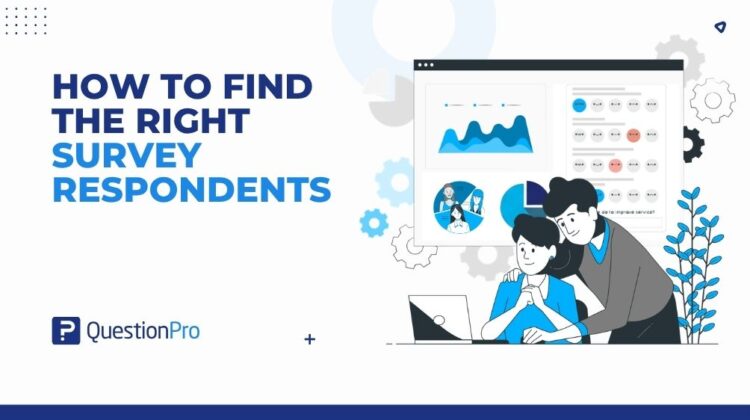
Knowing how to find the right survey respondents matters more than how well the survey itself is written. A perfectly designed questionnaire sent to the wrong audience still produces unusable data.
Most research teams spend the bulk of their time on question wording and skip logic, then treat recruitment as an afterthought. That order should be reversed, because no amount of analysis can fix a sample that does not represent the population you actually care about.
This guide walks through what respondent targeting means, why it fails so often, and nine practical ways to recruit the audience your study actually needs.
What does it mean to target the right survey respondents?
Targeting the right respondents means recruiting a sample whose characteristics, behaviors, and opinions reasonably reflect the larger population a study is meant to describe. It is a targeting problem, not just a headcount problem.
A restaurant chain studying customer satisfaction, for example, needs feedback from people who have actually eaten there recently, across different visit frequencies and locations, not just its most loyal regulars. Recruiting only enthusiastic repeat customers produces a sample that flatters the brand and misleads the business.
This is different from sample size, which is simply how many people respond. A survey can have a large sample size and still be badly targeted if it skews toward one demographic, one channel, or one type of customer.
Why bad respondent targeting wastes an entire research project
A study can be well designed in every other respect and still fail here. If the people answering do not match the group you need insight into, the resulting data actively misleads decisions rather than informing them.
Representativeness, not raw response volume, is what determines whether a sample is usable. According to Pew Research Center’s survey methodology, rigorous studies are built around minimizing coverage and sampling error long before analysis even begins, because a biased sample cannot be statistically corrected after the fact.
Three symptoms usually point to a targeting problem rather than a question-wording problem:
- Results that contradict what your team already knows from support tickets, sales conversations, or account data
- A demographic skew that clearly does not match your actual customer base
- Response patterns that look unusually uniform, often a sign the panel skewed toward professional survey takers
9 Ways to find and target the right survey respondents
Each of these methods works for a different research situation. Most research teams end up combining two or three rather than relying on just one.
1. Define the target group before writing a single question
Write out the exact population you need in one sentence: who they are, what behavior or experience qualifies them, and who should be excluded. This single step prevents most targeting mistakes before recruitment even starts.
2. Balance the sample with demographic segmentation
Getting the right people is only half the job. You also need the right proportions of them, matching your actual population on the traits that influence the answer, such as:
- Age or life stage
- Gender
- Purchase or usage frequency
Skipping this step lets results skew toward whichever group happened to respond fastest, not the group you actually needed to hear from.
3. Use your existing email list, carefully
An opted-in customer list is a fast, low-cost recruitment source. Send to a representative subset of that list rather than blasting everyone, since a customer who churned two years ago will answer very differently than one who purchased last week.
Sharing a survey link on social platforms reaches a lot of people quickly, but without screener questions at the start, you will collect responses from people who do not qualify. Before posting a survey link publicly, check that the instrument does three things:
- Opens with one or two qualifying questions
- Routes disqualified respondents out immediately, rather than letting them finish
- States roughly how long the survey takes, to reduce partial completions
5. Use website traffic for broad, non-niche topics
Hosting a survey invitation on your own site works well for broad topics where any visitor’s opinion is useful. It works poorly for niche research, where a random visitor is unlikely to have the specific experience you need to study.
6. Recruit through an online research community
A managed online research community gives you a pool of engaged, pre-profiled participants you can return to repeatedly, which is useful for tracking studies or product feedback over time. The tradeoff is the setup and moderation effort required to keep the community active and representative.
7. Build and maintain your own respondent panel
A proprietary panel of pre-screened, willing participants costs more upfront than one-off recruitment, but it pays off over multiple studies. Once built, panel respondents are already qualified and ready to participate quickly, which is the main advantage over recruiting from scratch every time.
8. Ask current customers, with a caveat
Existing customers are a convenient, low-cost source of feedback, but only on features they already use. Testing a brand-new product on this group tends to backfire: recency bias and existing loyalty distort how honestly a longtime customer evaluates something unfamiliar.
9. Work with an online panel vendor
Panel vendors maintain large, pre-screened, actively managed audiences and can match respondents to specific demographic or psychographic criteria on demand. Before committing to one, it is worth confirming a few basics:
- How respondents are recruited and screened
- What fraud-detection measures are in place
- How quickly they can deliver a sample matching your criteria
When vetted properly, a panel vendor is often the fastest way to reach a larger survey audience when your internal list is too small or too narrow for the study.
How to check whether your sample size is actually sufficient
A representative sample still needs to be large enough to produce statistically reliable results. The right survey sample size depends on your total population size, your desired confidence level, and how much margin of error you can tolerate.
As a practical rule, a sample that is well targeted but too small will show wide swings between survey waves for no real reason. If your topline numbers move by double digits between similarly designed studies, sample size is worth checking before you conclude anything changed in the market.
Common respondent recruitment mistakes to avoid
- Sending a survey to your entire contact list instead of a representative subset
- Skipping screener questions on public or social distribution channels
- Relying only on your most loyal customers because they are easiest to reach
- Treating panel vendors as interchangeable without checking their screening standards
- Ignoring demographic balance in favor of hitting a raw response number quickly
Choosing the right recruitment method for your study
There is no single best method. A quick pulse check on an existing product can lean on your customer list. A brand-new concept test usually needs an external panel, since your current customers are not representative of the broader market you are trying to enter. Matching the method to the research goal, rather than defaulting to whatever is easiest, is what separates usable data from a wasted fielding cycle.
QuestionPro Audience connects research teams to pre-screened panels that can be filtered by the exact demographic and behavioral criteria a study calls for, which removes much of the manual vetting described above. Pairing that panel access with QuestionPro’s survey software keeps recruitment, distribution, and analysis inside one workflow instead of stitching together separate tools.
Good targeting is a design decision, not a distribution afterthought
The nine methods above are not a checklist to complete once. They are a set of levers to pull differently depending on what the study needs, and revisiting that choice before every project is what keeps data trustworthy over time.
Selecting the appropriate approach ensures you are connecting with the right survey respondents who can provide genuinely relevant feedback. When you align your methodology with the target audience’s habits and channels, you gather clearer insights while avoiding wasted budget on irrelevant data.
Frequently Asked Questions (FAQs)
It depends on your population size and desired confidence level, but most consumer studies aim for at least 350 to 400 completed responses for a 95% confidence level with a 5% margin of error. Smaller or highly segmented populations may need fewer.
A screener question filters respondents before the main survey begins, confirming they meet the criteria you are studying, such as recent purchase behavior or age range. Skipping screeners is one of the most common reasons social media and website-based surveys collect unusable data.
Use your own list when studying existing customers and their experience with your product. Use an external panel when testing something new, entering a new market, or when your internal list is too small or skewed to represent the audience you need.
Public forums can work for broad, low-stakes topics, but response quality varies widely, and some participants are motivated mainly by incentives rather than genuine interest. Screener questions and attention checks are essential if you use this channel.
Reputable vendors pre-screen respondents through onboarding questionnaires that capture demographic and behavioral data, then match that profile against your study’s criteria before inviting them. Ask any vendor about their screening and fraud-detection process before committing to a project.