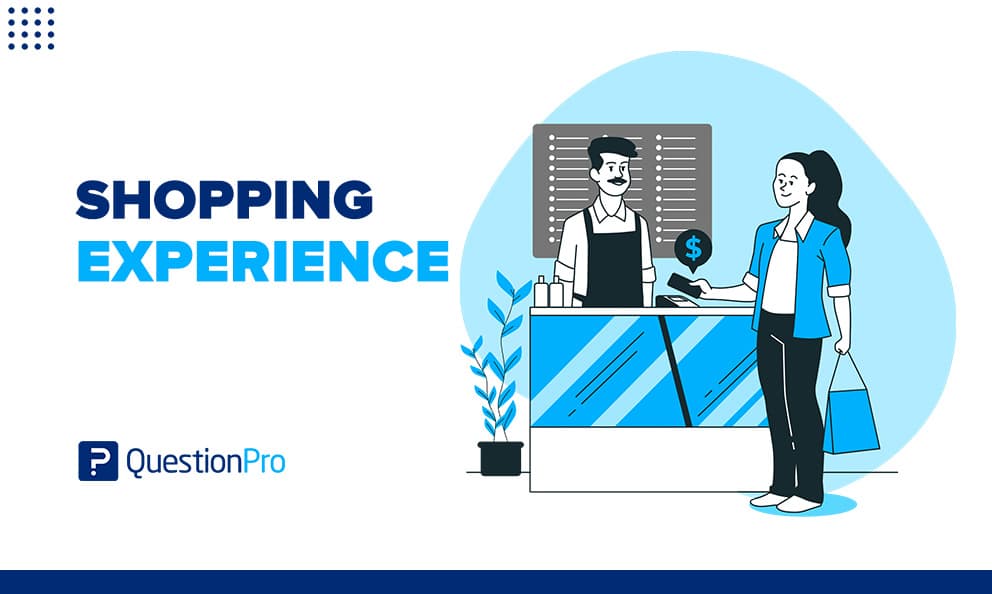
The shopping experience is the reason two stores selling the same product can post very different sales numbers. One store makes a customer feel noticed and confident in what they’re buying. The other leaves them checking their phone for a better deal elsewhere.
Retailers who get this right rarely talk about price first. A strong shopping experience is what decides whether a customer buys once or comes back for years.
In this blog, we’ll explore what shapes a shopping experience and the elements worth building around. From there, we’ll also cover how to measure and improve it, with real retail examples.
What is the shopping experience?
The shopping experience is every interaction, feeling, and impression a customer forms with a brand across an entire purchase. It starts before the first click or store visit and continues well after checkout.
Some retailers use the term shopping journey instead. The distinction is mostly one of emphasis:
- Shopping experience: How each step of a purchase feels to the customer
- Shopping journey: The sequence of steps the customer moves through
Both describe the same underlying reality. This guide treats the two terms as interchangeable. A customer’s experience with a return, a support ticket, or a follow-up email still counts. It’s part of the same shopping experience that started the moment they first heard of the brand.
Why the shopping experience matters
A good shopping experience directly affects revenue. Customers now judge brands on how a purchase feels, not only on price or product specs.
Customers are willing to pay up to a 16% price premium for a better experience, according to PwC’s Experience Is Everything study. The same research found several other consistent patterns:
- 73% of consumers say a good experience is a key factor in their purchasing decisions, alongside price and product quality
- One bad interaction is often enough for a shopper to switch brands entirely
- Consistency matters more than any single great gesture
Price and product drive loyalty less than they used to. How a brand makes a customer feel at each step now matters more. That’s exactly what the elements below are built to improve.
Key elements of the shopping experience
A strong shopping experience rests on five elements: environment, service, transparency, personalization, and communication. Retailers who treat these as one connected system see the biggest gains in loyalty and repeat purchases.
Environment
Environment is the sensory and visual backdrop of a purchase. It’s everything a customer sees, hears, and feels while browsing, in a store or on a catalog page.
- In physical stores: Wall color, lighting, signage, music, and layout
- In online stores: Page design, image quality, catalog layout, and button placement
Both settings send the same message: this brand pays attention to detail.
Service
Service is the human side of the shopping experience. It’s the effort a brand puts into building trust rather than closing a single sale. In a physical store, this shows up in how salespeople listen and advise rather than push. Online, it shows up in mobile usability, checkout speed, live chat support, and clear product descriptions. These are the same in-store service principles, just applied digitally. Customers can usually tell within minutes whether a brand is trying to sell them something, or trying to help them decide.
Transparency
Transparency means giving customers accurate information before they buy. Most shoppers now research a brand before they hand over a card number, a shift in consumer behavior driven by easy access to:
- Video reviews and unboxings
- Verified website and marketplace reviews
- Social media posts from other buyers
A brand that matches its marketing promises to the real product earns real trust. A single sale can never buy that trust on its own.
Personalization
Personalization, sometimes called flexible options, means giving customers enough range that an offer feels built around them instead of mass-produced. A clothing retailer that stocks multiple cuts, colors, and sizes is applying this principle. So is a software company that lets a customer configure a plan.
Personalization increases a customer’s sense of control. That sense of control is one of the strongest predictors of purchase satisfaction.
Communication
Communication is how consistently a brand stays connected to a customer. That means every channel they use, not only the one where the sale happens.
- Offline: In-store staff, phone support, direct mail
- Online: Website, email, social media, live chat
Online shoppers cannot touch or test a product before buying. Consistent communication is what replaces that missing physical reassurance.
How to improve the shopping experience
Improving the shopping experience rarely requires a full rebrand. Five specific changes account for most of the gains retailers see. They apply almost equally to physical stores and e-commerce.
- Map every customer touchpoint.
Walk through your own store or website the way a first-time customer would. Are customers greeted or acknowledged right away? Can they find what they came for without asking twice? Retailers running both a physical and online presence should map customer touchpoints across both, since inconsistency between the two channels is one of the most common complaints.
- Invest in employee experience.
Employee turnover and dissatisfaction show up directly in the shopping experience. Inconsistent, undertrained staff cannot deliver a consistent brand impression, while supported employees stay longer, know the product better, and put in the extra effort that turns an average interaction into a memorable one.
- Design the atmosphere and add real moments.
A well-lit, clearly organized space and a fast, intuitive site layout both remove friction before a customer reaches the product. Clear signage, a layout matched to how customers actually shop, and in-store events all contribute to this.
- Make loyalty programs personal.
A loyalty program only works if the reward feels earned and specific to that customer, not identical to what every other shopper gets. Retained customers already cost less to serve, tend to spend more per visit, and become the unpaid brand ambassadors no ad budget can fully replace.
- Cut checkout friction.
Long lines, outdated payment terminals, and multi-step online checkouts are where otherwise satisfied customers change their mind. A complicated checkout is the retail equivalent of an abandoned cart, and it’s one of the easiest fixes on this list to test and measure.
Real-world examples: Brands getting the shopping experience right
These three retailers show what the elements above look like once implemented, across very different price points and product categories.
Koio is a direct-to-consumer sneaker brand with both physical stores and an online shop. It blends its channels deliberately rather than treating them as separate businesses. That includes personalized thank-you notes and product recommendations after purchase, community events like launch parties open to in-person and online shoppers alike, and consistent follow-up regardless of which channel the sale happened on. The result is a shopping experience that feels the same. It doesn’t matter whether a customer buys in a store or from their phone.
HATCH is a maternity and women’s clothing retailer with stores in New York City and Los Angeles. It built a digital community around its core customer instead of only around its products. Most HATCH shoppers are expecting mothers, so its social channels share content about pregnancy, birth, and early parenting. That relevance keeps customers engaged with the brand between purchases, not only during them.
Rebag started as an online-only marketplace for resale luxury handbags. It later opened physical stores in New York City, Los Angeles, and Miami to extend that same experience offline. Every serious buyer is assigned a dedicated relationship manager who helps source, authenticate, and process purchases directly, and that same relationship continues across future purchases. This kind of clienteling is what makes a luxury resale shopping experience feel trustworthy. At this price point, trust is the entire value proposition.
How to measure the shopping experience
The shopping experience is measurable with a small set of standard metrics. Each one suits a different stage of the purchase.
| Metric | What it measures | When to use it |
|---|---|---|
| Net Promoter Score (NPS) | Overall likelihood a customer recommends the brand | After purchase, or at set intervals |
| Customer Satisfaction Score (CSAT) | Satisfaction with one specific interaction | Right after checkout, a support call, or a store visit |
| Customer Effort Score (CES) | How much effort a task took the customer | After checkout or a support request |
| Mystery shopping | Direct observation of staff and store execution | Ongoing, for physical stores or live chat |
None of these metrics tells the whole story alone. Pairing a score like CSAT with an open-ended follow-up question usually reveals why a shopping experience is falling short. Customer journey mapping software can tie these scores back to specific touchpoints. That beats leaving them as one number nobody acts on.
Common mistakes that hurt the shopping experience
Most shopping experience failures come from a small set of repeatable mistakes, not one catastrophic error.
- Treating online and offline channels as two separate brands instead of one connected experience
- Measuring satisfaction once, right after a sale, and never again
- Rewarding loyalty with generic discounts instead of anything tied to actual purchase history
- Adding technology like chatbots or self-checkout without testing whether it removes friction or adds it
- Treating staff turnover as only an HR problem, not also a shopping experience problem
Most of these mistakes cost nothing to correct once they’re actually noticed.
How QuestionPro supports a better shopping experience
Most of the mistakes above come down to one root cause. Brands find out about a broken touchpoint from lost sales, instead of from the customer directly. QuestionPro Customer Experience, paired with the underlying survey software, closes that gap by collecting feedback at the exact touchpoints covered in this guide, whether in-store, post-checkout, or after a support interaction. A few specific capabilities support this:
- Feedback capture at each touchpoint identified in a journey map
- Every response ties back to NPS, CSAT, or CES automatically
- Low scores route to the right team automatically, before a customer churns
Retailers running the touchpoint mapping step above at scale need this kind of structure. Without it, a single audit turns into a one-time exercise that gets forgotten by next quarter.
The shopping experience is never a one-time fix
A great shopping experience is never something a brand finishes and moves on from. Customer expectations shift every time a competitor improves theirs. The retailers who stay ahead treat every element in this guide as something to re-measure regularly: environment, service, transparency, personalization, and communication.
Consistency between online and offline channels matters more than any single flashy feature. Measurement has to be ongoing rather than a one-time audit. Personal touches, not generic ones, are what customers actually remember and repeat.
Frequently Asked Questions (FAQs)
They describe the same thing from two angles. Shopping experience refers to how a purchase feels at each step, while shopping journey refers to the sequence of steps itself. Most retailers and researchers use the terms interchangeably in practice.
Five elements shape most shopping experiences: environment, service, transparency, personalization, and communication. Environment sets the visual tone, and service builds trust through human interaction. Transparency shares accurate information, personalization offers customized options, and communication keeps every channel consistent.
Start with the cheapest fixes first: faster checkout, clearer signage, and staff training, none of which require new technology. Personalized loyalty rewards and consistent communication across channels cost far less than a store redesign. They usually affect retention more directly too.
Use Net Promoter Score for overall loyalty and Customer Satisfaction Score for single interactions. Customer Effort Score captures how hard a task felt. Pair these with mystery shopping or direct customer comments to understand the reason behind each score.
A smoother, more personal purchase reduces the perceived risk and effort of buying, so customers treat that reliability as worth paying extra for. PwC’s research found consumers are willing to pay up to a 16% premium for a consistently better experience.