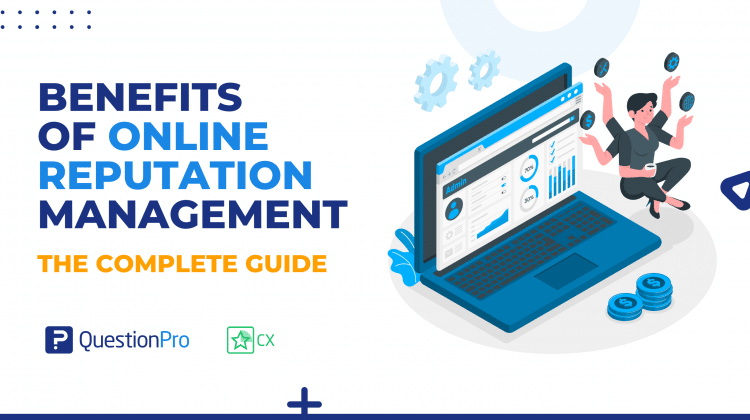
The benefits of online reputation management show up in sales, search results, hiring, and crisis recovery. Online reputation management (ORM) is the practice of monitoring, shaping, and responding to what people say about your brand online.
Buyers check reviews before they check your website. In a 2026 survey, 97% of US consumers said they read reviews when researching local businesses. Your reputation works as a daily sales asset, not a PR afterthought.
In this blog, we’ll explain the eight main benefits, show how to measure each one, and walk through the mistakes that undo the gains.
What is online reputation management?
Online reputation management (ORM) is the ongoing process of monitoring, influencing, and responding to how a person or organization appears across search results, review sites, social media, and news coverage. Its goal is a public picture of your brand that is accurate, current, and trusted.
ORM covers three jobs:
- Listen: Track mentions, reviews, and search results.
- Respond: Answer feedback quickly and in a human voice.
- Fix: Resolve the problems behind the complaints.
A team that only listens watches its reputation. A team that does all three improves it.
The practice applies to companies, locations, products, and individual executives. A single-location bakery and a global software firm both have an online reputation. They just manage it at different scale.
People often use ORM, review management, brand management, and public relations as if they mean the same thing. They overlap, but each has a different scope and owner.
| Term | What it covers | Main focus |
|---|---|---|
| Online reputation management | Reviews, search results, social posts, news, and forums | Monitoring and shaping public perception online |
| Review management | Collecting and answering reviews on rating sites | One channel inside ORM |
| Brand management | Positioning, messaging, and visual identity | How you want to be seen |
| Public relations | Media relationships and press coverage | Earned coverage and announcements |
| Social listening | Tracking brand and topic mentions on social platforms | Data input that feeds ORM |
Think of review management and social listening as tools inside ORM. Brand management sets the promise. ORM checks whether the public believes it.
What are the benefits of online reputation management?
The benefits of online reputation management fall into eight groups: trust, sales, search visibility, loyalty, early problem detection, crisis control, hiring, and competitive position. Each one stands on its own, and they reinforce each other over time.
1. Builds customer trust and credibility
Trust is the first benefit because the others depend on it. Shoppers use reviews as proof before they spend money. BrightLocal’s 2026 Local Consumer Review Survey of 1,002 US adults found:
- 97% read reviews when researching local businesses.
- 49% trust reviews from strangers about as much as advice from people they know.
- 89% expect business owners to respond to reviews.
ORM turns those expectations into routine. You collect reviews, answer them, and fix what they reveal.
2. Increases sales and revenue
Strong reputations convert more browsers into buyers. Research found that a product with five reviews had a purchase likelihood 270% higher than a product with none. The effect grew with price. Conversion rose 380% for higher-priced products and 190% for lower-priced ones.
Revenue data tells a similar story. A Harvard Business School study of Seattle restaurants found that a one-star Yelp increase lifted revenue 5% to 9% for independent restaurants. Ratings did not move revenue for chains, likely because shoppers already knew those brands. Smaller and lesser-known businesses gain the most.
3. Improves search visibility
Reviews help people find you, not just trust you. Google ranks local results on relevance, distance, and prominence. Google states that more reviews and positive ratings can help your local ranking under prominence.
ORM supports search in three practical ways:
- Steady review requests keep your review count and recency growing.
- Public replies show shoppers you value feedback, which Google notes helps a business stand out.
- Monitoring your brand-name search results lets you spot negative pages early.
4. Strengthens customer loyalty and retention
A fast, courteous reply to a complaint can keep a customer who was about to leave. The public response shows everyone else that the issue got attention. A private follow-up then closes the loop with the person who complained.
Pair review monitoring with short surveys so unhappy customers reach you before they reach a review site. That gives you a chance to fix the problem privately. It also gives you honest data on why people stay or go.
5. Surfaces product and service problems early
Reviews are free, unfiltered feedback at scale. Tag them by theme and watch for repeats. Patterns tell you more than any single comment:
- Repeated mentions of wait times or billing point to a process issue.
- A spike in complaints after a release points to a product defect.
- Complaints from one location point to a local operations gap.
One bad customer experience is an incident. Ten of the same kind are a signal worth acting on.
6. Limits damage during a crisis
A crisis rarely starts big. It starts with a few angry posts that nobody answers. Monitoring lets you catch the spike within hours instead of days, which matters because reputational risk grows with every hour of silence. Reputational risk is the chance that public opinion harms your revenue, relationships, or standing.
A basic response sequence keeps teams calm:
- Acknowledge the issue publicly and quickly.
- State what you know, and only what you know.
- Fix the cause and name the fix.
- Follow up when the fix is live.
7. Helps you recruit and retain talent
Customers are not your only audience. A survey from June 2023 found that 83% of US job seekers are likely to check employer reviews and ratings before deciding where to apply.
Your employer reputation shapes how many qualified candidates apply and how many accept offers. Responding to employee reviews with the same care you give customer reviews signals a culture that listens. That is a hiring advantage competitors without a plan will not match.
8. Builds a lasting competitive advantage
Reputation is slow to build and slow for rivals to copy. The bar is also rising. Research found that 3zzzzz1% of consumers now use only businesses rated 4.5 stars or higher, up from 17% in 2025.
| Reputation habit | What buyers notice | Cost to competitors who skip it |
|---|---|---|
| Replying to every review | The business listens | Look absent or indifferent |
| Steady recent reviews | The business is active and consistent | Look stale or unproven |
| Clean brand-name search results | Nothing alarming appears | Lose shoppers to the first bad link |
| Fast complaint handling | Problems get fixed | Lose them to a rival with a better rating |
What do online reputation management examples look like?
Examples help show how ORM works day to day. The scenarios below are illustrative composites, not client case studies. They show the pattern most teams follow: listen, respond, fix, and ask again.
- Multi-location dental practice.
One office averages 3.6 stars while the others sit near 4.6. Tagging shows complaints cluster around check-in waits. The practice changes scheduling, then asks recent patients for reviews. - B2B software company.
After a release, review-site comments mention a broken export. The team replies publicly with a workaround within a day. When the fix ships, it updates the reply so future buyers see the resolution. - Independent hotel.
The hotel answers every review, in the guest’s language, and names a specific detail from the stay. Prospective guests read the replies as proof of attentive service.
The Harvard Business School restaurant study mentioned earlier is the best documented real case. Independent businesses with better ratings earned measurably more.
How do you measure online reputation management?
You measure ORM with a small set of repeatable metrics reviewed monthly. Track the same ones over time so you see the trend, not just a snapshot.
| Metric | What it shows | How to read it |
|---|---|---|
| Average star rating | Overall sentiment | Spiegel found purchase likelihood peaks between 4.0 and 4.7 stars |
| Review volume and recency | Activity and prominence | Set a monthly target from your last three months |
| Response rate and time | Responsiveness | A practical goal: reply to every negative review within 48 hours |
| Sentiment share | Percent positive, neutral, negative | Investigate any drop that lasts two months |
| Net trust score | How much customers trust you | Compare against your own prior results |
| Online reputation score | Combined view of your standing | Use as a trend line, not a grade |
| Page-one search results | Negative or outdated pages | Aim for zero negative results on page one |
The 48-hour reply goal is a practical benchmark, not an industry standard. Adjust it to your review volume.
Step-by-step guide to building an ORM program
A working ORM program takes six steps. You can start with free tools and add software when volume grows.
- Audit your footprint: Search your brand name, then list every review site, social profile, and directory that mentions you.
- Set up monitoring: Create alerts for new reviews and brand mentions on each channel.
- Write a response playbook: Define tone, reply deadlines, and who escalates what. Our guide to protecting your brand reputation covers tactics in more depth.
- Request reviews on a schedule: Ask after each purchase or service, and send every customer the same request.
- Fix root causes: Review tagged themes weekly and assign owners to the top issues.
- Report monthly: Share the metrics above with leadership and set one improvement goal.
How do you decide where to start with ORM?
Start where your customers look first. The right priority depends on your business model, your size, and how fast feedback arrives.
- Single-location local business: Claim and complete your Google Business Profile, then reply to every review.
- Multi-location brand: Pull all locations into one view so you can compare ratings and spot weak sites.
- B2B or software company: Focus on G2, Capterra, and LinkedIn, where buyers research vendors.
- Hiring-heavy company: Add Glassdoor and Indeed to your monitoring list.
- No website: Treat your review profiles as your storefront. They may be the only page buyers see.
Software becomes worthwhile when checking sites takes more than an hour a day. That hour is a rule of thumb, not a hard limit. Our comparison of online reputation management software lists the main options.
What are the common mistakes and risks of ORM?
Most ORM failures come from shortcuts. Avoid these five, and your reputation work will hold up under scrutiny.
- Buying or faking reviews.
The FTC’s rule banning fake reviews took effect on October 21, 2024. It bans fake and AI-generated reviews and review suppression through threats or intimidation. Courts can impose civil penalties on knowing violators. - Arguing in public.
Every future customer reads a defensive reply. Thank the reviewer, address the facts, and move detailed talk to a private channel. - Asking only happy customers.
Selective review requests, often called review gating, skew your rating. Many platforms prohibit the practice, and shoppers notice when a perfect score looks too clean. - Treating ORM as a one-time cleanup.
Reputation changes daily. A burst of effort followed by silence leaves old problems to return. - Trusting automated sentiment blindly.
Software can misread sarcasm and slang. Review a sample of flagged items by hand each month.
ORM also costs time and, with software, money. Budget for both before you start.
How does CX Reputation connect reviews to customer feedback?
Reviews show what happened, but not why, and not how the silent majority feels. CX Reputation, part of QuestionPro Customer Experience, brings public reviews and customer survey data into one decision process.
The CX Reputation tool offers these capabilities:
- Pulls ratings, reviews, and mentions from sources such as Google, Facebook, Trustpilot, TripAdvisor, Yelp, and Capterra into one location.
- Applies AI sentiment analysis with tagging, filtering, and export.
- Lets teams reply to reviews and posts directly, with automatic translation for reviews in other languages.
Teams that also run customer surveys can compare what reviewers say publicly with what customers say privately. A gap between the two is often the earliest warning that a problem is coming.
Reputation compounds when you treat it as routine work
Reputation is the sum of many small moments, and you can shape most of them. Each answered review, each fixed problem, and each honest reply adds a little trust that competitors cannot easily copy. Brands that treat ORM as weekly habit pull ahead of brands that treat it as a rescue plan.
Ask your team three questions this week:
- Which review site would a new customer check first, and when did we last look?
- How many reviews went unanswered last month, and why?
- What one problem keeps showing up in feedback that we have not fixed?
Frequently Asked Questions (FAQs)
Review replies and monitoring help immediately, but ratings move slowly. Expect a few months of steady review requests to shift your average meaningfully. Search result changes can take longer, depending on how strong the pages you are trying to outrank are.
Generally, only if the review violates the platform’s policies, such as spam, fake content, or off-topic posts. You can flag it for review. Legitimate negative reviews usually stay, so the best response is a calm public reply and a visible fix.
The FTC’s 2024 rule bans paying for reviews with a set sentiment, positive or negative. Offering incentives for honest reviews is a riskier area that requires clear disclosure. Check current FTC guidance or ask counsel before running any incentive program.
Check at least once every business day for active review sites, and set instant alerts for one-star reviews. Most customers expect a timely reply, so a daily habit prevents complaints from sitting unanswered for a week.
Yes. B2B buyers research vendors on G2, Capterra, LinkedIn, and peer communities before they speak to sales. Employee reviews on Glassdoor also affect hiring. B2B teams usually track fewer reviews, but each one carries more weight per deal.