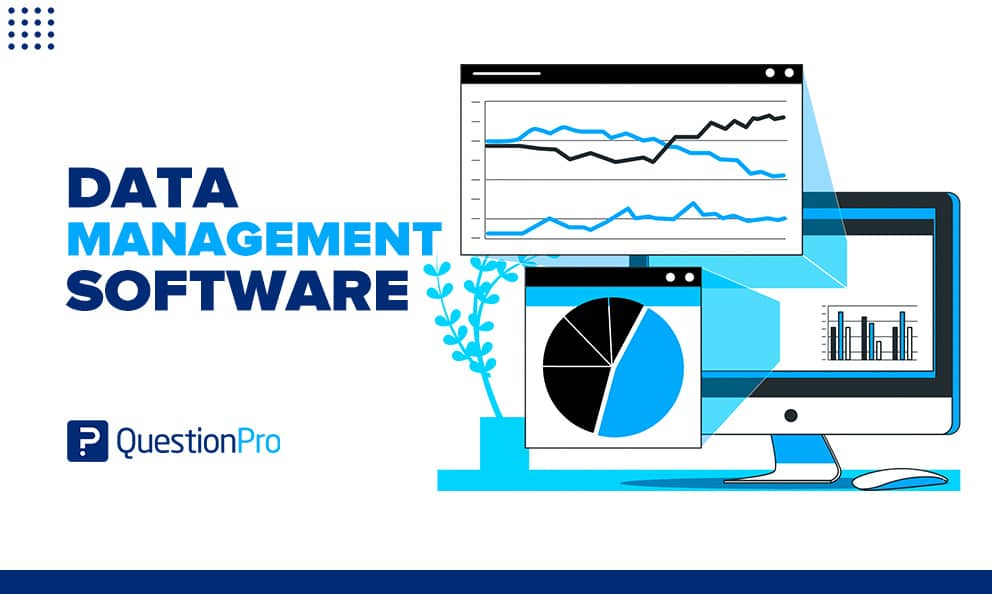
Data management software helps organizations collect, store, organize, protect, and use their data in one controlled way. It covers a wide range of tools, from integration pipelines and cloud data platforms to governance catalogs and research repositories.
Choosing the right product is hard because the label covers so many jobs. A tool that moves data between systems solves a different problem than one that governs who can see it, or one that stores research findings. Buying the wrong type wastes budget and time.
This guide explains what data management software is, the main types, the features that matter, 12 leading options by category, and a practical way to choose.
What is data management software?
Data management software is a set of tools that integrate, clean, store, secure, and deliver data from many sources so people can trust and use it. The terms “tools,” “software,” and “platform” overlap. A tool usually does one job, while a platform bundles several jobs in one product.
Good data management software supports six core jobs:
- Integration: Connects sources and moves data between systems.
- Storage: Holds data in databases, warehouses, or lakes.
- Quality: Finds and fixes errors, duplicates, and gaps.
- Governance: Controls who owns, sees, and changes data.
- Security: Protects data with access controls and encryption.
- Delivery: Gives people and applications the data they need.
No single product is best at everything. Most organizations combine two or three, often supported by a clear data management strategy.
How is data management software different from a database or a data warehouse?
A database and a data warehouse are places to store data. Data management software is the wider set of tools that moves, cleans, governs, and protects data wherever it lives.
- Database: Stores and retrieves records for an application, such as an order system.
- Data warehouse: Stores cleaned, structured data from many sources for reporting and analysis.
- Data management software: Connects those stores, keeps data accurate, controls access, and documents what exists.
Think of databases and warehouses as rooms, and data management software as the plumbing, locks, and labels that make the rooms usable. Many products now blur the line, since cloud platforms bundle storage with integration and governance features.
What types of data management software exist?
Analyst research groups the market by function, and one buyer’s guide describes five areas: data governance, data quality, master data management, data integration, and data intelligence. The table adds storage and research needs.
| Type | What it does | Example products |
|---|---|---|
| Data integration | Moves and transforms data between systems | Informatica, Talend, Boomi |
| Cloud data platforms | Store and process data at scale | Snowflake, Databricks, Google Cloud, AWS, Microsoft Azure |
| Governance and catalog | Documents data and enforces rules | Collibra, Informatica |
| Master data management | Keeps one trusted record for key entities | Profisee, Ataccama ONE |
| Data quality | Profiles, cleans, and monitors data | Ataccama ONE, Talend |
| Databases | Store and query structured data | Oracle, IBM Db2 |
| Research data management | Stores and organizes survey and research findings | QuestionPro InsightsHub |
What features should data management software have?
Features matter more than brand names. Check whether a product covers the capabilities your use case needs.
- Connectivity: Native connectors for your databases, cloud apps, and files.
- Data quality tools: Profiling, cleansing, deduplication, and validation rules. See this guide to data quality tools.
- Metadata and cataloging: Search, tags, lineage, and clear definitions. Good metadata management keeps data findable.
- Governance controls: Role-based access, audit logs, and policy enforcement.
- Security: Encryption, masking, and monitoring for sensitive data.
- Scalability: Stable performance as volume and users grow.
- Automation: Scheduled jobs, alerts, and workflows that reduce manual work.
- Usability: An interface that business users, not just engineers, can use.
- Reporting: Dashboards or links to reporting tools.
Should you choose cloud or on-premises data management software?
Most new data management software runs in the cloud, but on-premises and hybrid setups still make sense for some organizations. Weigh the trade-offs before you shortlist products.
Pros of cloud software
- Fast setup: Teams can start in days instead of months.
- Elastic scale: Capacity grows and shrinks with demand.
- Lower upkeep: The vendor handles updates, patches, and hardware.
Cons of cloud software
- Usage costs: Bills can rise quickly without monitoring.
- Data location rules: Some contracts or regulations require data to stay in specific places.
- Vendor dependence: Moving to another provider later can be hard.
Hybrid setups keep sensitive data on-premises while using cloud services for analytics. They add flexibility but also add integration work, so plan them carefully.
What are the benefits of data management software?
The right software turns scattered data into a dependable asset. Seven benefits stand out:
- Centralized access: One governed place to find and use data.
- Better quality: Fewer errors, duplicates, and conflicting records.
- Stronger compliance: Audit trails and access controls support privacy rules.
- Faster decisions: Teams spend less time hunting for data and more time using it.
- Less redundancy: Shared data replaces repeated copies across departments.
- Lower risk: Security and backup features protect against loss and misuse.
- Easier collaboration: Teams work from the same versions of the data.
What are the 12 best data management software options?
The options below cover different jobs, so compare them by category rather than as a single ranking. Pricing for most enterprise products is custom or usage-based, so request a quote and run a pilot before you commit.
| Software | Category | Best for |
|---|---|---|
| QuestionPro InsightsHub | Research data management | Insights and research teams |
| Informatica | Enterprise data management suite | Large organizations with complex needs |
| Collibra | Governance and catalog | Governance programs and stewardship |
| Snowflake | Cloud data platform | Scalable cloud analytics |
| Databricks | Lakehouse platform | Data engineering and machine learning |
| Microsoft Azure | Cloud data services | Microsoft-centered environments |
| Google Cloud | Cloud data services | Large-scale analytics and AI |
| AWS | Cloud data services | Broad, flexible cloud data stacks |
| Talend | Integration and quality | Data integration with quality checks |
| Boomi | Integration platform | Connecting cloud and on-premises apps |
| Profisee | Master data management | Single trusted records for key entities |
| Ataccama ONE | Data quality and MDM | Combined quality and master data work |
1. QuestionPro InsightsHub
QuestionPro InsightsHub is a research repository that brings survey findings, reports, and project materials into one searchable place.
- Best for: Insights teams that need to find and reuse research.
- Standout strength: A unified library, so past studies are easy to find and compare.
- Watch out: It manages research knowledge. It is not a general-purpose warehouse or integration suite.
- Pricing model: Custom quote based on users and scope.
2. Informatica
Informatica offers a broad cloud platform that covers integration, data quality, master data, and governance in one suite.
- Best for: Large enterprises that want one vendor across many data jobs.
- Standout strength: Breadth of capabilities, from integration to governance.
- Watch out: Cost and complexity can be high, so confirm you need the full suite.
- Pricing model: Consumption-based cloud pricing, quoted by the vendor.
3. Collibra
Collibra is known for data governance and cataloging. It helps teams document data, assign stewards, and define business terms.
- Best for: Organizations that are building a governance program.
- Standout strength: Stewardship workflows and a business glossary.
- Watch out: Setup can require significant process work, and it does not store or move data.
- Pricing model: Custom enterprise quote.
4. Snowflake
Snowflake is a cloud data platform used for warehousing and analytics at scale.
- Best for: Teams that need a scalable place to store and query data.
- Standout strength: Separates storage from computing, which helps with flexible scaling.
- Watch out: Costs depend on usage, so monitor workloads.
- Pricing model: Usage-based, with compute and storage billed separately.
5. Databricks
Databricks is a lakehouse platform that combines data engineering, analytics, and machine learning.
- Best for: Engineering-led teams that run machine learning and large pipelines.
- Standout strength: Supports structured and unstructured data in one environment. See how it relates to a data lake.
- Watch out: It suits teams with strong technical skills.
- Pricing model: Usage-based, tied to compute consumed.
6. Microsoft Azure
Microsoft Azure offers data storage, analytics, and governance services within the Microsoft ecosystem.
- Best for: Organizations that already use Microsoft products.
- Standout strength: Close fit with Microsoft tools and identity controls.
- Watch out: Many separate services mean careful design is needed.
- Pricing model: Pay-as-you-go per service, with reserved options.
7. Google Cloud
Google Cloud provides data warehousing, analytics, and AI services, including its BigQuery warehouse.
- Best for: Teams that run large-scale analytics and AI workloads.
- Standout strength: Strong analytics and machine learning services.
- Watch out: Usage-based costs need monitoring.
- Pricing model: Pay-as-you-go per service, with committed-use options.
8. AWS
Amazon Web Services offers a wide set of storage, integration, warehouse, and analytics services.
- Best for: Teams that want flexible, modular cloud building blocks.
- Standout strength: Breadth of services and a large ecosystem.
- Watch out: The choice of services can overwhelm small teams.
- Pricing model: Pay-as-you-go per service, with savings plans.
9. Talend
Talend focuses on data integration and quality. Qlik acquired Talend in 2023.
- Best for: Teams that need pipelines with built-in quality checks.
- Standout strength: Integration plus data quality in one family of tools.
- Watch out: Check current packaging and editions with the vendor.
- Pricing model: Subscription tiers, quoted by the vendor.
10. Boomi
Boomi is an integration platform that connects cloud and on-premises applications.
- Best for: Companies that need to link many business applications quickly.
- Standout strength: Prebuilt connectors and low-code integration.
- Watch out: It focuses on integration, so pair it with storage and governance tools.
- Pricing model: Subscription tiers based on connectors and features.
11. Profisee
Profisee is a master data management product that helps create a single trusted record for entities such as customers or products.
- Best for: Organizations with duplicate or conflicting master records.
- Standout strength: Master data matching and stewardship.
- Watch out: Plan for data modeling and a learning curve.
- Pricing model: Subscription, quoted by the vendor.
12. Ataccama ONE
Ataccama ONE combines data quality, master data management, and cataloging features.
- Best for: Teams that want quality and master data work in one product.
- Standout strength: Automated profiling and quality rules.
- Watch out: Review scope carefully, since the product spans several functions.
- Pricing model: Custom enterprise quote.
Business intelligence tools such as Tableau, Power BI, and Looker sit next to this list. They analyze and visualize data, but they do not manage it, so they belong in your reporting layer.
How do you choose data management software in 8 steps?
Start with the problem, not the product. These eight steps keep the choice practical.
- Define the problem.
Write the specific pain, such as scattered data, duplicate records, or slow reporting. - List your data sources.
Note systems, formats, and volumes, including survey and feedback data. - Match type to need.
Decide whether you need integration, storage, governance, master data, quality, or research management. - Check connectors and integration.
Confirm the product connects to your current systems. See this guide to data integration. - Review security and compliance.
Verify access controls, encryption, and audit trails for the rules that apply to you. - Test usability.
Let business users try it, since adoption depends on ease of use. - Estimate total cost.
Include licenses, setup, training, and the staff time to run it. - Run a pilot.
Test two or three finalists on one real dataset before you sign a contract.
How much does data management software cost?
Costs vary more by pricing model than by brand. Understanding the model helps you compare quotes fairly.
| Pricing model | How it works | Watch for |
|---|---|---|
| Per user or seat | A fixed fee for each person who uses the tool | Costs rise as adoption grows |
| Usage-based | Charges for compute, storage, or data processed | Surprise bills from heavy queries |
| Capacity or tier | A set price for a volume band or feature tier | Paying for capacity you do not use |
| Open source | Free software, with paid support or hosting options | Staff time to run and maintain it |
| Enterprise license | A negotiated contract for a suite of tools | Long terms and bundled features you may not need |
License fees are only part of the bill. Add implementation, integration work, training, and the people needed to run the software. A tool with a lower price but a heavy setup can cost more over three years than a pricier, easier one.
What are common use cases for data management software?
Different teams use the same category for different goals.
- Research and insights: Store studies and survey findings so teams can reuse them and avoid repeat research.
- Customer data: Bring customer records together, remove duplicates, and keep one trusted profile.
- Marketing and sales: Keep contact data clean and consistent across tools.
- Finance and operations: Standardize reporting data and support audits.
- Healthcare and regulated industries: Control access to sensitive data and keep audit trails.
- Product and engineering: Manage pipelines, feature data, and analytics for machine learning.
What trends are shaping data management software?
The category changes quickly. Five trends affect what you should look for today.
- AI-assisted management: Tools now suggest tags, detect sensitive data, and write descriptions automatically.
- Open table formats: Formats such as Apache Iceberg let teams switch engines without moving data.
- Data observability: Monitoring tools watch pipelines for broken jobs, late data, and sudden quality drops.
- Data mesh thinking: Business domains own and publish their data, with central standards and shared tools.
- Privacy automation: Software maps personal data and helps teams respond to access and deletion requests.
Ask vendors how their products support these trends, but buy for the problem you have now, not the one you might have in five years.
How does data management software support research?
Research teams face a special problem. Their data includes survey responses, interview notes, and reports spread across files and folders. A research data management approach brings that material into one governed place.
QuestionPro InsightsHub supports this need, and QuestionPro survey software feeds it with fresh data.
- Unified repository: Organize, search, and find research projects in one place.
- Real-time dashboards: Share reporting dashboards with the stakeholders who need them.
- Integration: Connect with existing research tools and data sources.
- Reuse: Compare findings across studies to save time and money.
What mistakes should you avoid when buying?
Most failed purchases share the same few errors. Watch for these:
- Buying a suite for a narrow problem: A team with duplicate customer records may need master data tools, not a full enterprise platform.
- Ignoring ownership: Software cannot decide who is accountable for data, so pair any purchase with a data governance framework and a clear view of data management vs. data governance.
- Skipping the pilot: A demo hides problems that real data exposes.
- Underestimating training: Adoption depends on people knowing how to use the tool.
- Choosing on brand alone: A famous name does not guarantee a fit for your stack or skills.
How do you roll out new data management software?
A good rollout matters as much as a good product. Most tools fail through low adoption, not missing features.
- Start small.
Pick one team and one dataset that causes visible pain, such as duplicate customer records. - Name an owner.
Give one person responsibility for the rollout, the timeline, and user questions. - Set success measures.
Choose two or three, such as fewer duplicates or faster report delivery, and record the starting values. - Train in context.
Run short sessions built around the team’s real work, not generic product tours. - Collect feedback early.
Ask users what slows them down after the first two weeks and again after the first month. - Expand on proof.
Add teams only when the first one uses the tool without reminders and the measures improve.
Fit matters more than features
The best data management software is the one that solves your actual problem and that your team will use. A modest tool used well beats an expensive suite that sits idle.
Name the problem, choose the right category, pilot two or three options, and measure the result. That process will serve you better than any ranking.
Frequently Asked Questions (FAQs)
Software is the broad term for any product that helps manage data. A platform usually bundles several functions, such as integration, quality, and governance, in one environment. Many vendors use the words interchangeably, so check what each product includes.
Spreadsheets work for small, simple datasets. You should consider software when data comes from many sources, several people edit it, or errors and duplicates keep appearing. Those signs show that manual methods no longer scale.
Master data management (MDM) creates one trusted record for key business entities, such as customers, products, or suppliers. It matches and merges duplicates across systems, so every team uses the same name, address, and identifier for each entity.
Some can. Data lakes and lakehouse platforms store text, images, and logs alongside tables. Others focus on structured data only. Confirm which data types a product supports before you buy.
Research teams need to store and reuse studies, not just move data. A research repository such as QuestionPro InsightsHub fits that need, while general integration or warehouse tools fit engineering needs. Choose by the job you need done.