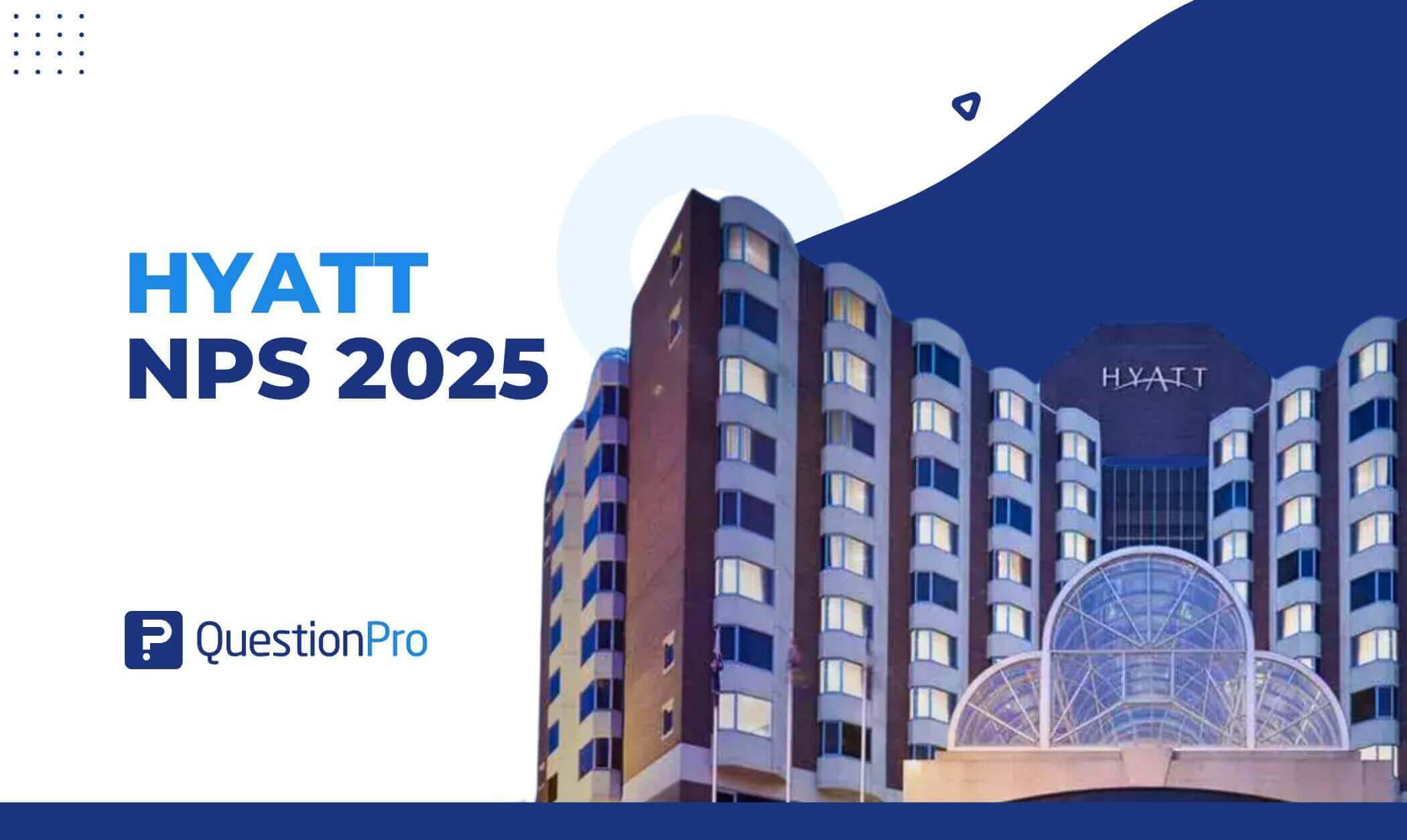
Hyatt NPS 2025 data puts the hotel brand well ahead of the hospitality industry average, and the gap is wide enough to matter. Guests are not just satisfied with their stays. They are actively telling friends, family, and colleagues to book a room.
Net Promoter Score (NPS) is the metric behind that gap. It measures how likely a guest is to recommend a brand after a stay, and it has become one of the most trusted loyalty signals in hospitality.
This article breaks down Hyatt’s 2025 NPS, compares it against other measurement standards, and shows how any hotel brand can track and improve its own score using the same methodology.
What is Net Promoter Score, and why does it matter for hotels?
Net Promoter Score is a loyalty metric based on one question: on a scale of 0 to 10, how likely are you to recommend this hotel to a friend or colleague? The answer sorts guests into three groups.
- Promoters (9 to 10): Guests who had a great stay and are likely to recommend the brand.
- Passives (7 to 8): Guests who were satisfied but not enthusiastic enough to promote the brand.
- Detractors (0 to 6): Guests whose stay fell short of expectations.
The score itself comes from a simple formula.
NPS = (% of Promoters) – (% of Detractors)
A brand with 60% Promoters and 15% Detractors would post an NPS of 45. The result ranges from negative 100 to positive 100, and any score above zero means promoters outnumber detractors. For hotels specifically, Net Promoter Score tracking matters because a single bad review can spread fast, while a loyal guest base drives repeat bookings without extra ad spend.
Hyatt’s NPS in 2025: the numbers behind the score
According to QuestionPro’s Q1 2025 Benchmarking NPS and CSAT Report, Hyatt Hotels posted an NPS of 58 against a hotel and hospitality industry average of 44. That 14 point gap places Hyatt at the top of the brands measured in the study.
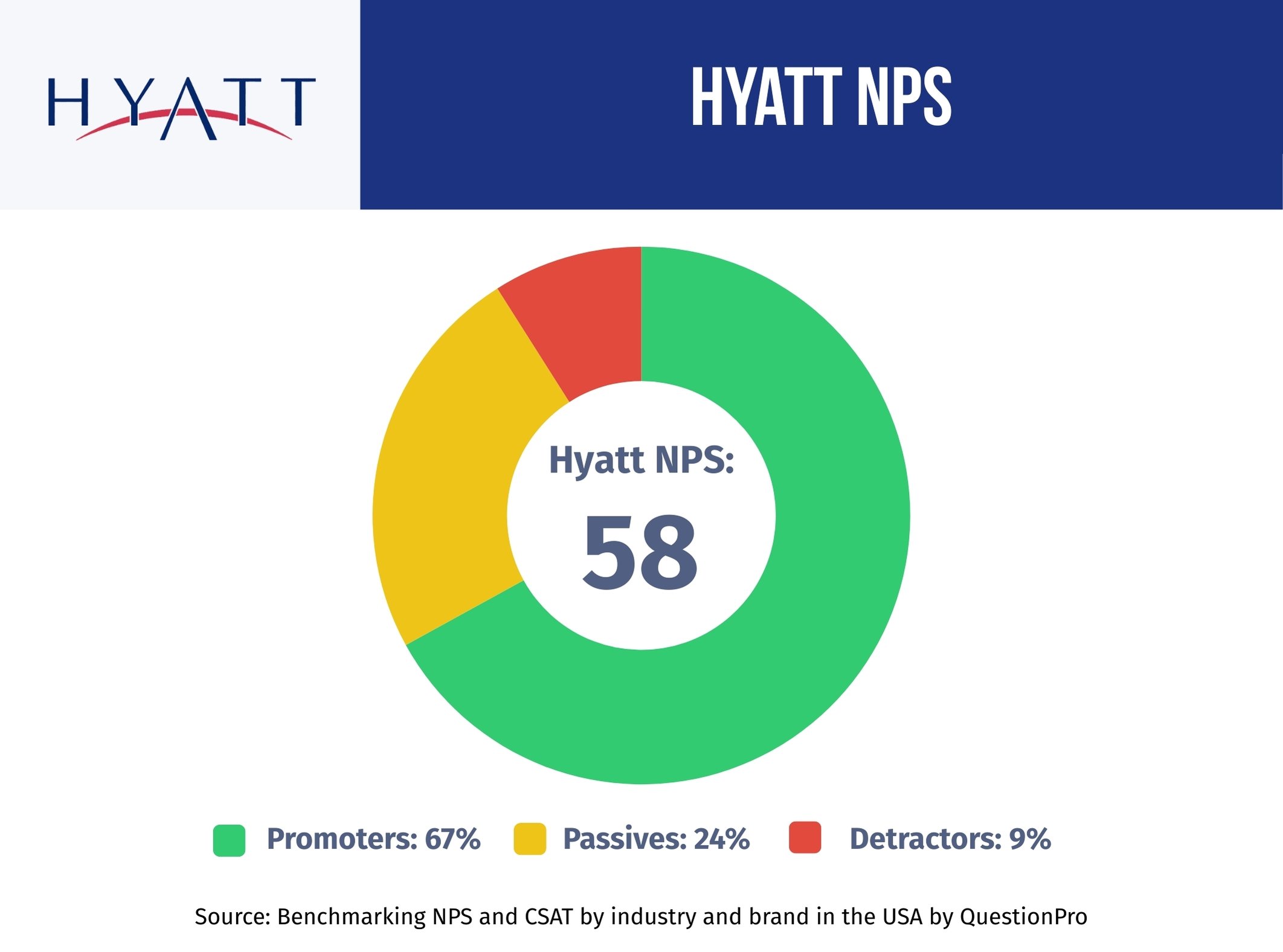
The breakdown behind that score looks like this.
| Guest segment | Share of respondents |
| Promoters | 67% |
| Passives | 24% |
| Detractors | 9% |
A 9% detractor rate is low for the hotel industry, where inconsistent service across properties often drags scores down. The same QuestionPro study found Hyatt’s detractor rate was the lowest of any hospitality brand measured, while Best Western Hotels & Resorts sat at the high end with 14% detractors.
That Q1 figure is not the whole story, though. QuestionPro’s Q4 2025 Experience Benchmarks report tracked Hyatt’s score across all four quarters of 2025, and the number moved more than most guests would expect. Hyatt opened the year at 58, dipped to 54 in Q2, jumped to a high of 67 in Q3, then fell to 49 by Q4. A single quarterly snapshot, including the widely cited 58, only tells part of the guest loyalty story for the year.
NPS vs CSAT vs ACSI: why Hyatt’s score looks different depending on the source
Search around and you will find more than one number attached to Hyatt’s guest satisfaction. That is not a contradiction. It happens because NPS, CSAT, and ACSI measure different things using different methods.
- NPS (Net Promoter Score) asks about recommendation likelihood and produces a score from negative 100 to positive 100. QuestionPro’s Q1 2025 study puts Hyatt at 58 using this method.
- CSAT (Customer Satisfaction Score) asks guests to rate a specific experience, usually on a 1 to 5 scale, and reports the percentage who were satisfied.
- ACSI (American Customer Satisfaction Index) is a third-party academic benchmark that scores brands on a 0 to 100 scale using a weighted model of guest expectations, perceived quality, and value. According to the American Customer Satisfaction Index, Hyatt scored 76 in 2025 and rose to 77 in 2026, close to the lodging industry average of 76 and 77 over the same period.
A separate tracker, Comparably, calculates Hyatt’s NPS at 32 based on ongoing employee and consumer sentiment sampling rather than a dedicated post-stay survey. The three numbers are not wrong. They reflect three different survey designs, sample sizes, and question formats. Anyone benchmarking a hotel brand should always check which methodology sits behind a published score before comparing it to their own.
How Hyatt compares to other major hotel brands
Hyatt’s 2025 NPS does not exist in a vacuum. Placed next to its closest competitors from the same Q1 2025 report cited above, the score shows where consistency in guest experience makes the biggest difference.
| Hotel brand | NPS (Q1 2025) | Promoters | Detractors |
| Hyatt Hotels | 58 | 67% | 9% |
| Hilton | 56 | 66% | 10% |
| Marriott | 51 | 60% | 9% |
| Wyndham | 48 | 57% | 9% |
| Best Western | 42 | 56% | 14% |
Hilton comes closest to Hyatt on both promoter share and detractor rate, which shows just how tight the race is at the top of the industry. Marriott and Wyndham post similarly low detractor rates but lose ground on promoter share, landing them in the middle of the pack. By Q4 2025, the order shifted again: Hilton held steady at 55 while Hyatt slipped to 49, a reminder that a Q1 leaderboard position is not guaranteed to hold for the rest of the year. Reviewing a competitor breakdown like this is useful before setting an internal NPS target, since it shows what a top performing hotel brand’s segment mix actually looks like rather than just the headline number.
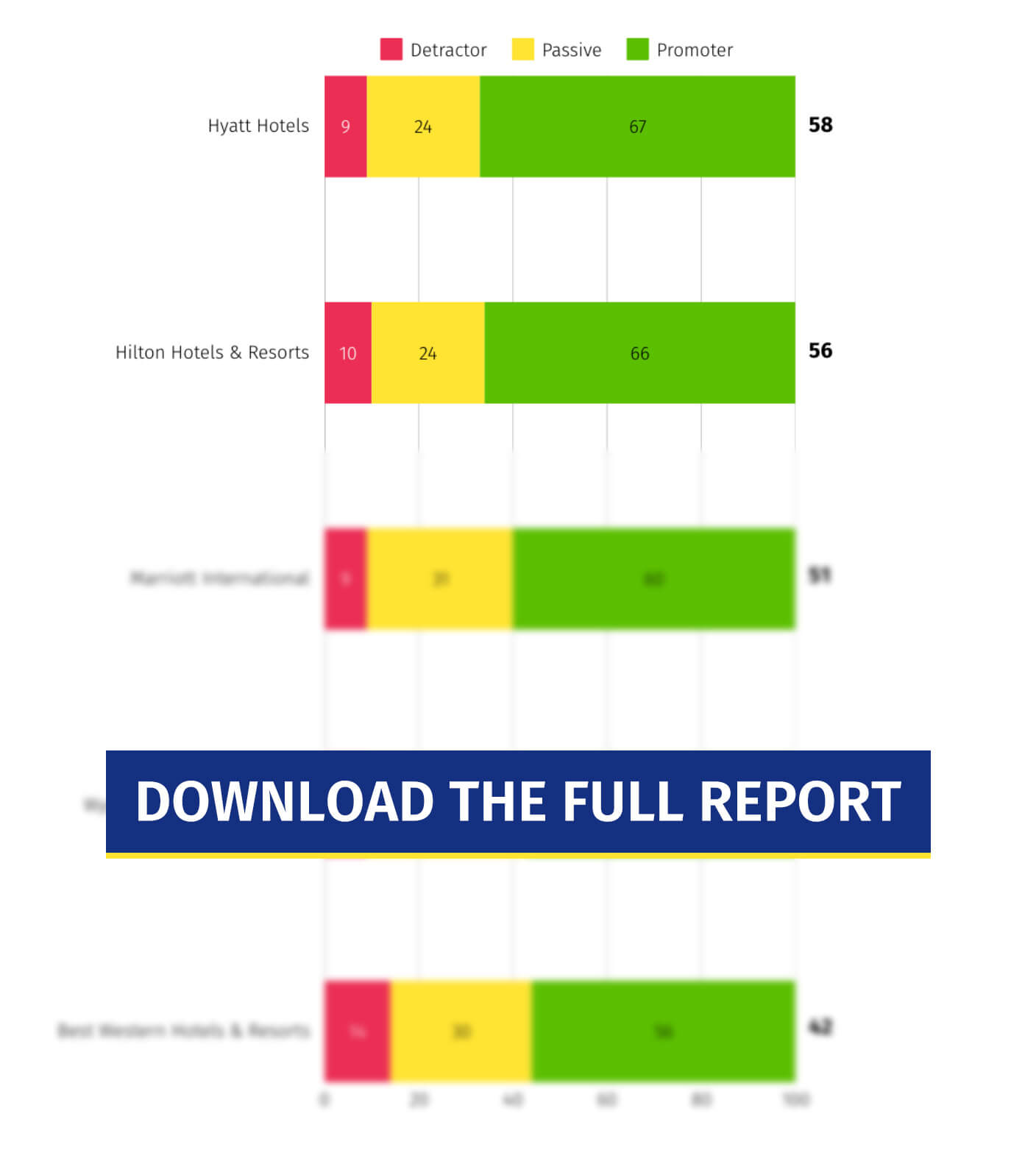
These insights come from QuestionPro’s latest study, which surveyed 1,000 participants to measure NPS across leading companies and industries. The report is based on real customer feedback from Q1 2025 and is updated quarterly.
We invite you to download the full report. It’s a valuable resource for evaluating your company’s performance and determining your customers’ perceptions of you.
What drives Hyatt’s guest loyalty
Guest feedback collected alongside the NPS survey points to a handful of recurring themes. One traveler praised a last minute booking experience, singling out attentive shuttle and front desk staff. Another highlighted a smooth stay during a conference trip, crediting valet and front desk teams by name for going out of their way. A third guest described Hyatt as a reliably clean, well priced option for a comfortable stay.
Those patterns line up with five factors that show up consistently in Hyatt’s guest data.
- Personalized service: Staff interactions, not just room quality, drive the strongest promoter comments.
- Consistent cleanliness: Guests trust the room standard whether they book for one night or a week.
- Cross-property reliability: A stay in Chicago should feel like a stay in Singapore, and Hyatt guests report that it does.
- A smooth digital booking experience: Easy reservations and check-in reduce the friction that usually creates detractors.
- Loyalty program value: World of Hyatt perks, from complimentary breakfast to late checkout, reinforce the sense that guests are getting more than a room.
Common mistakes hotels make when tracking guest NPS
Many hotel brands run an NPS program without getting a score they can actually act on. A few mistakes show up again and again.
- Surveying only at checkout.
This misses issues that happen mid-stay, when a hotel still has time to fix them. - Skipping the follow-up question.
A score alone does not explain why a guest scored the way they did. - Comparing NPS across unrelated industries.
A 58 in hospitality is not directly comparable to a 58 in software or retail. - Ignoring the detractor segment.
Teams that focus only on growing promoters miss the faster win of learning how to turn detractors into promoters. - Treating one quarter’s score as permanent.
Guest sentiment shifts with staffing, renovations, and seasonality, so a single snapshot goes stale fast.
Avoiding these mistakes is usually a bigger driver of score improvement than any single service upgrade.
How to measure and improve your hotel’s NPS with QuestionPro
Tracking guest loyalty the way Hyatt does does not require an enterprise research team. Here is the process broken into four steps.
1. Launch a post-stay NPS survey
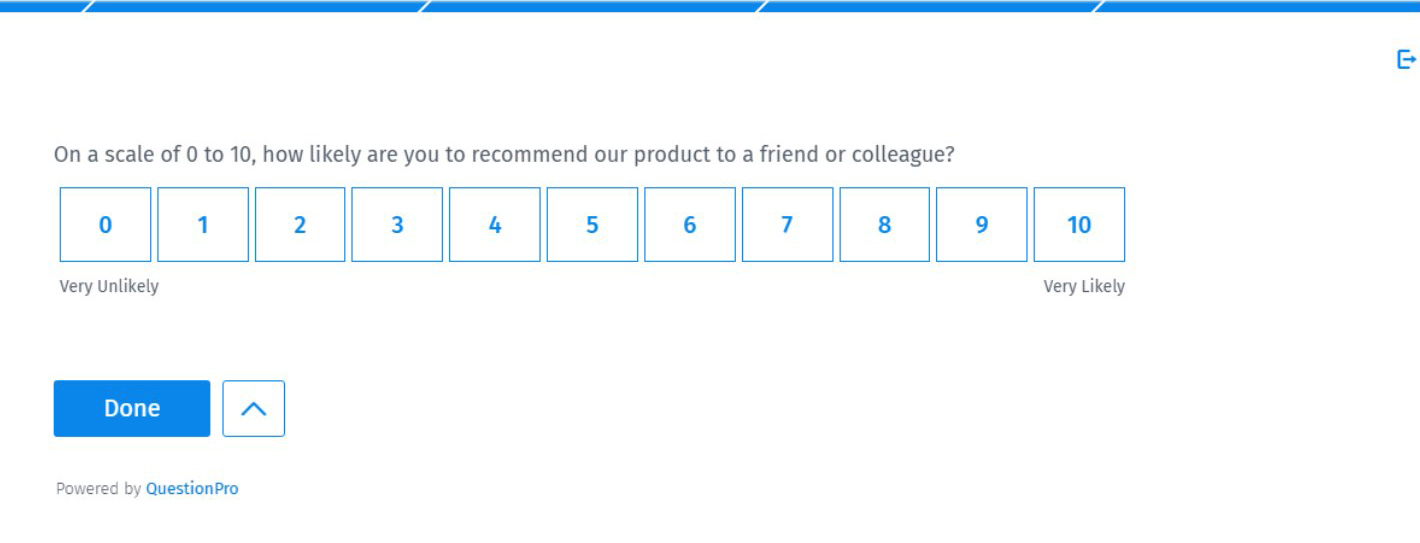
Start with the standard 0 to 10 recommendation question, then add an open-ended follow-up so guests can explain their score in their own words. QuestionPro’s AskWhy question type is built for exactly this, and it can be added to any survey software template in a few minutes.
2. Reach guests through the right channel
Distribute the survey by email, SMS, QR code, or a direct link at checkout. If a property wants to reach a specific traveler segment, QuestionPro Audience can supplement direct responses with sample data from travelers matching that profile.
3. Watch the dashboard, not just the final score
A live dashboard shows Promoters, Passives, and Detractors as responses come in, so a property manager can flag a bad week before it turns into a bad quarter.
4. Act on the feedback
Route detractor comments to the team that can fix the issue, whether that is housekeeping, front desk, or the booking platform. Benchmarking tools let a hotel brand compare its own trend line against industry data instead of guessing whether a shift in score is normal seasonal noise or a real problem.
The real lesson behind Hyatt’s guest loyalty numbers
Hyatt’s 2025 NPS is not the product of one flashy initiative. It comes from stacking small, consistent wins, a clean room, an attentive front desk, an easy booking flow, across thousands of properties and guest touchpoints. That consistency is what separates a brand that occasionally delights guests from one that reliably turns them into promoters.
Any hotel brand chasing a similar score should start with the same discipline Hyatt applies: measure often, ask why, and fix what the data points to. A customer experience management platform built around that loop is what turns a single NPS number into a repeatable guest loyalty strategy.
Stay Informed with the Latest NPS Trends
Get the Q1 2025 NPS Benchmark Report to see how leading brands drive customer satisfaction and discover strategies to keep their customers returning.
Want to increase your NPS? Reach out to the experts at QuestionPro for proper advice on measuring and enriching customer satisfaction.
Frequently Asked Questions (FAQs)
Anything above the industry average of 44 is considered strong in hospitality, and scores in the 50s and above, like Hyatt’s 58, put a brand among the top performers. Context matters more than the raw number, since a “good” score varies by segment and region.
Loyalty perks alone do not create promoters, but they reinforce good experiences guests already had. Guests cite late checkout, point earning, and complimentary breakfast as reasons a positive stay felt like even better value, which nudges borderline scores higher.
Quarterly tracking catches seasonal shifts without overwhelming guests with repeat surveys, though high-volume properties can layer in a short post-stay survey after every checkout. QuestionPro’s own benchmark reports follow this same quarterly cadence, which keeps the data comparable year over year.
Each tracker uses a different sample, survey window, and respondent pool. A dedicated post-stay NPS survey, a continuous sentiment tracker, and an academic satisfaction index will rarely land on the same number, even when they agree on the general trend.
Yes, because the two metrics weigh different inputs. NPS is driven almost entirely by recommendation intent, while ACSI factors in expectations, perceived value, and quality ratings, so a brand can inspire strong word of mouth while still losing points on price or amenities.
Hyatt isn’t the only company in the hospitality & hotels industry with valuable lessons for those looking to improve their customer service and experience. Below, we recommend a few articles where you can learn how other major hotels manage to maintain a high NPS and a loyal customer base — you’ll surely find some useful insights along the way.