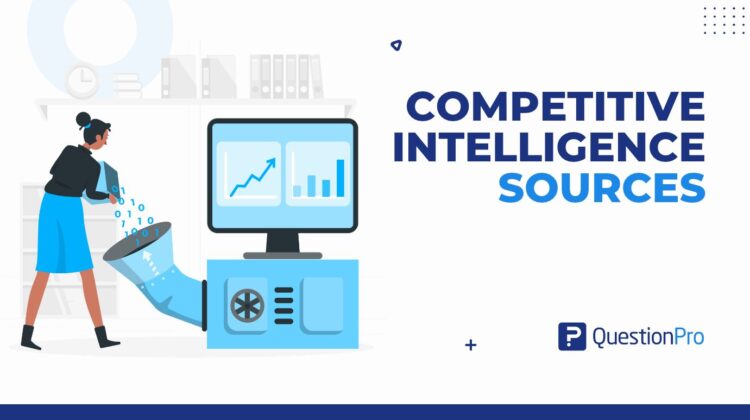
Competitive intelligence sources are the people, records, and data feeds that show what your rivals are doing and why customers might choose them. Most are already within reach. Your sales calls, supplier conversations, customer reviews, job boards, and public filings all qualify.
The harder part is picking sources that answer a real business decision, then checking that the answers hold up. A pile of competitor trivia will not help anyone set a price or choose a feature.
In this guide, we’ll cover 12 sources, show how to match them to a decision, and explain how to stay ethical, measure results, and avoid common mistakes.
What are competitive intelligence sources, and how do they differ from competitor analysis?
Competitive intelligence sources are the people, documents, and data feeds you use to learn about rivals, customers, and market shifts. They are the raw material for a larger practice. A few related terms get blurred often, so it helps to separate them.
- Competitive intelligence is the ongoing practice of collecting and using information about rivals and markets to support decisions.
- Competitor analysis is a structured comparison of named rivals’ products, pricing, and positioning. Our step-by-step competitive analysis guide walks through the framework.
- Market research studies buyers and the wider market, not only your competitors.
- Corporate espionage means obtaining secrets through theft or deception. It is illegal and sits outside everything in this guide.
Sources supply the facts. Competitor analysis and market research turn those facts into conclusions.
What is the difference between primary and secondary competitive intelligence sources?
Primary sources are information you collect firsthand. Secondary sources are information someone else has already collected or published. Strong programs use both, plus a third group called internal intelligence, which covers what your own teams already hear.
| Source type | What it means | Examples | Main strength | Main risk |
|---|---|---|---|---|
| Primary | Information you gather yourself from people or direct observation | Customer interviews, market surveys, mystery shopping, supplier talks, conference conversations | Answers your exact question | Slower and costlier to collect |
| Secondary | Information others already published | Reviews, competitor websites, SEC filings, patents, news, job postings | Fast, cheap, and broad | Can be dated or off-topic |
| Internal | Knowledge your own staff already hold | Sales call notes, support tickets, lost-deal feedback | Free and timely | Personal bias and scattered records |
Use secondary sources to spot what changed. Use primary sources to learn why it matters.
How do you choose the right competitive intelligence sources for a decision?
Start with the decision, not the source list. A source earns a place on your list only if it helps answer a question tied to something you will actually do. These five steps keep the work focused.
- Name your goal.
Ask what you want to achieve and why you need this information.
- Define the decision and its test.
For example: “We will buy this equipment if we can sell 10,000 more units.” That number tells you what evidence counts.
- Write your questions.
Draft them, then test them on three to five colleagues. If the answers are not useful, rewrite the questions. Our list of competitive intelligence questions gives you a starting bank.
- Match questions to sources.
Pick one or two sources per question using the sections below.
- Agree on the action.
Ask your management team to confirm what you will do once answers arrive.
Quick matches to get you started:
- A pricing change calls for competitor websites, reviews, customers, and your sales team.
- A new feature calls for reviews, customer interviews, job postings, and patents.
- A new market segment calls for industry associations, conferences, filings, and a market survey.
- A capability gap calls for job postings and ethical hiring.
Which competitive intelligence sources are people you can ask directly?
People are your richest primary sources because they explain why buyers choose one company over another. Five groups are the most productive to ask:
- Customers who have compared you with rivals
- Your sales and customer service teams
- Suppliers and distributors
- Contacts at conferences and trade shows
- Members and speakers in industry associations
1. Customers who have compared you with rivals
Customers are the most direct source of competitive intelligence because they have already weighed you against someone else. Schedule interview calls and use your tested questions as the discussion guide. Ask which alternatives they considered, what tipped the decision, and what they still wish you did better.
Salespeople can work the same questions into regular conversations. Tell customers upfront that you want to hear about their needs and which companies meet them. That framing keeps the talk on the customer, not the competitor. For a wider view, send the same questions as a short survey and compare patterns across segments.
2. Your sales and customer service teams
Your sales and customer service teams hear competitor news before anyone else, yet that knowledge rarely reaches the people who need it. Share your questions with them, along with the reason you are asking. They can then weave those questions into calls with customers and prospects.
A pulse survey, which is a brief recurring poll sent to a small group, turns scattered hallway comments into data. Build one in survey software and keep it light:
- Limit it to five to eight questions that take a few minutes to answer.
- List your known competitors and add an open field for new names showing up in deals.
- Add one rotating question that changes each round.
- Run it monthly or quarterly in most markets, and weekly or every two weeks in fast-moving ones.
Keep it simple, or reps will see the survey as a drag on selling. Win over sales management early, and share the results back. Closing that loop keeps people answering.
Feed the findings into battlecards, which are short reference sheets reps use to answer competitor objections. External market surveys remain the strongest way to learn how the market sees rivals, but they cost more and take longer. The internal pulse survey works as a cheaper companion, not a replacement.
3. Suppliers and distributors
Suppliers serve several companies in your industry, so they notice demand shifts, order patterns, and new entrants. They also owe confidentiality to every customer. Choose questions they can answer without breaching it.
Good examples include “What are you hearing about lead times this quarter?” and “Are buyers asking more about a particular feature?” Skip anything that asks for a rival’s pricing or volumes. If a supplier hesitates, drop the topic and move on. That respect protects the relationship and keeps you on the right side of the line.
4. Conferences and trade shows
A trade show is an industry event where companies exhibit and demo products. It works as a giant focus group because many buyers, competitors, and analysts gather in one place. A focus group is a moderated discussion with a small set of participants.
Prepare before you travel:
- Give every attendee three to five of your tested questions.
- Make collecting answers an explicit goal of the trip, with a debrief afterward.
- Capture notes in the QuestionPro mobile app, which works offline, so nothing lives only in someone’s memory.
- Collect competitor handouts and spec sheets from booths.
5. Industry associations
Industry associations show you who matters in your market. Watch which sponsors, speakers, and experts they feature in newsletters, panels, and reports. Companies that appear again and again are shaping the conversation.
Read what those voices say, and note whom they cite. Then look for a way into the group, such as speaking, sponsoring, or contributing research. Member directories and event agendas are free secondary sources that also point you to the right people to ask.
Which public competitive intelligence sources reveal competitor strategy?
Public sources are fast and low cost, and they show what rivals do rather than what they say. Five of them cover most needs:
- Customer reviews
- Competitor websites
- Job postings
- Public filings and patents
- News and social channels
6. Customer reviews
Customer reviews show how buyers experience a competitor in their own words. G2, a software review marketplace, reports that 84% of buyers consult online review sites during a purchase, so a rival’s review profile shapes deals before your reps get a call. Filter for the last six months, since older feedback may not match the current product.
| Signal in reviews | What it reveals |
|---|---|
| Recurring complaints | Weak spots you can address in messaging or product |
| Most-praised features | What buyers value enough to name |
| Vendor replies to negative reviews | How the rival treats unhappy customers |
| Reasons for switching | Why people leave them, or left you |
Pair these themes with win-loss analysis, a review of why specific deals were won or lost, to see whether reviews match what happens in real sales.
7. Competitor websites
A competitor’s website is the clearest statement of how it wants to be seen. Read the homepage headline, pricing page, product pages, and customer stories. Then check each month again.
A new pricing tier, a removed feature, or a rewritten headline often signals a strategy change before any announcement. Save dated screenshots so you can compare versions later. Public pages are fair game, and a simple spreadsheet of changes is enough to start.
8. Job postings and hiring patterns
Job postings reveal where a competitor plans to invest next. Roles can take weeks or months to fill, so a cluster of similar openings works as an early signal. Watch LinkedIn and the company’s careers page. A few illustrative patterns:
- A burst of enterprise sales and security compliance roles may point to an upmarket move.
- New data science titles can suggest a bet on analytics or AI features.
- Openings in a new city or country can come before expansion.
- Removed postings or a sudden slowdown may hint at a hiring freeze.
Treat each signal as a hypothesis. Confirm it with a second source before you act.
9. Public filings and patents
For US companies, public filings and patent records rank among the most reliable secondary sources. Public companies must file reports with the Securities and Exchange Commission (SEC), and anyone can read them for free in EDGAR, the SEC’s public filing database. A 10-K is the annual report, and an 8-K reports major events as they happen. Together, they show revenue mix, risk factors, acquisitions, and stated strategy.
A patent is a government grant of exclusive rights to an invention, so patent records show what a rival is building. The US Patent and Trademark Office (USPTO) runs Patent Public Search, which offers free full-text searching of US patents and published applications. Private companies file far less, so lean on state business registries, funding announcements, and press coverage for them.
News and social channels give you real-time signals if you set them up once and check them on a schedule. Social listening means tracking mentions of a brand or topic across social platforms. It shows how customers talk about a rival right now. Set it up in five steps:
- List your top three to five competitors and their product names.
- Create a Google Alert for each name.
- Follow rival executives and company pages on LinkedIn.
- Subscribe to their newsletters and press release feeds.
- Review everything in one weekly 30-minute slot.
Which active research methods go beyond public information?
Active methods cost more, but they answer questions public data cannot. Use them when a decision carries real money or risk. Two stand out:
- Ethical hiring from competitors
- Mystery shopping and market surveys
11. Ethical hiring from competitors
Hiring from a competitor can close a capability gap, but only if you know the gap exists. Decide which area you want to build first. Then look for people from rivals who excel there, not simply anyone with a competitor on their resume.
The Strategic Consortium of Intelligence Professionals (SCIP) notes that former competitor employees can be valuable sources. The same code treats confidential information obtained illegally as a clear violation. Tell new hires plainly not to bring trade secrets, documents, or access credentials from a past employer.
12. Mystery shopping and market surveys
Mystery shopping means a trained person poses as an ordinary customer to evaluate a competitor’s service. It gives you an on-the-ground view of what their customers experience. Many companies hire a third party, and our mystery shopper study guide explains how these studies work. Keep the shopper to what any real customer could do.
A market survey asks your target buyers directly, and it can reach people who have never spoken to you. Useful questions include:
- Which brands have you considered in the past year?
- What made you choose or reject each one?
- How do you rate us and two named rivals on price, quality, and support?
- Which companies are new to you in this category?
The last question lets respondents name entrants you have not spotted yet.
How do you gather competitive intelligence ethically?
Ethical gathering means using only information that is public or freely shared, and never deceiving people to get it. That rule protects your company from legal risk and protects trust with customers and suppliers. SCIP describes its code of ethics as the most widely embraced set of guidelines for competitive and market intelligence. Its guidance states that using a competitor’s password without authorization is illegal and breaks the code.
Fair game
- Public websites, filings, patents, and press releases
- Customer reviews and social posts
- Job postings and conference materials
- Conversations where you identify yourself honestly
- Surveys and interviews with willing participants
Off limits
- Logging in to a rival’s systems without authorization
- Posing as someone else to extract confidential details
- Asking new hires for documents or trade secrets from a past employer
- Pressing suppliers or customers to break a confidentiality agreement
- Recording calls without the consent your state requires
State laws on recording and trade secrets differ. This is general information, not legal advice, so ask counsel to review your policy.
How do you run conversations that surface better answers?
Better answers come from curiosity, clear questions, and a customer-first frame. The biggest mistake is getting defensive because the topic is a competitor. People sense that tension and share less.
Walk in curious instead. Ask open questions such as “What did you use before us?” or “What almost made you pick someone else?” Then listen for comparisons, and write down the exact words people use.
Keep the focus on the other person’s needs and goals, not on you or your rival. Note the source and the date next to every answer. A claim from a customer last week carries more weight than a rumor from last year.
What does competitive intelligence look like in practice?
In practice, competitive intelligence means turning a handful of sources into one clear decision. Here is an illustrative scenario, not a specific company. A 60-person project management software firm notices demo-to-close rates slipping against one rival, so the team pulls four sources together over six weeks.
- Sales logs the competitor’s name after every demo, using a one-question pulse survey.
- A marketer reads the rival’s last six months of reviews and finds repeated praise for security features and repeated complaints about onboarding.
- A product manager spots five new security compliance roles on the rival’s careers page.
- The team interviews five lost prospects, who confirm that security paperwork decided two of the deals.
The answers point to a clear plan. The firm publishes a security page, adds a compliance checklist to its demos, and promises a faster onboarding timeline. It then tracks its win rate against that rival for two quarters.
How do you measure whether your competitive intelligence sources are working?
Competitive intelligence works when it changes a decision, so measure decisions and outcomes, not documents. Review each source every quarter, and keep, fix, or drop it.
| Metric | How to measure it | Suggested target |
|---|---|---|
| Win rate against named rivals | Closed-won deals divided by all decided deals, split by competitor | Rising over two or more quarters |
| Question coverage | Share of priority questions answered by two independent sources | 80% or higher |
| Information freshness | Age of the data behind each pricing or positioning claim | Under 90 days |
| Time to update | Days between a rival’s change and your battlecard update | Under 14 days |
| Sales usage | Share of reps who opened competitor resources last month | Rising month over month |
| Source reliability | Score each source A to C on its accuracy track record | Drop any source that misleads you twice |
Turning these numbers into competitive insights is what lets leaders act on them. Share a one-page summary after each review so the findings reach the people who decide.
What common mistakes make competitive intelligence sources useless?
Most failures come from process, not from missing information. These mistakes show up most often:
- Starting with sources instead of decisions.
Without a decision, every fact looks equally important.
- Trusting a single source.
Cross-check important claims with a second, independent source.
- Treating it as a one-time project.
Markets move, and a year-old report describes a different rival.
- Relying only on public content.
Websites show how a rival wants to be seen, not how customers experience it.
- Copying a rival’s move.
Know why customers want a feature before you build it.
- Leaving it ownerless.
Name one person to collect, check, and share what you learn.
- Skipping the ethics check.
One shortcut can create legal and reputational damage.
How QuestionPro fits into a competitive intelligence practice
QuestionPro fits where public sources run out, which is direct research with buyers. Public sources show what rivals do, while surveys show how buyers weigh you against them. That adds a source your competitors cannot see or copy.
- Reach buyers you do not already know. QuestionPro Audience lets you survey a target audience that matches your buyers and ask which brands they consider and why.
- Repeat the same survey on a schedule. Market Research Software helps you compare results across segments and survey waves, so you see trends instead of one snapshot.
- Share one version of the findings. Keeping survey results in a single workspace helps sales, product, and marketing work from the same facts.
Competitive intelligence starts with a better question
The best competitive intelligence sources are rarely exotic. They are your customers, your sales team, a few public records, and the willingness to ask a good question. A short list, matched to one decision and checked against a second source, beats a long list nobody opens.
Pick the decision in front of you, choose two or three sources, and set a review date. Stay curious about your customer, and the competitor picture fills in on its own.
Frequently Asked Questions (FAQs)
Public sources such as SEC filings, patents, websites, reviews, and press releases are legal to use. Risk begins when someone obtains trade secrets through deception, theft, or a breach of confidentiality. This is general information, so ask an attorney to review your policy.
Most small teams do well with three to five sources matched to their top decisions, such as customer interviews, reviews, competitor websites, and a sales feedback survey. Add more only when a specific question stays unanswered after those.
Start with the SEC’s EDGAR database for annual reports (10-Ks), quarterly reports (10-Qs), and event reports (8-Ks). Add earnings call transcripts from the company’s investor page and patent records from the US Patent and Trademark Office’s free search tool.
Check the date and origin of each one. Favor primary or official records over summaries, then look for a third independent source. If you cannot settle it, label the finding unconfirmed and keep it out of price and product decisions.
Review pricing and positioning monthly in fast-moving markets such as software, and quarterly elsewhere. Refresh the full source list once a year. Check immediately after a rival announces funding, an acquisition, or a major product launch.