Customer retention surveys are designed to understand why customers stay with your brand or why they might leave. They focus on the experiences, satisfaction levels, and loyalty drivers that influence long-term relationships. These surveys reveal what keeps customers engaged and what improvements can reduce churn.
By collecting this feedback, businesses can pinpoint issues early, strengthen loyalty programs, and prioritize improvements. A well-structured customer retention survey helps you measure satisfaction trends, identify at-risk segments, and build customer retention strategies to increase repeat purchases and lifetime value.
In this blog, we will discuss how customer retention surveys help you collect feedback, act on insights, and build loyalty by reducing churn.
What is Customer Retention?
Customer retention is keeping your existing customers coming back over time. Instead of only trying to attract new people, it focuses on building good relationships with the customers you already have. The aim is to make them want to buy again and stay connected to your brand.
Businesses do this by offering reliable products or services, helpful support, and smooth, positive experiences. Small efforts like loyalty rewards, personal messages, or special offers can also make customers feel appreciated. When customers feel valued, they are more likely to trust your brand, stay longer, and continue buying from you.
Learn More About: How to Calculate Retention Rate & Mistakes to Avoid
Why Customer Retention Starts With Listening
Keeping customers loyal begins with listening. Customer retention surveys make that possible at scale by giving people a simple way to tell you what works, what hurts, and what would keep them around longer.
Think of it as a loop that turns feedback into loyalty:
- Collect feedback with short surveys
Ask short surveys at key moments, such as onboarding, support, and renewal. Keep it to 1–5 questions, and include one open-text box for context.
- Act properly on it
Group comments into themes such as pricing, support, usability, or performance. Prioritize the issues that appear most often and affect the most customers.
- Communicate and inform what has changed
Close the loop with a clear update in product, by email, or in release notes. For example, “you told us wait times felt long. We added weekend coverage. Average reply time is now 2 hours.”
- Build trust through transparency
Share what you fixed, what is in progress, and what you decided not to change yet, and why. Honest updates show respect and strengthen relationships.
That loop is what transforms feedback into retention. Customers feel heard, problems shrink before they cause churn, and confidence grows with every visible improvement.
Also Learn About: What is Customer Churn, Rate, Analysis and Prediction
Types of Customer Retention Surveys
Different surveys help you understand different parts of the customer journey. Using the right mix gives you a full picture of why people stay, what they love, and where they face challenges. Below are the main types of customer retention surveys you can use to improve loyalty and reduce churn.
1. Post-purchase CSAT Surveys
A Customer Satisfaction (CSAT) survey measures how happy customers are right after buying or using your product. It’s short, simple, and focused on the immediate experience.
Example question:
- “How satisfied are you with your recent purchase?”
This survey helps you catch issues early, like confusing checkout steps or slow delivery, before they turn into frustration.
2. NPS Surveys for Advocacy and Risk
The Net Promoter Score (NPS) survey helps you see how loyal your customers are.
It asks one key question:
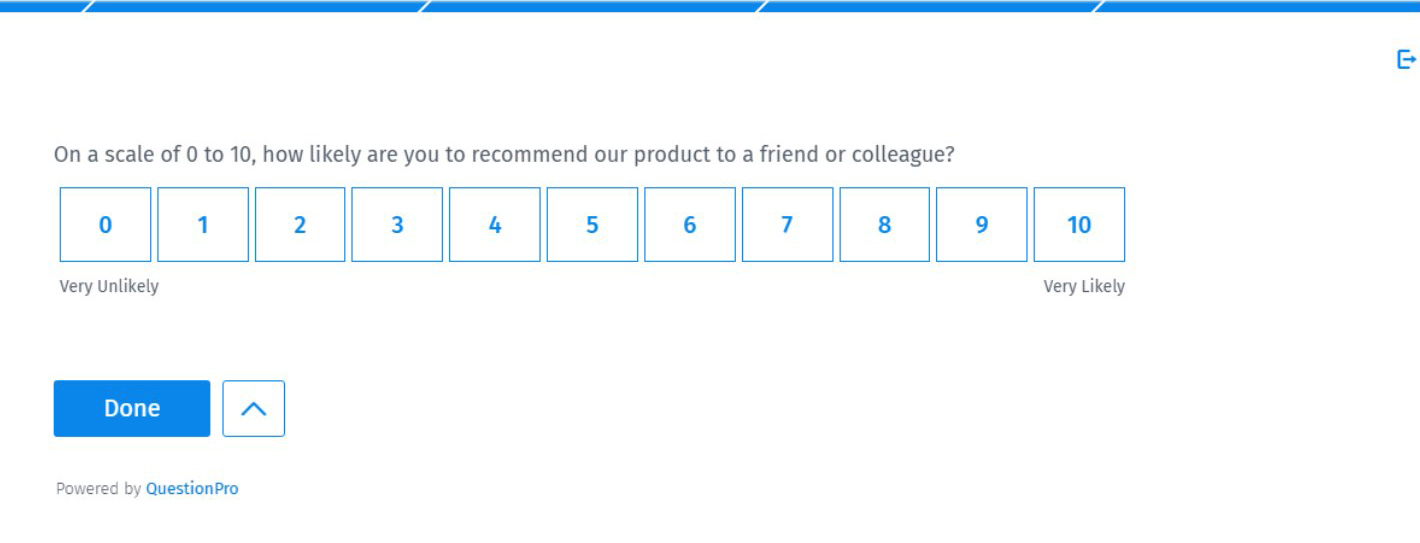
Customers who score high are your promoters who love your brand and bring in referrals. Low scorers are detractors who might churn. Tracking NPS over time shows whether loyalty is growing or slipping.
3. CES Surveys to Find Friction
The Customer Effort Score (CES) measures how easy it is for customers to get what they need.
Example question:
- “How easy was it to resolve your issue today?”
When effort is high, satisfaction drops. Reducing friction, such as simplifying account setup or shortening support response times, helps customers stay longer.
4. Onboarding Pulse Surveys Check
First impressions matter. Onboarding surveys help you understand how new users feel during their first few days or weeks.
Example question:
- “How clear and helpful was the onboarding process?”
A quick pulse check can reveal if instructions are unclear or if new users feel lost. Fixing those early frustrations keeps customers engaged.
Learn More: What is Pulse Suarerveys, Benefits & Examples
5. In-Product Microsurveys
These are short, one-question surveys that appear directly inside your app or website. They collect real-time feedback while customers are using your product.
Example question:
- “How easy was it to complete this task?”
Microsurveys capture authentic reactions and help identify usability issues before they affect satisfaction or retention.
6. Support Interaction Surveys
After a customer interacts with your support team, send a brief survey to measure how well the issue was handled.
Example question:
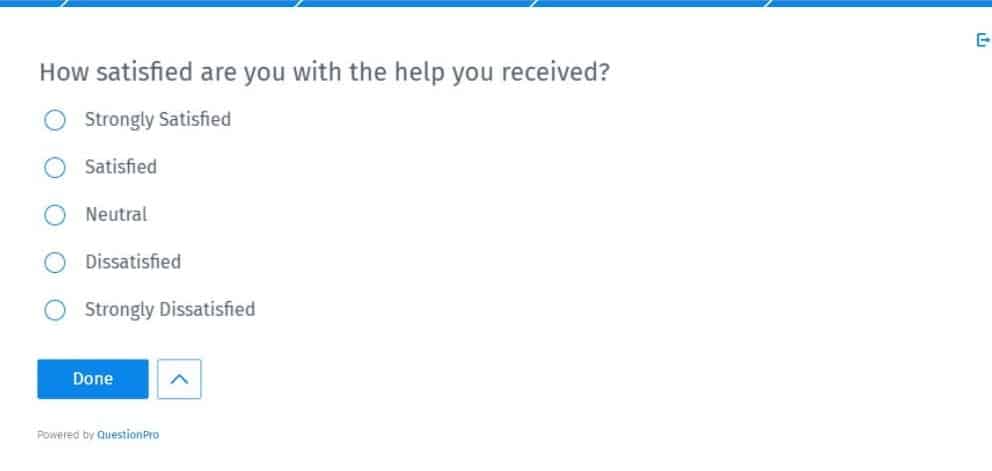
These surveys highlight gaps in customer service, allowing you to coach teams, improve processes, and ensure consistent quality.
7. Exit and Win-Back Surveys
When customers cancel or stop using your service, don’t let the conversation end there. Exit surveys help you understand why they’re leaving, while win-back surveys check what could bring them back.
Example questions:
- “What made you decide to cancel?”
- “What could we improve to win you back?”
These insights reveal patterns in churn reasons and give you ideas for future retention strategies.
Using a combination of these survey types helps you see the full story, from first impressions to final decisions. Together, they turn feedback into a roadmap for stronger customer relationships and long-term loyalty.
How to Design Customer Retention Surveys?
Creating a customer retention survey starts with a simple goal to understand why customers stay and what might cause them to leave. To do this well, your survey should be short, clear, and sent at the right time.
Ask questions that are easy to answer, use simple rating scales, and give customers space to share what really matters to them. A well-designed survey feels like a conversation, not a chore.
1. Question Wording and Scales
Keep questions short and specific. Avoid technical terms that can confuse people. Each question should focus on one idea at a time, such as satisfaction, ease of use, or likelihood to renew.
Examples:
- “How satisfied are you with our service?”
- “How easy was it to find what you needed?”
- “What could we do to improve your experience?”
Use 5-point or 7-point scales to make feedback measurable. For example:
- 1 = Very Dissatisfied, 5 = Very Satisfied
- 1 = Very Difficult, 7 = Very Easy
Clear wording and balanced scales help customers respond quickly and honestly.
Learn More about: Likert Scale, Types, Examples, & Best Practices
2. Timing and Trigger Logic
When you ask, it is just as important as what you ask. Send surveys right after meaningful interactions so the experience is still fresh in the customer’s mind.
Best times to send surveys:
- After a purchase or renewal
- After a customer support call or chat
- After onboarding completion
- When usage drops, or a subscription renewal is coming up
Automation keeps feedback consistent and timely, helping you collect more accurate responses.
3. Sampling, Channels, and Frequency
Don’t overwhelm your customers with too many surveys. Choose the right audience, reach them where they already are, and ask just often enough to track changes without creating fatigue.
Tips:
- Send surveys through familiar channels like email, SMS, or in-app pop-ups.
- Randomly sample a small group instead of everyone at once.
- Space out your surveys once per quarter or after key milestones is often enough.
- A smaller, well-timed sample provides better insights than a large number of rushed responses.
4. Reducing Bias and Survey Fatigue
To get reliable data, your survey must be fair and easy to complete. Avoid leading questions that push customers toward a certain answer. For example, instead of asking “How much did you love our new feature?” ask “How would you rate your experience with our new feature?”
Ways to reduce bias and survey fatigue:
- Mix up question types (ratings, multiple choice, open text).
- Keep the survey short.
- Show progress so customers know how long it will take.
- Thank respondents and share how their feedback will be used.
Top 10 Customer Retention Survey Questions to Ask
Customer retention surveys are most effective when they focus on key objectives that drive real business growth. The goal is not just to collect feedback, but to use it to maximize satisfaction, identify at-risk customers early, understand why customers leave, and maintain personal, meaningful connections.
Asking the right questions ensures you get actionable insights that help retain valuable customers and improve the overall customer experience. Here are some key questions to ask that can give you valuable insights and help improve loyalty, reduce churn, and boost satisfaction.
Satisfaction & Experience
- How satisfied are you with your recent purchase or experience?
- Did our product or service meet your expectations?
- How easy was it to find what you needed or complete your task?
Loyalty & Advocacy
- How likely are you to recommend our product/service to others?
- What is the main reason you continue to use our product/service?
- What made you decide to stay with our service?
Improvement & Feedback
- What could we improve to make your experience better?
- If you considered leaving, what would have made you stay?
Support & Service
- How helpful was our support team in resolving your issue?
- How satisfied are you with the response time of our support team?
How to Turn Survey Feedback into Retention Strategies
Collecting feedback is only the beginning. The real impact comes when you turn that feedback into simple, visible actions that improve the customer experience. Here’s how to close the loop, with easy examples anyone can relate to.
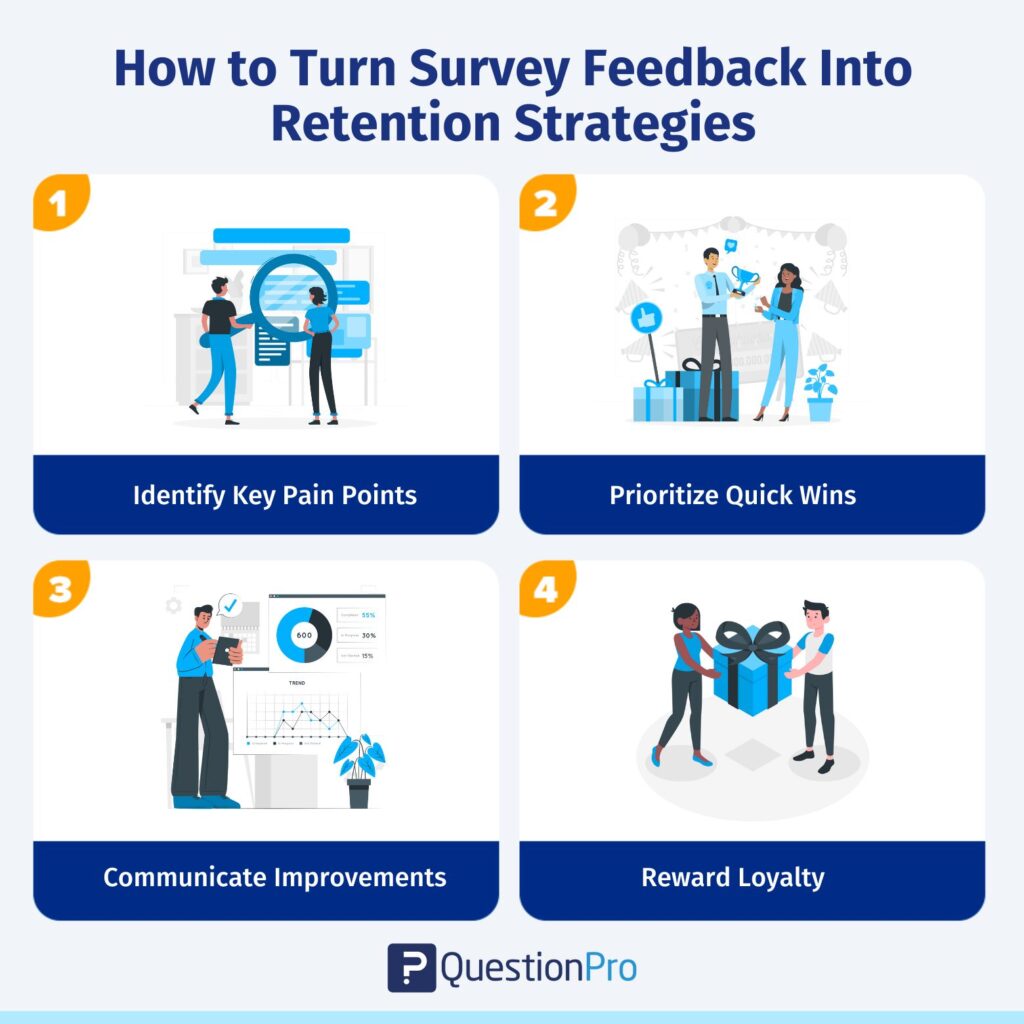
1. Identify Key Pain Points
Start by looking for patterns in your survey results. If you see the same complaint or comment multiple times, that’s a sign something needs fixing. Group similar feedback together so it’s easier to spot the main issues.
Common Customer Pain Points
- Customers report the same problems repeatedly
- Hard to spot trends when feedback is scattered
- Similar issues are not grouped together properly
- Reviewing all responses takes too much time
- Important problems are getting missed
By identifying and understanding these pain points, you can take targeted actions that directly address customer concerns.
2. Prioritize Quick Wins
Fix the simple things first. Small improvements can make customers happier right away and show them that you care about their experience.
If customers often say your emails are too long, shorten them and use bullet points to highlight key information. The next time they open your message, they’ll notice it’s easier to read, and that makes them more likely to stay engaged.
3. Communicate Improvements
Once you make a change, let your customers know. People like to see that their feedback led to action. It builds trust and shows that their opinions matter.
If customers complained about long delivery times, send an email update saying, “We heard you! We’ve partnered with a faster courier, and deliveries will now arrive two days sooner.” That one message can turn frustration into appreciation.
4. Reward Loyalty
Always thank customers for taking the time to share feedback. A small reward or acknowledgment makes them feel valued and encourages them to respond again in the future.
Types of loyalty rewards you can give:
- Discount codes or coupons
- Free samples or gifts
- Points in a loyalty program
- Early access to new products
- Personalized thank-you messages
Learn More: 15 Top Customer Retention Strategies to Boost Loyalty
How to Measure and Track Customer Retention Effectively
Running customer retention surveys is important, but what really matters is what the results tell you about business outcomes. Measuring the right metrics helps you see if your feedback programs are truly improving loyalty, reducing churn, and increasing lifetime value. These metrics connect customer opinions to real growth.
1. Core Metrics That Show Customer Retention
These are the three core metrics that show how well you’re keeping customers over time.
- Retention rate shows the percentage of customers who continue using your product or service after a specific period. A higher retention rate means customers are satisfied and staying longer.
- Churn rate is the opposite. It tells you how many customers leave. Tracking churn alongside survey data helps you understand why customers are leaving.
- Customer Lifetime Value (LTV) measures how much revenue you earn from a customer during their relationship with your brand. When retention improves, LTV naturally goes up because satisfied customers buy more and stay longer.
2. Early Signals and Outcome Metrics
To understand performance, it helps to look at both leading and lagging indicators.
- Leading indicators are early signals that help you predict future behavior.
- Lagging indicators reflect what has already happened, like actual churn or renewal rates. They confirm the results of your earlier actions.
3. Tracking Retention Over Time and Groups
To get deeper insights, look at your data by cohorts, waves, and segments instead of overall averages.
- Cohort tracking groups customers by the time they joined, such as all users who signed up in January. This helps you see how retention changes across different customer groups.
- Wave tracking compares survey results over time, like measuring NPS or CSAT every quarter, to see if satisfaction is rising or falling.
- Segment tracking looks at differences between customer types, such as new versus long-term users or small versus enterprise clients.
Also Read: 8 Key Customer Retention Metrics to Track
How QuestionPro Helps Boost Retention Through Surveys
Customer retention surveys work best when insights are easy to see and act on. QuestionPro helps teams collect feedback, understand what it means, and respond quickly so customers feel heard and choose to stay.
1. Dashboards, Alerts, and Text Analytics
QuestionPro brings survey results into clear dashboards that update in real time. You can track CSAT, NPS, and CES, filter by product, plan, or region, and spot changes as they happen.
Automated alerts flag low scores or negative comments so the right person can follow up. Text analytics groups open comments into themes like pricing, support, or usability, which makes it easier to find root causes and set priorities.
2. Integrations with CRM and Support Tools
QuestionPro connects with systems such as Salesforce, HubSpot, and Zendesk. Survey responses can sync to customer records so sales, success, and support see the same signals. You can create workflows that open tickets for low scores, notify account owners, or trigger onboarding tasks based on feedback.
3. Real-Time Feedback Programs
With QuestionPro, you can trigger short surveys at key moments across the journey, such as onboarding completion, support interactions, renewals, and feature launches. Results appear instantly, which allows teams to fix issues early and confirm whether changes improved the experience in the next wave.
Why it matters:
- Timely signals that prevent churn
- Lightweight surveys customers actually answer
- Continuous loop from listening to improvement
Create your customer retention survey with QuestionPro AI
Conclusion
Strong retention starts with listening and acting on what you learn. Customer retention surveys reveal what keeps customers satisfied and where friction appears, so you can collect feedback, act on it, and communicate what changed. Use clear, timely surveys, track results with retention, churn, and LTV, and compare cohorts and segments to see what works.
With tools like QuestionPro to surface themes, trigger alerts, and connect to your CRM, teams can close the loop faster. The result is simple, and those customers feel heard, trust grows, and loyalty follows.
Frequently Asked Questions (FAQs)
Answer: Customer retention surveys are tools used to understand why customers stay with your brand or decide to leave. They collect feedback on satisfaction, product experience, and loyalty. By identifying pain points early, businesses can fix problems before they lead to churn, improving the overall customer experience and keeping more customers over time.
Answer: Running them too often can create fatigue, while running them too rarely can make you miss important insights. The best practice is to run short surveys after key touchpoints such as purchases, renewals, or support interactions, and a broader retention survey every quarter or twice a year.
Answer: Key metrics include retention rate, churn rate, and customer lifetime value (LTV). Tracking these alongside survey results helps you see how feedback influences real outcomes. When satisfaction and loyalty scores go up, retention and revenue usually follow.
Answer: NPS (Net Promoter Score) measures loyalty and advocacy by asking how likely a customer is to recommend your brand. CSAT (Customer Satisfaction Score) measures immediate satisfaction after an interaction or purchase. CES (Customer Effort Score) measures how easy it is for customers to complete a task or resolve an issue.
Answer: Each survey type captures a different signal. CSAT, NPS, CES, and exit surveys help you measure different metrics. Together, they provide a clearer view of what customers feel and what drives retention over time.