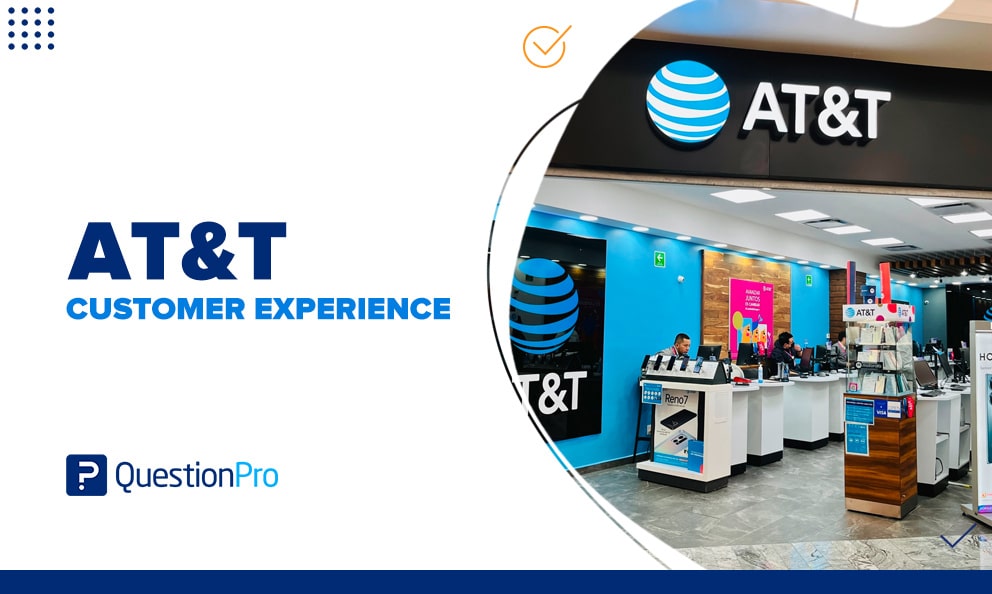
AT&T customer experience has become one of the most studied cases in the telecommunications industry, mainly because the carrier has ranked first in fiber customer satisfaction for four straight years. For a company serving more than 100 million wireless and fiber customers, that kind of consistency says something about how deliberately AT&T manages every touchpoint.
The company backs that reputation with real commitments, not just marketing language. A public service guarantee, generative AI support tools, and steady investment in network reliability all tie back to one goal: keeping customer trust intact in an industry known for complaints.
In this article, we’ll explore what drives AT&T’s approach, map its customer journey stage by stage, and show what other businesses can borrow from it, regardless of industry.
What makes the AT&T customer experience stand out?
AT&T customer experience refers to how the company manages every interaction a customer has with its wireless, fiber, and entertainment services, from the first ad they see to a support call years later. Few telecom brands tie that experience as closely to measurable outcomes, and the financial case for doing so is well documented. Research shows that companies leading on customer experience achieve more than double the revenue growth of experience laggards.
That logic shows up in AT&T’s own numbers. Much of the structure behind it starts with a detailed customer journey map that tracks where customers gain or lose confidence in the brand. The benefits AT&T gets from that discipline include:
- Customer loyalty: Improved satisfaction lowers churn and keeps customers on multi-year plans.
- Revenue stability: Satisfied customers add services and renew contracts instead of shopping competitors.
- Lower service costs: Fewer complaints and faster resolutions reduce the load on support teams.
- Competitive separation: Positive experiences differentiate AT&T in a market crowded with similar pricing.
- Better product decisions: Feedback data shapes which features and plans AT&T builds next.
Telecommunications is a notoriously tough industry for customer sentiment, so sustaining an advantage here takes more than a single initiative. It takes a system.
How does AT&T’s customer experience compare to Verizon and T-Mobile?
One way to understand AT&T customer experience is to place it next to its two closest rivals. All three carriers compete on network quality, but they differentiate on service delivery, and the American Customer Satisfaction Index’s annual telecom study is the clearest way to measure that gap.
| Provider | ACSI score (fiber or top segment) | Signature CX commitment | Primary differentiator |
|---|---|---|---|
| AT&T | 80 (AT&T Fiber) | AT&T Guarantee, covering both wireless and fiber | Combined network and service promise |
| Verizon | 75 (Fios) | Reliability-first messaging | Broad 5G and fiber coverage |
| T-Mobile | 73 (5G Home Internet) | Un-carrier pricing transparency | Simplicity and no-contract plans |
Scores like these come from independent surveys, not company self-reporting, which is why the gap matters. ACSI’s telecom data shows AT&T has held the top fiber satisfaction spot consistently, while Verizon and T-Mobile compete more on price and coverage claims. The distinction is subtle but important: AT&T pairs network investment with a formal, dollar-backed guarantee, something neither competitor currently matches at the same scale.
What are AT&T’s most notable customer experience initiatives?
Three initiatives explain most of AT&T’s recent gains in customer satisfaction. Together, they mark a shift from reactive support toward proactive, technology-assisted service.
- The AT&T Guarantee: Launched in January 2025, this program promises an automatic bill credit if a fiber outage lasts 20 minutes or longer, or a wireless outage lasts 60 minutes or longer. It is backed by more than $140 billion in network investment since 2019 and close to a billion dollars in customer care spending.
- GenAI-powered self-service: AT&T has built machine learning into its self-service channels so the system can learn from past interactions, similar to how a human agent builds expertise over time. This supports faster first-call resolution, a pattern explored further in this breakdown of AI customer experience.
- Omnichannel touchpoint tracking: AT&T monitors satisfaction across calls, retail stores, its app, and social media as one connected relationship rather than separate channels, an approach detailed in this guide to omnichannel customer experience.
- Bundled service simplicity: Combining wireless, internet, and entertainment into single plans cuts down on the friction of managing multiple accounts and bills.
None of these initiatives work in isolation. The Guarantee only holds up because the network investment behind it is real, and the AI tools only help because the data feeding them comes from tracking every channel consistently.
What does the AT&T customer journey map look like?
A journey map turns a customer’s path, from first awareness to loyal advocacy, into a visual reference that teams can actually act on. Mapping AT&T’s journey this way makes its pain points and fixes easier to apply to any business, telecom or otherwise. A dedicated journey mapping tool, built on the same survey software foundation used for broader feedback collection, lets teams document a map like this in days instead of weeks.
| Stage | Key touchpoint | Common pain point | How AT&T addresses it |
|---|---|---|---|
| Awareness | TV and online ads | Banner blindness, low ad recall | Platform-specific, targeted creative |
| Consideration | Website, reviews | Complex plan and pricing details | Simplified comparison pages |
| Conversion | Online purchase, retail stores | Inconsistent in-store promotions | Standardized pricing across channels |
| Loyalty | Upgrades, loyalty perks | Unclear program benefits | Clearer communication of rewards |
| Advocacy | Social media, referrals | Weak incentive to refer friends | Structured referral rewards |
Each stage carries its own risk of losing a customer, which is exactly why mapping it in detail, rather than guessing at it, is what separates AT&T’s approach from a generic service policy.
What can businesses learn from AT&T’s customer experience strategy?
AT&T’s scale makes some of its tactics hard to copy directly, but the principles behind them apply at any company size.
- Tie guarantees to measurable service levels.
Instead of vague promises, AT&T attaches dollar credits to specific outage thresholds, which makes the commitment concrete and easy to track, both internally and from the customer’s side. - Treat every channel as one conversation.
Customers do not experience a brand in channels. They experience it as a single relationship, so satisfaction data should roll up across calls, chat, and in-person visits rather than sitting in separate reports. - Invest before problems become visible.
Network spending that happens quietly tends to show up later as better satisfaction scores, not as immediate praise, which means the payoff requires patience. - Let data drive service design.
Just as AT&T uses machine learning to anticipate common support requests, smaller teams can use survey trends to catch recurring friction before it starts driving cancellations.
What common mistakes should you avoid when applying AT&T’s playbook?
Studying AT&T’s approach is useful, but copying it without context tends to create new problems instead of solving old ones.
- Promising guarantees you cannot operationally support: A guarantee that fails in practice damages trust faster than having no guarantee at all.
- Measuring channels in isolation: Treating call center scores and app ratings as unrelated numbers hides where customers are actually struggling.
- Treating AI self-service as a cost-cutting shortcut: When automation is built to resolve requests faster, customers notice the difference. When it is built only to cut headcount, they notice that too.
- Ignoring early churn signals: Waiting for cancellation requests to spike misses the point. Tracking customer churn indicators early gives a business time to intervene.
How can you measure customer experience the way AT&T does?
AT&T’s results are grounded in constant measurement, not assumption. The ACSI score it competes on is only one input. Most CX programs combine several metrics to build a full picture of where a business stands.
Customer Satisfaction Score, Net Promoter Score, and Customer Effort Score each capture a different angle of the relationship, and this guide on how to measure customer experience breaks down when to use each one. Businesses that want this kind of visibility without AT&T’s budget can start with QuestionPro Customer Experience, a platform built to collect feedback across touchpoints and turn it into the kind of journey-level insight this article has walked through, from awareness through advocacy.
The real lesson behind AT&T’s customer experience success
AT&T’s position at the top of the ACSI fiber rankings did not happen by accident, and it did not happen quickly either. It took a multi-year combination of network spending, a formal guarantee with real financial stakes, and AI tools built to resolve problems rather than just deflect them. None of those pieces would matter much on their own.
What makes the strategy work is that AT&T measures all of it and adjusts based on what customers actually report, not on what the company assumes they want. That discipline, more than any single program, is the part other businesses can realistically apply, whatever size they happen to be.
Frequently Asked Questions (FAQs)
AT&T is the first and only major carrier offering a single guarantee covering both wireless and fiber outages with automatic bill credits. The commitment followed a period of losing market share, which gave the company a direct financial reason to formalize its service promises.
A nationwide outage in February 2024 affected millions of customers and accelerated AT&T’s push toward the AT&T Guarantee. Executives have acknowledged the company was losing industry share beforehand, which pushed leadership to rebuild trust through a visible, dollar-backed commitment.
Customers automatically qualify for a credit equal to a full day of service if a fiber outage lasts 20 minutes or longer, or a wireless outage lasts 60 minutes or longer. Small business customers are contacted directly with resolution options instead of an automatic credit.
Yes. AT&T has built machine learning and generative AI into its self-service and support systems so they can learn from prior customer interactions, similar to how a human support expert builds judgment over time, particularly for high-volume self-service requests.
Yes. The core discipline, mapping touchpoints and tracking satisfaction consistently across channels, scales down well. Tools built for journey mapping and feedback collection let small teams apply the same structure AT&T uses, just at a fraction of the cost.