A business startup test helps founders check whether an idea has real demand before they spend too much time, money, or effort building it. A startup idea may sound strong in a brainstorming session, but the real test is whether customers understand it, need it, and are willing to pay for it.
For founders in the USA, competition is high across almost every category. The difference between a useful idea and a risky one often comes down to market readiness, customer pain points, pricing, positioning, and timing. Testing the idea early helps reduce guesswork before launch.
In this article, we’ll explain what a business startup test is, how founders can validate an idea before launch, and how surveys, competitor research, and customer feedback can reduce startup risk.
What is a business startup test?
A business startup test is a structured way to validate a business idea before launch. It checks whether the idea solves a real problem, has a clear audience, fits the market, and can stand apart from competitors.
A good startup test does not only ask, “Do people like this idea?” That question is too easy to answer politely. A stronger test looks at behavior, needs, alternatives, pricing, and willingness to act.
A business startup test usually checks:
- Who the target customers are
- What problem they need to solve
- How they solve it today
- Whether the idea feels clear and useful
- What competitors already offer
- What price feels reasonable
- What message makes people pay attention
The goal of testing is simple. Try to find the weak spots before the market finds them for you.
Also read: What is target audience and how to define it
Why should founders test a startup idea first?
Founders should test a startup idea first because assumptions can be expensive. Many startups struggle because they build too much before confirming demand, customer interest, or market fit.
Market research helps founders understand customers and competitors before making major decisions. A business startup test can help founders avoid:
- Building a product people do not need
- Targeting the wrong audience
- Setting the wrong price
- Using unclear messaging
- Entering a crowded market without differentiation
- Spending heavily before testing demand
- Confusing interest with actual buying intent
Testing does not guarantee success. It gives founders better evidence before they move forward.
Also learn: Free survey tool for startups
What startup lessons can founders learn from failed ideas?
Startup stories often show the same pattern. The idea may be interesting, but the market, timing, positioning, or execution is not strong enough.
Ride-hailing companies like Uber grew because they solved a clear transportation problem. The service was easy to understand, and customers already needed a better way to move around.
Other startups struggled because repeat demand was insufficient. Older food-tech examples like Dazo and TinyOwl show how hard it can be to survive in a crowded market.
These startups faced challenges like high customer acquisition costs, unclear positioning, heavy discount dependence, and weak customer habits.
For today’s founders, the lesson is simple. Do not only test whether people like the idea. Test whether they understand it, trust the offer, and are willing to take action.
A startup idea is weaker when:
- Customers do not understand what makes it different.
- The market already has easier alternatives.
- The product solves a small or low-priority problem.
- The business model depends too much on discounts.
- Customer acquisition costs are too high.
- The timing is wrong.
- Feedback is ignored after launch.
A business startup test helps founders spot these risks early. It provides clearer evidence of demand, positioning, pricing, consumer behavior, and retention before they invest heavily in the launch.
How do you test a startup idea before launch?
You can test a startup idea before launch by checking the problem, audience, competition, demand, pricing, and message before investing too much time or money.
1. Define the problem
Start with the problem, not the product. A strong startup idea solves something painful, frequent, costly, or frustrating.
Ask:
- What problem are we solving?
- Who feels it most?
- How often does it happen?
- Why are current solutions not enough?
If the problem is weak, the product will struggle.
2. Identify your target audience
A startup cannot test demand with “everyone.” Define the exact group most likely to care about the idea. Strong audience testing should look at:
- Location
- Budget
- Current behavior
- Pain points
- Buying triggers
A clear audience makes feedback more useful.
3. Research competitors
Study how customers solve the problem today. Competitors can be direct brands, substitute products, manual workarounds, or even doing nothing.
Look at their pricing, reviews, features, complaints, and positioning. This helps you see where the market is crowded and where customers still feel underserved.
Your idea needs a clear reason to exist. If competitors already solve the problem well, your startup must offer something easier, better, faster, or more relevant.
4. Test market demand
Testing market demand means checking whether people show real interest, not just polite approval. Useful signals include:
- Survey responses
- Interviews
- Landing page signups
- Waitlist interest
- Prototype feedback
- Pre-orders
A strong signal shows people understand the value and want to take the next step.
5. Ask real people
Use surveys to spot patterns and interviews to understand the reasons behind those patterns. Avoid relying only on friends or family. They may be supportive, but they are not always honest or representative of your target market.
6. Test the name and message
A startup idea can fail if people do not understand what it does. Test the name, tagline, value proposition, and main message before launch. Ask whether people can quickly explain:
- What does this product do?
- Who is it for?
- What problem does it solve?
- Why is it different?
- Would you try it?
If people need a long explanation, the message may need work.
7. Review the results
After collecting feedback, look for patterns. Do not focus only on the comments you like.
Review:
- What people understood
- What confused them
- Which features mattered
- What price felt fair
- What objections appeared
Weak results do not always mean the idea is bad. They may show that the audience, price, message, or offer needs to change.
Learn more about: How to do Research for a startup idea
What questions should a startup survey ask?
A startup survey should ask questions that test demand, pain points, alternatives, pricing, and willingness to buy. Keep the survey short so people finish it. Useful startup survey questions include:
- What problem are you currently trying to solve?
- How do you solve this problem today?
- How satisfied are you with your current solution?
- What is the biggest frustration with current options?
- How important is this problem to you?
- How likely would you be to try this solution?
- What feature would matter most?
- What would make you hesitate?
- What price range would feel reasonable?
- Which name or message is clearest?
- Would you join a waitlist or request early access?
Do not ask only dichotomous questions (yes-or-no). Mix rating scales, multiple-choice questions, and a few open-ended questions so you can see both patterns and explanations.
How can QuestionPro help with a business startup test?
QuestionPro can help founders run a business startup test by collecting feedback from target customers, testing demand, and analyzing results before launch.
Startup founders need more than opinions. They need structured feedback that helps them understand whether the idea, audience, pricing, and message make sense.
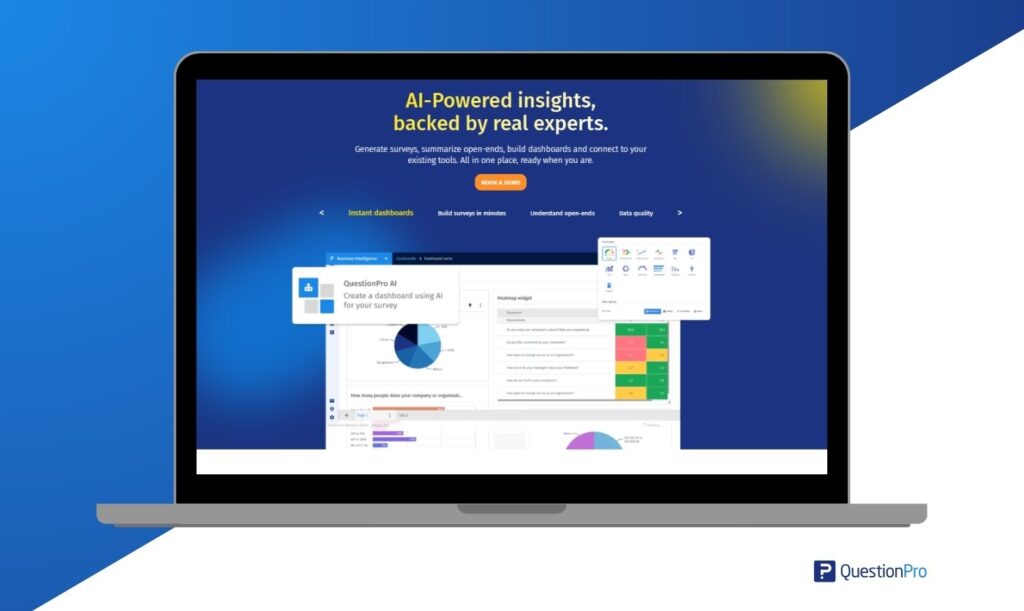
With QuestionPro, founders and early-stage founders can:
- Create startup surveys for idea validation
- Test customer pain points and demand
- Compare product names, taglines, and messages
- Collect feedback on pricing and features
- Run market research for startups
- Use polls for quick reactions
- Analyze open-ended responses
- Review survey results in dashboards
- Share findings with partners, investors, or internal teams
Final takeaway
A business startup test helps founders move from a promising idea to stronger evidence. It shows whether customers understand the idea, need the solution, and are willing to take action.
The best founders test early, listen carefully, and adjust before launch. A startup test will not remove every risk, but it can help reduce costly mistakes and make the next decision clearer.
Frequently Asked Questions (FAQs)
You validate a startup idea by researching customers, studying competitors, testing market demand, collecting feedback, and checking whether people understand and want the solution.
Startups often fail because of weak demand, unclear positioning, poor timing, strong competition, pricing problems, or limited customer understanding.
Surveys help founders collect feedback from target customers about pain points, demand, pricing, product features, competitors, and messaging.
Founders should test the problem, target audience, market demand, pricing, competitors, product name, main message, and willingness to buy.