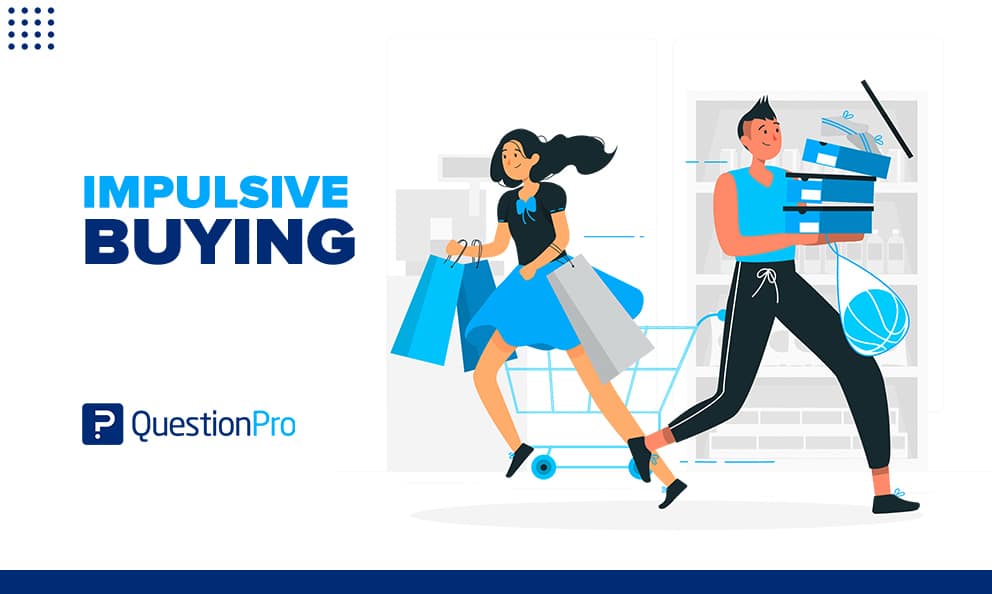
Impulsive buying is a purchase made with little or no planning, driven by a sudden want rather than a real need. A candy bar at the checkout counter. A “limited time” banner in an Instagram feed. Shoes bought because they were 40% off, not because anyone needed shoes.
These moments feel small on their own. Added up across a year, they shape a large share of consumer spending. Retailers design entire store layouts and checkout flows around triggering exactly this response.
This matters beyond personal finance. Marketers study impulsive buying because it reveals how emotion, not logic, drives a large share of purchase decisions. Understanding the pattern helps shoppers spend more intentionally and helps businesses design experiences that respect that impulse instead of exploiting it.
In this blog, we’ll break down what impulsive buying actually is and why it happens. We’ll also cover what separates a harmless treat from a habit that quietly drains a budget.
What Is Impulsive Buying?
Impulsive buying is the act of purchasing a product or service without prior planning, triggered by a sudden emotional urge rather than a specific need.
It shows up across nearly every product category, low-cost and high-cost alike:
- Everyday items, such as chocolate or a beauty product
- Mid-range items, such as clothing or small electronics
- Big-ticket items, such as jewelry or a vehicle
Any of these can be an impulse purchase if the decision happened in the moment rather than as part of a plan. The dollar amount does not define impulsive buying. The absence of deliberation does.
A shopper walks into a hypermarket with no intention of buying anything and leaves with a bag of items anyway. Elsewhere, a phone manufacturer releases a matching fitness band or watch alongside a new phone launch, knowing a share of buyers will add it to their cart without planning to. Both are examples of the same underlying consumer buying behavior pattern: desire outrunning deliberation.
Impulse purchases are not automatically harmful. A $6 coffee treat rarely damages anyone’s finances. The risk grows when impulsive buying becomes frequent enough to disrupt a budget. It also grows when buying starts to function as a coping mechanism for stress, boredom, or difficult emotions.
Impulsive buying vs. compulsive buying: What’s the difference?
Impulsive buying and compulsive buying get used interchangeably, but they describe different things. Impulsive buying is an occasional, situational behavior. Compulsive buying is a recognized pattern of uncontrollable buying urges that causes ongoing harm.
A Stanford University School of Medicine study found that roughly 5.8% of U.S. adults show symptoms consistent with compulsive buying disorder, split almost evenly between men and women. That distinction matters because the two terms call for very different responses.
| Feature | Impulsive buying | Compulsive buying |
|---|---|---|
| Frequency | Occasional, situational | Frequent, ongoing |
| Trigger | A specific product, display, or deal | An internal urge, often unrelated to any one product |
| Planning | None, but the decision ends once the purchase is made | Purchasing itself becomes the recurring behavior |
| Financial impact | Usually minor to moderate | Often significant, sometimes debt-driving |
| Best response | Budgeting tools, pause-and-reflect habits | Professional support; may require clinical treatment |
If impulse purchases are occasional and within budget, they are a normal part of shopping. Buying can also become a repeated way to manage emotions, regardless of need or affordability. That pattern points toward compulsive buying, and it benefits from professional guidance rather than a budgeting tip.
What triggers impulsive buying?
Impulsive buying rarely happens by accident. It is usually the result of an emotional state, a social cue, or a deliberate marketing tactic converging at the right moment. All three sit inside the broader field of consumer behavior.
Emotional triggers
Stress, boredom, excitement, and even happiness can all push someone toward an unplanned purchase. Shopping delivers a quick hit of pleasure. That is why it gets used as informal “retail therapy” during a hard week or a slow afternoon. Common emotional triggers show up as follows.
- A stressful day that creates a craving for a quick reward
- Boredom during idle scrolling or browsing
- Celebrating good news with a “treat yourself” purchase
Social triggers
Peer influence and fear of missing out, often called FOMO, push people to buy items they had no prior interest in. A trend, a friend, or a social feed can make an unfamiliar product feel urgent within minutes. A viral product on social media can generate demand almost overnight, well ahead of any real need for it.
Marketing and store-design triggers
Retailers actively design for impulsive buying, using tactics such as:
- Checkout aisles stocked with small, low-cost items within easy reach
- Flash sales with visible countdown timers
- “Only 3 left in stock” or similar scarcity messaging
These tactics work because they shorten the time between seeing a product and deciding to buy it, leaving little room for deliberation.
Digital and situational triggers
One-tap checkout, saved payment details, and personalized product feeds remove nearly every point of friction that used to slow a purchase down. Late-night browsing adds another layer. Decision fatigue and reduced self-control make an unplanned purchase easier to justify at 11 p.m. than at 11 a.m.
Common examples of impulsive buying
Impulsive buying spans low-cost and high-cost purchases alike. Typical examples include:
- Grabbing snacks, gum, or magazines at a checkout lane
- Buying a clothing item spotted while browsing with no shopping intent
- Adding a phone accessory, like a case or fitness band, alongside a device purchase
- Purchasing a gadget seen in a social media ad within minutes of scrolling past it
- Booking a spontaneous weekend trip after seeing a flash airfare deal
- Buying a car or a piece of jewelry after a single showroom visit, without comparison shopping
Impulsive buying statistics for 2026
Independent consumer research shows how widespread and how costly impulsive buying has become. According to Capital One Shopping’s 2026 consumer research, most shoppers have a history of impulse buying. It now accounts for a meaningful share of both in-store and online spending.
| Metric | Figure |
|---|---|
| Shoppers with a history of impulse buying | 92% |
| Share of e-commerce sales from impulse purchases | Around 20% |
| Online shoppers swayed by an advertised discount | 72% |
| Shoppers who have spent $100+ on a single impulse buy | 54% |
| Estimated average monthly impulse spend | Roughly $250 to $280 |
These figures shift year to year as spending habits, inflation, and shopping channels change. The underlying pattern holds steady. Impulsive buying is normal, common across income levels, and heavily influenced by how a store or app is designed.
Is every impulse buy a problem? A quick decision framework
Not every unplanned purchase deserves guilt or regret. A simple framework helps separate a harmless treat from a purchase worth reconsidering. It works much like the checkpoints marketers map across the consumer decision journey.
- Check the amount against your budget.
If the purchase is small relative to monthly discretionary spending, it is unlikely to cause harm.
- Wait it out.
Step away for 10 minutes for a small purchase, or 24 hours for anything over roughly $50 to $100. If the urge fades, the purchase was likely impulse-driven rather than needed.
- Ask what emotion is driving it.
A purchase made to celebrate is different from one made to escape stress or boredom.
- Weigh the regret risk.
If a similar past purchase went unused or got returned, that is a signal worth taking seriously this time.
If a purchase clears these four checks, buying it is a reasonable choice rather than a mistake to fix later.
Common impulsive buying mistakes and financial risks
A few patterns turn occasional impulse buys into a real financial risk:
- Relying on credit for unplanned purchases, which turns a small splurge into ongoing debt
- Impulse buying repeatedly in the same category, such as clothing that goes unworn
- Treating sale prices as a reason to buy rather than a bonus on something already needed
- Shopping while emotionally overwhelmed, which lowers the ability to weigh a purchase objectively
- Ignoring return windows, which locks in the cost of a purchase that already feels like a mistake
None of these point to a personal failing. They are predictable outcomes of situations designed to bypass deliberate decision-making. Recognizing the pattern is the first step toward changing it.
How to control impulsive buying: 5 practical strategies
Gaining control over impulsive buying does not require eliminating spontaneity altogether. It requires a few consistent habits.
- Set a budget by category.
Assign a specific amount to discretionary spending each month, and treat it as a hard limit rather than a suggestion.
- Shop with a list.
Whether online or in-store, a written list makes it obvious when an item was not part of the plan.
- Build in a pause.
A short delay between seeing a product and buying it interrupts the emotional urge long enough for logic to catch up.
- Identify emotional triggers.
Notice which moods lead to unplanned purchases, and build a non-shopping response for those moments, such as a short walk or a call to a friend.
- Unsubscribe from pressure.
Promotional emails, countdown-timer sales, and app notifications are built to manufacture urgency. Cutting the channel reduces the temptation before it starts.
How retailers design for impulsive buying
Retailers do not leave impulsive buying to chance. Store layouts place high-margin, low-cost items directly in the checkout path. Roughly a third of all impulse decisions happen before a customer ever reaches the register, a pattern well documented across common consumer behavior models. Some retailers now stagger checkout lane displays or keep the queue area visually calm, betting that a calmer layout builds enough trust to offset a few lost impulse sales.
Packaging plays a role too. Shoppers hesitate over front-of-store items they cannot fully evaluate. Brands increasingly use transparent or resealable packaging to lower that hesitation and signal freshness at a glance.
Online, the same principles show up as one-click checkout, “frequently bought together” prompts, and countdown timers on limited-stock items. Every one of these tactics shortens the gap between noticing a product and buying it. That gap is exactly where impulsive buying lives.
How QuestionPro helps track and measure impulsive buying triggers
Understanding impulsive buying at a company level takes more than assumptions about what “probably” drives a purchase. It takes direct research into the emotional and situational triggers behind actual buying decisions. QuestionPro’s Customer Experience Software lets teams run structured studies that go beyond a simple satisfaction score. A few examples stand out.
- Post-purchase intercept surveys that capture what triggered a specific unplanned purchase while the memory is still fresh
- Segmentation tools that separate planned buyers from impulse-driven buyers within the same customer base
- Trend and comparative analytics that track how impulse-purchase rates shift after a pricing change, store redesign, or promotion
Businesses that need a broader sample beyond their existing customers can pull from QuestionPro’s audience panel of profiled consumers. This makes it possible to test how different shoppers respond to a specific trigger, such as checkout placement or a limited-time offer, before rolling a change out at scale. That data turns “we think impulse buying drives our sales” into a specific, testable answer.
The real lesson behind impulsive buying
Impulsive buying is not a character flaw, and it is not going away. It is a predictable response to emotion, timing, and design. Understanding that pattern is the real advantage, whether the goal is spending less or selling more responsibly.
A shopper who recognizes the pull of a checkout display can decide, deliberately, whether to give in. A business that understands the same pull can build experiences that respect a customer’s wallet instead of working around it.
Frequently Asked Questions (FAQs)
No. An occasional, budget-friendly purchase made on impulse is a normal part of shopping. It becomes a concern when it happens frequently enough to disrupt a budget or gets used repeatedly to manage stress or difficult emotions.
Millennials tend to report the highest annual impulse spending of any generation, often linked to late-night online browsing. Gen Z shoppers impulse buy most often in response to social media and influencer content rather than in-store displays.
In-store shopping still drives a larger share of impulse purchases overall, but online impulse buying is growing faster. One-click checkout, saved payment details, and personalized product feeds remove the friction that once slowed an online purchase down.
Clear product photography, accurate sizing or spec details, and honest packaging reduce the mismatch between expectation and reality that drives many impulse-purchase returns. Post-purchase surveys can also flag which products generate the highest regret before return volume becomes a pattern.
Occasional impulsive buying does not automatically lead to compulsive buying disorder, but frequent, emotion-driven purchasing over time is a known risk factor. A pattern that feels uncontrollable or is causing financial harm is worth discussing with a professional.