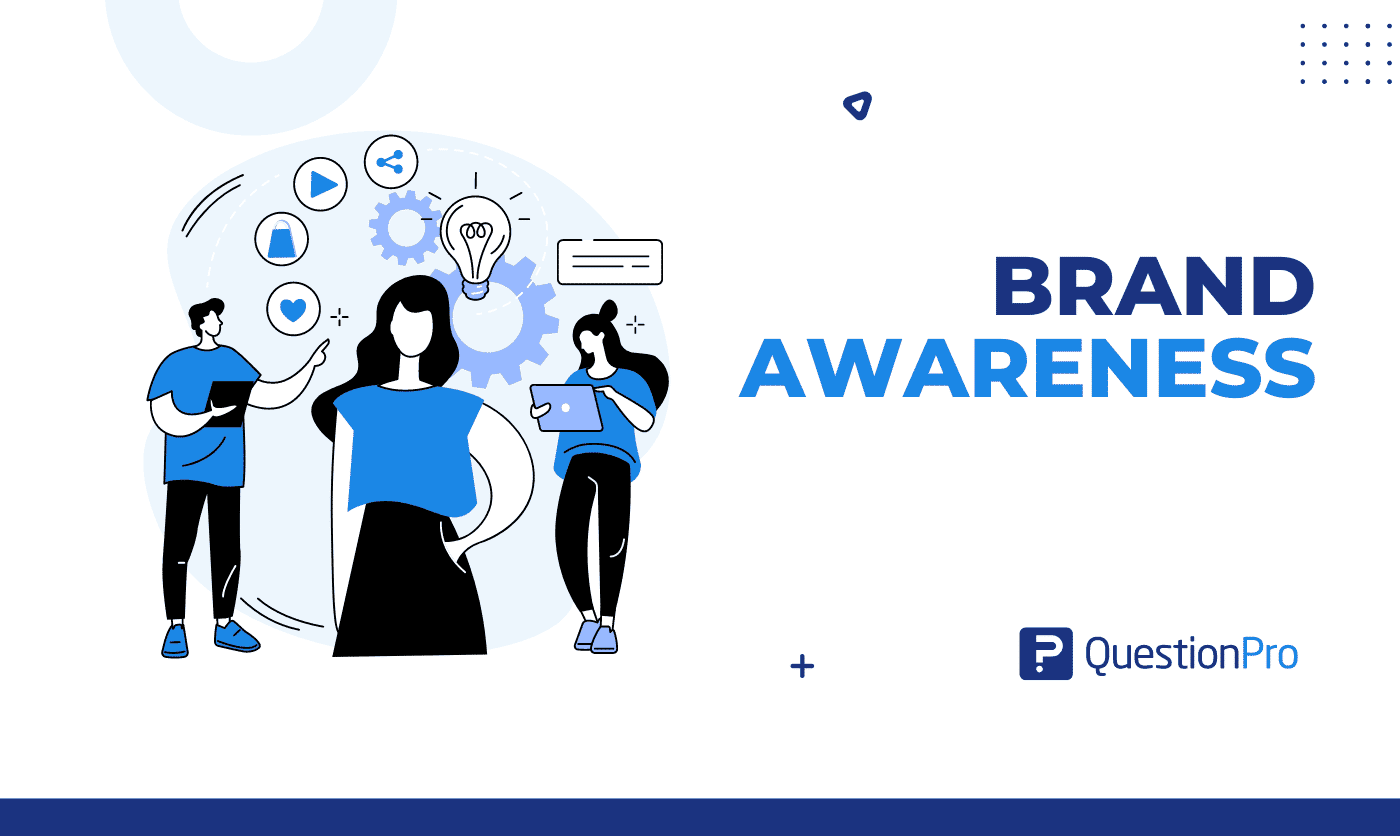
Brand awareness is how well people recognize a brand and recall it when they think about a product category. It is the first step in every buying decision. Shoppers rarely choose a brand they have never heard of.
Strong awareness shortens the path to purchase. It also makes every later marketing dollar work harder.
In this guide, we’ll define brand awareness, compare its types, show how to build and measure it, and cover the mistakes that quietly stall growth.
What is brand awareness?
Brand awareness is how familiar a target audience is with a brand’s name, logo, products, and message. It covers two abilities: recognizing the brand when they see it, and recalling it without a prompt when a need arises.
Marketers treat awareness as the top of the brand funnel. Consideration, preference, purchase, and loyalty all sit below it.
Researchers describe the same idea in different terms. Kevin Keller’s customer-based brand equity model places awareness at its base and measures its breadth and depth. Breadth is the range of situations in which the brand comes to mind. Depth is how easily it comes to mind.
Brand awareness is the umbrella term. Recognition, recall, salience, and brand health each describe a narrower slice. Mixing them up leads to the wrong survey questions.
| Term | What it means | Typical question |
|---|---|---|
| Brand awareness | Overall familiarity with the brand | “Have you heard of this brand?” |
| Brand recognition | Identifying a brand when shown its name or logo | “Which of these brands do you know?” |
| Brand recall | Naming a brand without any prompt | “Which brands come to mind for running shoes?” |
| Brand salience | How quickly and often the brand comes to mind in buying situations | “Which brand would you consider first?” |
| Brand equity | The added value a known brand earns | “Would you pay more for this brand?” |
| Brand health | A broad scorecard of awareness, perception, and loyalty | Combined tracker of several measures |
Salience is closely tied to what the Ehrenberg-Bass Institute calls mental availability. Kantar describes it as a brand’s ability to come to mind quickly when a need or occasion arises. For a wider scorecard, see QuestionPro’s guide to brand health.
What are the types of brand awareness?
There are three levels of brand awareness, ordered from weakest to strongest: aided recognition, unaided recall, and top-of-mind awareness. Each level needs a different survey question, so the distinction affects how you measure.
Aided awareness (brand recognition)
A person recognizes the brand when shown its name or logo. This is the weakest level, but it still matters in retail, where shoppers choose from a shelf.
- Typical question: “Which of these brands have you heard of?”
- Where it counts most: Grocery aisles, app stores, and online marketplaces.
Unaided awareness (brand recall)
A person names the brand with no prompt. Two points set it apart:
- Stronger signal: Recall predicts consideration better than recognition because the brand has to exist in memory, not just on a list.
- Harder to earn: It needs repeated, distinctive exposure over time.
Top-of-mind awareness
The brand is the first one named for a category, and it is the strongest form of awareness. A buyer who thinks of your brand first often never opens the comparison tab.
Most brands sit at the aided level. Moving up one level usually takes longer, and costs more, than building the first.
How does brand awareness fit into the marketing funnel?
Brand awareness is the top of the funnel: it decides whether a brand is even considered when a need appears. Nothing below it works if buyers do not know you exist.
The funnel runs in this order:
- Awareness: The buyer knows the brand exists.
- Consideration: The buyer compares it with alternatives.
- Preference: The buyer favors it.
- Purchase: The buyer converts.
- Loyalty and advocacy: The buyer repeats and recommends.
A weak result at one stage points to a specific fix. High awareness with low consideration suggests a positioning problem. Low awareness with high conversion suggests a reach problem, because the people who find you already like you.
Why does brand awareness matter?
Brand awareness matters because familiar brands get considered first, and consideration comes before every sale. It also supports price, loyalty, and word of mouth.
The main benefits are:
- Higher consideration: Buyers shortlist brands they already know.
- Trust: Familiarity reads as safety, especially for new purchases.
- Pricing room: Strong brand equity lets a company hold price against cheaper rivals. QuestionPro’s guide to perceived value explains why buyers pay more for brands they rate highly.
- Lower acquisition cost: Known brands convert warm audiences, not cold ones.
- Referrals: People recommend brands they remember and trust.
- Resilience: Loyal customers forgive an occasional mistake.
Kantar’s BrandZ tracking of 5,334 brands over three years found that most brands whose claimed purchase rose also gained salience. Kantar cautions that salience alone does not guarantee growth. The strongest brands are also meaningful and different.
What are some brand awareness examples?
Good brand awareness examples share one trait: they give people something worth sharing or remembering. The tactics differ, but each one builds either recognition or recall.
- Spotify Wrapped: Each December, Spotify turns listening data into a personal recap that users post on social media. Every share doubles as an ad.
- Red Bull Stratos: The 2012 space jump tied the brand to extreme performance. Red Bull sells a drink, but it built awareness as a media company.
- HubSpot’s inbound methodology: HubSpot taught a way of marketing before it sold software. Marketers learned the term, then learned the brand behind it.
- Duolingo’s owl: A consistent character and a humorous social voice made the brand recognizable even to people who have never used the app.
A smaller example shows the same logic. A regional bakery that sponsors the local 5K, posts weekly baking clips, and offers free samples at the finish line builds awareness in one town. It does not need national reach.
How does B2B brand awareness differ from B2C?
B2B brand awareness targets a small group of decision makers over a long buying cycle. B2C awareness targets a large public over a short one. The goals overlap, but the tactics and measures do not.
B2C brand awareness
- Audience: Large, often defined by age, region, or lifestyle
- Main drivers: Social video, retail presence, creators, and paid reach
- Best measure: Aided and unaided awareness across the general population
B2B brand awareness
- Audience: Small, defined by role, company size, and industry
- Main drivers: Original research, webinars, conferences, and search
- Best measure: Unaided awareness among the named buyer group, such as VPs of sales at mid-sized US firms
In B2B, a general consumer sample tells you almost nothing. Survey the people who sign the purchase order.
How to build brand awareness step by step
Building brand awareness works best as a sequence. Set a baseline, pick an audience, and build a distinct identity. Then publish consistently where that audience already spends time.
- Measure your baseline.
Run a short survey to learn how many people in your market know you today. - Define the audience.
Name the segments you want to reach, such as US small business owners or Gen Z shoppers. - Sharpen the identity.
Choose a name, visual style, voice, and promise that you can repeat everywhere. - Pick two or three channels.
Spread too thin and nothing sticks. Choose the channels your audience uses. - Publish useful content.
Guides, data, and tools earn attention without paid reach. - Add partnerships.
Co-branding, influencers, and events borrow trust from established names. A structured brand ambassador program turns happy customers into repeat advocates. - Repeat and re-measure.
Awareness builds through repetition. Re-run your baseline survey each quarter.
Which channels build brand awareness fastest?
No channel wins on its own. Search and content build durable awareness, social builds reach quickly, paid media buys speed, and partnerships borrow trust. Match the channel to your audience and budget.
Search and content
Publish pages that answer the questions your buyers ask. Ranking for category terms puts your name in front of people before they choose a brand.
- Strength: Compounding reach that keeps working after publication.
- Limit: Slow to start, often six months or more.
Social and video
- Short video: Fast reach, short memory unless the style repeats.
- Community posts: Slower, but builds familiarity with a defined group.
- Creator partnerships: Borrow an audience that already trusts the creator.
Paid media and PR
Paid ads buy reach on a schedule you control. Earned coverage from journalists carries more credibility but is harder to plan. Most brands use both, with paid media for frequency and PR for trust.
How to measure brand awareness
You measure brand awareness by combining direct data with indirect signals. Survey responses are direct data. Branded search and social mentions are indirect. No single number captures it.
| Metric | What it tells you | Where to find it |
|---|---|---|
| Aided awareness % | Share who recognize your brand | Brand awareness survey |
| Unaided awareness % | Share who name you without help | Brand awareness survey |
| Top-of-mind % | Share who name you first | Brand awareness survey |
| Branded search volume | Interest in your name | Google Search Console, Google Trends |
| Direct traffic | People who type your URL | Web analytics |
| Social share of voice | Your mentions versus competitors | Social listening tools |
| Earned media mentions | Third-party coverage | Media monitoring |
| Net Promoter Score | Willingness to recommend | Customer survey |
Surveys give the cleanest read because they ask the target market directly. Indirect signals are faster and cheaper, but they only show behavior from people who already found you.
For the full framework, read QuestionPro’s guide to brand measurement.
How to run a brand awareness survey
A brand awareness survey asks a representative sample of your target market what they know about your brand. It starts with open questions and moves to prompted ones. Order matters, because an early prompt biases later answers.
Use this sequence:
- Top-of-mind: “When you think of project management software, which brand comes to mind first?”
- Unaided recall: “What other brands can you name in this category?”
- Aided recognition: “Which of these brands have you heard of?” (show a list that includes yours)
- Familiarity depth: “How familiar are you with each brand?” (five-point scale)
- Source: “Where did you first hear about this brand?”
Calculate each percentage by dividing the respondents who gave the answer by total respondents. If 400 of 1,000 respondents pick your brand from the list, aided awareness is 40%.
Aim for at least 300 to 400 respondents per audience segment. That keeps the margin of error near five percentage points at a 95% confidence level. For question wording and sampling detail, see QuestionPro’s brand awareness survey guide.
How do you choose the right brand awareness strategy?
Choose a strategy by matching your current awareness level, budget, and audience to the tactic that fits. A brand with almost no recognition needs reach. A brand with recognition but weak recall needs repetition and distinctiveness.
| Your situation | Best-fit focus | Why |
|---|---|---|
| New brand, small budget | Content and community | Low cost, builds trust slowly |
| New brand, larger budget | Paid social plus partnerships | Buys reach fast |
| Known, but not recalled | Consistent distinctive assets, repetition | Strengthens memory |
| Strong locally, weak nationally | Regional sponsorships, PR | Expands reach step by step |
| B2B with long sales cycle | Thought leadership, original research | Builds authority among buyers |
Run a baseline survey before spending. If aided awareness is already above 70% in your target market, extra reach adds little. If it is below 20%, recall work is premature.
How does brand awareness show up in AI search?
In AI search, brand awareness means being named in the answers that Google AI Overviews, ChatGPT, and Perplexity give. Buyers now ask these tools for recommendations. A brand they skip misses a new kind of shortlist.
You can check this directly. Ask each tool the questions your buyers ask, such as “What are the best project management tools for small teams?” Record whether your brand appears, where it ranks in the list, and which sources the tool cites.
Repeat the test monthly with the same prompts. Pair it with the survey question “Where did you first hear about us?” and add “AI assistant” as an answer. That shows how much discovery now starts in a chat window.
What are the most common brand awareness mistakes?
The most common mistakes are measuring only vanity metrics, changing the brand identity too often, and surveying the wrong audience. Each one wastes budget while looking like progress.
- Counting impressions as awareness: Impressions show delivery, not memory.
- Surveying only customers: Customers already know you. Sample the wider market.
- Skipping the baseline: Without a starting point, growth is a guess.
- Inconsistent identity: Changing logos, colors, and tone resets recognition.
- Prompting too early: Showing a brand list before asking for recall inflates results.
- One-off measurement: Awareness moves slowly. Track it on a schedule.
- Confusing awareness with preference: People can know a brand and still not choose it.
How can QuestionPro help track brand awareness over time?
Tracking awareness over time means asking the same questions of comparable samples on a fixed schedule. QuestionPro’s Market Research Software combines survey design, respondent access, and reporting in one place, so a quarterly tracker runs without rebuilding the study each time.
A tracker built this way lets teams:
- Reach the target market through a respondent panel
- Compare each wave with the last
- Split results by segment, such as region or age
- Check whether a campaign moved aided awareness, not just clicks
Final thoughts on brand awareness
Brand awareness is a memory, and repetition builds memory. A brand that stays distinctive and appears where its audience already looks will outlast one that chases every tactic. Measuring progress keeps it honest.
Start with a baseline, choose one audience, and measure again in 90 days. The gap between those two numbers is the clearest proof that your brand awareness work is paying off.
Frequently Asked Questions (FAQs)
Expect noticeable movement in three to six months for a focused local campaign, and one to three years for national recognition. Timelines depend on budget, category competition, and how consistently the brand repeats its message across channels.
No universal benchmark exists, because scores depend on category size and audience. Compare your aided and unaided percentages with two or three direct competitors in the same sample, then track your own movement wave over wave.
Most brands run a tracker quarterly, with a fuller annual review. Run an extra wave after a major launch or campaign. Keep question wording and sample criteria identical between waves so changes reflect real movement.
Yes. A short online survey sent to a local email list or social following, plus branded search trends in Google Search Console, gives a usable baseline for little cost. Add a respondent panel later if you need a wider audience.
No. Awareness measures whether people know a brand exists. Reputation measures what they think of it. A brand can be widely known and poorly regarded, which is why awareness should be tracked alongside sentiment and trust.