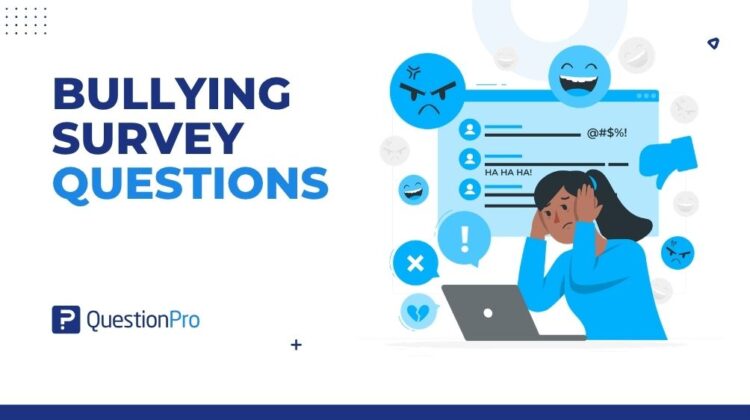
Bullying survey questions turn a problem people often hide into data a school, employer, or platform can actually act on. Bullying itself is repeated, intentional behavior meant to hurt, intimidate, or exclude someone who has less power to defend themselves.
The setting changes the shape bullying takes, but not the underlying pattern. A student pushed in a hallway, an employee left out of key meetings, and a teenager tagged in a humiliating post are describing the same core behavior. Only the details differ. Questions built for one setting rarely work well in another.
In this article, we’ll explore bullying survey questions by setting, show how to structure a survey that gets honest answers, and cover the mistakes that quietly weaken the data.
What is bullying?
Bullying is a pattern of repeated, intentional aggression directed at someone who has less power to stop it or respond in kind. The power gap can come from physical size, social status, seniority, or access to a screen. Three elements separate it from a normal disagreement: intent to harm, repetition over time, and a real or perceived power imbalance between the people involved.
Researchers and educators usually group bullying behaviors into four categories, regardless of where it happens.
- Physical bullying: hitting, shoving, blocking someone’s path, or damaging their belongings.
- Verbal bullying: name-calling, threats, mocking, or repeated insults.
- Relational (social) bullying: excluding someone, spreading rumors, or damaging their reputation within a group.
- Cyberbullying: using texts, apps, or social platforms to harass, humiliate, or threaten someone.
This article organizes questions by setting (school, workplace, online, peer groups) because that’s how most survey programs are actually built. Knowing the four behavior types above helps you write questions specific enough to capture what happened, not just that something did.
Bullying vs. conflict vs. harassment
These three terms get used interchangeably, but they describe different things, and a survey that mixes them up will collect confusing data.
| Term | Definition | Key marker |
|---|---|---|
| Bullying | Repeated, intentional aggression against someone with less power to defend themselves | Power imbalance plus repetition |
| Conflict | A disagreement or friction between people with roughly equal standing | No power imbalance; typically resolves through discussion |
| Harassment | Unwanted conduct tied to a protected characteristic such as race, sex, disability, or religion | Can be a single incident; carries a legal definition under US employment and education law |
A single argument between coworkers of equal rank is conflict, not bullying. A supervisor’s repeated public put-downs of one direct report is bullying. If the mistreatment targets a protected trait, it may also meet the legal bar for harassment, which changes how an organization is required to respond. Survey questions should ask about frequency, power dynamics, and the target’s identity separately so the data reflects which of these is actually happening.
How to structure a bullying survey
A bullying survey works best with 10 to 15 questions, enough to cover frequency, location, type, and emotional impact without causing survey fatigue. Longer surveys see sharper drop-off, especially with younger respondents or employees completing it on a break.
Keep these guidelines in mind when building one:
- Use a frequency scale, not yes/no, for the core question. A 5-point scale (“never” to “almost every day”) captures severity that a binary question misses.
- Ask about witnessing separately from experiencing. Bystanders often see more than victims report, and their responses surface patterns victims are reluctant to disclose.
- Offer anonymous submission. Respondent Anonymity Assurance settings let people answer honestly without a traceable identity attached to sensitive responses, which matters most in workplace and school settings where retaliation is a real fear.
- Aim for a response rate above 60% within the group you’re surveying. Below that, a handful of vocal respondents can skew the picture of how widespread the problem actually is.
- Pair closed questions with one open-ended field. A single “Is there anything else you’d like us to know?” question often surfaces details no checklist anticipates.
- Set a follow-up timeline before you launch. Decide in advance who reviews results, how quickly flagged cases get escalated, and when respondents will hear back about any changes. A survey with no follow-up plan tends to produce lower response rates the next time it runs.
Student bullying survey questions
School bullying affects a large share of US students every year. Federal data shows an estimated 19% of high school students were bullied on school property in the 12 months prior to the survey. The most common locations are classrooms, hallways, and the cafeteria, not just the playground or bus during unsupervised time. A student who’s mocked daily for their appearance in the cafeteria, or repeatedly excluded from group work, may never mention it unless a survey asks directly.
Sample questions for a student bullying survey:
- Have you ever felt bullied at school?
- Where did the bullying take place (classroom, hallway, cafeteria, online)?
- How often did it happen in the past month?
- What type of bullying did you experience (physical, verbal, social, cyber)?
- Did you tell a teacher, parent, or other trusted adult?
- Do you feel safe at school most days?
- Have you witnessed someone else being bullied this year?
Use QuestionPro’s bullying survey for students template as a starting point, then adjust the language for the age group you’re surveying. A third-grader and a high school junior need different wording for the same underlying question.
Workplace bullying survey questions
Workplace bullying is widespread and often invisible to leadership. The 2024 Workplace Bullying Institute national survey found that 32% of Americans report being directly bullied, which translates to approximately 52.2 million workers. A manager who consistently excludes one direct report from decisions fits the pattern. So does a colleague who takes credit for another’s work while undermining them publicly. Neither requires a single dramatic incident to count as bullying.
Sample questions for a workplace bullying survey:
- Have you experienced bullying or abusive behavior at work in the past 12 months?
- Have you witnessed a coworker being bullied?
- Do you feel the workplace culture is respectful and safe?
- Have you reported an incident to a supervisor or HR representative?
- Do you believe the organization takes reports seriously?
- Are there specific teams or individuals where this behavior seems more common?
- Has this affected your job satisfaction or well-being?
HR and people teams can build this out further with QuestionPro’s HR survey templates, which include broader culture and engagement questions worth pairing with a bullying-specific set.
Cyberbullying survey questions
Cyberbullying has grown sharply over the past two decades. A 2025 national study found that approximately 58% of students reported experiencing cyberbullying at some point in their lifetimes. About 33% said it had happened in the most recent 30 days alone. Mean comments, exclusion from group chats, and spreading rumors were the most common forms reported that year.
Sample questions for a cyberbullying survey:
- Have you ever been bullied online or through text messages?
- How often has this happened in the past 30 days?
- Which platform or app was involved?
- Did the bullying include rumors, exclusion, threats, or embarrassing content?
- How did it affect your mood or stress levels?
- Did you report the incident to the platform or a trusted adult?
- Do you feel safe using social media generally?
- What would make you more likely to report an incident?
Write these questions to be free of leading language. A question like “Don’t you think online bullying is out of control?” pushes respondents toward an answer instead of measuring their actual experience.
Relational bullying survey questions
Relational bullying, also called relational aggression, is peer-based social harm: exclusion, rumor-spreading, or manipulating group dynamics to isolate someone. It’s distinct from domestic violence or elder abuse, which involve different relationships and different legal frameworks entirely. Folding them into the same survey category produces data that’s hard to act on.
A friend group that deliberately starts a rumor to push one member out is one example. A team that quietly stops inviting one coworker to informal gatherings is another. Both follow the same pattern of using social exclusion, rather than direct confrontation, to isolate a target.
Sample questions for a relational bullying survey:
- Have you experienced exclusion or rumor-spreading in the past 12 months?
- Have you witnessed someone else being excluded or targeted this way?
- Have you ever taken part in excluding someone or spreading rumors?
- Do you feel your school, team, or community promotes inclusion?
- Have you noticed a change in your mood or confidence because of this?
- Would you feel comfortable stepping in if you saw it happening?
QuestionPro’s social survey templates offer a starting point for community and group-based questionnaires that can be adapted to this topic.
Choosing the right bullying survey for your setting
The right survey depends on who you’re asking and how much detail you need.
| Setting | Recommended length | Who typically administers it |
|---|---|---|
| School/students | 8-12 questions | Teachers, counselors, or school administrators |
| Workplace | 10-12 questions | HR or People teams |
| Online/social platforms | 12-15 questions | Parents, schools, or platform trust and safety teams |
| Peer groups/community | 8-10 questions | Community leaders, school staff, or HR |
Shorter surveys work well for regular pulse checks, while longer ones make sense for an annual, in-depth climate assessment. A school might run a 5-minute pulse check after a policy change, then a full climate survey once a year to track trends across grades and campuses. QuestionPro’s survey software supports both formats, along with the logic branching needed to skip irrelevant follow-up questions for respondents who haven’t experienced bullying.
Common mistakes to avoid when writing bullying survey questions
A well-intentioned bullying survey can still fail to produce usable data. Watch for these issues before sending one out:
- Leading or loaded questions.
Phrasing that assumes an answer, like “How badly has bullying affected you?”, biases responses before the respondent even starts.
- No anonymity option.
People under-report bullying when they think their name is attached to the answer, especially in workplaces and schools.
- Undefined terms.
If the survey never defines bullying, respondents apply their own definition, and results become impossible to compare across groups.
- No consent process for minors.
Student surveys on sensitive topics generally need parental notification or consent, along with a clear disclaimer explaining the survey’s purpose.
- Collecting data with no action plan. Running a survey and shelving the results erodes trust and makes people less likely to respond honestly next time.
- Missing crisis resources.
Bullying is linked to anxiety, depression, and suicidal ideation in some students. Include a note pointing to the 988 Suicide & Crisis Lifeline or a school counselor for anyone who needs immediate support.
Getting these details right is what separates a bullying survey that produces real policy change from one that just confirms what people already suspected.
Frequently Asked Questions (FAQs)
Verbal bullying, including name-calling and repeated insults, is consistently reported as the most common form across US school surveys. Relational bullying, such as exclusion and rumor-spreading, follows closely, particularly among middle school students.
Most effective bullying surveys use 10 to 15 questions covering frequency, type, location, emotional impact, and reporting behavior. Going much longer increases drop-off, especially among younger respondents or employees completing it during a break.
Yes, in most cases. Anonymous or confidential submission increases honest reporting because respondents don’t fear retaliation from the person they’re describing, which is especially important in workplace and school settings.
Bullying is repeated aggression tied to a power imbalance, while harassment is unwanted conduct connected to a legally protected characteristic like race, sex, or disability. Harassment can occur after a single incident and carries specific legal obligations for employers and schools.
Schools and workplaces typically run a full bullying survey annually, supplemented by shorter pulse surveys after a policy change, a reported incident, or a shift to remote or hybrid arrangements. Frequent, shorter check-ins catch problems earlier than a single yearly assessment.