Transactional NPS surveys help organizations measure customer feedback immediately after a specific interaction. These surveys are event-triggered Net Promoter Score surveys sent to customers right after a defined experience, such as a purchase, support interaction, or service visit. Instead of capturing how customers feel about a brand overall, they focus on individual moments that shape satisfaction and loyalty.
Because feedback is collected while the experience is still fresh, transactional NPS surveys provide clearer, more actionable insight into what worked and what caused friction at a specific customer touchpoint.
What are transactional NPS surveys?
Transactional NPS surveys measure customer sentiment after a single interaction rather than across the entire relationship. They use the standard Net Promoter Score question, but the focus is limited to a recent experience
This distinction matters. Relationship NPS reflects long-term brand perception, while transactional NPS captures how customers feel about what just happened.
These surveys are typically sent after touchpoints, such as completing an online or in-store purchase or resolving a return, refund, or complaint. It can help you understand how specific interactions influence customer perception, not just overall loyalty.
Learn about: When to use a transactional survey and best practices
How to calculate transactional NPS
Transactional NPS works by tying the NPS question to a clearly defined event. Customers are asked to rate their likelihood to recommend based on that single interaction.
Transactional NPS survey question
“How likely are you to recommend [Company or Product] to a friend or colleague based on your recent experience?”
Customers respond on a scale from 0 to 10 and are grouped into three categories:
- Promoters (9 to 10): Very satisfied customers
- Passives (7 to 8): Neutral or moderately satisfied
- Detractors (0 to 6): Dissatisfied customers
The score is calculated using the standard NPS formula:
Transactional NPS = Percentage of Promoters − Percentage of Detractors
Scores range from -100 to +100. A positive score indicates more positive than negative reactions to that interaction.
For example, if 45 percent of respondents are Promoters and 15 percent are Detractors, the transactional NPS score is 30. This indicates that the experience created more positive reactions than negative ones and suggests there is room for further improvement.
Also check: What Net Promoter Score is & how to measure
Transactional NPS vs relational NPS: What is the difference
The main difference between transactional NPS and relational NPS is what they measure and when feedback is collected. They answer different questions and should not replace each other.
Below is a clear comparison of the two approaches:
| Transactional NPS (tNPS) | Relational NPS (rNPS) |
| Focuses on a single interaction | Measures overall relationship health |
| Sent immediately after an event | Sent periodically, often quarterly or annually |
| Identifies specific issues quickly | Tracks long-term loyalty trends |
| Supports short-term improvements | Supports strategic planning |
Using both metrics together gives a more complete view of customer satisfaction. SaaS, retail, and service companies often use transactional NPS to fix day-to-day experience gaps, while relational NPS tracks broader brand perception over time.
Learn more: The differences between transactional and relational NPS
When to use transactional NPS surveys
Transactional NPS surveys work best when the interaction has a clear start and finish. Timing is critical. Sending the survey too late weakens accuracy and introduces recall bias.
Transactional NPS surveys can be triggered whenever customers complete a meaningful action, including:
- Completing a checkout or payment
- Closing a support ticket
- Finishing a service visit or appointment
- Completing onboarding or implementation
- Ending a trial, subscription, or contract
Any interaction with a clear beginning and outcome is a good opportunity to ask for feedback. In fast-moving US markets where customers expect quick resolution and clear communication, delayed feedback often hides real issues.
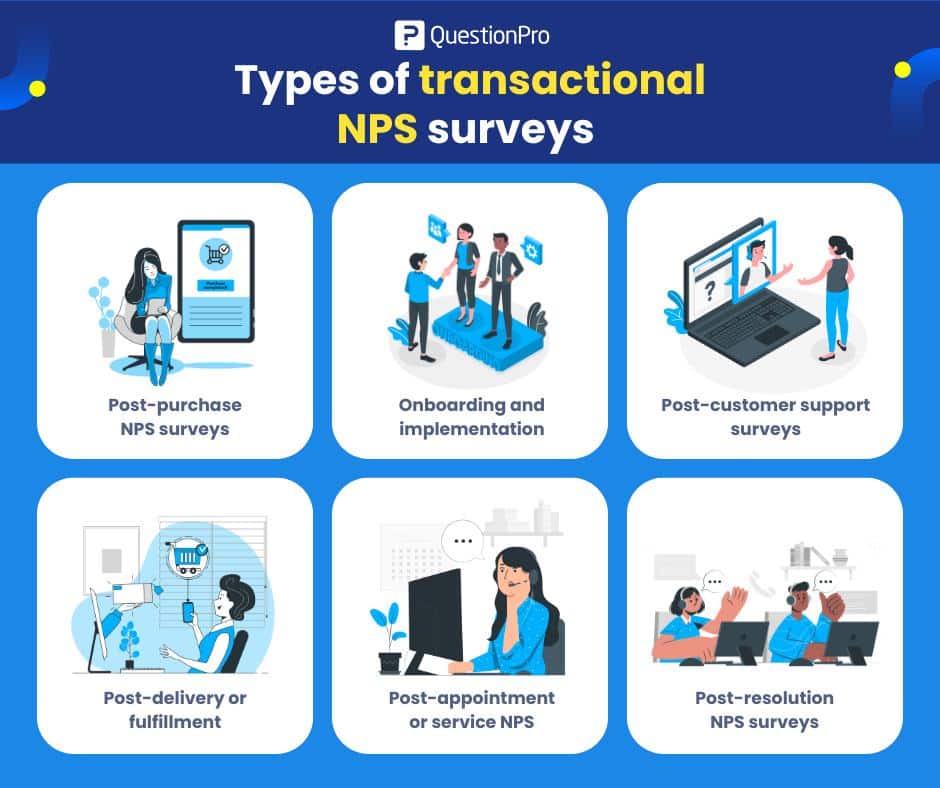
Types of transactional NPS surveys
Transactional NPS surveys are designed to capture feedback at specific moments in the customer journey. Each type focuses on a single interaction and should be triggered only after the experience is complete. This can help you understand how individual touchpoints influence customer satisfaction and loyalty.
1. Post-purchase transactional NPS surveys
Post-purchase surveys measure how customers experienced checkout, payment, and fulfillment. They are common in e-commerce and retail and help identify whether the purchase process was clear, smooth, or frustrating.
Here is the transactional NPS Question:
Based on your recent purchase, how likely are you to recommend us to a friend or colleague?
And you can add follow-up questions:
- How easy was it to complete your purchase?
- Did anything feel unclear or slow during checkout?
2. Onboarding and implementation
Onboarding surveys capture early impressions during setup or first use. These early moments often determine whether customers continue or disengage. They are especially important for B2B and subscription products.
Common focus areas are:
- Clarity of instructions
- Time required to get started
- Ease of completing initial steps
Here you can ask NPS survey questions like:
How likely are you to recommend our product based on your onboarding experience?
Also, the follow-up questions can be:
- Did the onboarding process help you get started easily?
- What part of the setup felt most confusing?
3. Post-customer support transactional NPS surveys
Post-customer support surveys evaluate how customers felt about issue handling, communication, and resolution quality.
Here is the core NPS question:
Based on your recent interaction with our support team, how likely are you to recommend us?
Typical follow-up questions include:
- Was your issue resolved in a satisfactory way?
These surveys are useful for improving service quality and support processes.
4. Post-delivery or fulfillment
Post-delivery surveys focus on delivery speed, accuracy, and condition, all of which influence satisfaction, regardless of product quality. They are commonly used in retail, logistics, and food delivery contexts to monitor fulfillment performance.
Typical TNPS question is:
How likely are you to recommend our delivery service on a scale of 0 to 10?
You can ask follow-up questions in this transactional NPS survey:
- Did your order arrive on time?
- Was the delivery accurate and complete?
- If not, what could we improve?
5. Post-appointment or service NPS
Service-based surveys are used in healthcare, financial services, and consulting to evaluate staff interactions and service quality.
Typical questions in surveys include:
- Did the service meet your expectations?
- How was your interaction with our staff?
- Would you recommend our service based on this visit?
6. Post-resolution transactional NPS surveys
Post-resolution surveys measure satisfaction after refunds, complaints, or service recovery. They focus on how the resolution process was handled rather than just the outcome.
Core transactional NPS survey question:
How likely are you to recommend us based on your recent support or refund experience?
Follow-up question:
- What part of the resolution process was most helpful or frustrating?
Learn about: Types of customer feedback, collection methods & examples
How to use transactional NPS surveys to improve customer experience
Transactional NPS surveys improve customer experience by showing exactly where friction occurs. Because responses are collected while the experience is still fresh, the feedback is more accurate and easier to act on.
You can quickly see what worked well and what caused frustration without relying on delayed or vague input. They help:
- Identify weak touchpoints instead of guessing
- Detect dissatisfaction early before churn occurs
- Compare performance across channels or teams
- Prioritize fixes that matter most to customers
Businesses often misuse transactional NPS by sending it too often or attaching it to vague interactions. Clear triggers and controlled frequency matter more than volume.
Also check: What post-call survey is & how to use it
What factors influence transactional NPS scores
Transactional NPS scores are shaped by a few consistent factors:
- Clarity and ease of the interaction
- Speed of response or delivery
- Communication quality
- Consistency of the experience across touchpoints
When these factors meet or exceed customer expectations, transactional NPS scores tend to be higher. Inconsistent experiences or friction at any stage can quickly reduce scores, even if other parts of the journey perform well.
Best practices for running transactional NPS surveys
Transactional NPS surveys deliver the most value when they are designed and managed with intention. The goal is to capture accurate feedback that reflects real customer experiences and leads to meaningful improvements.
To achieve this, transactional NPS surveys should follow a set of practical best practices:
- Choose interactions that clearly impact perception
- Send surveys within hours of the experience
- Keep surveys short with one follow-up question
- Act on feedback and close the loop
- Control frequency to avoid fatigue
One common mistake is treating passives as neutral noise. In transactional NPS, passives often signal unclear value or missed expectations.
How QuestionPro supports transactional NPS programs
Running transactional NPS surveys consistently requires more than sending a question. You need reliable triggers, clean data, and clear workflows to turn feedback into action. QuestionPro supports transactional NPS programs by providing the end-to-end structure needed to manage them.
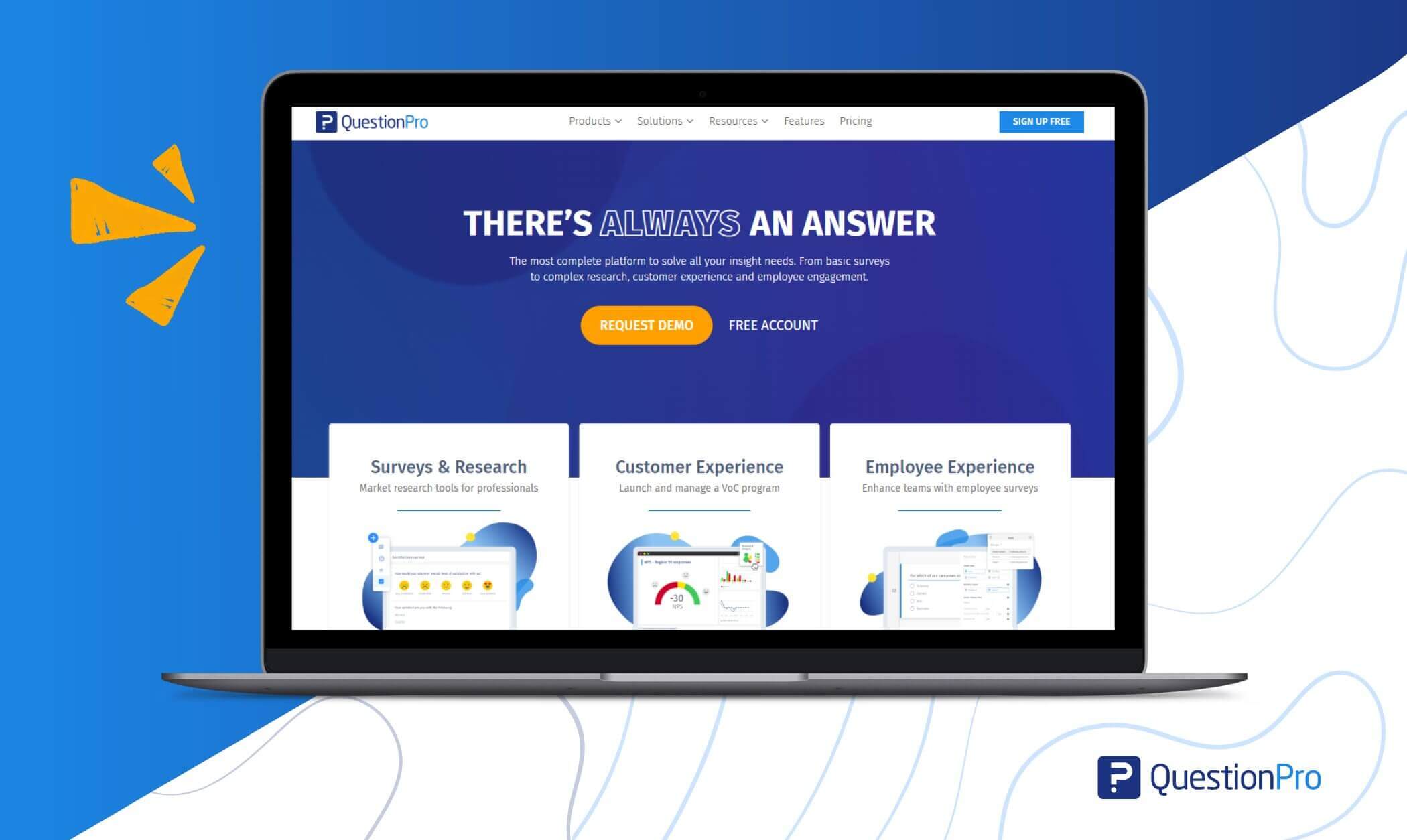
Using QuestionPro, you can design event-based surveys, automate triggers, analyze feedback by touchpoint, and route responses.
- Standard NPS and follow-up question setup, including AskWhy open-ended questions to capture context behind scores
- Multi-channel survey distribution lets you collect feedback via email, links, or embedded touchpoints, based on how the interaction occurred.
- Touchpoint and segment level analysis to compare performance across teams, channels, locations, or customer groups
- Predictive analysis, real-time alerts, and dashboards that surface low scores quickly so you can respond while the interaction is still recent
- Automated routing and follow-ups to ensure feedback reaches the right owners, and the loop is closed consistently.
Conclusion
Transactional NPS surveys show how individual interactions influence customer perception in real time. They reveal where experiences succeed, where they fail, and why customers react the way they do in specific moments.
Used correctly, transactional NPS surveys help teams detect problems earlier, prioritize fixes more effectively, and improve consistency across touchpoints. The value does not come from the score itself, but from how quickly and thoughtfully teams respond to what customers are telling them.
Frequently Asked Questions (FAQs)
Answer: Transactional NPS measures feedback after a specific interaction, such as a purchase or support call. Relationship NPS measures overall loyalty based on a brand’s long-term relationship. They answer different questions and are best used together.
Answer: Companies consider a transactional NPS score above 30 to be strong. What matters more is consistency across touchpoints and improvement over time rather than hitting a fixed number.
Answer: Transactional NPS surveys should be sent as soon as possible after the interaction, ideally within a few hours. Delays reduce accuracy because customers forget details or mix experiences.
Answer: No. Transactional NPS measures advocacy, while CSAT measures satisfaction with a specific task or outcome.
Answer: Customers should only receive transactional NPS surveys after meaningful interactions. Sending them too frequently can cause survey fatigue and lower response quality, especially in high-volume US service environments.