A buyer persona is a research-based profile of an ideal customer that helps teams understand customer needs, behaviors, pain points, motivations, and buying decisions. It gives marketing, sales, product, and customer experience teams a clearer picture of who they are trying to reach.
For businesses in the USA, buyer personas are useful because customers often compare many options before making a decision. A clear persona helps teams create better messages, ask better research questions, and build offers around real customer needs instead of assumptions.
In this article, we’ll explain what a buyer persona is, why it matters, what it should include, and how research, surveys, and customer insights can help teams create personas that reflect real buyers.
What is a buyer persona?
A buyer persona is a semi-fictional customer profile built from market research, customer data, surveys, interviews, and real buying behavior.
The persona represents a specific type of customer in your target market. It helps teams understand how that customer thinks, what they need, what problems they face, and what message may resonate with them.
A buyer persona usually answers questions like:
- Who is the customer?
- What do they need or want?
- What pain points are they trying to solve?
- What motivates them to buy?
- What stops them from buying?
- Which channels do they use to research options?
- What kind of message feels relevant to them?
A buyer persona is not a random profile. It should be based on customer insights, market research, and real feedback.
Why is a buyer persona important?
A buyer persona is important because it helps businesses create marketing, products, services, and customer experiences around the people they want to reach.
Without a buyer persona, teams may create generic messages for a broad audience. That often leads to weak campaigns, unclear content, poor targeting, and product decisions that do not match customer needs.
A strong buyer persona helps teams:
- Understand customer needs and pain points.
- Create better marketing messages.
- Improve product positioning.
- Choose better sales talking points.
- Build more relevant content.
- Segment audiences more clearly.
- Improve customer research questions.
- Align marketing, sales, and product teams.
What should a buyer persona include?
A buyer persona should include the details that help your team understand who the customer is, what they care about, and how they make buying decisions. A useful buyer persona template often includes:
- Persona name: A simple label, such as Marketing Maya or Operations Omar.
- Role or job title: The person’s role, department, or decision-making position.
- Demographics: Age range, location, income range, education, or company size when relevant.
- Psychographics: Goals, values, priorities, attitudes, and motivations.
- Pain points: Problems, frustrations, risks, or barriers the customer wants to solve.
- Needs and wants: What the customer expects from a product, service, or solution.
- Buying triggers: Events or situations that push the customer to search for a solution.
- Objections: Reasons the customer may hesitate before buying.
- Preferred channels: Where they research, compare, and communicate.
- Customer language: Real phrases customers use when describing their problem.
The best personas are specific enough to guide action but not so detailed that they become fictional stories with no research behind them.
Also read: Customer buying process, Importance & 5 Stages
What is the difference between a buyer persona and a target audience?
A target audience is a broad group of potential customers, while a buyer persona is a more detailed profile of a specific customer type within that group.
| Area | Target audience | Buyer persona |
|---|---|---|
| Scope | Broad customer group | Specific customer profile |
| Example | Small business owners in the USA | “Marketing Maya,” a 34-year-old SMB marketing manager |
| Main purpose | Defines who to reach | Explains how to speak to them |
| Data used | Demographics, location, segments | Needs, pain points, behavior, motivations |
| Use case | Media planning and broad targeting | Messaging, content, product, and sales strategy |
For example, a target audience might be “HR leaders at mid-sized companies.” A buyer persona would go further and describe a specific HR leader’s goals, challenges, decision-making process, objections, and preferred information sources.
How do you create a buyer persona?
You create a buyer persona by collecting customer data, finding patterns, and turning those patterns into a clear customer profile your team can use.
1. Collect customer and market research data
Start with what you already know. Review survey responses, CRM data, customer interviews, support tickets, website analytics, sales notes, reviews, and market research.
Look for repeated patterns in customer goals, questions, objections, and pain points.
2. Segment your audience
Group customers by shared traits. This may include role, industry, company size, location, buying stage, budget, product use, or problem type. Segmentation helps you avoid creating a single vague persona for everyone.
3. Use surveys and interviews
Surveys help you collect structured feedback from a larger group. Interviews help you understand the reason behind customer choices. Ask questions such as:
- What problem were you trying to solve?
- What made you start looking for a solution?
- What almost stopped you from buying?
- What information helped you decide?
- What alternatives did you compare?
- What result did you expect?
4. Identify goals, needs, and pain points
A strong customer persona should make the customer’s problem easy to understand. Focus on what the customer wants to achieve, what gets in the way, and what would make their life or work easier.
5. Map buying behavior and objections
Look at how the customer researches, compares, and decides. For B2B buyers, this may include decision-makers, influencers, procurement teams, or end users.
For B2C buyers, it may include lifestyle needs, budget, timing, reviews, and trust signals.
6. Build the persona profile
Turn your findings into a simple profile. Keep it practical and easy for teams to use. A buyer persona should help someone quickly understand:
- Who the person is.
- What they care about.
- What problem they need solved.
- What message will feel relevant.
- What may stop them from buying.
7. Validate and update the persona
Buyer personas should not stay frozen. Update them when customer behavior, market conditions, pricing, products, or buying channels change.
A persona is most useful when it reflects real customers today, not an old assumption.
How can you use a buyer persona to improve your business?
A buyer persona can help teams segment audiences, improve messaging, create better campaigns, and find new growth opportunities. It is not only useful for selling products. It can also help teams understand customer needs, test ideas, and improve the overall customer experience.
Two useful ways to use a buyer persona are validation and insight generation.
1. Validate and create stronger personas
A buyer persona should not be built only from assumptions. Assumptions can help you start, but research should confirm whether the profile reflects real customers.
Use surveys, interviews, customer data, and market research to check:
- Whether the persona matches a real audience
- What needs and pain points matter most
- Which messages feel relevant
- What objections appear often
- Which product features people care about
This makes the persona more reliable and easier to use across marketing, sales, product, and customer experience teams.
2. Use personas to find customer insights
Once you understand your ideal buyer persona, you can use it to collect more focused insights. Instead of asking broad questions to a broad audience, you can ask the right people about the topics that matter most.
This can help you:
- Improve campaigns
- Test product ideas
- Find messaging gaps
- Identify buying triggers
- Understand customer objections
- Improve customer journeys
- Prioritize areas for growth
With QuestionPro Audience, teams can use demographic and audience criteria to reach a more relevant respondent group. That helps businesses compare their persona assumptions with feedback from real people.
How can QuestionPro help validate buyer personas?
QuestionPro can help teams validate buyer personas by collecting feedback from real respondents, segmenting audiences, and analyzing customer insights.
A buyer persona is stronger when it is tested with research. QuestionPro Audience can help teams reach specific respondent groups based on demographic, behavioral, or market criteria. This helps businesses compare assumptions against real customer feedback.
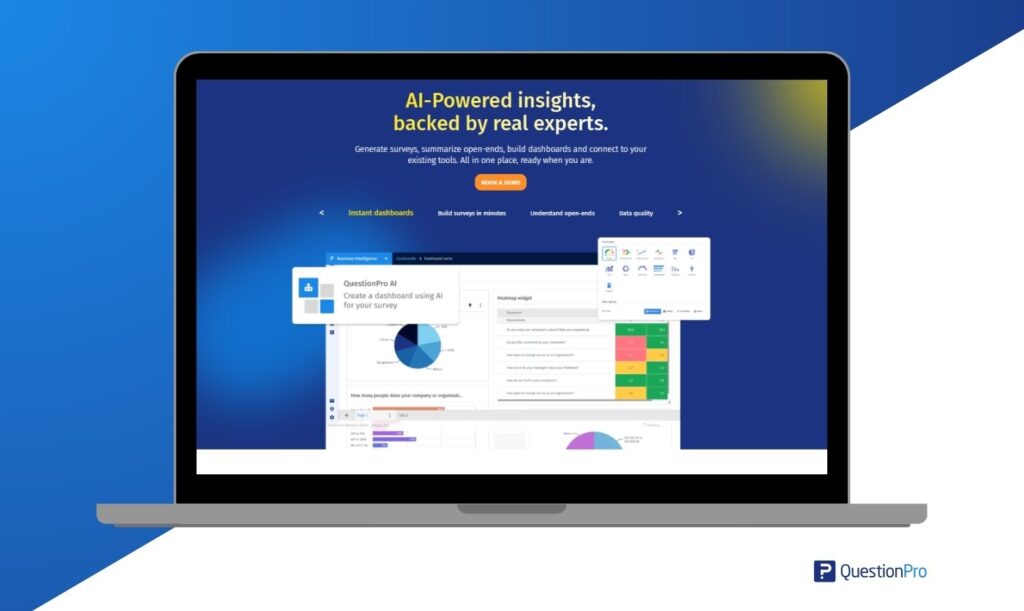
With QuestionPro, teams can:
- Run customer persona surveys.
- Segment respondents by demographics or behavior.
- Test needs, wants, and customer pain points.
- Compare buyer persona examples across audience groups.
- Use surveys to understand decision-making patterns.
- Test product messaging and value propositions.
- Analyze open-ended responses.
- Review insights in dashboards and reports.
The goal is not only to create a persona. The goal is to create a profile that reflects real customer needs and helps teams make better decisions.
Final thought
A buyer persona helps businesses understand who they are trying to reach, what those customers need, and how they make decisions.
The strongest personas are built from research, not guesses. Use surveys, interviews, customer data, and market research to create personas that guide messaging, product decisions, and customer experience.
Frequently Asked Questions (FAQs)
A buyer persona helps teams create better marketing messages, products, content, campaigns, and customer experiences by focusing on real customer needs.
You create a buyer persona by collecting customer data, running surveys or interviews, identifying patterns, documenting goals and pain points, and validating the profile with research.
A buyer persona focuses on the person who makes or influences a buying decision. A customer persona may also include users, existing customers, or audience groups after purchase.
Most businesses should start with one to three buyer personas. Too many personas can make marketing, product, and sales decisions harder to focus.