Customer satisfaction survey questions help businesses understand how customers feel after a purchase, support interaction, product experience, website visit, or service request. The right questions can show what customers like, where they struggle, and what needs to improve.
CSAT, or customer satisfaction score, measures how satisfied customers are with a specific product, service, interaction, or experience. It is usually collected through a rating-scale question, followed by an open-ended question that explains the reason behind the score.
For businesses in the USA, customer expectations can change quickly across digital, phone, in-store, and support channels. A short, clear survey helps teams collect feedback before small issues turn into churn, poor reviews, or repeated support problems.
What are customer satisfaction survey questions?
Customer satisfaction survey questions are questions used to measure how happy customers are with a product, service, support interaction, website, or overall experience. They help businesses collect customer feedback and understand what needs to be improved.
These questions can be asked after important touchpoints, such as:
- A product purchase
- A customer support call
- A website visit
- A mobile app session
- An onboarding experience
- A delivery or service appointment
- A renewal or cancellation request
Customer satisfaction questions usually include rating scales and open-ended questions. A rating scale gives you measurable feedback. An open-ended question gives you the reason behind the rating.
For US market context, the American Customer Satisfaction Index measures customer satisfaction across the U.S. economy and is widely used as a benchmark for understanding customer experience trends.
Why are customer satisfaction survey questions important?
Customer satisfaction survey questions are important because they show whether customers are getting the experience they expected. They help businesses find pain points, track satisfaction over time, and decide which improvements matter most.
Good CSAT survey questions can help you:
- Identify product or service issues
- Understand why customers are unhappy
- Track satisfaction across touchpoints
- Improve customer support quality
- Reduce churn risk
- Prioritize product improvements
- Find patterns by customer segment
- Build stronger customer relationships
The value is not just in collecting responses. The value comes from acting on the feedback. If customers keep reporting the same issue, the survey is pointing to a problem your team should fix.
20 customer satisfaction survey questions by category
The best customer satisfaction survey questions depend on what you want to learn. Use these 20 examples as a starting point, then adjust the wording to match your product, service, or customer journey.
Demographic customer satisfaction questions
Demographic customer satisfaction questions help you segment responses by customer type. Use them only when they support the survey goal, and make sensitive questions optional when possible.
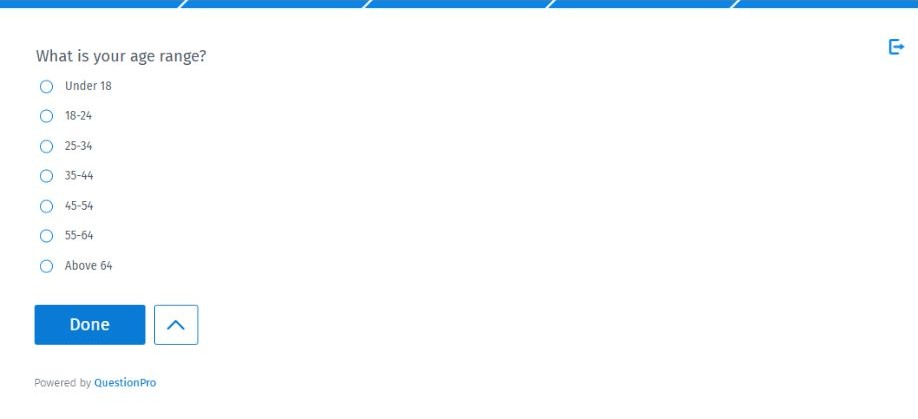
- What is your age range?
- Where are you located?
- Which option best describes your relationship status?
Demographic questions can help identify trends across customer groups. For example, satisfaction may differ by location, age group, customer type, or buying behavior. Avoid asking for personal details you do not need.
Product and service satisfaction questions
Product and service satisfaction questions help you understand whether your offering meets customer expectations. These questions are useful after a purchase, subscription, trial, or service delivery.
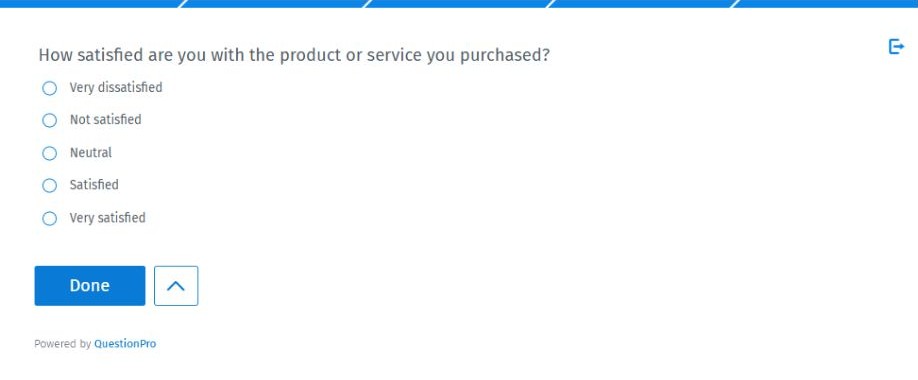
- How satisfied are you with the product or service you purchased?
- What do you like most about the product or service?
- What could we improve about the product or service?
- Based on your experience, how likely are you to purchase from us again?
Use a rating scale for question 4 and an open-ended format for questions 5 and 6. This gives you both measurable feedback and clear customer language.
Customer support satisfaction questions
Customer support satisfaction questions help you measure how well your team handles customer issues. These questions are useful after a support ticket, phone call, chat, or help center interaction.
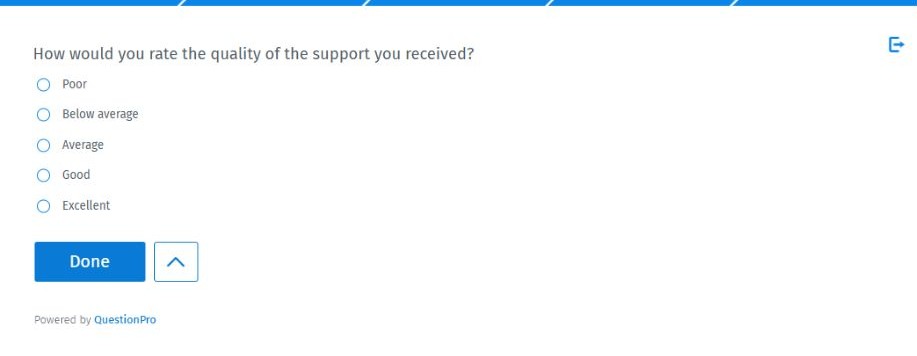
- How would you rate the quality of the support you received?
- How satisfied are you with the help provided by our customer support team?
- Did our support team have the knowledge needed to answer your question?
- Did our support team make you feel valued?
- What could we do to improve your support experience?
These questions help you review support speed, knowledge, tone, and issue resolution. If customers rate support poorly, ask a follow-up question to understand what went wrong.
Website and app experience questions
Website and app experience questions help you find issues in digital touchpoints. These questions are useful after a website visit, checkout flow, account login, app session, or online form submission.
- How would you rate your experience using our website or app?
- Was it easy to find what you were looking for?
- What changes would improve our website or app experience?
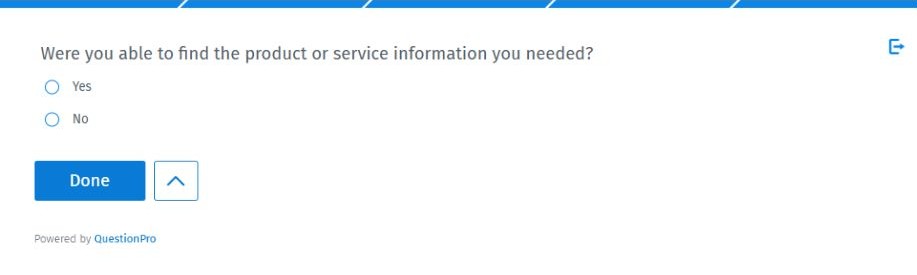
- Were you able to find the product or service information you needed?
These questions help identify problems with navigation, page content, search, mobile usability, forms, and checkout steps. They are especially useful when paired with analytics data.
Competitor and purchase decision questions
Competitor and purchase decision questions help you understand why customers chose your business over another option. These questions are useful after a purchase, demo, trial, or sales conversation.
- Which other brands or options did you consider before choosing us?
- What was the main reason you chose our product or service?
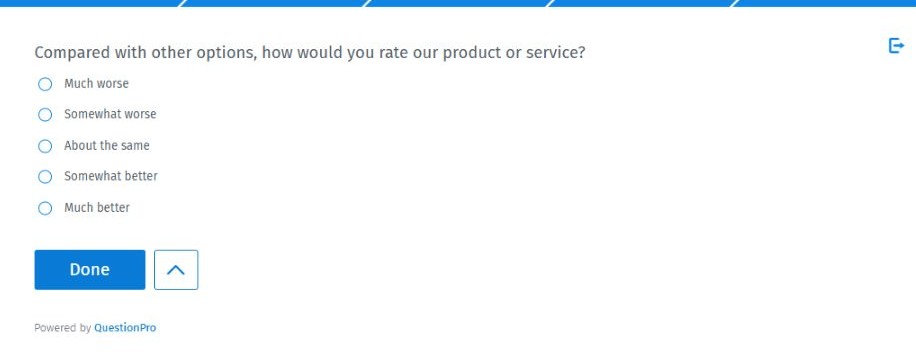
- Compared with other options, how would you rate our product or service?
These questions can show what customers value most, such as pricing, features, support, brand trust, speed, quality, or convenience.
Open-ended customer feedback questions
Open-ended customer feedback questions let customers explain their experience in their own words. These questions are useful at the end of a CSAT survey.
- Is there anything else you would like to share with us?
This question gives customers space to mention issues, ideas, or suggestions that your survey did not cover. It is simple, but it often reveals useful details.
How do you choose the right customer satisfaction survey questions?
Choose customer satisfaction survey questions based on the goal of the survey. A short survey with the right questions is usually better than a long survey with every possible question.
| Goal | Best question type |
|---|---|
| Measure overall satisfaction | CSAT rating question |
| Understand product issues | Product feedback question |
| Evaluate support quality | Customer support question |
| Improve website experience | Website or app experience question |
| Understand purchase decisions | Competitor or decision question |
| Gather new ideas | Open-ended customer feedback question |
For example, if you want to measure a recent support interaction, focus on support quality, issue resolution, and the customer’s open-ended feedback. Do not add unrelated demographic or competitor questions unless they directly support the goal.
What tips should you follow before sending a CSAT survey?
Before sending a CSAT survey, make sure each question is clear, unbiased, and connected to one goal. A good customer satisfaction questionnaire should be short enough to complete quickly and specific enough to produce useful feedback.
Follow these tips:
- Start with one clear goal: Decide whether you are measuring product satisfaction, support quality, website experience, or overall satisfaction.
- Avoid leading questions: Do not push customers toward a positive answer.
- Keep the survey short: Ask only what you need to know.
- Use rating and open-ended questions together: Ratings show the CSAT score. Comments explain the reason.
- Ask after key touchpoints: Send surveys after purchases, support interactions, onboarding, or website sessions.
- Make sensitive questions optional: Demographic questions should not feel forced.
- Act on the feedback: Customers are more likely to respond when they believe their input matters.
A simple CSAT question like “How satisfied are you with your experience?” is useful, but it becomes more valuable when followed by “What is the main reason for your rating?”
For related measurement guidance, see QuestionPro’s guide to customer satisfaction ratings.
How can QuestionPro help with customer satisfaction surveys?
QuestionPro can help teams create customer satisfaction surveys, collect feedback across touchpoints, and analyze responses to identify patterns in customer experience.
Teams can use QuestionPro to build CSAT surveys for:
- Product feedback
- Support interactions
- Website and app experiences
- Post-purchase feedback
- Onboarding feedback
- Customer service follow-ups
- Long-term customer experience tracking
QuestionPro can also help teams use templates, rating scales, open-ended questions, and dashboards to review satisfaction trends over time. The goal is not only to collect feedback. The goal is to understand what customers need and decide what to improve next.
Customer satisfaction survey template
A customer satisfaction survey template helps you measure how customers feel across important touchpoints, such as purchases, support interactions, product usage, and overall brand experience.
This sample questionnaire includes 20+ ready-to-use questions to measure:
- Customer Satisfaction Score (CSAT)
- Net Promoter Score (NPS)
- Customer Effort Score (CES)
- Customer service satisfaction
- Product and service feedback
- Customer recommendations
Use this template to collect structured feedback, spot pain points, and understand what customers expect from your business. You can also customize the questions based on your goals, audience, and customer journey.
Use the customer satisfaction survey template →
Final thoughts
Customer satisfaction survey questions help businesses understand what customers experience, not just what internal teams assume is happening. A well-written CSAT survey can reveal product gaps, support issues, digital friction, and moments where customers feel satisfied or disappointed.
The best surveys are short, focused, and easy to answer. Start with the goal, choose the right question type, and include one open-ended question so customers can explain their rating.
Once the responses come in, look for patterns. If customers keep mentioning the same problem, treat it as a priority. Customer feedback is only useful when it leads to action.
Frequently Asked Questions (FAQs)
A good customer satisfaction survey question is clear, specific, and easy to answer. For example, “How satisfied are you with your recent support experience?” works well because it focuses on one interaction and can be measured with a rating scale.
A customer satisfaction survey should usually include 3 to 7 questions. Short surveys tend to be easier for customers to complete. Use one main rating question, one or two follow-ups, and one open-ended feedback question.
Send a customer satisfaction survey soon after an important touchpoint, such as a purchase, delivery, support call, onboarding session, or website interaction. Timely surveys help customers remember the experience clearly and give more accurate feedback.
CSAT measures satisfaction with a specific product, service, or interaction. NPS measures how likely a customer is to recommend the company. CSAT is better for touchpoint feedback, while NPS is better for loyalty signals.
Demographic questions should only be included when they help with analysis or segmentation. Keep them optional when possible, especially for sensitive topics. Asking unnecessary personal questions can reduce trust and lower survey completion rates.