To build an effective employee experience design, organizations need to understand how employees experience every stage of work, from preboarding and onboarding to daily tasks, feedback, growth, and exit.
The goal is not to make HR processes look polished. The goal is to make work easier, clearer, and more useful for employees.
For US organizations with hybrid teams, multiple locations, and different employee expectations, employee experience design needs to be flexible. A process that works for one role or team may not work for another. The best approach is to listen, test, improve, and keep the employee journey simple.
What is employee experience design?
Employee experience design is the process of intentionally improving how employees experience work across the full employee journey.
It includes the systems, tools, communication, support, and interactions employees receive before they join, while they work, and when they leave. A good employee experience design helps employees feel informed, supported, trusted, and connected to their goals.
Employee experience is not only about perks. It is influenced by daily moments, such as how easy it is to complete employee onboarding, get feedback, ask questions, understand goals, use tools, and communicate with managers.
Why does employee experience design matter?
Employee experience design matters because it can affect how employees feel, work, communicate, and decide whether to stay with the organization.
A confusing onboarding process, unclear goals, poor communication, or weak manager support can slowly reduce trust. A clear and supportive experience can help employees work with more confidence.
Strong employee experience design can improve
Employee engagement
Employees are more likely to participate, contribute, and stay connected when the workplace feels clear and supportive.
Productivity
Simple processes, clear goals, and easy access to tools help employees spend less time figuring things out.
Retention
Employees are more likely to stay when they feel heard, supported, and able to grow.
Work culture
Better communication and stronger manager support can build more trust across teams.
Employee feedback
Regular feedback helps organizations understand what is working and what needs attention.
Employee trust
When companies listen and act, employees are more likely to believe that their input matters.
SHRM explains that quality onboarding can affect long-term employee success, productivity, and retention. That matters because onboarding is one of the first major moments in the employee experience.
What stages should employee experience design include?
Employee experience design should include every major stage of the employee lifecycle. The employee lifecycle is the full path an employee takes with an organization, from first contact to exit.
Key stages include:
- Preboarding: The period after offer acceptance and before the first day.
- Onboarding: The process of helping new employees understand the company, role, tools, and expectations.
- Daily work experience: The systems, meetings, communication, tools, and support employees use every day.
- Learning and development: Employee training, career growth, coaching, and skill-building opportunities.
- Performance and feedback: Goal setting, check-ins, evaluations, and recognition.
- Engagement and retention: The ongoing work of keeping employees connected, supported, and motivated.
- Exit experience: The final stage where employees leave, share feedback, and transition responsibilities.
Many organizations focus only on onboarding and exit. That is not enough. Employees form opinions about the workplace through repeated daily experiences.
How do you build an employee experience design?
You can build an employee experience design by mapping the employee journey, identifying friction points, collecting feedback, testing improvements, and assigning ownership across teams. Start by asking where employees struggle most.
- Is onboarding too slow?
- Are goals unclear?
- Do employees know where to find information?
- Are managers giving useful feedback?
- Are employees leaving because they feel unheard?
A simple employee experience strategy should include:
- Clear employee journey stages
- Feedback collection at key moments
- Ownership across HR, managers, IT, and leadership
- Regular employee evaluations
- Simple communication channels
- Goal tracking and performance check-ins
- A process for testing and improving the experience
The design should not be static. What works today may not work next year, especially as teams, tools, expectations, and work models change.
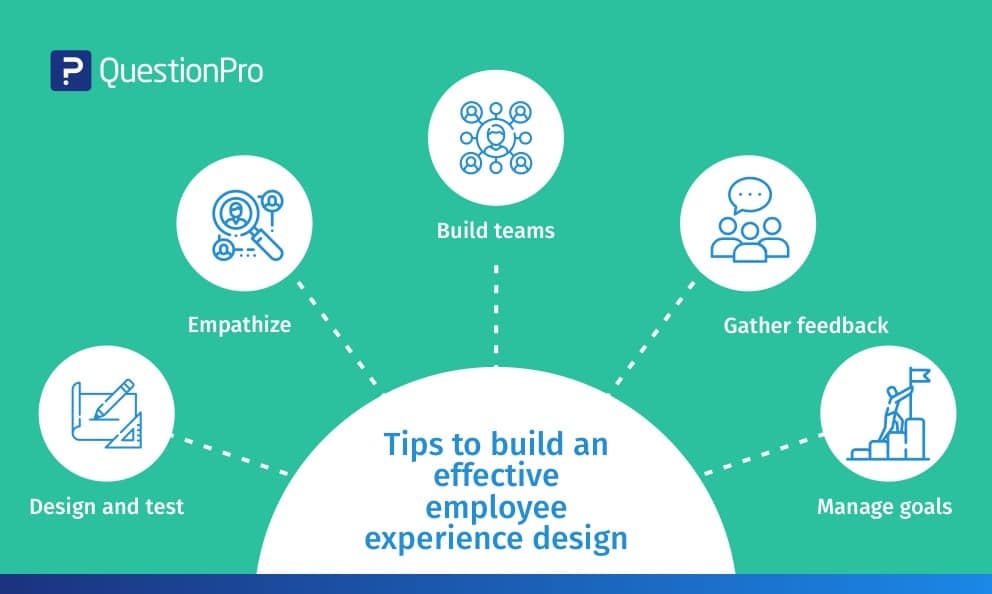
What are the best tips to build an effective employee experience design?
The best tips to build an effective employee experience design focus on simplicity, feedback, communication, and regular improvement.
- Design, develop, test, and modify
Create a version of the experience, test it, and improve it based on employee feedback. The first version does not need to be perfect.
- Keep the experience simple
Do not add unnecessary forms, tools, approvals, or steps. A simple process is easier for employees to follow and easier for teams to manage.
- Look at the journey from the employee’s perspective
Think like a candidate, new hire, team member, or manager. Better yet, ask employees directly where the experience feels slow or confusing.
- Involve teams beyond HR
Employees do not only interact with HR. Bring in IT, managers, finance, operations, and leadership when their work affects the employee journey.
- Create a cross-functional employee experience team
A small cross-functional team can review feedback, spot bottlenecks, test improvements, and keep employee experience work active.
- Run regular employee evaluations
Employee evaluations help managers and employees discuss performance, challenges, progress, and development needs before issues grow.
- Keep communication open
Employees need clear updates about company goals, changes, policies, products, and decisions that affect their work.
- Gather employee feedback often
Use surveys and feedback channels to understand onboarding, engagement, work culture, manager support, and internal communication.
- Connect employee goals to company goals
Employees need to understand how their work supports the organization. Clear goals and regular feedback help people stay focused and aligned.
Also read: Top 10 ways to perfect employee experience strategy
How do you measure employee experience design?
You measure employee experience design by tracking feedback, engagement, retention, performance conversations, and key moments across the employee journey.
Useful methods include:
- Employee Net Promoter Score
- Pulse surveys
- Onboarding surveys
- Employee engagement surveys
- Exit surveys
- Employee evaluations
- Retention and turnover trends
- Feedback themes
- Manager check-ins
- Goal completion patterns
The best measurement combines scores with comments. A score can show where the problem is. Employee comments explain what is actually happening.
How can QuestionPro Employee Experience help improve employee experience design?
QuestionPro Employee Experience can help organizations collect, analyze, and act on employee feedback across the employee lifecycle.
An effective employee experience design needs real employee input. Without feedback, teams may improve the wrong process or miss the moments that matter most.
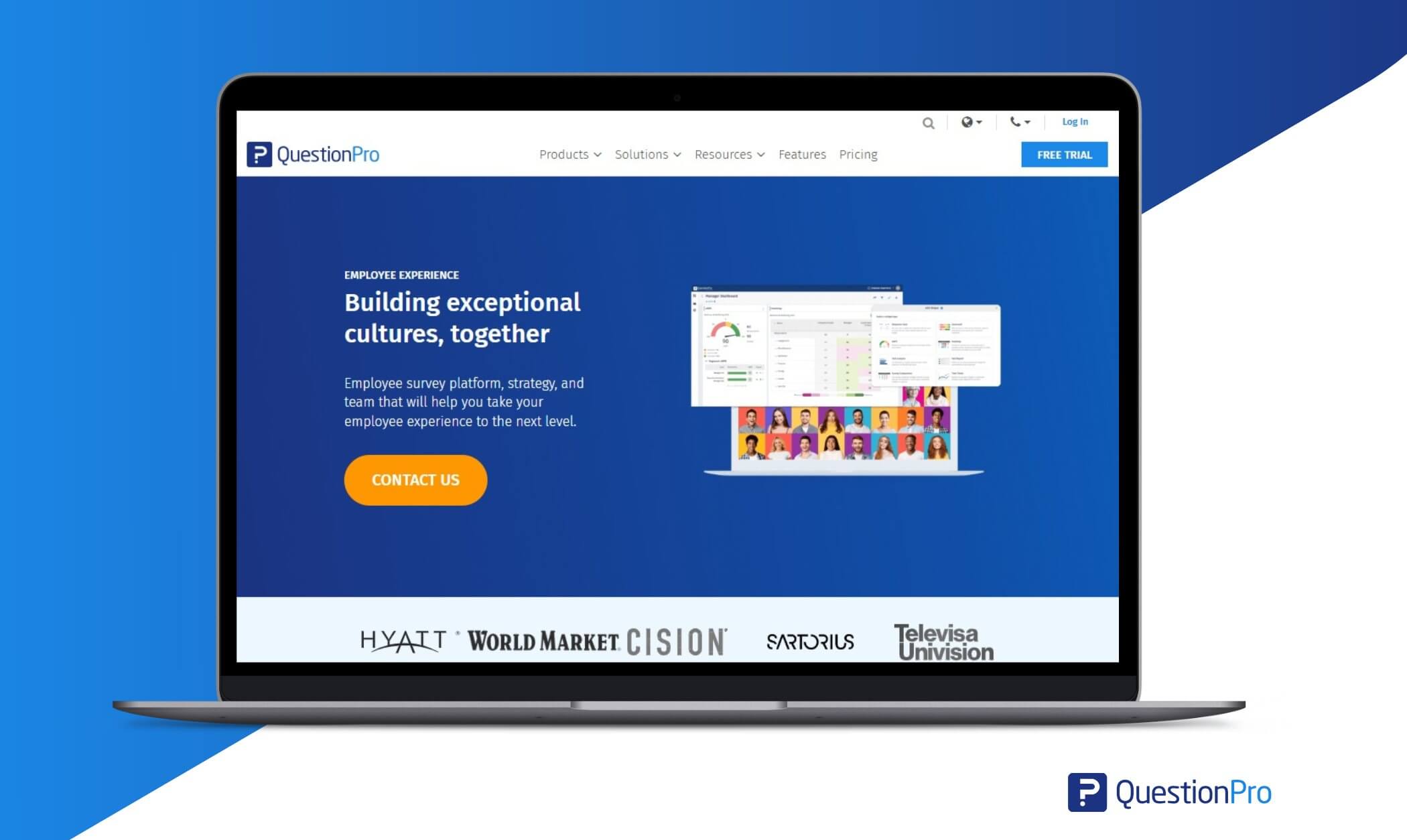
With QuestionPro Employee Experience, teams can:
- Run employee engagement surveys.
- Collect onboarding and exit feedback.
- Use pulse surveys to track employee sentiment.
- Measure employee experience across teams or locations.
- Measure Employee Net Promoter Score.
- Analyze open-ended comments.
- Track trends in dashboards and reports.
- Support regular employee evaluations.
- Share insights with HR, managers, and leadership.
Final thoughts
To build an effective employee experience design, start with the employee journey and improve the moments that affect trust, clarity, productivity, and retention.
The best employee experience programs are not one-time projects. They are built through feedback, testing, cross-team collaboration, and regular improvement.
Frequently Asked Questions (FAQs)
Employee experience design is important because it can affect engagement, productivity, retention, trust, communication, and workplace culture.
The main stages include preboarding, onboarding, daily work, learning and development, performance feedback, engagement, retention, and exit.
HR can improve employee experience by listening to employees, simplifying processes, improving communication, supporting managers, and acting on feedback.
You can measure employee experience through engagement surveys, pulse surveys, employee Net Promoter Score, onboarding surveys, exit surveys, employee evaluations, and retention trends.