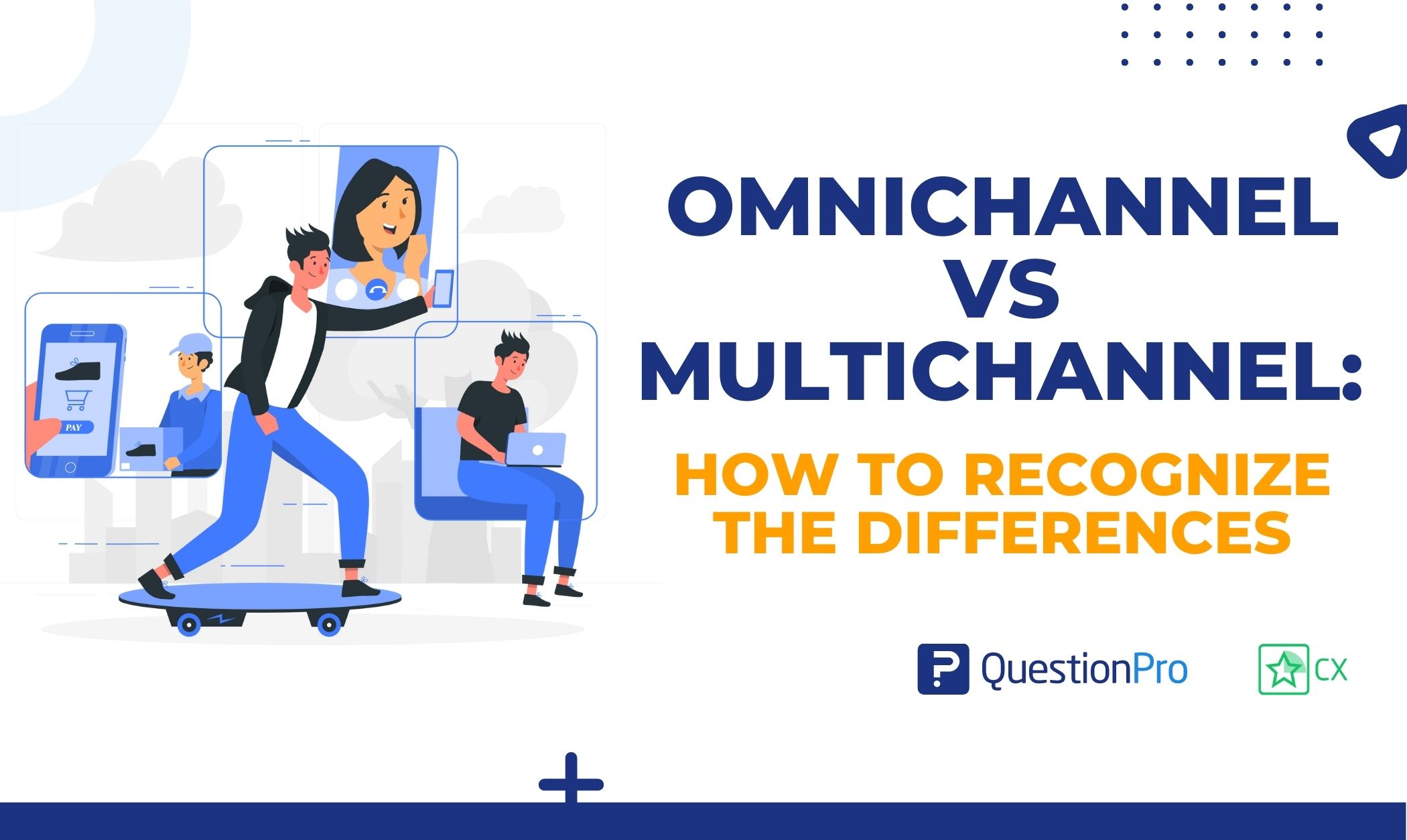
Omnichannel and multichannel both mean reaching customers across several channels, but they are not the same strategy. Multichannel spreads a consistent message across independent channels, while omnichannel connects those channels so the customer experience feels seamless no matter where it starts or ends.
Customer expectations have shifted fast. McKinsey has found that most customers now engage with three to five channels during a single purchase journey, which puts real pressure on brands to keep those channels connected.
In this guide, we’ll break down what separates omnichannel from multichannel, when each approach makes sense, and how to decide which one fits your customers.
What is omnichannel?
Omnichannel is a customer experience strategy that connects every channel, device, and touchpoint into one continuous, consistent journey. The word itself comes from “omni,” meaning all, plus channel.
Under an omnichannel approach, a customer can start a conversation on social media, continue it by email, and finish it on a phone call without repeating themselves. Context follows the customer, not the channel.
This matters because customers switch between channels and devices constantly throughout a single day. An omnichannel setup absorbs those switches without friction, so nobody gets lost mid-journey or has to start over.
A useful way to picture this: a customer browses your site on a laptop at lunch, checks your app on the train home, then walks into your store that evening already knowing what they want. Omnichannel makes each of those steps feel like part of one conversation, not three separate encounters.
You can map this kind of flow using a customer journey map, which shows exactly where handoffs between channels tend to break down.
What is multichannel?
Multichannel marketing is the practice of communicating with customers across several separate channels, such as email, social media, television, and print, without necessarily connecting them. Each channel operates on its own, often with its own message and its own goals.
A retailer running a multichannel strategy might promote a sale through a TV spot, a distinct email campaign, and a separate Instagram post, each written and designed independently. There is no requirement that a customer experience these consistently or that data from one channel informs another.
Multichannel strategies are centered on distributing a message widely rather than shaping one continuous experience. Each channel functions as its own sales opportunity, which makes multichannel simpler to launch but harder to keep consistent as more channels get added.
Omnichannel vs multichannel: What’s the difference?
The core difference between omnichannel and multichannel comes down to focus. Omnichannel centers on the customer and connects every channel around their journey. Multichannel centers on the message and treats each channel as independent.
| Omnichannel | Multichannel |
|---|---|
| Centered on the customer | Centered on the product or message |
| Channels are connected | Channels operate independently |
| Messaging adapts by context | Messaging tends to stay uniform |
| Builds long-term relationships | Maximizes reach quickly |
| Requires more setup and integration | Faster to launch across channels |
Neither approach is inherently better. The right choice depends on your customer base, your resources, and how complex your typical customer journey already is.
How do you decide between omnichannel and multichannel?
Choosing between omnichannel and multichannel comes down to how much continuity your customers expect and how much integration your team can realistically support. A few questions help clarify the decision.
- Do your customers move between channels mid-purchase?
If customers research on mobile and buy in-store, omnichannel prevents drop-off during that handoff.
- How many channels are you actually running?
Multichannel works fine with two or three well-managed channels. Omnichannel becomes more valuable as that number grows.
- What’s your data infrastructure like?
Omnichannel requires shared customer data across systems. Without that, “omnichannel” often becomes multichannel in disguise.
- What does your team have bandwidth for?
Multichannel is faster to execute with a small team. Omnichannel takes more coordination but pays off in retention.
Many companies start multichannel and evolve toward omnichannel as their customer base and tech stack mature. That progression is normal and often more realistic than attempting full integration on day one.
Real-world examples of each approach
A national coffee chain that lets customers order on an app, earn rewards, and pick up in-store with a synced loyalty balance is running an omnichannel model. The experience carries over no matter which channel the customer picks first.
A local bakery that posts on Instagram, sends a separate weekly email newsletter, and runs occasional local radio ads, without linking any of that activity to a shared customer record, is running multichannel. Each channel reaches people, but none of them talk to each other.
What mistakes do brands make with omnichannel and multichannel strategies?
The most common mistake is calling a strategy “omnichannel” when the channels are not actually connected on the backend. Adding more channels without integrating the data behind them just creates a more complicated version of multichannel.
Other frequent issues include inconsistent messaging across channels, siloed customer data that prevents support teams from seeing history from other channels, and treating channel expansion as automatically better without checking whether it improves the customer experience. More channels only help if each one is managed well.
How can you measure whether your channel strategy is working?
You measure channel strategy performance by tracking customer satisfaction at each touchpoint, how often customers have to repeat information across channels, and whether switching channels correlates with drop-off. These signals reveal whether your channels are truly connected or just co-located.
Customer feedback surveys placed at key touchpoints, combined with satisfaction tracking over time, give a clearer picture than channel-level metrics alone. Pairing this with a broader customer experience vs. customer service framework helps teams separate service-level issues from deeper journey problems. Tracking Net Promoter Score alongside channel-level satisfaction also shows whether friction at one touchpoint is dragging down loyalty overall. A channel can look successful in isolation while still creating friction in the broader journey.
How QuestionPro CX supports omnichannel and multichannel strategies
QuestionPro CX helps businesses capture and act on customer feedback across every channel they operate, whether that data needs to stay connected for an omnichannel strategy or tracked separately for a multichannel one. It combines survey distribution, real-time alerts, and reporting so teams can see where the experience breaks down.
For companies moving toward omnichannel, QuestionPro CX consolidates feedback from all channels into one view, making it easier to spot where handoffs are failing. For multichannel teams, it can track satisfaction on each channel independently, which helps pinpoint channel-specific problems before they affect the wider relationship. Businesses building out a full journey view often pair this with a Journey Management Tool or explore Survey Software options for channel-specific feedback collection.
Getting the channel strategy right for your business
The choice between omnichannel and multichannel is not permanent. Many teams shift their approach as their customer base grows, their tech stack improves, or their resources change.
What matters more than picking the “correct” label is being honest about how connected your channels actually are today, and building toward whichever level of integration genuinely serves your customers.
Frequently Asked Questions (FAQs)
Not necessarily. Omnichannel suits businesses with complex, cross-device customer journeys, while multichannel can work well for simpler operations with limited channels. The right choice depends on customer behavior and available resources, not a general rule.
Timelines vary widely based on how many systems need to connect and how much customer data already exists in silos. Most companies move gradually, starting with two or three integrated channels before expanding further.
Yes, especially with cloud-based CRM and CX tools that centralize customer data without heavy infrastructure investment. Small businesses often integrate two key channels first, such as email and a customer portal, before scaling further.
CRM platforms, customer experience management software, and journey mapping tools are the most common building blocks. These systems share customer data across touchpoints so that context carries through the entire interaction.
Usually yes, at least upfront, because of the integration work involved. Many businesses find the long-term retention gains offset the higher initial investment, particularly in industries with frequent repeat purchases.