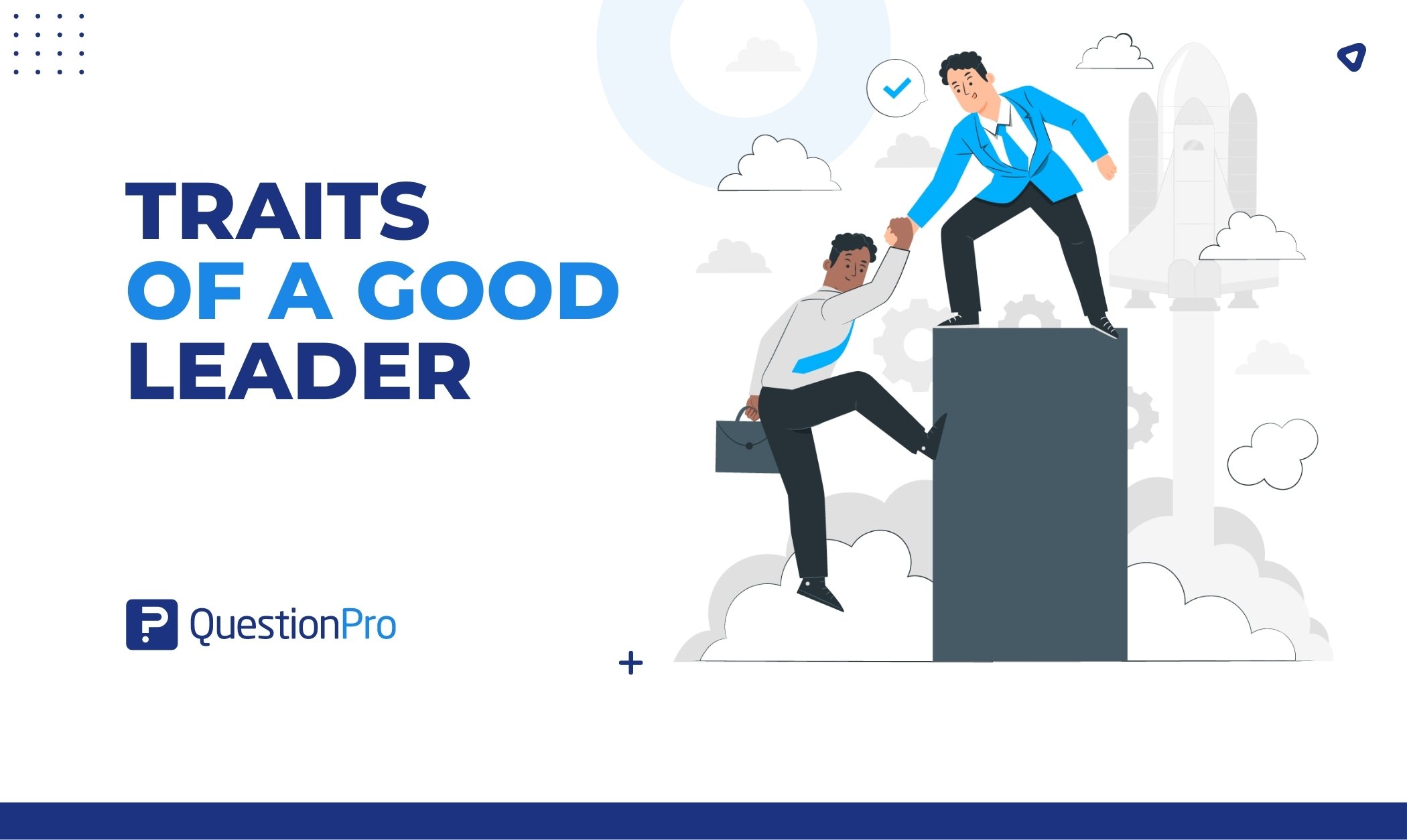
The traits of a good leader show up long before a title does. They show up in how someone handles a missed deadline, delivers hard feedback, or makes a call with incomplete information.
Some people build these qualities early. Others develop them through years of trial, feedback, and deliberate practice. Either path works, but only if you know which traits actually matter.
In this article, we’ll break down the ten traits that separate strong leaders from the rest, how to tell a leader from a manager, and how organizations in the United States measure and grow these qualities over time.
What is a good leader?
A good leader is someone who consistently guides, motivates, and supports a team toward a shared goal while earning that team’s trust.
That trust is the part most definitions skip. A person can hit every target and still fail as a leader if their team does not believe in them. Leadership, in practice, is influence that people choose to follow rather than authority they are forced to obey.
This distinction matters more than job title. Plenty of individual contributors act as informal leaders on their teams, while some managers with the title never earn real influence. The traits below apply to both.
Why do leadership qualities matter in the workplace?
Leadership qualities matter because they directly shape how engaged, productive, and loyal a workforce becomes.
According to Gallup research on U.S. managers, managers account for up to 70% of the variance in employee engagement scores, which means the traits a manager brings to the job outweigh almost any other workplace factor. When those traits are missing, the effects spread quickly:
- Engagement and discretionary effort drop along with morale
- Decision-making slows because teams second-guess unclear direction
- Customer satisfaction suffers when frontline culture turns negative
- Turnover rises as employees leave managers rather than companies
- Innovation stalls because people stop volunteering ideas they think will be dismissed
Strong leadership qualities reverse each of these outcomes, which is why most HR and people teams now treat leadership development as a measurable business priority rather than a soft skill.
10 Traits of a good leader
These ten traits appear consistently across leadership research and are the ones most often cited by employees when describing a manager they trust.
1. Integrity
Integrity means doing the right thing even when no one is checking. Leaders who act with integrity give honest feedback, give credit where it is due, and keep commitments they make to their team.
2. Emotional intelligence
A project falls apart right before a deadline, and one manager spirals while another stays level. That difference usually comes down to emotional intelligence, the ability to recognize your own emotions and read what a teammate is feeling before responding.
3. Clear communication
Clear communication is less about vocabulary and more about three habits:
- Explaining the reasoning behind a decision, not just the decision itself
- Listening as much as talking, especially during disagreements
- Checking that the message actually landed before moving on
4. Accountability
Looks like: Owning a missed deadline in front of leadership and explaining what changes next time. Doesn’t look like: Naming which employee fell behind instead of taking responsibility as the leader.
Accountable leaders also follow through on what they commit to, which is what earns a team’s trust over time.
5. Decisiveness
A launch slips, half the data is missing, and the team is waiting on a call. Decisive leaders gather what input they can, set a deadline for the decision, and commit once it is made instead of relitigating it afterward.
6. Empathy
Empathy shows up as one specific behavior: asking what someone needs before deciding how to respond. A leader with empathy treats a teammate going through a hard stretch differently than one who is simply behind, because the two situations call for different support.
7. Adaptability
Budgets shrink, priorities get reshuffled, and plans change without warning. Adaptable leaders adjust the plan without losing sight of the goal, and they do it calmly enough that the team does not panic along with them.
8. Enthusiasm
Genuine enthusiasm for the work is difficult to fake, and employees notice the difference within weeks of working for someone. Leaders who care visibly about outcomes tend to pull extra effort out of a team without ever having to ask for it.
9. Transparency
Transparent leaders explain why an unpopular decision was made instead of letting rumors fill the silence.
Example: Telling the team a project was cut for budget reasons instead of a vague nod to “leadership decisions.”
10. Open-mindedness
Open-minded leaders ask for feedback on purpose, not only when something goes wrong, and they change course when that feedback is good even if it means admitting they were wrong. Teams led this way tend to raise problems earlier, because they have seen feedback actually change something before.
Leadership qualities vs. management skills: What is the difference?
Leadership qualities and management skills are related but not the same thing, and mixing them up leads to poor hiring and promotion decisions.
Leadership is about direction and influence. Management is about execution and process. A strong organization needs both, often in the same person, but they are built differently.
| Leadership qualities | Management skills |
|---|---|
| Set vision and direction | Plan and organize work |
| Build trust and influence | Track tasks and deadlines |
| Motivate through purpose | Motivate through structure |
| Comfortable with ambiguity | Comfortable with process |
| Measured by team trust and engagement | Measured by output and efficiency |
Neither column is more important than the other. A team with a visionary leader but no management discipline will miss deadlines, while a team with strong management but no leadership will hit deadlines for a direction nobody believes in.
How to identify and measure leadership qualities
Leadership qualities can be identified and measured through structured feedback rather than guesswork or gut feeling.
Most organizations use a mix of the following methods:
- 360-degree feedback surveys.
Direct reports, peers, and supervisors all rate the same leader, which removes the blind spots of a single perspective. - Self-assessments.
Leaders rate their own behavior first, then compare results against how their team actually experiences them. - Behavioral pattern tracking.
Reviewing decisions and interactions over months, not a single incident, separates a bad day from a real gap. - Direct observation.
Watching how a leader handles a live disagreement or a tight deadline reveals more than any survey question alone.
The leadership assessment tools an organization chooses for this matter, since a vague or leading question set produces flattering but useless results. Many HR teams pair a broader assessment with a focused 360 leadership assessment once a specific concern comes up.
Common mistakes that undermine good leadership
Even leaders with strong intentions can undo their own credibility through a handful of repeatable mistakes, and most of them surface in how a leader handles employee feedback.
| Mistake | Why it hurts | What to do instead |
|---|---|---|
| Avoiding hard conversations | Lets small problems grow into resentment | Address issues early and directly |
| Taking credit, deflecting blame | Destroys team trust quickly | Share credit, own failures publicly |
| Treating feedback as optional | Signals the leader already has all the answers | Ask for feedback on a regular cadence |
| Managing everyone the same way | Ignores real differences in motivation and skill | Adjust approach to the individual |
| Withholding context on decisions | Breeds rumors and disengagement | Explain the reasoning, not just the outcome |
Most of these mistakes are not intentional. They tend to appear under pressure, which is exactly when the traits above matter most.
Real-world examples of strong leadership traits
Abstract traits are easier to recognize with a concrete picture of what they look like day to day.
- A manager who tells their team the real reason a project got cut, instead of a vague excuse, is practicing transparency.
- A team lead who asks a struggling employee what support they need before assigning a performance plan is practicing empathy.
- A director who reverses a decision publicly after new data comes in, instead of quietly abandoning it, is practicing open-mindedness.
- A supervisor who takes responsibility for a missed deadline in front of leadership, rather than naming which employee fell behind, is practicing accountability.
None of these examples require a formal title. They are behaviors any employee can start practicing before they manage anyone.
How QuestionPro supports leadership development
Most of the traits above are easier to build once a leader can see how their team actually experiences them, rather than how they assume they come across.
QuestionPro’s Employee Experience platform includes 360-degree feedback surveys that combine input from peers, direct reports, and supervisors into one clear report, so leaders can see patterns instead of isolated comments. That same kind of ongoing feedback loop supports lighter pulse checks between formal review cycles, which helps catch a leadership gap before it grows into a bigger trust problem.
Teams that build this habit tend to catch small issues while they are still easy to fix.
The traits that matter most are the ones you practice
No leader arrives with all ten traits fully formed, and most spend their entire career strengthening the ones that do not come naturally.
A leader is one who knows the way, goes the way, and shows the way.
John C. Maxwell
What separates strong leaders from the rest is not talent. It is the habit of asking for honest feedback, acting on it, and doing that consistently enough that employee trust builds over time instead of eroding.
Frequently Asked Questions (FAQs)
Most research points to integrity as the foundation, since trust collapses quickly once it is broken. Without integrity, other traits like communication or decisiveness lose their credibility with the team, no matter how well they are executed.
Most leadership traits are learnable through feedback and deliberate practice, even ones like emotional intelligence that seem innate. Research from organizations such as the Center for Creative Leadership shows measurable improvement in leaders who receive structured coaching over time.
Most mid-size and large U.S. companies use 360-degree feedback surveys combined with periodic engagement data. Smaller companies often rely on manager self-assessments paired with informal team feedback, though this approach tends to miss blind spots a full survey would catch.
A boss relies on positional authority to get tasks completed, while a leader earns voluntary buy-in through trust and example. Employees often comply with a boss out of obligation but go beyond the minimum for a leader they respect.
Most organizations run a formal 360-degree assessment annually, with lighter pulse surveys every quarter to catch problems sooner. Waiting a full year between check-ins often means a trust issue has already affected team performance before anyone notices.