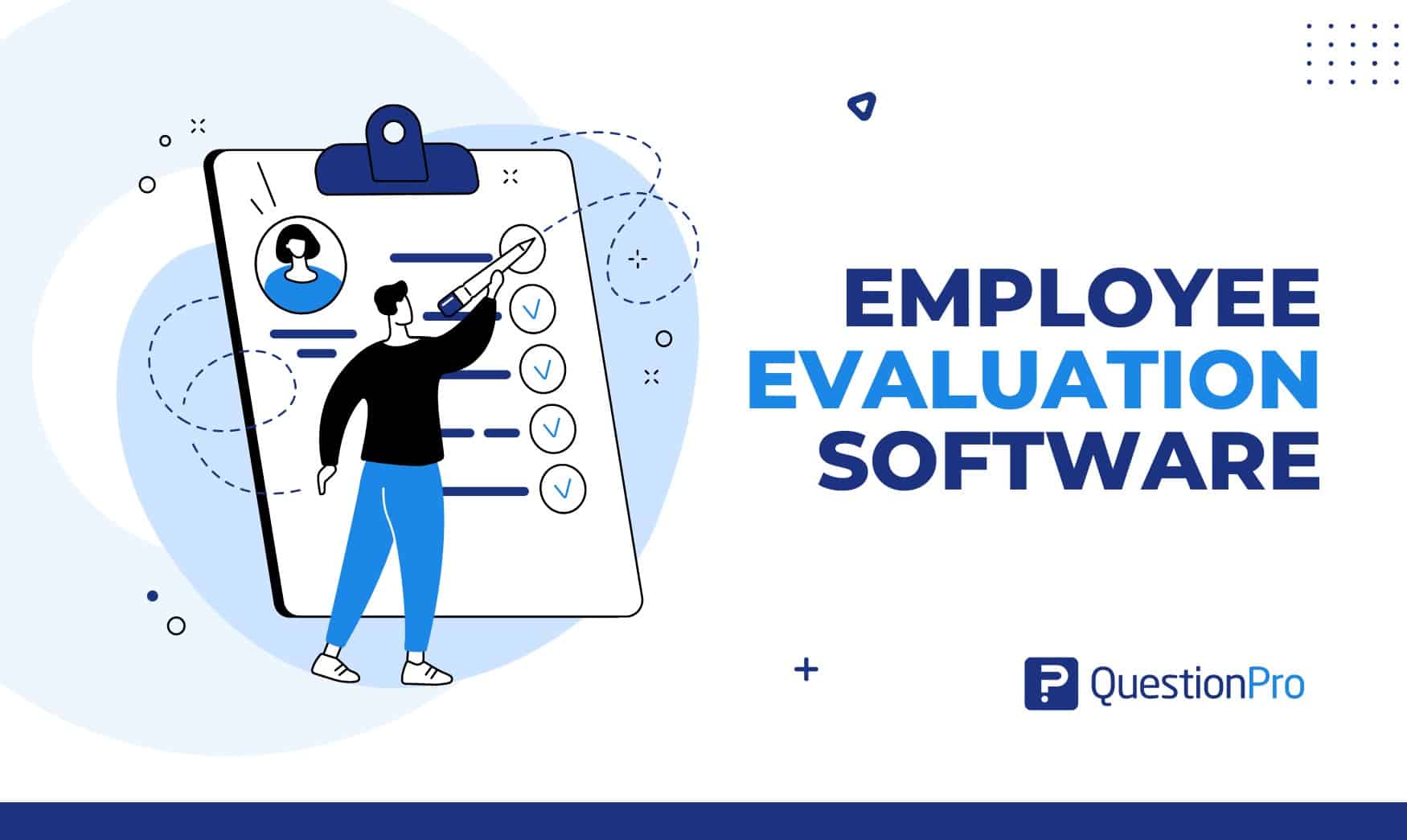
Employee evaluation software is a digital tool that runs the employee review process from start to finish. It schedules review cycles, collects self, manager, and peer ratings on consistent forms, sends reminders, and turns the results into reports. The goal is fairer, faster evaluations that employees actually trust.
That trust is rare today. Many teams still run reviews on spreadsheets and email threads, which makes ratings inconsistent from one manager to the next and leaves little data to act on afterward.
In this blog, we’ll compare 12 of the best employee evaluation software tools for 2026 by features, AI, and verified pricing. You’ll also get a six-step buying checklist, the mistakes that sink rollouts, and the metrics that show whether your new system is working.
What is employee evaluation software?
Employee evaluation software is a platform that standardizes how an organization assesses each employee’s performance, using shared forms, rating scales, and review schedules. It replaces paper forms and ad hoc emails with one system of record for every review.
Most people search for it under several names. Employee performance evaluation software, employee appraisal software, and performance review software usually describe the same core product. Whatever the label, a good tool does five jobs.
- Structure reviews: It gives every manager the same questions, competencies, and rating scales, so scores are comparable across teams.
- Collect multiple views: It gathers self-assessments, manager ratings, and, where useful, feedback from peers and direct reports.
- Automate the cycle: It launches reviews on a set date, sends reminders, and tracks who has finished.
- Keep a record: It stores every rating and comment, so you can see an employee’s history across cycles.
- Report patterns: It shows rating distributions, gaps between self and manager scores, and trends by team or year.
How does employee evaluation software work?
Employee evaluation software works by turning a review cycle into a repeatable workflow. Most platforms follow the same five stages, whatever the vendor calls them.
- Load employee data.
HR imports names, roles, managers, and departments, often through an HRIS (human resources information system) connection or a file upload. - Configure the cycle.
Admins choose the review type, the rating scale, the competencies, and the dates. A rating scale is the set of answer options, such as 1 to 5 from “Needs improvement” to “Exceptional.” - Collect input.
Employees complete self-assessments, managers rate their reports, and optional raters add peer or upward feedback. - Review and discuss.
Managers see the combined results and hold a review conversation. Many tools let them record notes and next steps in the same place. - Analyze and act.
HR reviews completion rates, rating patterns, and development needs across the organization, then plans the next cycle.
If you are building the process itself before buying a tool, this guide to the performance review process walks through each step in detail.
How is employee evaluation software different from performance management software?
Employee evaluation software focuses on the review event itself, while performance management software covers the whole year of goals, check-ins, and coaching around it. In practice, many products now do both, so the label matters less than which jobs you need covered.
The table below separates five tool types buyers often confuse.
| Tool type | Main job | Best when you need | Where it falls short |
|---|---|---|---|
| Employee evaluation software | Run structured review cycles with consistent forms and ratings | Fair, documented annual, semi-annual, or quarterly reviews | May lack goal tracking or weekly check-ins |
| Performance management software | Connect goals, check-ins, feedback, and reviews all year | Continuous performance conversations | Can be heavy and costly for small teams |
| 360 feedback software | Collect ratings from managers, peers, direct reports, and self | Leadership and development assessments | Not built for compensation decisions on its own |
| Employee development software | Link goals, reviews, and growth plans | Turning review results into skills and career growth | Usually not the system that runs the review |
| HRIS with a performance module | Keep reviews next to payroll and employee records | Fewer vendors in a smaller HR stack | Review features are often basic |
If your real need is acting on review results through training and career paths, see our guide to employee development software, which covers that category in depth.
Why do fair, consistent evaluations matter?
Fair evaluations matter because employees act on reviews only when they believe the process is accurate. Right now, most do not. Research found that only 14% of employees strongly agree their performance reviews inspire them to improve.
Frequency and quality of feedback make the difference. Employees who say they received meaningful feedback in the past week are far more likely to be engaged: 80% of them are fully engaged. Software cannot hold those conversations for managers, but it can schedule them, prompt them, and keep a record.
A structured, unbiased system pays off in five practical ways.
- Fairness: Shared criteria stop one lenient manager from inflating a whole team’s ratings.
- Merit-based decisions: Promotions and pay changes rest on documented evidence instead of memory or favoritism.
- Development: Employees get specific strengths and gaps, not a single vague score.
- Retention: People who see the process as fair are less likely to leave over a review they feel was arbitrary.
- Legal protection: In the US, consistent written evaluations help if a termination or promotion decision is later challenged under federal anti-discrimination laws enforced by the EEOC (Equal Employment Opportunity Commission).
What features should employee evaluation software have?
The must-have features are customizable review forms, multi-rater input, automated workflows, and clear reporting. Use the checklist below to score each vendor during demos, ideally with your own review form loaded.
- Customizable forms and templates: Rating scales, open-ended questions, and competency sections you can edit without vendor help.
- Self, manager, and peer reviews: Different rater types in one cycle. Dedicated 360 Feedback Software adds direct reports and outside raters for leadership roles.
- Flexible cycles: Annual, semi-annual, quarterly, probationary, and project-based reviews on their own schedules.
- Automated reminders: Nudges for late raters, so HR is not chasing people by email.
- Calibration support: Views that let leaders compare rating distributions across managers before results are final. Calibration is a meeting where managers align their ratings to one standard.
- Goal and check-in links: A way to bring goals and one-on-one notes into the review as evidence.
- Reporting and analytics: Completion tracking, rating distributions, self-versus-manager gaps, and year-over-year trends.
- Integrations: An HRIS integration to sync employee records, plus single sign-on and chat tools such as Slack or Microsoft Teams.
- Security and privacy: Role-based access, anonymity controls for peer feedback, and compliance with standards such as GDPR.
- AI assistance: Comment summaries and writing help that save time while leaving the final rating to a person.
The 12 best employee evaluation software tools for 2026
The best employee evaluation software depends on your team size, review style, and budget. We compared these tools using public vendor information, with pricing checked in November 2026, against six criteria:
- Review flexibility: Custom forms, rating scales, and cycle types.
- Multi-rater feedback: Self, manager, peer, and 360 options.
- Analytics: Reporting that goes beyond completion tracking.
- AI features: Published AI capabilities for writing, summaries, or insights.
- Integrations: HRIS and workplace tool connections.
- Pricing clarity: Whether prices are public or quote-based.
QuestionPro is our product. Tools from the earlier version of this list that are general project management or recognition apps were left out because they are not evaluation software.
| Tool | Best for | Starting price |
|---|---|---|
| QuestionPro Employee Experience | Survey-based reviews, 360 feedback, and people analytics | Quote-based, free trial |
| Lattice | Reviews tied to goals and calibration | $10 per seat/month |
| 15Five | Weekly check-ins plus reviews | $11 per user/month |
| Culture Amp | Combining performance and engagement data | Quote-based |
| Leapsome | Modular performance and OKR suite | €7 per employee/month (Performance Reviews module) |
| PerformYard | Flexible review cycles for mid-size firms | $5 to $15 per person/month |
| BambooHR | Small and mid-size firms wanting HRIS plus reviews | $17 per employee/month (Pro plan) |
| Betterworks | Enterprise goal and check-in programs | $8 per user/month |
| Engagedly | Broad talent suite on a budget | $5 to $8 per user/month |
| ClearCompany | Recruiting-to-review talent platform | Quote-based |
| Trakstar (Mitratech) | Classic review cycles with bias reports | Quote-based |
| Connecteam | Frontline and deskless teams | Free for up to 10 users |
1. QuestionPro Employee Experience
QuestionPro Employee Experience is an employee feedback and analytics platform that runs performance reviews, 360 feedback, and pulse reviews as structured surveys. HR builds review forms with more than 20 question types, sends them by email or SMS, and analyzes results in real-time dashboards.
It suits organizations that want evaluation data to sit next to engagement, onboarding, and exit feedback in one listening program. The QuestionPro Employee Experience platform covers the full employee lifecycle, so review results can be read alongside eNPS (employee net promoter score) and engagement drivers.
Best for: HR and people analytics teams that want flexible review forms, 360 feedback, and deep analysis in one place.
Key features:
- Configurable 360 assessments with self-ratings compared against managers, peers, and raters inside or outside the company.
- AI that summarizes 360 evaluator comments into development priorities, plus text and sentiment analysis of open answers.
- Mobile-ready pulse reviews that employees can complete on their phones, even offline.
- Gap analysis, year-over-year comparisons, and exports to CSV or PDF.
- Respondent Anonymity Assurance and a confidential demographics roster to protect peer feedback.
Pros:
- Highly flexible question design, logic, and branching for any review format.
- Review data connects with engagement, pulse, and exit surveys for a fuller picture.
- Plans include unlimited users, surveys, and responses, with no per-response fees.
- Automated rater reminders and branded, easy-to-read reports.
Cons:
- It is a feedback and analytics platform, not a full HRIS, so payroll and compensation stay in other systems.
- Teams that want built-in OKR cascades will pair it with a goal tool.
Pricing: Quote-based, set by organization size. A free trial is available with no credit card required.
2. Lattice
Lattice is a people management platform that sells performance, goals, and engagement as separate products. Its Performance product covers review cycles, calibration, and talent reviews, and it includes manager tools such as one-on-ones and feedback.
Best for: Growing companies that want reviews, calibration, and promotions in one workflow.
Key features:
- Performance reviews, calibration, talent reviews, and performance improvement plans (PIPs).
- One-on-ones, weekly updates, and feedback included with Performance.
- Goals and OKRs available as a separate product.
- An AI agent included with all base products.
Pros:
- Strong calibration and talent review tools.
- Modular buying lets you start with Performance only.
Cons:
- A $4,000 minimum annual agreement can be steep for small teams.
Pricing: Performance starts at $10 per seat per month, billed annually. Compare options in our roundup of Lattice alternatives.
3. 15Five
15Five is a performance management platform built around weekly check-ins, with reviews layered on top. Its Perform plan combines AI-assisted reviews, 360 reviews, OKRs, and calibration.
Best for: Teams that want frequent manager-employee check-ins to feed formal reviews.
Key features:
- AI-assisted performance reviews and 360 reviews.
- Weekly check-ins, one-on-ones, and weighted OKRs.
- Calibration and a 9-box talent matrix, a grid that plots performance against potential.
- Development plans, PIPs, and succession planning.
Pros:
- Check-in habits give reviewers more evidence than an annual form alone.
- Clear public per-user pricing.
Cons:
- Plans are billed annually only.
- Manager coaching products are paid add-ons.
Pricing: Perform is $11 per user per month, billed annually. See how it stacks up in our list of 15Five alternatives.
4. Culture Amp
Culture Amp pairs a performance product with its well-known engagement surveys. Its Perform product handles reviews, calibration, goals, and multi-rater feedback, while Engage covers pulse and engagement surveys.
Best for: Organizations that want to read performance results next to engagement data.
Key features:
- Performance reviews with calibration.
- Multi-rater feedback through its employee effectiveness tool.
- Goal management, one-on-ones, and continuous feedback.
- An AI Coach included in every plan.
Pros:
- Combines performance and engagement in one vendor.
- Strong development planning features.
Cons:
- No public pricing, which slows early budgeting.
Pricing: Quote-based, billed annually by employee count and product. Explore a Culture Amp alternative for engagement and 360 needs.
5. Leapsome
Leapsome is a modular people platform where performance reviews, goals, engagement, and learning are priced as separate modules. It also offers an HRIS foundation that the modules sit on.
Best for: Mid-size companies that want to build a custom suite module by module.
Key features:
- Review templates, automations, and cross-cycle analytics.
- Drag-and-drop calibration and external reviewers.
- Individual, team, and company OKRs with a goal tree.
- AI features that scale from limited to advanced by plan.
Pros:
- Transparent per-module pricing and a 14-day free trial.
- Flexible review visibility settings.
Cons:
- Prices are listed in euros, and costs add up as you stack modules.
Pricing: The Performance Reviews module is listed at €7 per employee per month.
6. PerformYard
PerformYard is a performance management tool known for handling many review formats at once. HR teams can run different review cycles for different groups, which suits companies with mixed roles.
Best for: Mid-size HR teams that need flexible, configurable review cycles.
Key features:
- Reviews and check-ins with configurable cycles.
- Goal management linked to company priorities.
- One-on-one meeting tools.
- PerformYard AI for writing help, summaries, and manager coaching prompts.
Pros:
- Handles complex, multi-format review programs.
- Published price range.
Cons:
- Final pricing still depends on headcount and products.
Pricing: $5 to $15 per person per month, billed annually.
7. BambooHR
BambooHR is an HRIS for small and mid-size businesses that includes performance management in its higher plans. Reviews sit next to employee records, time off, and onboarding data.
Best for: Smaller companies that want one HR system instead of a separate review tool.
Key features:
- 360 review cycles with customizable assessments.
- Custom review cycles.
- One-on-one scheduling, notes, and agendas.
- Company-wide and employee-level performance reports.
Pros:
- One system for HR records and reviews.
- Public per-employee pricing with volume discounts.
Cons:
- Performance features are not in the Core plan.
- Review depth is lighter than dedicated performance tools.
Pricing: Pro, which includes performance management, is $17 per employee per month.
8. Betterworks
Betterworks is an enterprise performance platform focused on goals, check-ins, and review conversations. Its higher plan adds calibration and talent intelligence.
Best for: Large organizations aligning performance with company goals and OKRs.
Key features:
- Review cycles run as structured conversations.
- Goals and OKRs with alignment.
- One-on-one meetings with automated summaries and follow-ups.
- Anytime calibration on the Performance plus Talent Intelligence plan.
Pros:
- AI assistance that can be switched off where company AI policy requires it.
- Public entry pricing for a strong enterprise tool.
Cons:
- Implementation is a separate one-time cost.
Pricing: Performance is $8 per user per month. Enterprise is custom.
9. Engagedly
Engagedly is a talent management suite that covers reviews, 360 feedback, goals, learning, and recognition. Its Performance Suite is one of the lower-priced complete options.
Best for: Mid-size firms that want reviews, 360 feedback, and skills in one budget tool.
Key features:
- Performance reviews, 360 feedback, and real-time feedback.
- Goals and OKRs with AI-powered goal suggestions.
- A competency and skills library.
- AI summaries of 360 feedback.
Pros:
- Broad feature set at a low per-user rate.
- Optional learning and recognition suites.
Cons:
- A $7,500 minimum annual price rules out very small teams.
Pricing: Performance Suite is $5 to $8 per user per month, billed annually.
10. ClearCompany
ClearCompany is a talent management platform that spans recruiting, onboarding, and performance. Its performance tools support several review types and use AI to gather evidence for reviewers.
Best for: Companies that want hiring and review data in the same platform.
Key features:
- Self, manager, peer, and 360-degree reviews.
- Annual, semi-annual, quarterly, and new-hire cycles.
- Goals linked to team and company priorities.
- AI that drafts evidence-backed review responses from goals, notes, and feedback.
Pros:
- Connects recruiting, onboarding, and reviews.
- Mobile input for employees and managers.
Cons:
- No public pricing.
Pricing: Quote-based.
11. Trakstar (Mitratech)
Trakstar is cloud-based performance review software, now part of Mitratech and sold as Mitratech Perform. It is known for traditional review cycles and reporting that helps HR spot rating bias.
Best for: HR teams that want a straightforward review tool with strong reporting.
Key features:
- 360-degree feedback from inside or outside the organization.
- SMART, metric, and cascading goals with email reminders.
- Time-stamped notes for managers.
- Rater bias, rating distribution, and performance history reports.
Pros:
- Bias and distribution reports support calibration.
- Simple setup for classic review cycles.
Cons:
- No published AI features for reviews on the product page checked.
Pricing: Quote-based.
12. Connecteam
Connecteam is an all-in-one app for deskless teams that includes digital evaluation forms. Managers can run reviews on a phone, which suits retail, hospitality, construction, and field service.
Best for: Frontline teams whose managers do not work at a desk.
Key features:
- Evaluation templates for 30-day check-ins, annual reviews, and self-evaluations.
- Rating scales, open answers, and e-signatures.
- AI that converts a photo of a paper form into a digital form.
- Employee timelines that store past evaluations and milestones.
Pros:
- Mobile-first and simple for non-HR supervisors.
- Free plan for small teams.
Cons:
- No native 9-box grids or complex compensation planning.
Pricing: Free for up to 10 users. Paid plans start at $29 per month for the first 30 users.
How do these tools compare on AI features?
AI in employee evaluation software mostly helps with writing, summarizing, and finding evidence, not with deciding ratings. The table shows what each vendor publishes, as checked in November 2026.
| Tool | Published AI features | Pricing model |
|---|---|---|
| QuestionPro Employee Experience | 360 comment summaries, text and sentiment analysis | Quote-based |
| Lattice | AI agent across base products | Per seat, $4,000 minimum |
| 15Five | AI-assisted reviews, AI thought partner | Per user, annual |
| Culture Amp | AI Coach in every plan | Quote-based |
| Leapsome | Limited AI on Foundation, AI agents on Pro | Per module |
| PerformYard | AI writing, summaries, coaching prompts | Per person range |
| BambooHR | Not listed for performance | Per employee |
| Betterworks | AI assistance, can be turned off | Per user |
| Engagedly | 360 summaries, goal suggestions | Per user, $7,500 minimum |
| ClearCompany | Evidence-backed review drafting | Quote-based |
| Trakstar | Not listed | Quote-based |
| Connecteam | Paper-to-digital form conversion | Free tier, flat plans |
Treat AI as a time saver. A manager should still read the evidence, write the final comments, and own the rating.
How much does employee evaluation software cost?
Most employee evaluation software costs between $5 and $17 per employee per month, based on the public prices in this list. Total cost depends more on minimums, modules, and implementation than on the headline rate.
A 200-person company paying $10 per seat spends about $24,000 a year. The same company could pay less with a $5 tool, or more once it adds goals, engagement, or compensation modules. Watch for four cost drivers:
- Annual minimums: Some vendors set floors, such as $4,000 or $7,500 a year.
- Module stacking: Reviews, goals, engagement, and learning are often priced separately.
- Implementation fees: Some enterprise tools charge a one-time setup cost.
- Seat definitions: Check whether you pay for every employee or only active reviewers.
Quote-based tools are not always more expensive. They often bundle unlimited users or responses, which can work out cheaper for large or seasonal workforces.
How to choose employee evaluation software in 6 steps
Choosing employee evaluation software starts with your review process, not the vendor list. Follow these steps to narrow 12 options to the right one.
- Write down your current review process.
List your review types, cycle dates, rater types, and rating scale. If the process is unclear on paper, software will only automate the confusion. - Decide how often you want to evaluate.
Annual reviews need strong forms and reporting. A continuous performance management approach needs check-ins and goal tracking too. - Set your must-have features.
Pick five to seven non-negotiables from the feature checklist above, such as 360 feedback, calibration, or mobile access. - Check integrations early.
Confirm the tool syncs with your HRIS, single sign-on, and chat tools before you sit through long demos. - Run a pilot with real users.
Test one review cycle with two or three teams. Track completion rate, time per review, and manager feedback on usability. - Compare total cost.
Add minimums, modules, and setup fees for a three-year view, then weigh that against the admin hours you expect to save.
What mistakes make evaluation software fail?
Most failed rollouts fail because of process and people, not the software. The four mistakes below show up most often, and each has a simple fix.
Stacking self-reviews, peer reviews, and pulse surveys in the same month is the most common one. It causes survey fatigue, which lowers completion and the quality of comments.
| Mistake | Why it hurts | How to fix it |
|---|---|---|
| Copying a broken paper process | A 40-question annual form is no better in software | Cut questions nobody uses in decisions before you configure the tool |
| Overloading employees with reviews | Completion drops and comments get shorter | Keep each form short and space out review and survey cycles |
| Skipping manager training | Managers still rate inconsistently in a new system | Train on scale definitions and biases such as recency bias, where recent events outweigh the full period |
| Treating the score as the outcome | A rating alone tells the employee nothing new | Make the review conversation and a development step required parts of the cycle |
How do you run an evaluation cycle with QuestionPro Employee Experience?
You can run a complete evaluation cycle in QuestionPro Employee Experience in five steps, from template to year-over-year analysis. This workflow suits annual, quarterly, or 360 reviews.
- Open Employee Experience and start a new project.
Sign in to QuestionPro and open the Employee Experience workspace to create a review project. - Choose a pre-built review template.
Start from a pre-designed question set for performance reviews or 360 feedback, then match it to your competencies. - Edit questions and rating scales.
Add rating scales, open-ended questions, and logic, so each rater sees only the questions that apply to them. - Deploy or schedule the review.
Send it by email or SMS, or schedule it for your cycle date. Automated reminders follow up with raters who have not finished. - Analyze results and compare cycles.
Use dashboards, gap analysis, and sentiment analysis to read results. Compare scores year over year to see whether development plans are working.
How do you know your evaluation software is working?
You know employee evaluation software is working when reviews finish on time, ratings become more consistent, and employees find the feedback useful. Measure these before launch so you have a baseline.
| Metric | How to measure it | What good looks like |
|---|---|---|
| Review completion rate | Completed reviews divided by assigned reviews by the deadline | Rising each cycle, with few late reviews |
| Time per review | Average manager time spent per review | Lower than your pre-software baseline |
| Rating distribution | Share of employees in each rating level, by manager | No manager rates almost everyone at the top |
| Self vs. manager gap | Average difference between self and manager scores | Narrowing as expectations become clearer |
| Perceived fairness | Post-review survey item: “My review was fair and accurate” | Improving agreement each cycle |
| Follow-through | Share of reviews with a documented development step | Close to every review |
Rating patterns also say a lot about managers. Our guide to manager evaluation explains how to assess the people running the reviews.
Employee evaluation software works best as a feedback habit
Employee evaluation software earns its cost when it makes reviews fairer, faster, and more useful to the employee being reviewed. The tool matters less than the process it supports: clear criteria, trained managers, frequent conversations, and follow-through on development.
Start with your review process, shortlist two or three tools that match it, and pilot one real cycle. Then measure completion, consistency, and perceived fairness, and keep adjusting until employees see their review as a guide to growth.
Frequently Asked Questions (FAQs)
Yes, some tools offer free plans for small teams. Connecteam is free for up to 10 users, and QuestionPro offers a free trial with no credit card required. Free tiers usually limit users, review types, or reporting, so growing teams often upgrade.
Many US employers run a formal review once or twice a year, with lighter check-ins in between. Quarterly reviews suit fast-changing roles and new hires. Whatever the schedule, frequent informal feedback matters more than the formal cycle length alone.
Software reduces bias but cannot remove it. Shared criteria, multiple raters, calibration meetings, and rating distribution reports expose inconsistent scoring. Managers still need training on biases such as recency and halo effects, because the person writing the rating makes the final call.
A small company can launch a basic review cycle in a few weeks. Larger organizations with HRIS integrations, custom competencies, and calibration usually need two to three months, including a pilot cycle with a few teams before the company-wide rollout.
Many organizations link reviews to pay, but separating the two conversations often helps. When pay is discussed separately, employees focus more on feedback and development. If you link them, document clear criteria and calibrate ratings first, so compensation decisions are consistent.