Employee surveys sit at the center of almost every HR decision that works. They shape everything from a smoother onboarding process to catching burnout before it costs you your best people. In this blog, we’ll cover what an employee survey is and the eight main types with real examples. We’ll also cover how to write questions that get honest answers, plus how to measure and act on the results.
What is an employee survey?
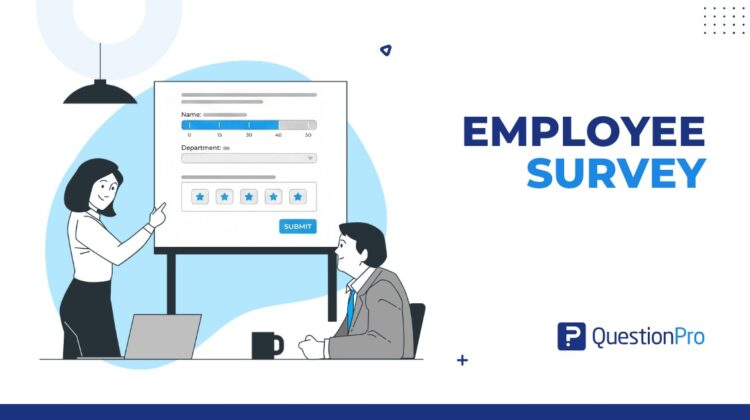
An employee survey is a structured questionnaire that collects employee opinions on their job, manager, team, and workplace. Most run anonymously, so people can respond honestly. HR and management teams use them to gauge morale, track engagement, spot problems early, and decide where to invest next.
Organizations have run some version of the employee attitude survey since the 1920s. The practice spread quickly, since asking staff directly beat guessing. What changed is the technology and the stakes. Gallup’s research shows managers account for a large share of the variance in how engaged their teams feel. That means the questions you ask, and the follow-through after, matter more than the survey tool itself.
A good employee survey typically covers:
- One clear goal, not a mix of unrelated topics
- Questions that map to a specific action the organization can take
- A mix of closed and open-ended formats
- A guarantee of anonymity that the survey process actually honors
Most HR teams start from a proven survey template and adjust the wording and length to fit their own culture.
Why do employee surveys matter?
Run well, employee surveys give an organization things hallway conversations and annual reviews can’t:
- A structured, anonymous channel for employee feedback that people actually use honestly
- Early warning on burnout, unclear expectations, or manager problems, before they show up as resignations
- Data to prioritize action plans instead of guessing which fix matters most
- Trend data over time, since consistent questions let you track whether past changes actually helped
- Evidence of what is and isn’t working in workplace culture, grounded in what employees experience, not assumptions
None of this happens on its own. A survey that collects data and goes nowhere tends to backfire. Employees notice when nothing changes, and they stop answering honestly the next time around.
What are the types of employee surveys?
Different employee surveys answer different questions. Picking the wrong one for the situation is one of the most common mistakes HR teams make. Here are the eight types you’ll use most.
Employee satisfaction survey
Also called an employee morale survey, this type measures how content people are with the tangible parts of their job. It typically covers:
- Pay, benefits, and other perks
- Physical work environment and safety
- Overall job satisfaction
- Reasons employees would stay or leave
- Views on specific company policies
Because it spans so many topics, a satisfaction survey usually runs 40 to 60 questions. Most organizations deploy it once or twice a year rather than continuously.
Employee engagement survey
An employee engagement survey measures something different from satisfaction: emotional investment and discretionary effort, not just contentment. It asks how closely employees relate to the company’s mission and how motivated they feel to do more than the minimum. A strong engagement survey also asks employees closest to customers or products for process suggestions. That feedback often surfaces fixes leadership would never spot on its own. Most engagement surveys stick to 20-30 focused questions to keep the results usable.
Pulse survey
A pulse survey is short, frequent, and built for one purpose. It catches sentiment shifts between the big annual surveys. Most cover 5 to 10 questions and run on one of these schedules:
- Monthly, for fast-moving teams tracking morale week to week
- Quarterly, for a steadier read on trends
- Under five minutes to complete, by design
Because they’re so quick, pulse surveys are the main tool organizations use for continuous listening instead of a once-a-year snapshot.
Organizational culture survey
Also known as a culture alignment survey, teams use this most often around mergers, acquisitions, or major structural change. It measures how well employees understand the company’s mission, how two merging teams’ cultures differ, how strong team unity feels, and how transparent leadership seems about business outcomes. A culture survey tells you whether people feel aligned with where the company is headed. It doesn’t just measure whether they like their job.
360-degree feedback survey
A 360-degree survey gathers input on one employee’s performance from multiple directions: managers, peers, direct reports, and sometimes clients, plus a self-assessment. It typically uses:
- A 4 to 7 point rating scale for consistency across reviewers
- A small number of open-ended questions for context
- Comparisons across categories of respondent, not just one overall score
The multiple viewpoints make it far more useful for performance and development decisions than a single manager’s opinion. It’s also the main tool organizations use for 360 feedback programs aimed at leadership development, since a leader’s blind spots rarely show up in their own self-review.
Exit survey
You send an exit survey to employees who are leaving. It captures reasons and context people often withhold while still employed. It’s most useful for spotting patterns. Say the same complaint about management or workload shows up across several exit surveys. Treat that as a signal worth acting on immediately, not something to save for the next annual cycle. Exit data also feeds directly into a broader employee retention strategy, since the same root cause often shows up across several people who left for “different” reasons.
Onboarding survey
An onboarding survey checks in during an employee’s first weeks, while first impressions are still forming. It typically asks:
- Does the employee feel welcome?
- Has their manager set clear expectations?
- Do they have the tools and training to do their job?
Catching a problem here costs far less than losing someone in month three.
Employee experience survey
An employee experience survey measures the full arc of what someone encounters, feels, and learns across their time at the company, not just one moment. It combines closed-ended questions for measurable trends with open-ended ones for context. Most organizations deploy it at specific milestones, onboarding, a promotion, a role change, and departure, rather than as a single annual event.
Employee satisfaction vs. engagement vs. experience: what’s the difference?
These three terms get used interchangeably, but they measure different things. Running the wrong one wastes a survey cycle.
| Term | What it measures | Typical use case |
|---|---|---|
| Satisfaction | Contentment with pay, benefits, and conditions | Annual check on tangible workplace factors |
| Engagement | Emotional investment and discretionary effort | Understanding motivation and intent to stay |
| Experience | The full employee lifecycle, from hire to exit | Mapping and improving specific milestones |
A satisfied employee isn’t necessarily an engaged one. An engaged employee can still have a rough onboarding experience. Match the survey type to the actual question you’re asking, and the results get far more actionable.
How to write employee survey questions that get honest answers
The survey type only gets you halfway. Poorly worded questions produce unreliable data no matter which type you run.
- Keep it short. Long, complicated sentences slow people down and reduce completion. State the question plainly.
- Avoid leading language: A question like “What did you think of our stunning new office?” nudges the answer before anyone responds. Neutral wording gets a real opinion instead of a reaction to the phrasing.
- Ask one thing at a time: Combining two topics, like workload and management quality, confuses respondents and muddies the data. Split it into two questions.
- Be specific: “How satisfied are you with your job?” is harder to act on than “How satisfied are you with the tools you’re given to do your job?”
- Test it yourself first: Answer your own draft questions before sending them out. A question that’s hard to answer clearly needs a rewrite.
How to choose the right employee survey for your goal
Match the survey to the goal instead of defaulting to whatever you used last year. That’s what makes the data useful.
- Start with the decision you need to make.
Deciding on pay and benefits investment calls for a satisfaction survey. Understanding motivation and retention risk calls for an engagement survey.
- Check the timing.
Mergers, restructures, or culture shifts call for a culture survey. A new hire’s first month calls for an onboarding survey.
- Match the frequency to the need.
Ongoing sentiment tracking needs a pulse survey cadence, not a single annual push.
- Consider who needs to weigh in.
Performance and development decisions benefit from multiple perspectives, which points to 360-degree feedback rather than a single-rater survey.
- Don’t run more than one type at once.
Stacking several surveys in the same month causes fatigue and lowers response quality across all of them.
How to measure and act on employee survey results
Collecting responses is only half the job. Without a clear way to measure and follow up, the data just sits there.
Check response rate first. A healthy employee survey typically lands between 30% and 40% completion. Shorter pulse surveys under 10 questions tend to land toward the higher end of that range. For anonymity, avoid reporting results for any team or demographic group under 10 responses. Smaller groups risk exposing individual answers even without names attached.
- Employee Net Promoter Score (eNPS): a 0-10 scale asking how likely someone is to recommend the company. Group scores into promoters (9-10), passives (7-8), and detractors (0-6), then subtract the detractor percentage from the promoter percentage.
- Segment by team, tenure, and location, not just company-wide, so systemic issues in one group don’t get averaged away.
- Share headline results within two to three weeks of the survey closing, before momentum and employee interest fade.
- Assign named owners and timelines to each action item, and report back on progress at the next cycle.
Common employee survey mistakes to avoid
A handful of avoidable errors account for most of the employee surveys that fail to produce change.
- Running a survey without a clear goal, so it tries to measure everything and helps with nothing
- Promising anonymity, then reporting results at a group size small enough that individuals could be identified
- Asking two things in one question, which confuses respondents and corrupts the data
- Collecting feedback and never communicating what happens next, the single biggest driver of declining participation over time
- Running surveys too often without adjusting scope, which leads to fatigue and lower-quality answers
- Comparing results only to an external benchmark, without tracking your own organization’s trend over time
How to design and run an employee survey step by step
Designing a survey well takes more effort upfront. It saves significant rework later.
- Define the objective. Decide exactly what you want to learn before writing a single question.
- Draft only the questions you need. Every question should map back to a specific decision you plan to make with the data.
- Sequence questions logically, grouping related topics together so respondents aren’t jumping between subjects.
- Balance closed and open-ended questions. Closed questions are easy to benchmark over time. Open-ended ones surface the “why” behind the numbers, but two or three is usually enough to avoid fatigue.
- Pilot the survey with a small group first to catch confusing wording before it goes company-wide.
- Distribute clearly, explaining the purpose, the timeline, and how the process protects anonymity.
- Analyze and share a summary, then turn the findings into a specific action plan with owners and deadlines.
QuestionPro’s approach to employee surveys
QuestionPro Employee Experience covers the full survey lifecycle in one platform. It includes:
- Pulse distribution and continuous listening tools alongside dedicated exit survey templates for capturing departure feedback
- AI sentiment analysis that reads open-ended responses at scale and surfaces recurring themes automatically, which matters most on longer satisfaction or experience surveys where manually reading hundreds of free-text answers isn’t realistic for most HR teams
- A dedicated action-planning workflow that assigns owners and tracks follow-through on each item, addressing the “we collected the data but nothing happened” gap that derails most employee listening programs
Getting more from every employee survey
An employee survey is only as valuable as the action that follows it. Even the best-designed questionnaire won’t fix a workplace problem by itself. It just tells you where to look. Organizations that treat employee surveys as an ongoing conversation, not a once-a-year event, see morale, retention, and performance actually move.
Frequently Asked Questions (FAQs)
It depends on the type. Annual or semi-annual surveys work well for satisfaction and engagement, while pulse surveys are designed to run monthly or quarterly. Running too many overlapping surveys in a short window causes fatigue and lowers response quality across all of them.
Most organizations see completion rates between 30% and 40%. Shorter surveys under 10 questions tend to perform better, and rates typically improve over time as employees see previous feedback lead to real changes.
They can be, if results are aggregated and never reported for groups smaller than about 10 people. Employees answer more honestly when the platform and the reporting process both protect against identification.
It depends on the type: pulse surveys work best at 5-10 questions, engagement surveys at 20-30, and comprehensive satisfaction surveys can run 40-60. Longer surveys need a clear reason for every added question, since each one reduces completion.
eNPS is a single 0-10 loyalty question that produces one score. An engagement survey is a broader questionnaire covering motivation, culture fit, and manager relationships, and it often includes an eNPS question as just one data point within it.
They’re the same thing. “Staff survey” and “employee survey” are interchangeable terms for a structured questionnaire that gathers employee feedback on satisfaction, engagement, or experience. Most US organizations now use “employee survey” as the standard term